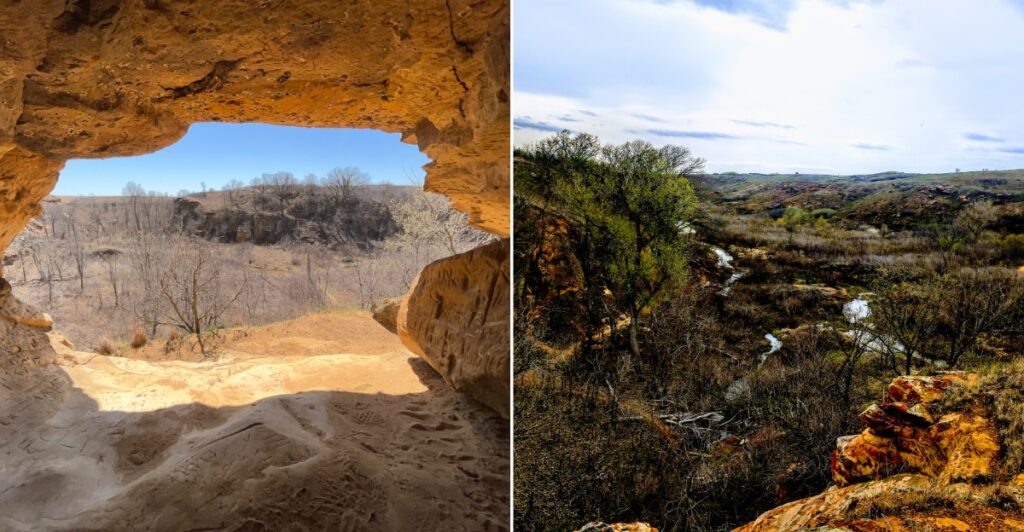
Short hikes can still pack a surprising amount of drama when the trail starts weaving past rock shelters and towering cliff faces.
This compact Kansas route proves you do not need an all-day trek to get a real sense of adventure.
The path moves through rugged formations, shaded pockets, and sections where the landscape seems much bigger than the mileage suggests.
It is the kind of hike that rewards curiosity more than endurance, especially if you like stopping to study the rocks instead of racing toward the finish.
I have a weakness for trails that make me forget how short they are.
On one rocky walk, I kept stopping to look into crevices and inspect strange formations until someone reminded me we had barely covered any distance.
I laughed because it felt like we had been exploring for hours.
That is exactly what I want from a short hike: enough scenery to slow me down and enough character to make the trail seem twice as long.
A Canyon Hiding In The Heart Of Kansas
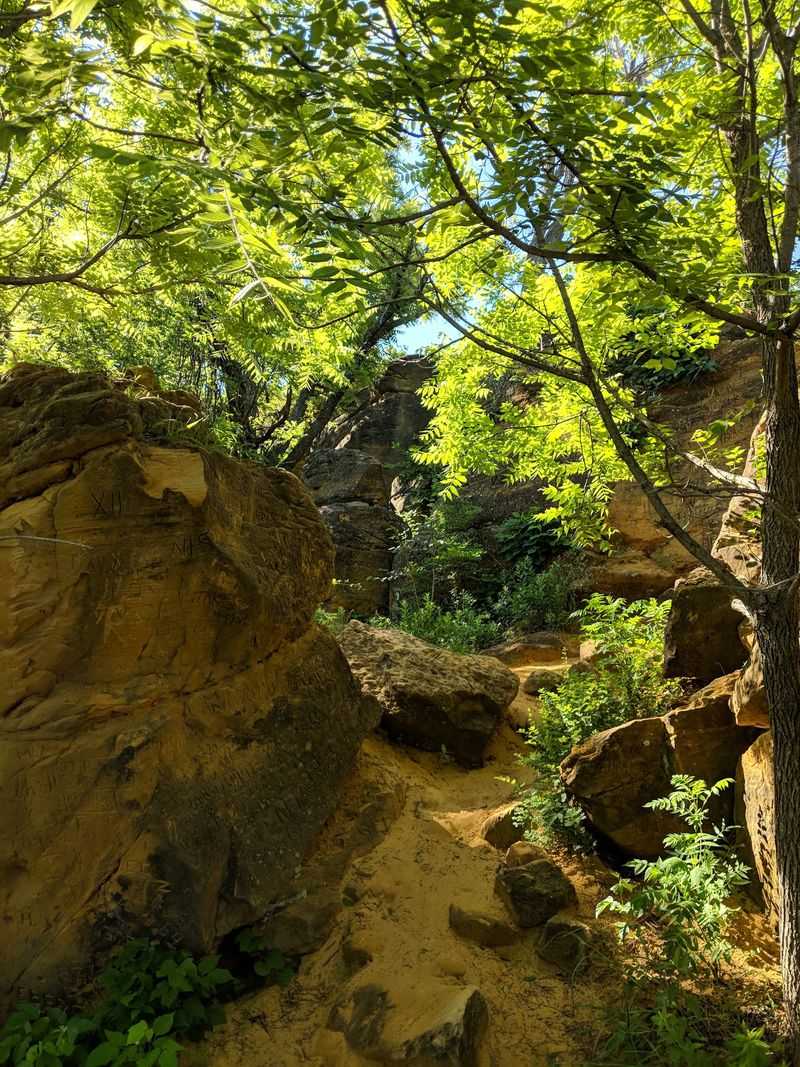
Pulling into the Horsethief area, I did not expect the prairie to suddenly split open into rock walls.
The Buffalo Track Canyon Nature Trail sits inside Kanopolis State Park, and the official address is 200 Horsethief Rd, Marquette, KS 67464.
The park lies in Ellsworth County, a short drive from Salina. It is about an hour and a half from Wichita, which makes it an easy day trip.
Once I stepped past the trailhead sign, the grassland view shrank away. Tall bluffs closed in on both sides, and the air felt cooler under the trees.
That surprise is the real magic here. Most people picture Kansas as endless wheat fields, so a canyon feels like a plot twist in a good book.
The route is short, though hikers should expect more than a one-mile loop from the trail. I finished in under an hour, but I lingered longer because every bend offered a new view.
Bring curiosity, because this little canyon has a lot to say for its size.
Sandstone Older Than The Dinosaurs Fading Out
Picture a beach where giant reptiles still roamed, and you are close to how these rocks began.
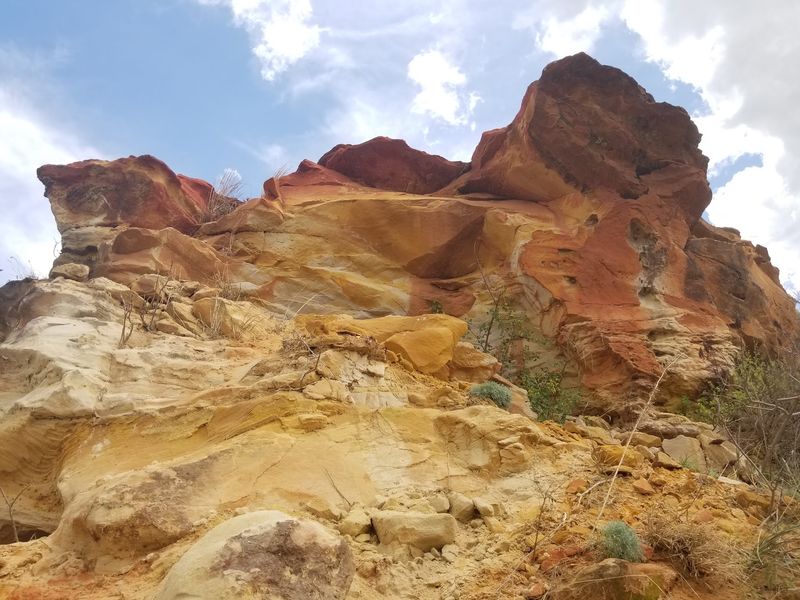
The cliffs along the trail are Dakota Sandstone, laid down roughly 100 million years ago during the Cretaceous Period.
Back then, a large inland sea covered much of North America. Rivers and shorelines dumped sand here, and time pressed it into stone.
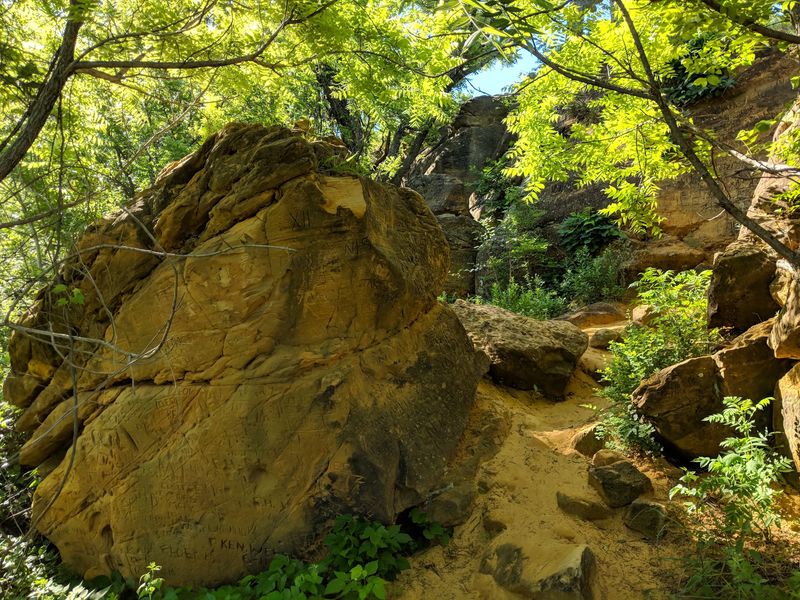
I ran my hand along one wall and felt the gritty texture right away. The colors ranged from pale tan to deep rusty orange, thanks to iron minerals in the rock.
Some surfaces show thin layers stacked like pages. Others have swirls and pockets carved by wind and water.
Geology fans will love spotting these details, but you do not need a science degree to enjoy them. I just liked how the sun made the walls glow.
Tip for curious minds: look for small round lumps in the stone. These concretions formed when minerals clumped together inside the sand long ago.
Honestly, touching rock this old made my morning coffee feel very young.
Rock Shelters That Invite A Closer Look
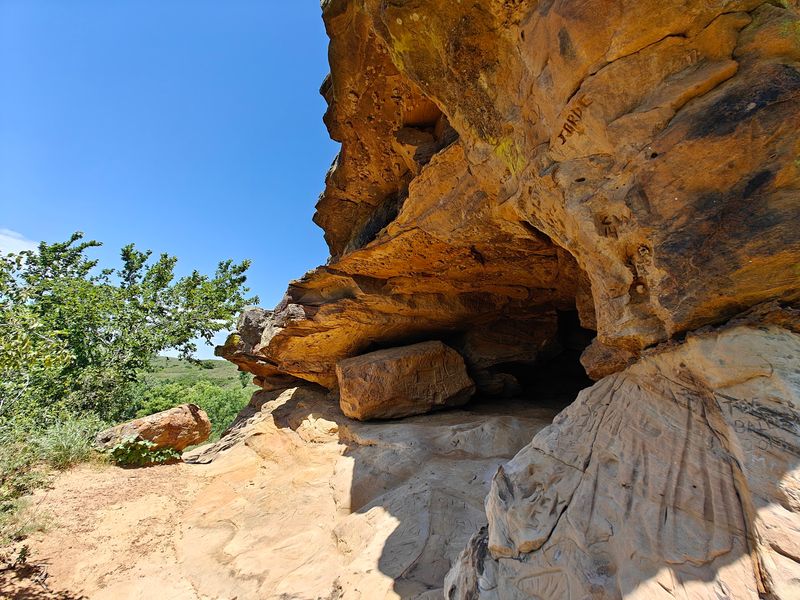
My favorite moment came when a dark hollow appeared in the cliff just a few steps off the path.
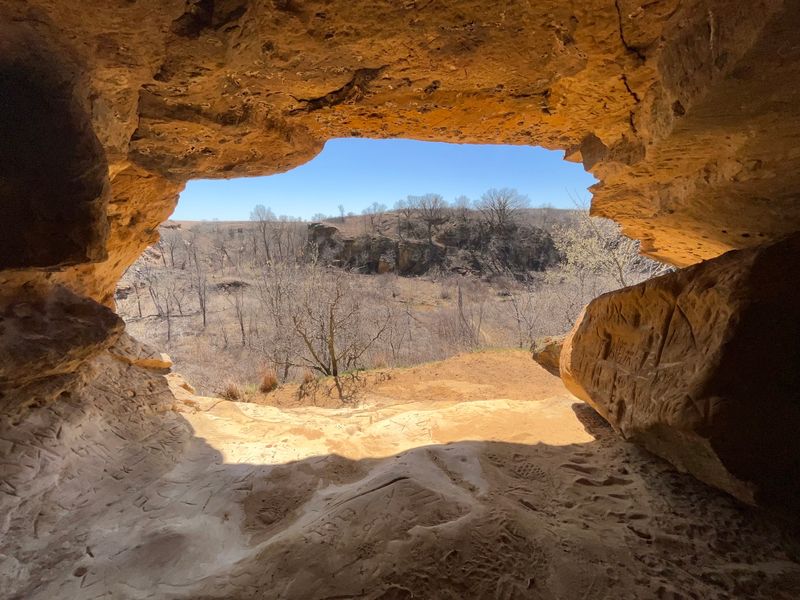
The canyon holds several shallow caves and overhangs, slowly formed as water seeped through poorly cemented sandstone.
These are not deep caverns, so you will not need a headlamp. Most are more like rocky porches with a roof overhead.
These sandstone shelters have existed in this region for a very long time. The overhangs offer welcome shade in summer and a break from winter wind.
Standing inside one, I noticed how quickly the temperature dropped. On a hot July day, that little pocket of cool air felt like a gift.
Please treat these spaces gently. The sandstone is soft, and climbing or scraping can damage it for everyone who comes later.
Watch your footing near the entrances, since loose sand can make the ground slippery. I also peeked in before stepping, because critters enjoy shade too.
Spotting each shelter felt like a small treasure hunt, and I happily counted every find.
Names And Dates Written In Stone
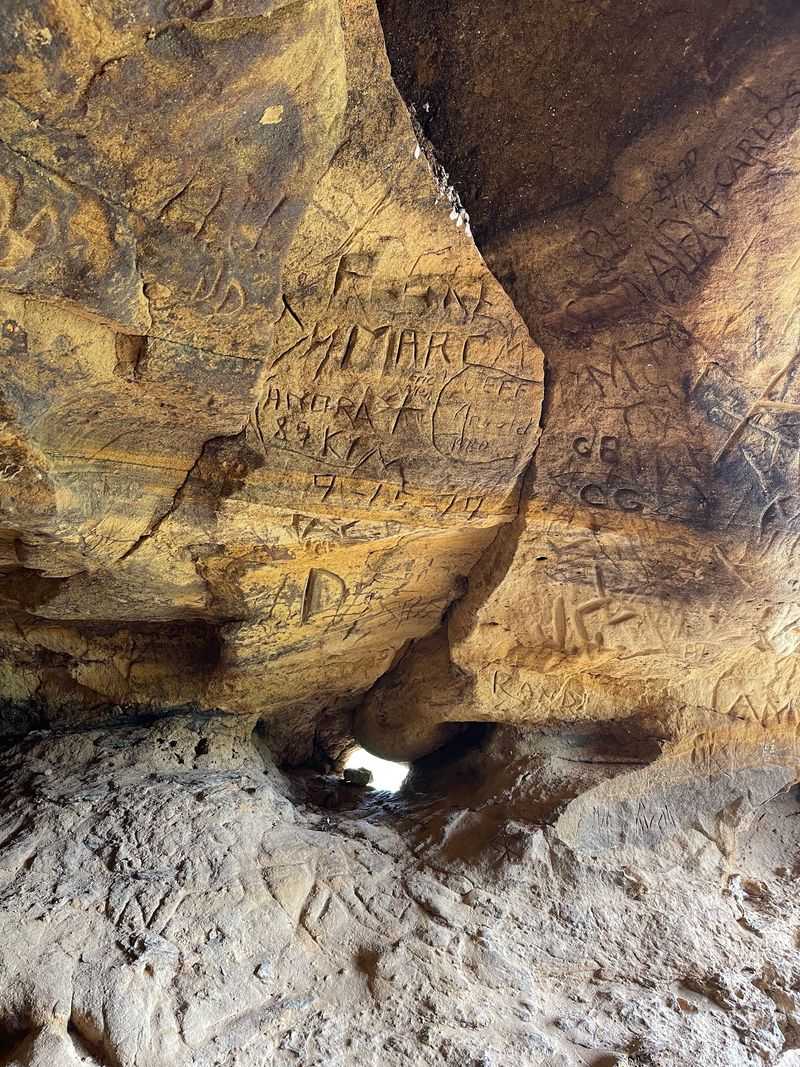
History buffs, get ready, because the canyon walls carry a guest book that stretches back many decades.
Visitors over the years carved initials and dates into the soft sandstone, and some look very old.
I spent a good ten minutes squinting at the markings. A few dates seemed to reach back to the early 1900s, which made me wonder who stood in that same spot.
It is fun to read them like a puzzle. Some letters are neat and careful, while others look rushed.
Still, I have to be clear about one thing. Carving new marks is not okay, and it harms the rock for good.
The best way to join this long story is with a camera instead of a knife. I snapped plenty of photos and left the walls exactly as I found them.
If you bring kids, turn it into a lesson. Ask them to find the oldest date, then talk about why protecting places matters.
Old carvings are interesting, but untouched stone is the real keepsake.
Kansas History Runs Deep Here
Here is a fun fact I love sharing: Kanopolis is recognized as the very first state park in Kansas.
It opened in 1955, next to Kanopolis Lake, a reservoir built by the U.S. Army Corps of Engineers on the Smoky Hill River.
The dam was finished in 1948 to help control flooding. Soon after, the land around it turned into a place for recreation.
Long before that, this region was bison country. Herds once moved across these grasslands, and that heritage lives on in the trail’s name.
The Horsethief area has a colorful name too. Local tradition links Box Canyon to Pawnee Indians hiding horses stolen from a Cheyenne village there long ago.
I cannot confirm every detail of that tale, but walking the narrow canyon, I could see why it made a good hideout. The bends block your view within seconds.
Knowing this backstory made the hike feel richer. Every step connected me to bison, settlers, and park builders who shaped this corner of the state.
Creek Crossings Keep Things Interesting
Wet shoes are practically a badge of honor on this canyon trail, so I learned to embrace them.
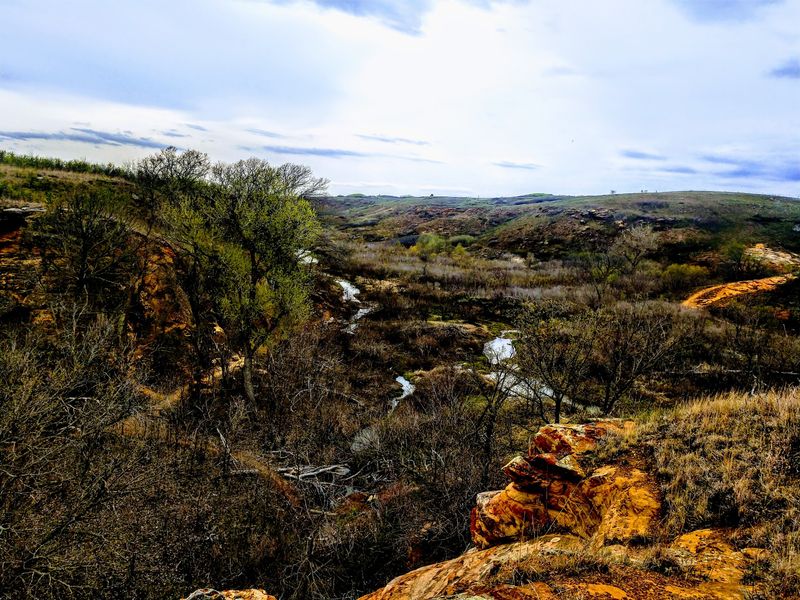
A small creek winds through the canyon, and the path crosses it more than once.
On dry days, I hopped across on stones without trouble. After rain, though, the water can rise and turn muddy fast.
That creek is the artist behind the whole scene. Over time, flowing water carved the canyon and shaped the bluffs you see today.
My advice is simple. Wear shoes with good grip that you do not mind getting muddy, or pack a spare pair of socks in the car.
If the water looks high or fast, turn around. The canyon will still be there another day, and safety beats a soggy adventure every time.
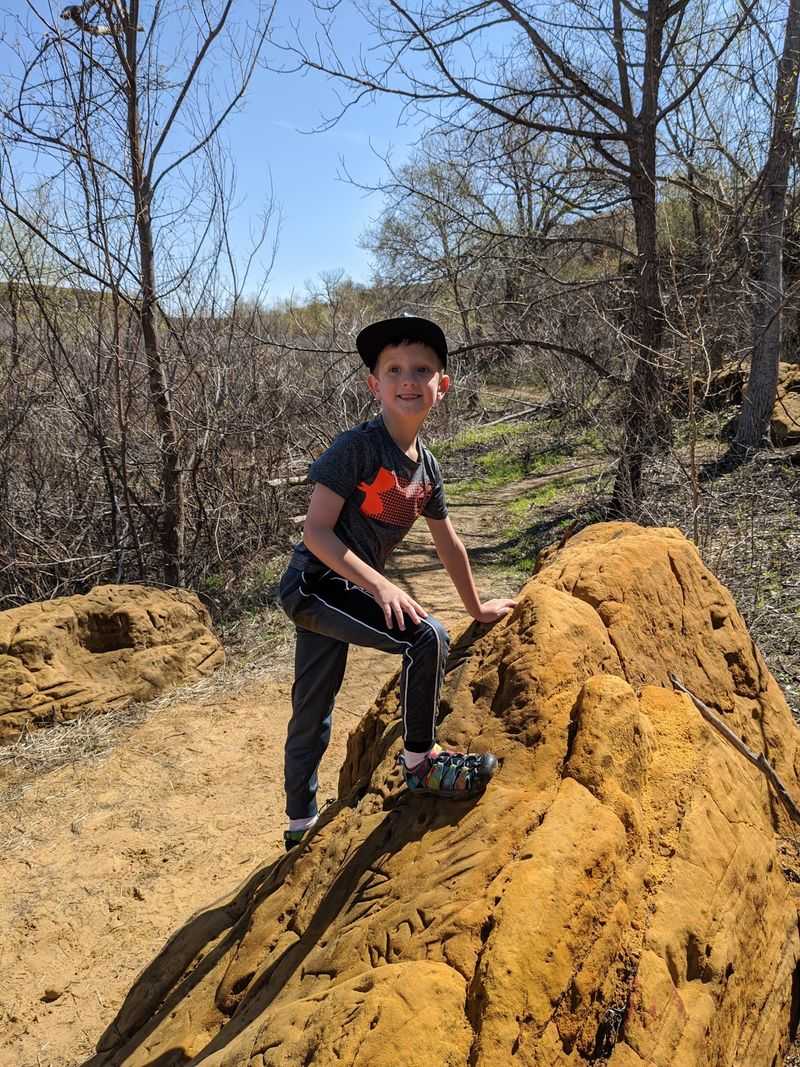
Kids usually love the crossings most. I watched a family turn each one into a mini challenge, counting stepping stones and cheering at the far side.
For me, the gurgle of water added a calm soundtrack to the entire walk.
Wild Neighbors Along The Loop
Early morning is prime time, because the canyon’s locals are usually up before most hikers.
I spotted fresh deer tracks in the sand and heard wild turkeys calling from the brush.
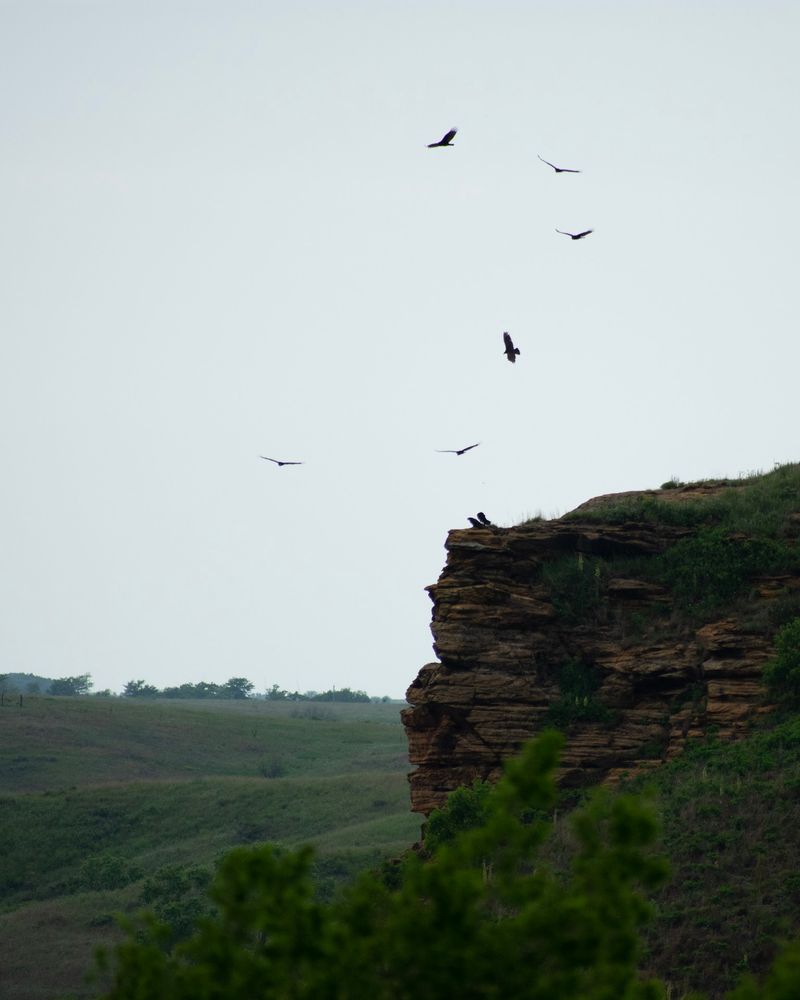
The park is home to white-tailed deer, turkeys, songbirds, and plenty of lizards sunning on warm rocks. Hawks often circle above the prairie edges.
Snakes can occur here too, so watch where you step and place your hands. I give snakes plenty of room before moving on.
Staying on the trail and watching where I placed my hands kept me relaxed. Snakes generally want nothing to do with people, so give them space.
Poison ivy also grows along parts of the path. The old rule helps: leaves of three, let it be.
Insects can be busy in warm months, so bug spray is a smart pack item. I also checked for ticks after the hike.
A pair of binoculars made the bird watching even better. I left feeling like a quiet guest in a very lively neighborhood.
Trail Colors And Staying On Track
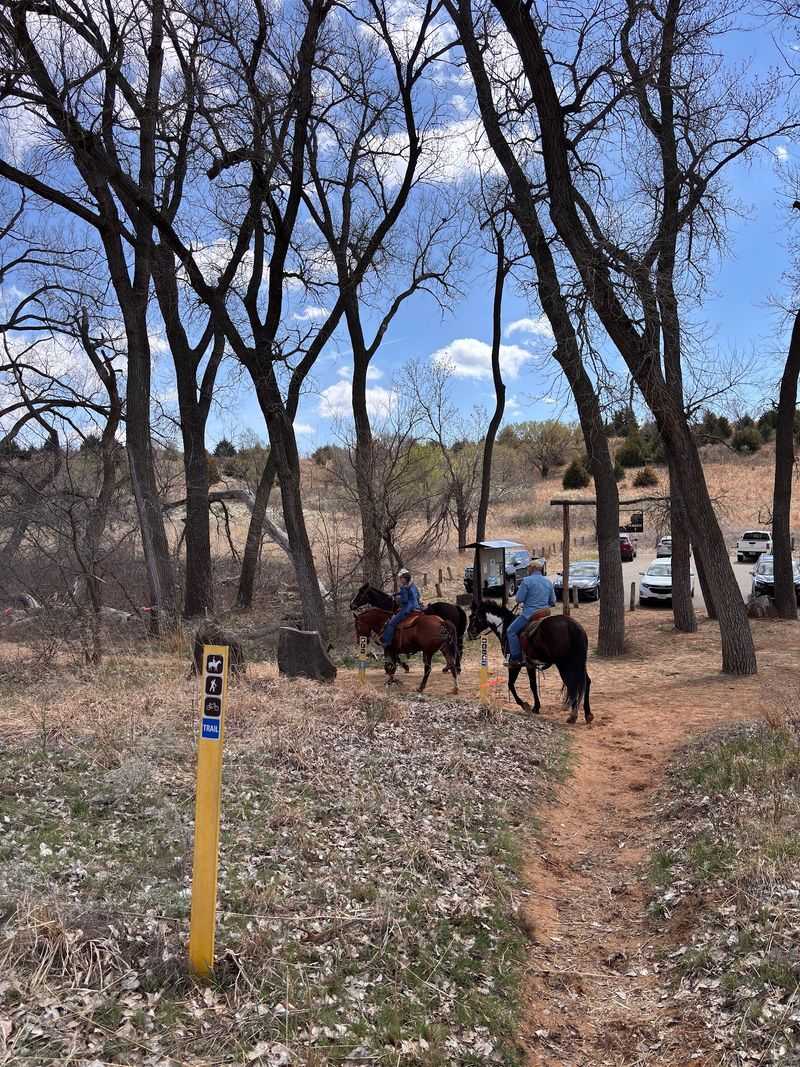
Getting a little turned around is easy here, since several paths weave together near the canyon.
The Horsethief area has a larger network of trails for hikers, bikers, and horseback riders, using color-coded routes.
The Buffalo Track trail is the short, hiking-only option. Other routes stretch for miles and can pull you far from the parking lot.
Before starting, I snapped a photo of the map at the trailhead. That picture saved me twice at confusing junctions.
Phone signals can be spotty down in the canyon. A map or a downloaded offline map is a wise backup.
Keep an eye on the numbered yellow markers along the nature trail. When I stopped seeing them, I backtracked to the last one instead of guessing.
Some connected trails are shared with horses, so they can be muddier and more churned up. Stick to the footpath if you want an easier walk.
Planning ahead turns a possible mix-up into a relaxed ramble, and my sense of direction thanked me.
Best Seasons For Canyon Wandering
Timing can turn a good walk into a great one, and the calendar matters in this corner of Kansas.
Spring and fall are my top picks for comfortable temperatures and fewer bugs.
In spring, wildflowers dot the prairie and the creek usually has a steady flow. The canyon feels fresh and green.
Autumn brings golden grasses and yellow cottonwood leaves. I found the crisp air perfect for lingering at the overlooks.
Summer can get very hot in central Kansas. If you go then, start early in the morning and carry more water than you think you need.
Winter offers quiet trails and clear views of the rock shapes once the leaves drop. Just watch for icy spots near the creek.
After heavy rain, trails may flood or close for safety. Checking park conditions before driving out is always a smart move.
No matter the month, golden hour makes the sandstone glow. I timed my last loop near sunset and got my favorite photos of the whole trip.
Packing Smart For A Happy Hike
Short trails still deserve smart packing, and I learned that lesson with one very empty water bottle.
Bring your own water instead of counting on drinking water at the Buffalo Track Canyon trailhead.
A vehicle permit is required for the park. Daily passes are affordable, and fees help care for the trails.
My simple checklist includes water, snacks, sunscreen, bug spray, and a hat. I also toss in a small first aid kit and extra socks.
Sturdy shoes are a must, because the sandy soil adds a little drag to each step. Good tread helps on slick rock and creek banks.
Pack out every scrap of trash. Day-use visitors are asked to carry their trash out, helping keep the canyon looking beautiful.
Tell someone your plans before heading out. It is a small habit that brings peace of mind.
With the right gear, the Buffalo Track Canyon Nature Trail becomes pure fun. I walked back to the car tired, happy, and already plotting my next Kansas canyon day.