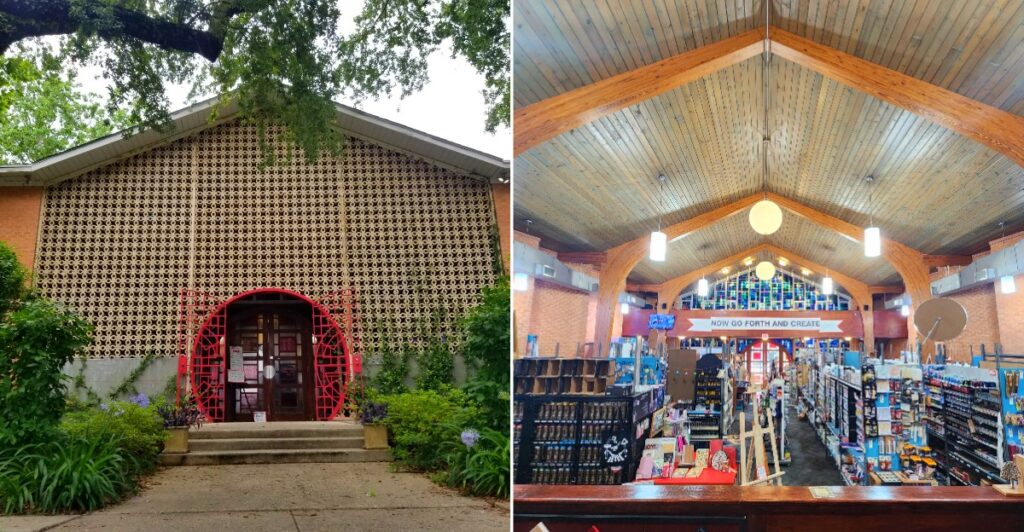
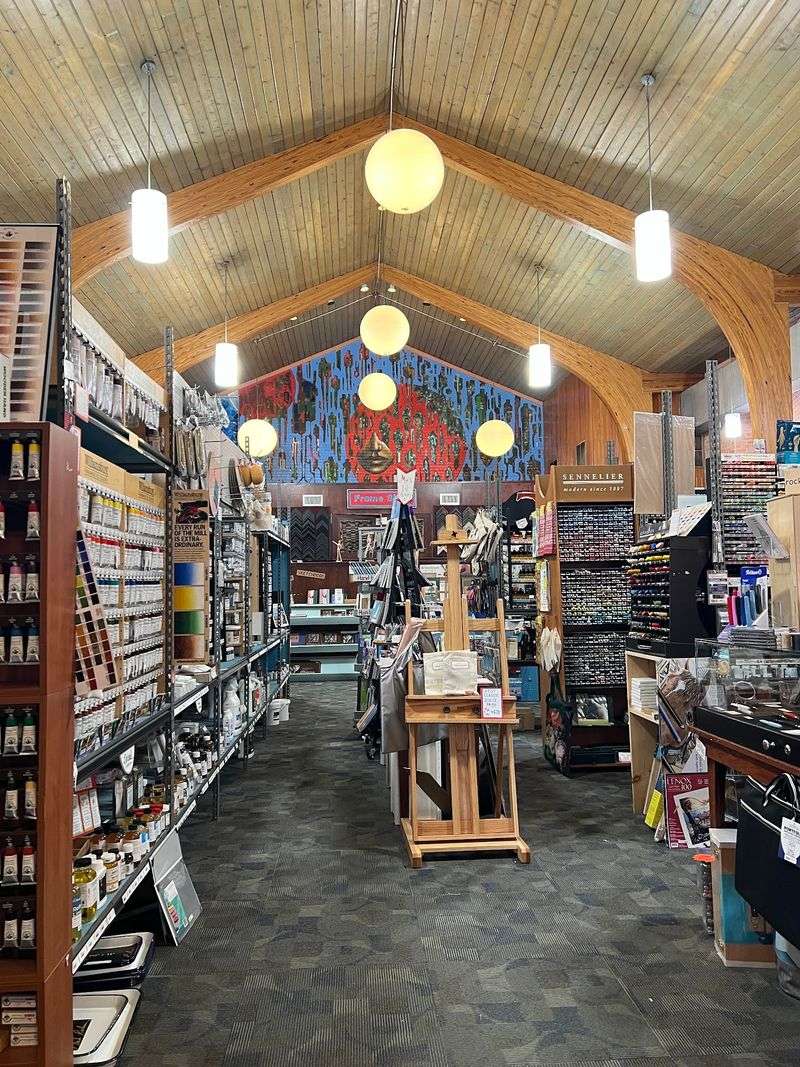
Some art stores sell supplies; this one also gives you a reason to admire the ceiling. Inside a former church, stained glass, wooden arches, and shelves of brushes, paper, and paint turn an ordinary shopping trip into something atmospheric.
The locally owned shop moved into the building in 2018, and the setting gives every sketchbook and tube of color extra character.
Creative shopping in Louisiana feels different here, where art supplies share space with historic architecture, stained glass, and plenty of room for inspiration.
What I like most is how easily the place nudges you toward making something. You can arrive needing one pen and leave wondering whether now is the time to try watercolor, printmaking, or whatever caught your eye two aisles back.
Even if your last art project happened in school, the building and the shelves make curiosity feel like a perfectly good reason to start again today.
Look Up Before Browsing
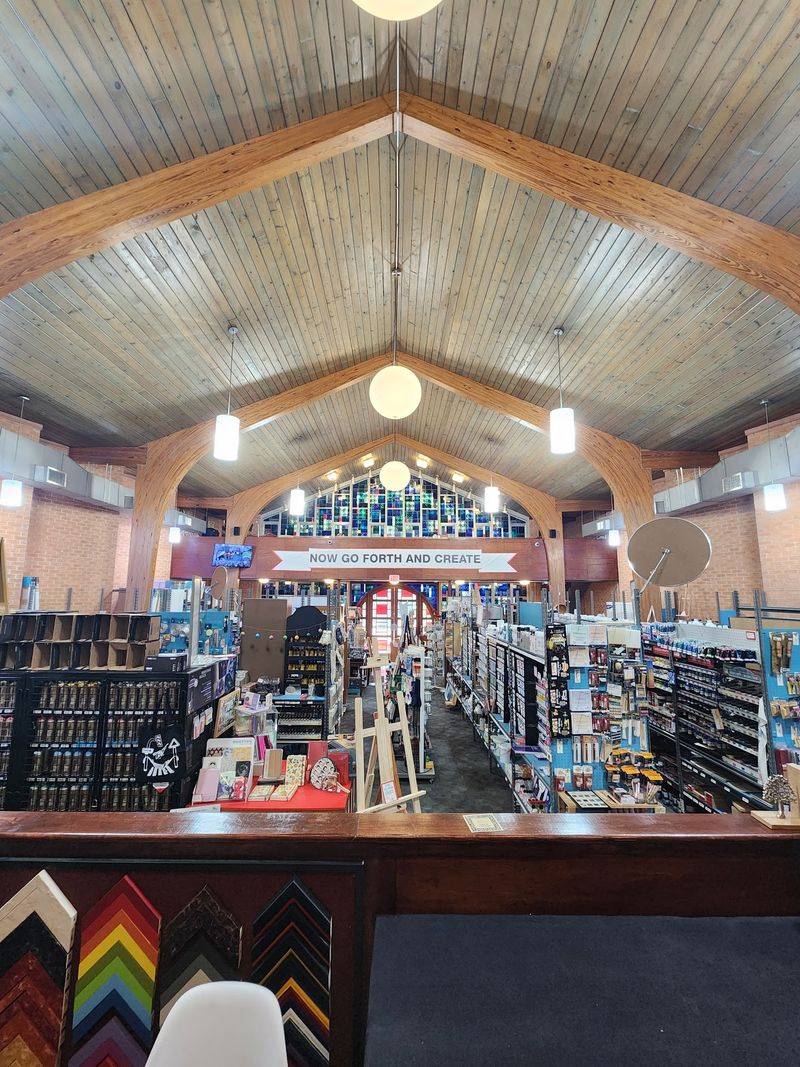
Paint tubes can wait a minute. The wooden arches and vaulted ceiling deserve an early look, especially before your attention settles on labels, prices, and the question of which blue to buy.
Those surviving church features give the store its unusual scale and character. Rather than hiding the building’s past, the setting lets art materials sit beneath architecture made for a very different gathering.
Pause where you can see the ceiling without blocking an aisle. Let your eyes follow the arches, then notice how the stained glass changes the feeling of the room.
For anyone keeping a travel sketchbook, this is a useful subject to study. A quick drawing of a curve or window shape can record the visit without requiring a full architectural portrait.
Ask before taking photographs, and keep other shoppers out of your frame whenever possible.
The Old Church Is The Giveaway
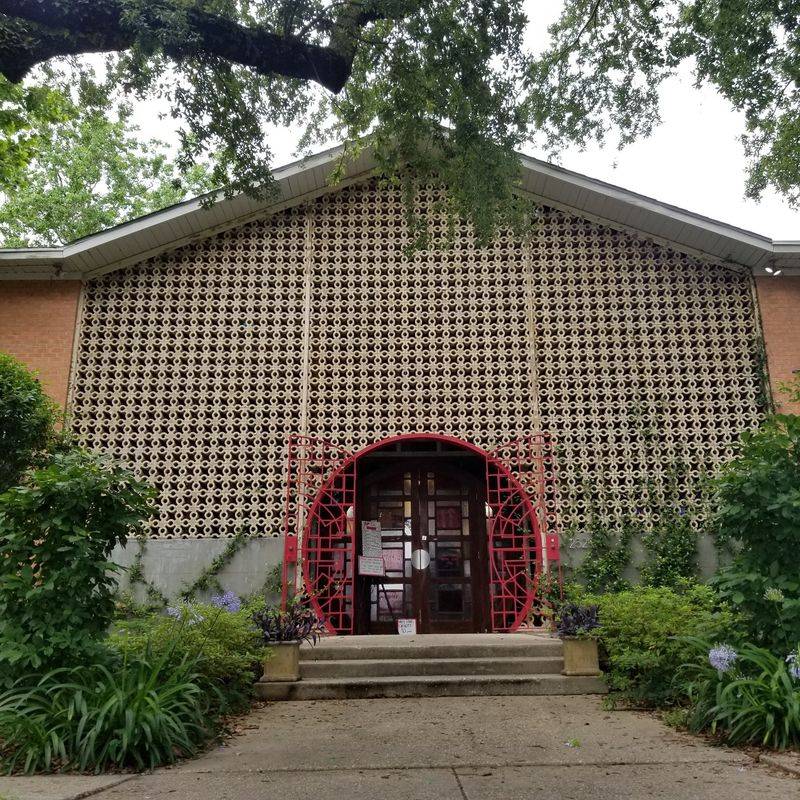
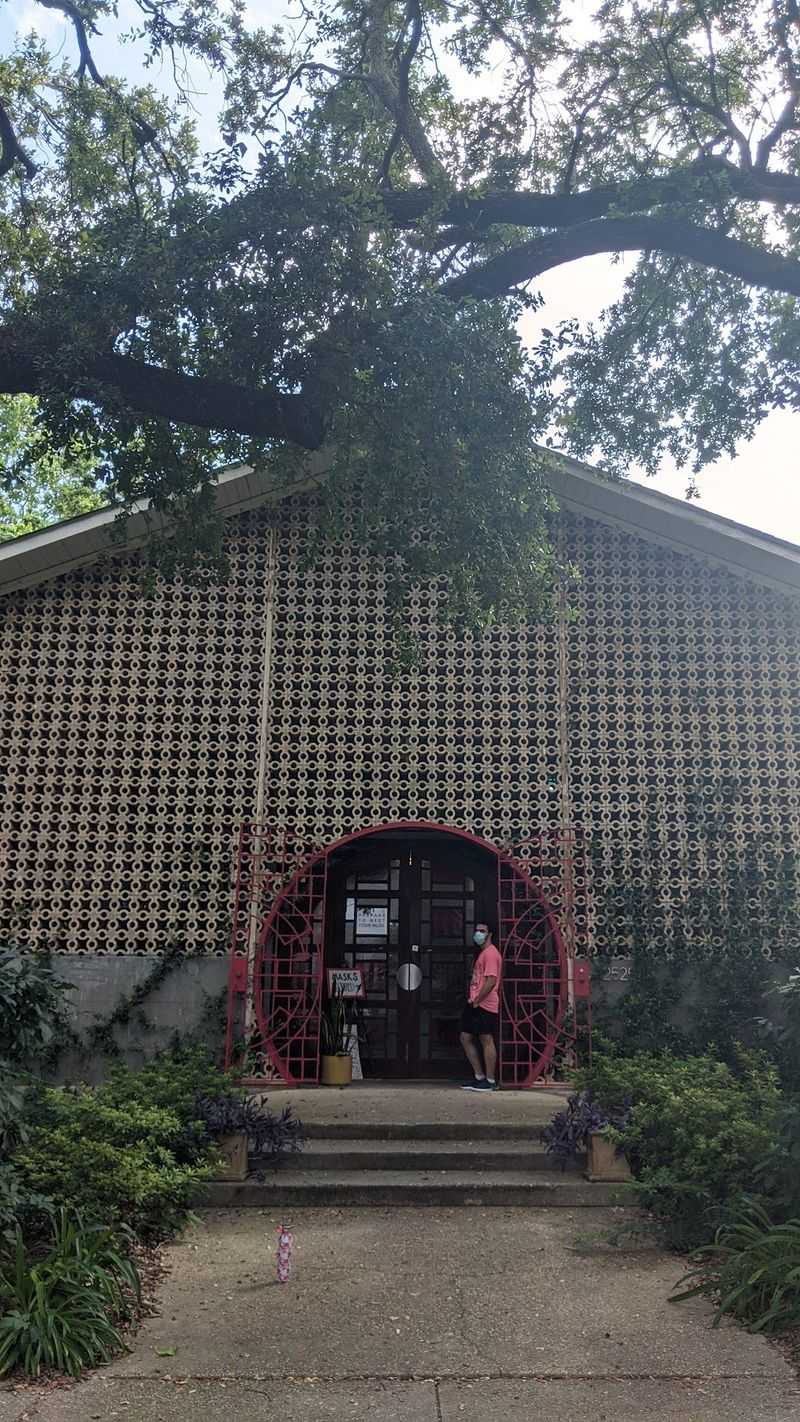
Mo’s Art Supply & Framing sits at 2525 Bienville Street in New Orleans, Louisiana, in Mid-City just one block off Broad Street. Bienville handles the final approach, with the shop tucked into the neighborhood rather than lined up on a major retail strip.
The building does most of the navigating for you. Once the former church comes into view, with stained glass and the open terra-cotta screen across the front, you know you have the right place.
Use legal street parking around Bienville Street and the surrounding block, then walk back toward the church entrance. From there, the art-supply shop is right inside the converted sanctuary.
A Window Story Hidden Behind Stucco
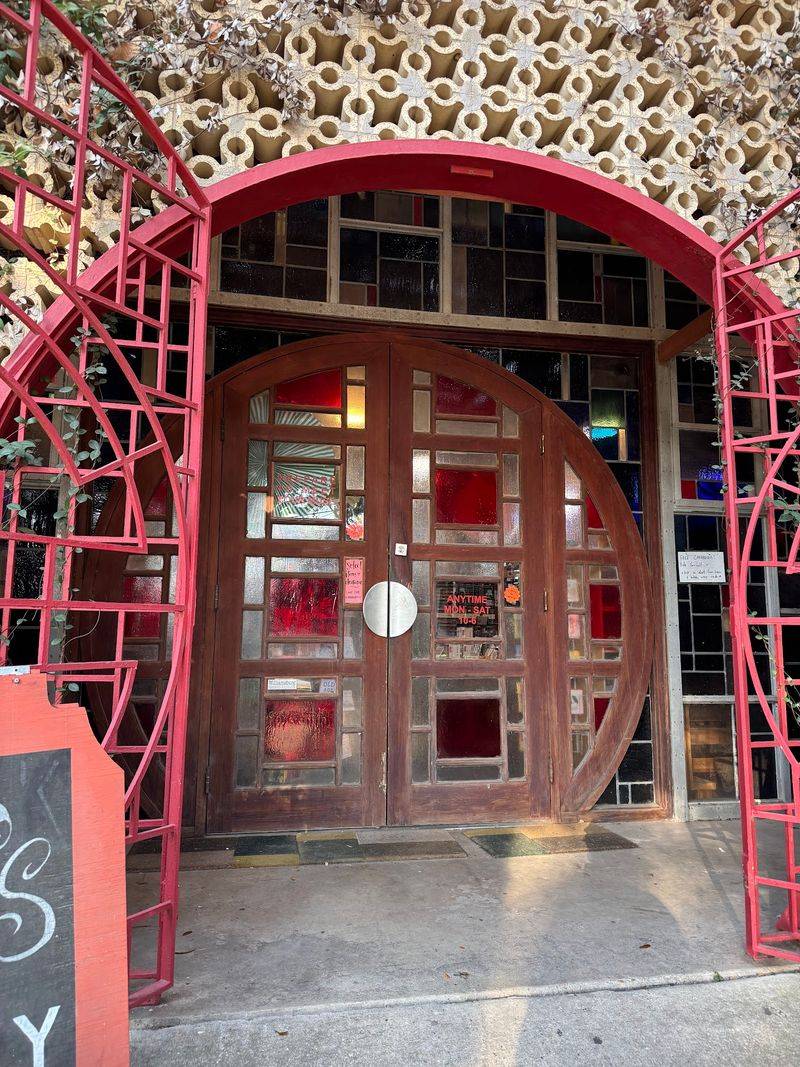
One of the building’s best details had to be uncovered. During renovations, workers removed stucco and revealed an original terra cotta screen, allowing more light to pass through the stained glass inside.
That change matters because daylight is part of the experience here, not just something that helps you read a price tag. The screen and glass connect the store’s current use with features from its church years.
Look for the relationship between the patterned surface and the windows rather than expecting a grand display. Small architectural details often explain more than a sweeping glance does.
If the light catches your attention, borrow the idea for your own work. Sketch a repeating shape, note a color pairing, or think about how layers change what you see.
Leave the building untouched and take your inspiration home on paper instead of relying on memory.
Choose A Paint With A Purpose
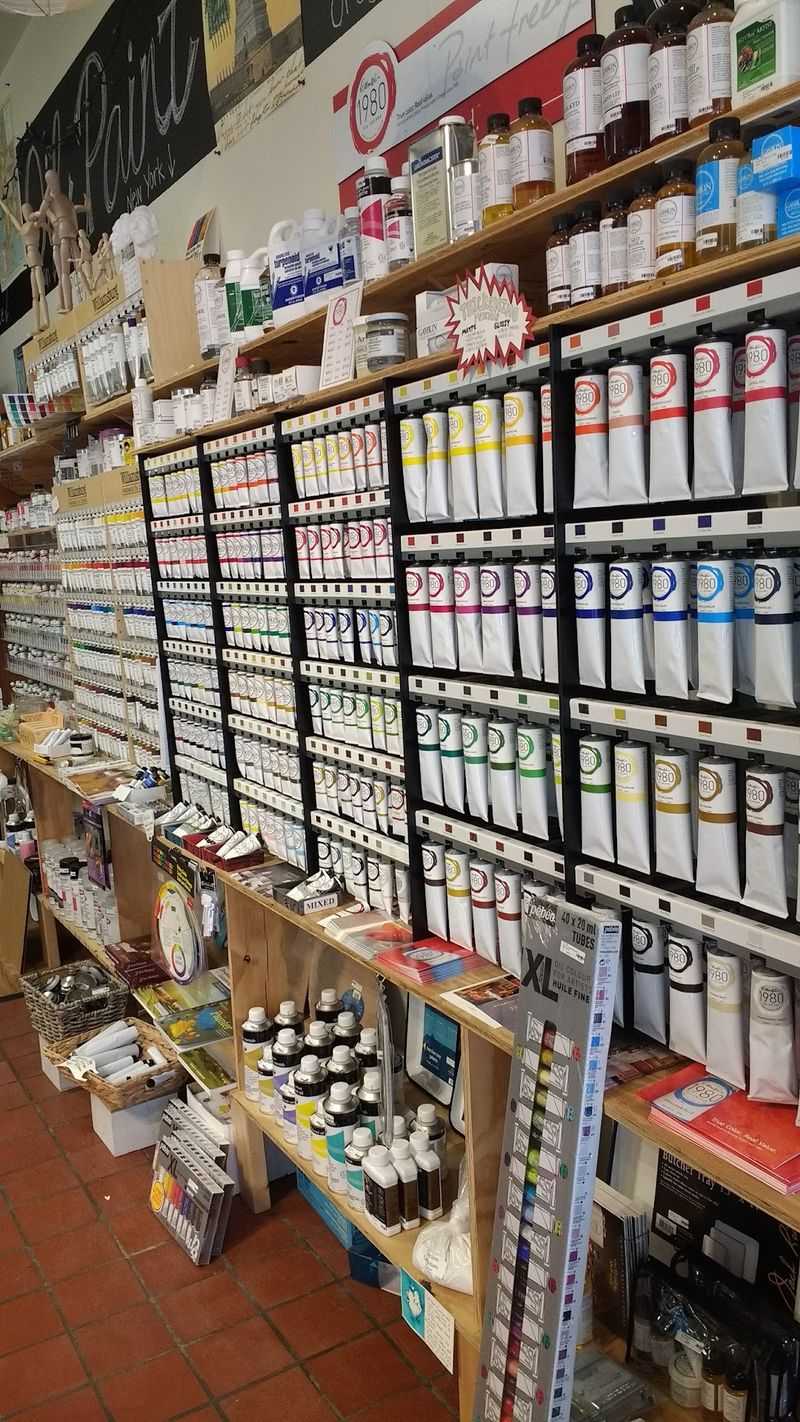
A wall of color can turn a sensible errand into a very cheerful puzzle. Mo’s carries oil, acrylic, and watercolor paints, giving beginners and experienced painters several directions to consider.
Start with the project rather than the brightest tube. Tell staff whether you want to paint on paper, canvas, or another surface, and explain how much experience you have.
Golden Heavy Body Acrylic Paint in fluorescent colors is among the products highlighted in the store’s supplied information. Ask about current stock before planning a project around a particular shade.
A small, useful selection usually beats a bag of colors with no clear purpose. Compare sizes and prices, and check whether you need a medium or other supplies alongside the paint.
The goal is to leave ready to make something, not simply ready to admire a growing collection of unopened tubes at home.
Paper Is Part Of The Artwork
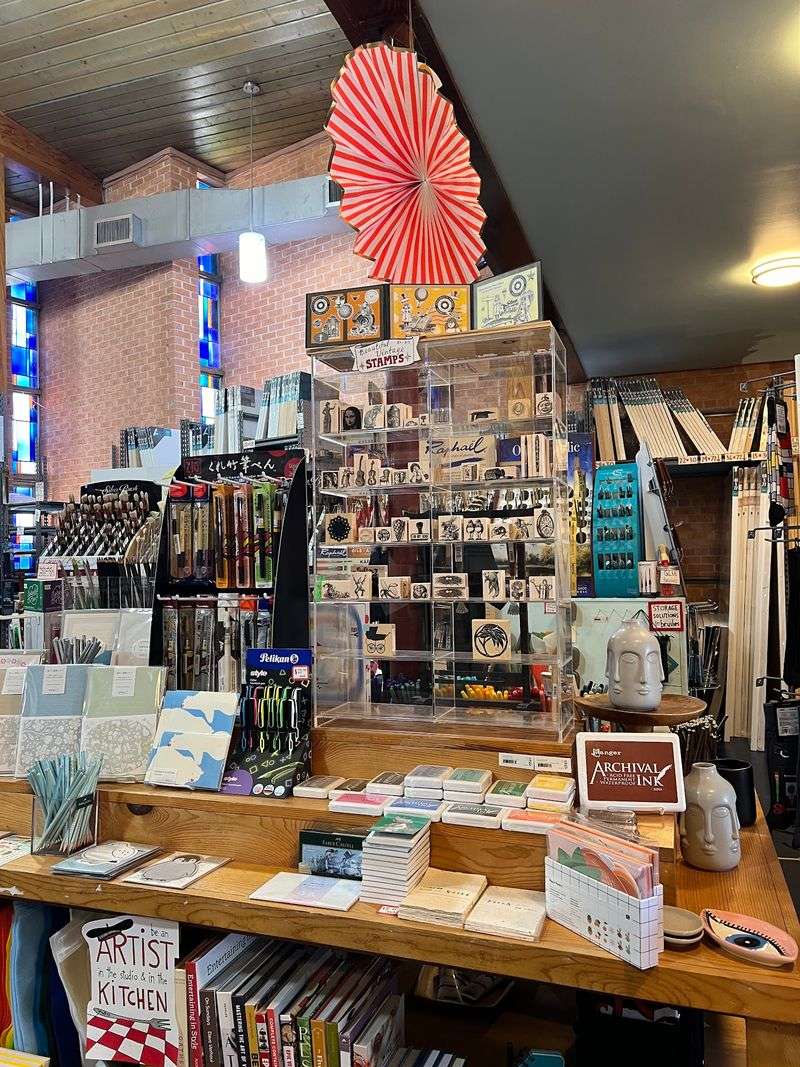
Those uneven paper edges are not necessarily a mistake. Indigo Artpapers, included among Mo’s distinctive offerings, have natural deckled edges that can become part of a finished drawing or painting.
Paper deserves attention before you choose your colors. Watercolor, charcoal, and graphite place different demands on a surface, so a sheet that suits one project may frustrate another.
Ask which paper fits your chosen material, then compare texture, weight, and size. Handle loose sheets only as staff allow, keeping fingers clean and avoiding bent corners.
For a small experiment, consider buying less paper rather than committing to a large supply immediately. A few tests can reveal whether you like a rough surface, a smoother finish, or a visible deckled border.
That simple choice can shape the whole piece before the first mark reaches the page, which is a satisfying discovery in itself.
Give Drawing Tools A Fair Comparison
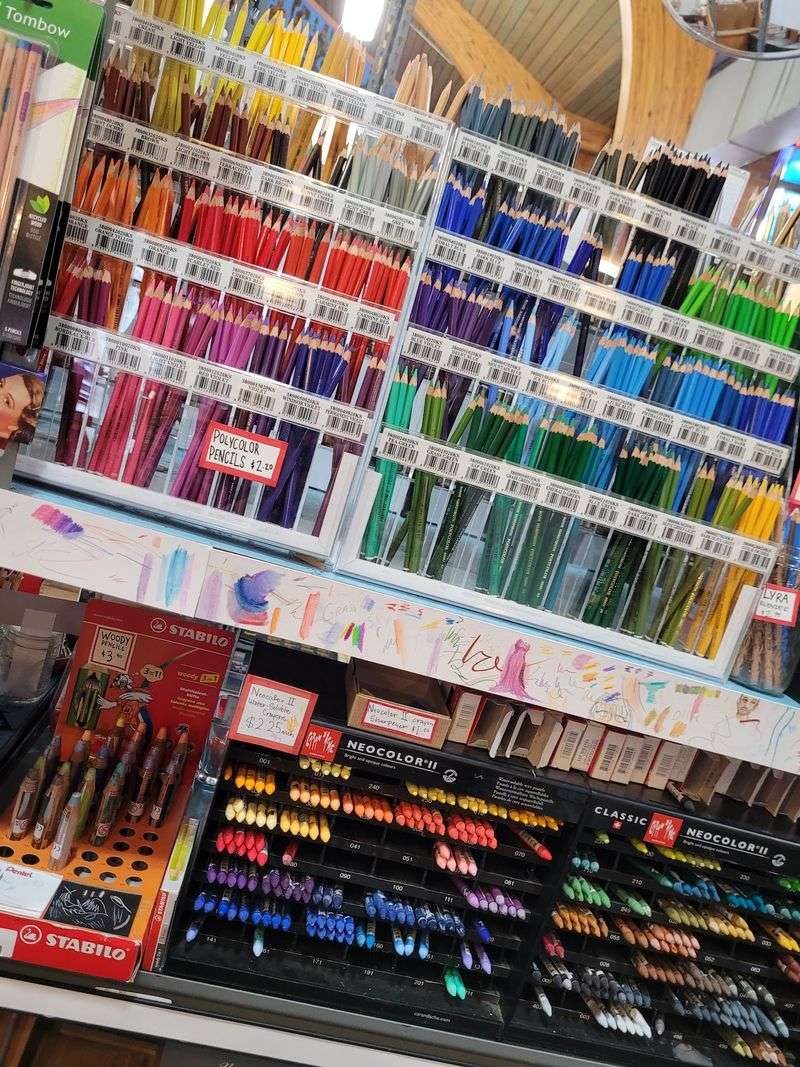
Sometimes a single pencil offers more freedom than a whole painting setup. Mo’s selection includes graphite, charcoal, and pastels, making the drawing supplies worth attention even if you arrived thinking only about paint.
Each material leaves a different kind of mark. Graphite suits many everyday sketches, charcoal can build strong dark areas, and pastels bring color without a brush.
Ask whether a sample or approved testing surface is available before trying anything. Testing policies and available samples can change, so never open packaged stock on your own.
Consider the cleanup, too. Ask about storage and any extra supplies your chosen medium needs, especially if you plan to draw while traveling.
A tool that looks exciting on the shelf should also fit the way you actually work. Pick something you will use soon, then give yourself a modest first project to try.
Pack A Smaller Creative Kit
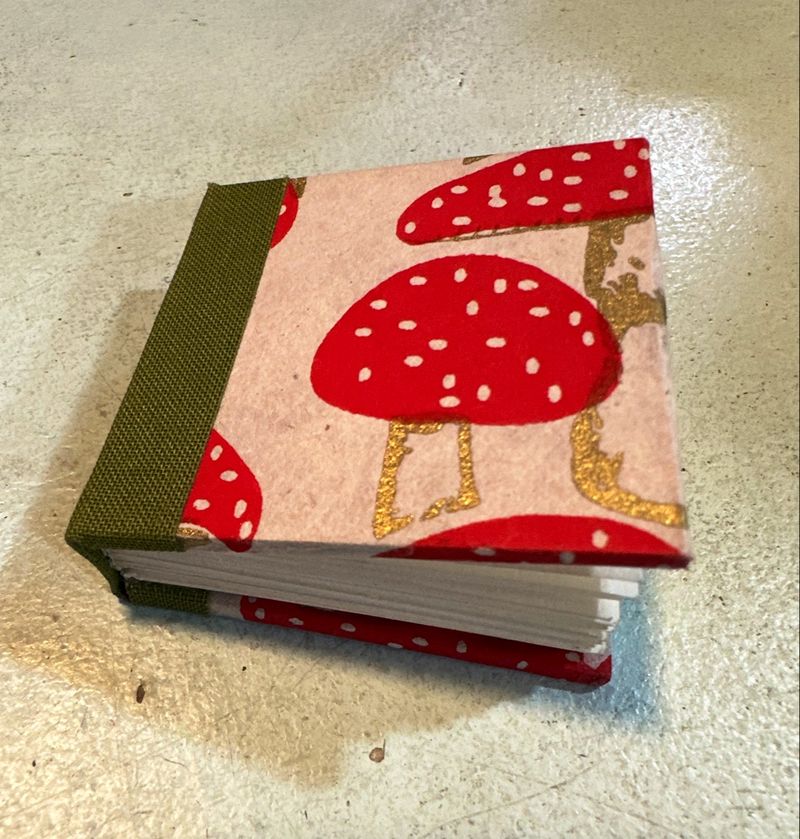
Not every art project needs an easel and a corner of the living room. Portable Vivia Colorsheets watercolors are among the distinctive products highlighted for Mo’s, offering a smaller option to ask about.
If you are visiting New Orleans, think about what will fit comfortably in your bag. A compact watercolor setup and suitable paper can make it easier to record a detail that catches your eye.
The store also carries watercolor brushes, including squirrel hair options. Ask how different brushes hold water and what care they need, rather than choosing by appearance alone.
Check current availability and compare the complete cost of your kit before buying. Remember that portable does not mean every supply is included.
Plan for water, cleanup, and drying time, then keep your first outing simple. One page and a few colors can be enough for an afternoon.
Mardi Gras Materials Have Their Own Scale
A tiny sketchbook and a float decoration ask very different things from an art store. Mo’s serves that bigger creative world with supplies such as large colored paper sheets, imitation gold leaf, and wide canvas sold by the yard.
These materials connect the shop to New Orleans traditions in a practical way. Celebration begins with people cutting, painting, measuring, and figuring out how to make an idea hold together.
Bring dimensions if you are shopping for a large project. A quick diagram can help explain what you need more clearly than a description alone.
Ask about surface preparation, suitable adhesives, and whether the materials match your intended setting. Do not assume every decorative product can handle outdoor conditions.
Confirm stock before a deadline, and allow room for mistakes in your measurements. Large projects become less daunting when the supply list starts with real numbers.
The Former Baptismal Pool Has A New Chapter
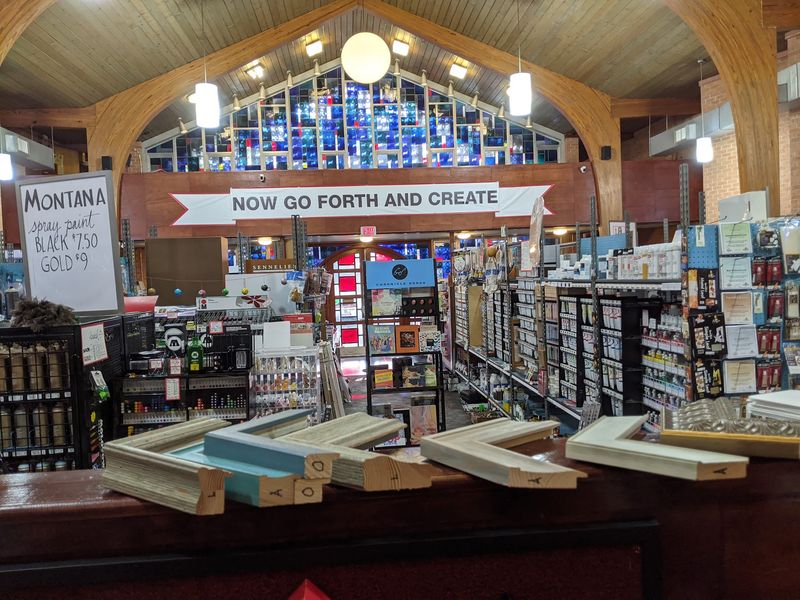
A framing shop in a former baptismal pool is a detail that tends to stick. In Mo’s conversion of the church, that area became a custom framing workspace, giving an old feature a distinctly practical second life.
Treat this as part of the building’s story, not a promise that framing services are currently available. Service offerings can change, and the supplied information does not establish their present status clearly.
Call before bringing artwork for a framing appointment or quote. Ask directly whether the NOLA location currently provides the service and what arrangements are needed.
Even without placing an order, the history offers a useful reminder about caring for finished work. Ask staff about appropriate protection, storage, or where to seek framing help.
Making art is one task; keeping paper flat, clean, and safely displayed is another worth considering before damage becomes a problem.
Make Room For An Unhurried Stop
Sunday is not the day to leave this errand until the last minute. The supplied hours list Mo’s Art Supply NOLA as open Monday through Saturday from 10 a.m. to 6 p.m., with Sunday closed.
Confirm hours before traveling, especially around holidays. The store’s listed phone number is 504-571-5030, and its website is mosartsupply.com.
Head to 2525 Bienville Street with a short shopping list and a little spare time. That balance lets you find what you need without rushing past the architecture or overlooking a useful material.
Mo’s was founded by Simone Burke in 2003, and this location gives its independent identity a memorable setting. Finish by checking that your supplies work together and will travel safely.
The best souvenir may be something ordinary: paper, a pencil, and a reason to pay closer attention to what you see next on your trip.