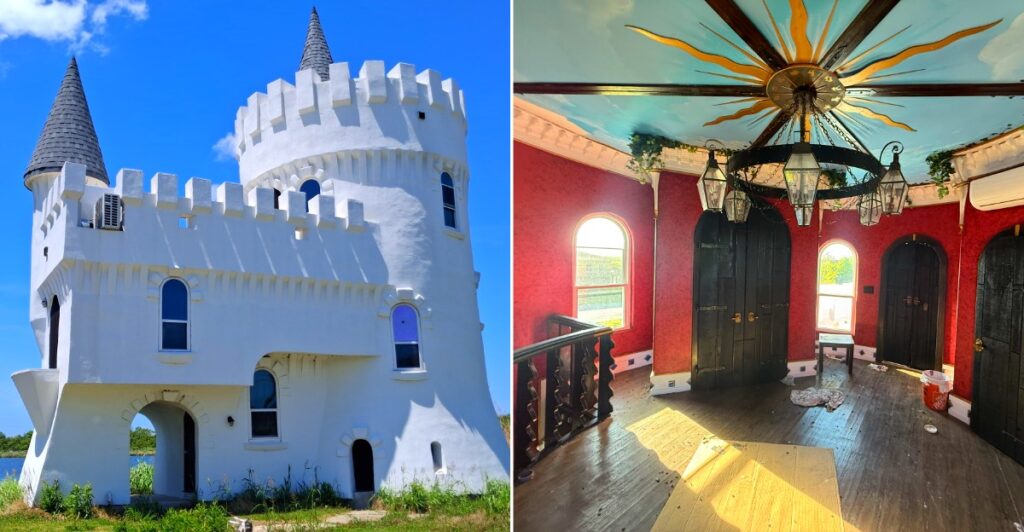
A castle rising beside Irish Bayou is the kind of roadside sight that makes you wonder whether you missed a turn into a fairy tale. Surrounded by fishing camps and Louisiana wetlands, its towers look whimsical at first glance, but the story gets heavier the longer you look.
Built in 1981, the structure survived Hurricane Katrina flooding, which gives its playful silhouette a surprising layer of resilience.
Near New Orleans, Louisiana, this roadside landmark combines storybook architecture, storm history, and bayou scenery in an unforgettable glimpse.
What I like most is the contrast. The building feels theatrical, yet its survival through disaster makes it more than a novelty.
Because it is associated with private property, the best visit is respectful and brief: admire it from outside, take in the setting, and let the mystery do the rest. Sometimes the strangest travel memories begin with one impossible-looking building beside the road.
Check The Address Before Setting Out
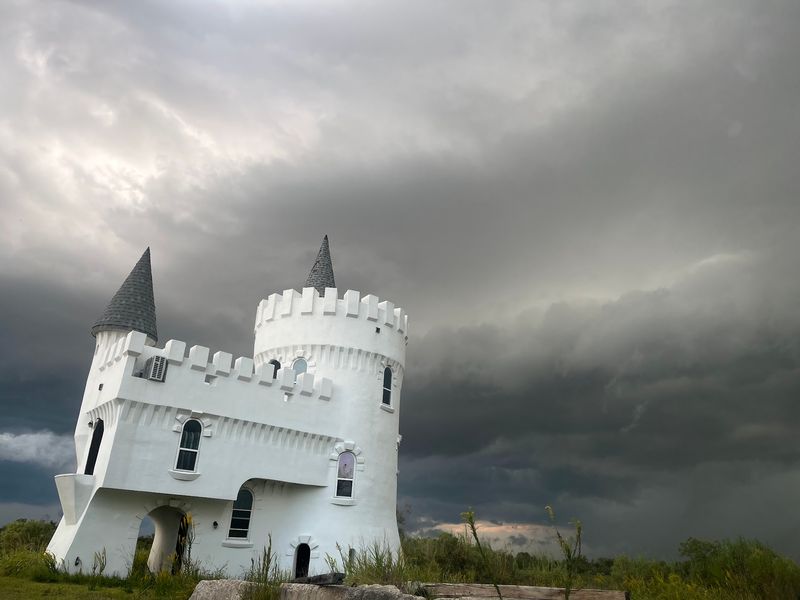
A castle with several names can also collect confusing map entries. The property is associated here with 3262 Ridgeway Boulevard, New Orleans, Louisiana 70129, while the supplied map information lists 3337 US Route 11.
Before leaving, compare the map pin with the building’s location and nearby roads. Searching Fisherman’s Castle or Irish Bayou Castle may help identify the same landmark under different labels.
Do not assume that a listing address marks a public entrance or an approved parking area. Real estate information, including a LoopNet reference, describes property rather than promising visitor access.
Save your route before driving and let a passenger handle navigation when possible. If the directions lead toward a private drive, stop and reassess instead of continuing onto the property.
A little preparation keeps a curious detour from becoming an awkward arrival for everyone involved.
The Castle Appears Right Off Highway 11
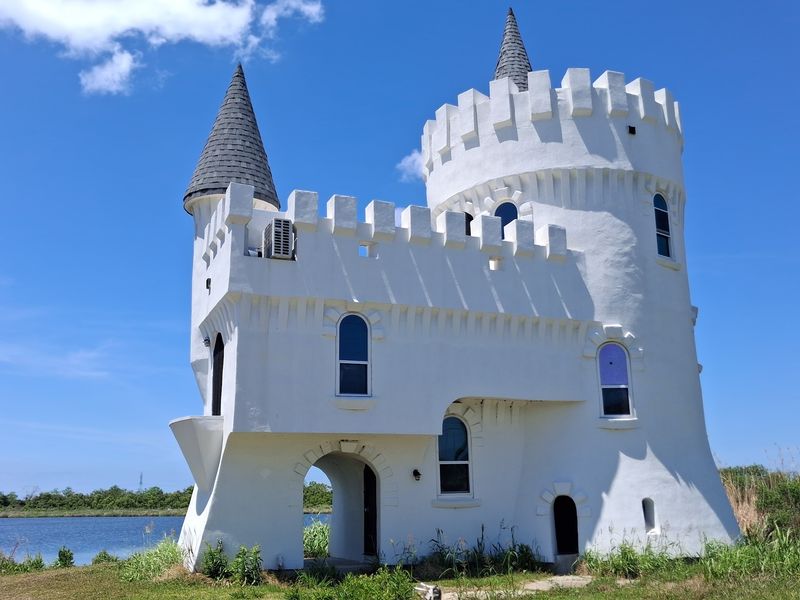
Fisherman’s Castle sits at 3262 Ridgeway Boulevard in New Orleans, Louisiana, out in the Irish Bayou area near U.S. Highway 11.
From I-10, Exit 254 gets you onto Highway 11, then the final approach runs south through the marshy edge of the city.
The last stretch feels far removed from central New Orleans, with open water, low development, and bayou scenery taking over. After about a mile on Highway 11, the tiny castle appears beside the road, looking wildly out of place against the wetlands.
There is no visitor lot or public entrance because the castle is private property. Stay on the public roadside, stop only where it is legal and safe, and admire the building from a distance without walking onto the property.
The Castle Began In 1981
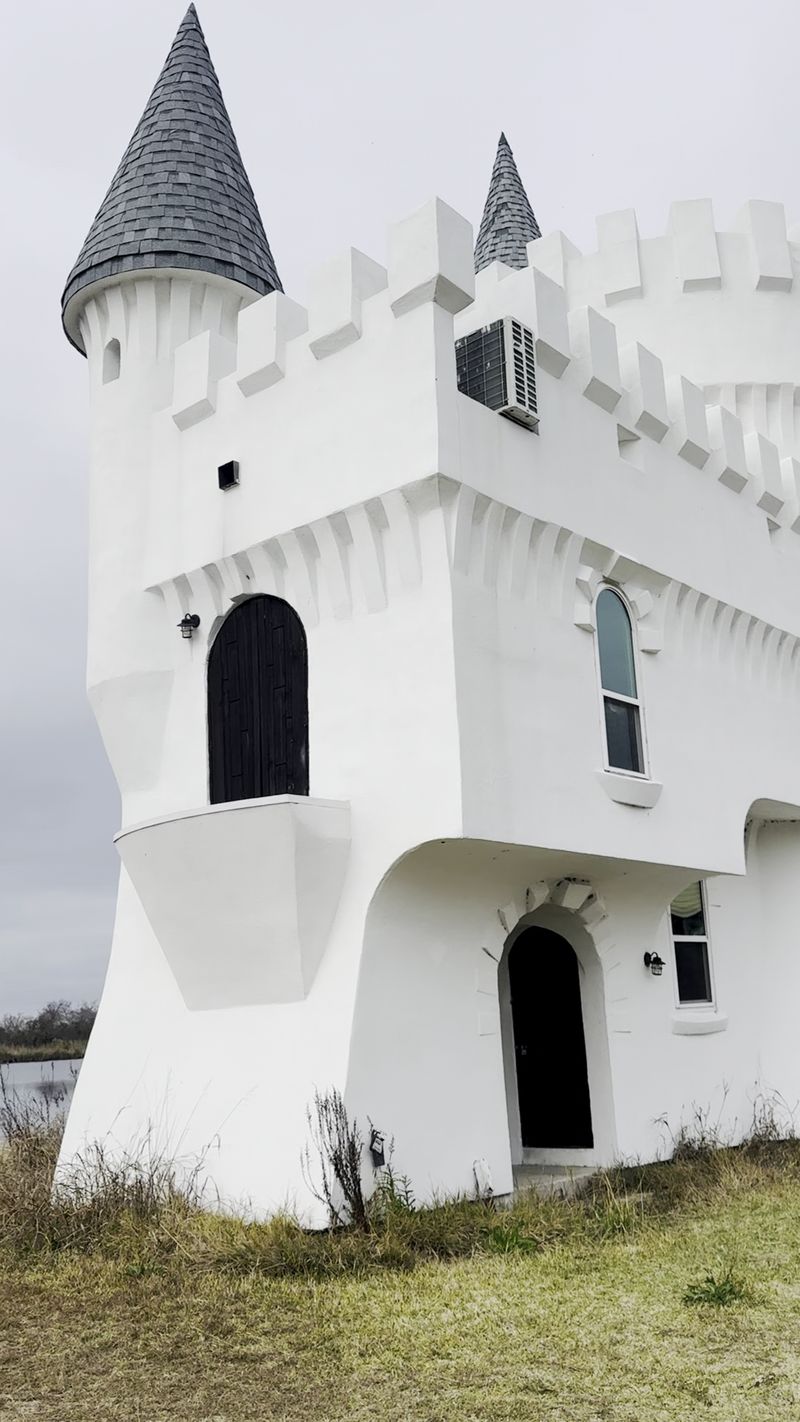
Despite its medieval costume, the building belongs to the late twentieth century. Fisherman’s Castle was built in 1981, making it much younger than its towers might first suggest.
Accounts credit Simon Villemarette with creating the unusual structure and describe a design inspired by a fourteenth-century chateau. That contrast is part of the fun: an old European idea translated into a small Louisiana fishing camp.
Knowing the date changes how you read the exterior. Instead of searching for ancient battle scars, notice the choices someone made to turn an ordinary building into something memorable.
When sharing photos, include the construction year rather than calling it a medieval ruin. The real story needs no extra centuries added.
A modern castle beside a bayou is curious enough, especially when its original purpose was so much closer to everyday life than royal ceremony.
An Ambitious World’s Fair Dream
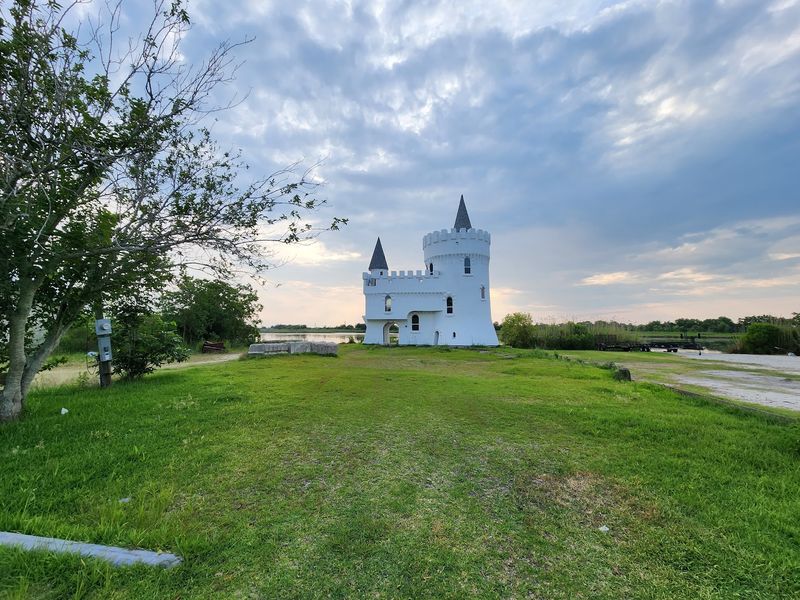
Tour buses and boats once figured into the castle’s reported future. Historical accounts describe plans to draw visitors during the 1984 World’s Fair in New Orleans, turning the unusual building into an attraction.
Those plans never fully developed, and the castle became better known as a private landmark. Its history therefore includes both a bold idea and the quieter reality that followed.
Keep that distinction in mind when reading older stories online. A proposal for public visits is not evidence that tours operate now, and an imagined attraction is different from an established business.
The unfinished ambition adds another layer to the exterior. Those little towers were meant to catch attention, and they still do, even without a ticket booth or scheduled tour.
Enjoy the surviving design without expecting the visitor experience its creator once hoped to build around it.
Look Closely At The Battlements
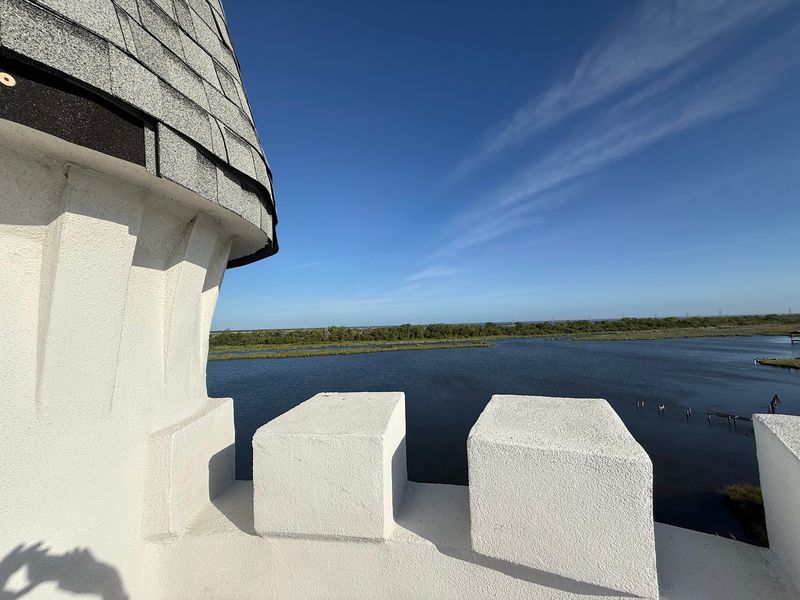
The notched roofline does much of the castle’s visual work. Those raised and lowered sections are called battlements, a feature borrowed from defensive buildings and used here to create a familiar fortress shape.
Rounded towers and arched windows strengthen the effect. Together, they make the exterior readable as a castle without requiring a huge footprint or an actual defensive purpose.
For a closer look, use binoculars or a camera’s zoom from a lawful viewing spot. There is no need to approach windows, step through a gate, or enter the yard to appreciate the design.
Try noticing one feature at a time rather than collecting only a quick wide shot. The roofline, curves, and window shapes reveal how a handful of architectural choices can change a building’s personality.
Even a brief look becomes richer when you know what to notice.
A Small Home Behind The Towers
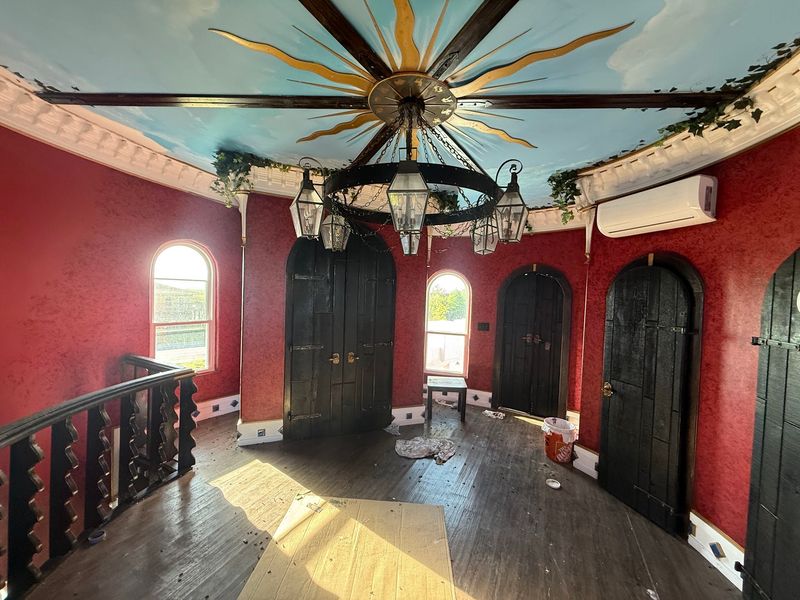
Grand looks do not always mean grand dimensions. Historical property descriptions put Fisherman’s Castle at about 942 square feet, with two bedrooms and one and a half bathrooms.
That makes its castle costume especially charming: the layout belongs to a small home, not a palace. Published accounts also describe ornate woodwork, curved surfaces, and medieval-themed decorations inside.
Treat those interior details as descriptions from earlier accounts, not promises about current furnishings or condition. Ownership, repairs, and decorating choices can change, and the exterior does not reveal what remains indoors.
Unless an owner explicitly offers access, keep your curiosity outside. Avoid pressing against windows or looking for an unlocked door.
Understanding the modest size is enough to sharpen your appreciation: the building achieves its theatrical effect with a compact footprint, proving that architectural personality does not require rooms stretching into the distance.
Katrina Survival Needs Careful Wording
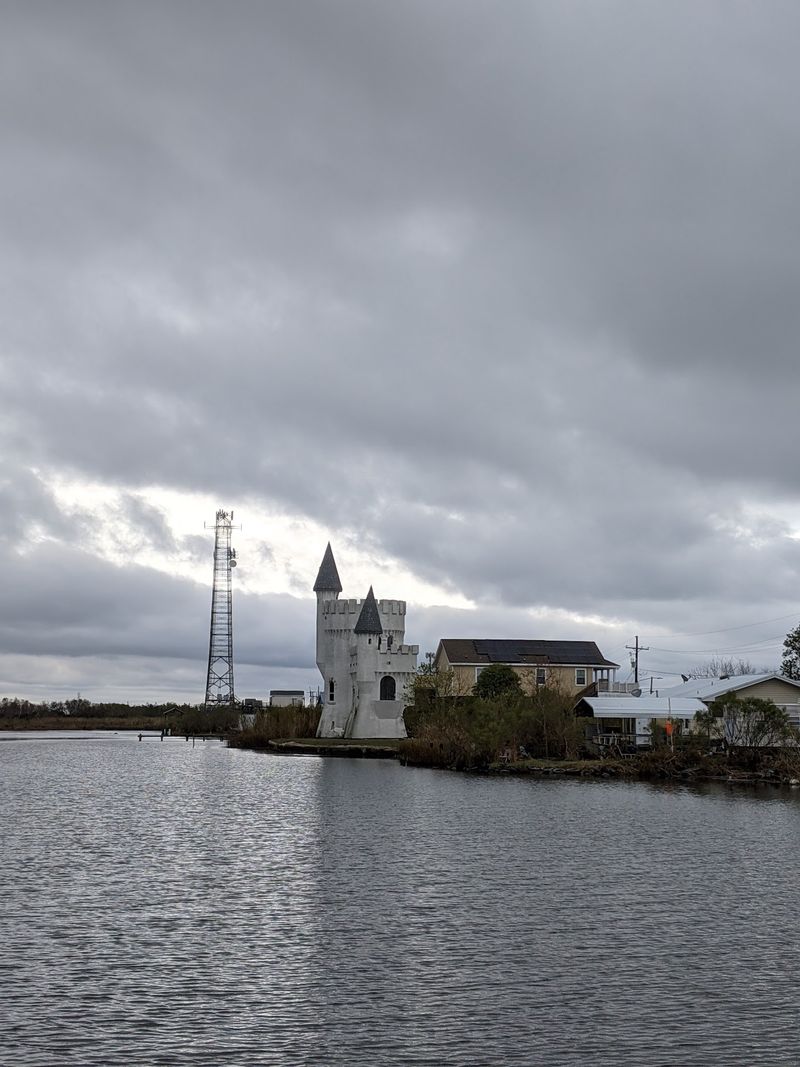
Standing after a hurricane is not the same as escaping it untouched. Accounts of Hurricane Katrina in 2005 report that Fisherman’s Castle endured roughly twelve feet of floodwater yet remained standing.
That is the central fact behind its remarkable survival story. Flooding can damage interiors and building systems even when the main structure stays upright, so avoid describing the castle as completely unharmed.
The reported water depth also helps explain why the location matters. A picturesque bayou setting can become dangerous when a major storm pushes water into low areas.
When telling the story, pair admiration with accuracy. Say the building survived Katrina, not that it defeated every possible hurricane risk.
Its continued presence is striking enough without turning a difficult regional disaster into a cheerful legend. The most meaningful detail is that this unusual structure was still there afterward.
Strong Construction Is Not A Safety Guarantee
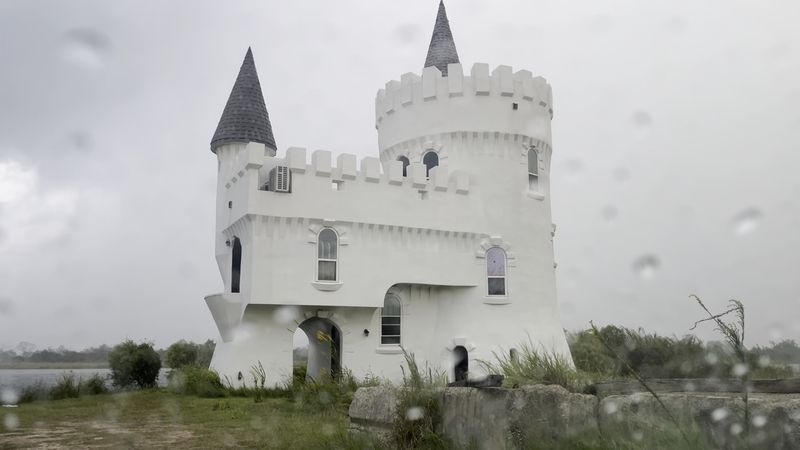
A fairytale outline can hide a serious concern with strength. Published descriptions say the castle was designed to withstand winds of up to 140 miles per hour, helping explain the attention given to its construction.
However, a reported design figure is not a current engineering inspection. Wind resistance also differs from flood resistance, and the condition of any building can change over time.
Appreciate the survival story without using it to judge whether the property is safe during bad weather. Visitors should follow forecasts and official warnings, not assume that sturdy towers offer protection.
If thunderstorms or tropical weather threaten, postpone the detour. The castle will be more enjoyable in calm conditions, when attention can stay on its design rather than rising water or difficult roads.
Its history encourages respect for coastal weather, not a test of how much another storm might bring.
Bayou Quiet Meets Highway Traffic
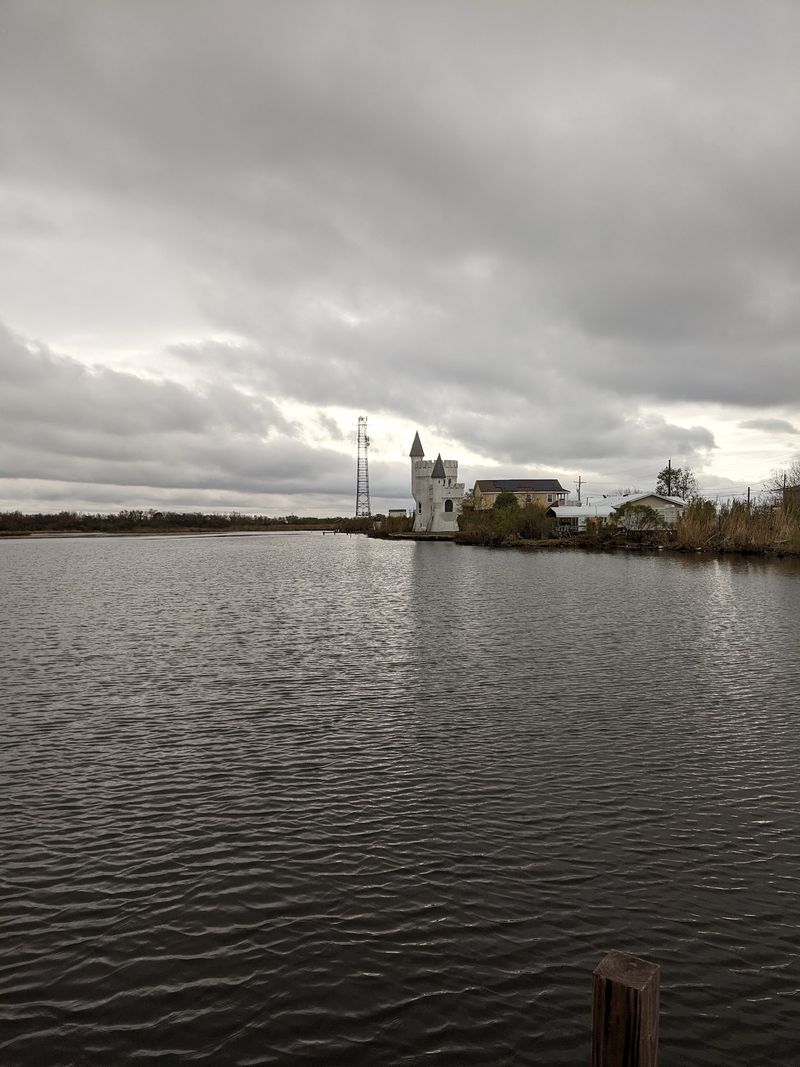
Water suggests quiet, but the nearby highway complicates the picture. Fisherman’s Castle sits in Irish Bayou near Interstate 10, between central New Orleans and Slidell, so its remote appearance does not mean total silence.
The contrast is part of the setting: a fanciful little building beside water, with a major travel route close enough to make it visible to passing motorists. Photographs can leave out that everyday layer.
Give yourself room to notice the broader scene rather than expecting a secluded retreat. Nearby homes and fishing camps are part of a lived-in community, not background scenery arranged for visitors.
Keep voices low, avoid blocking access, and leave surrounding spaces as you found them. The best way to enjoy the castle’s unusual mood is to accept both sides of its location: bayou character and the practical movement of people through the area.
Private Property Comes Before Curiosity
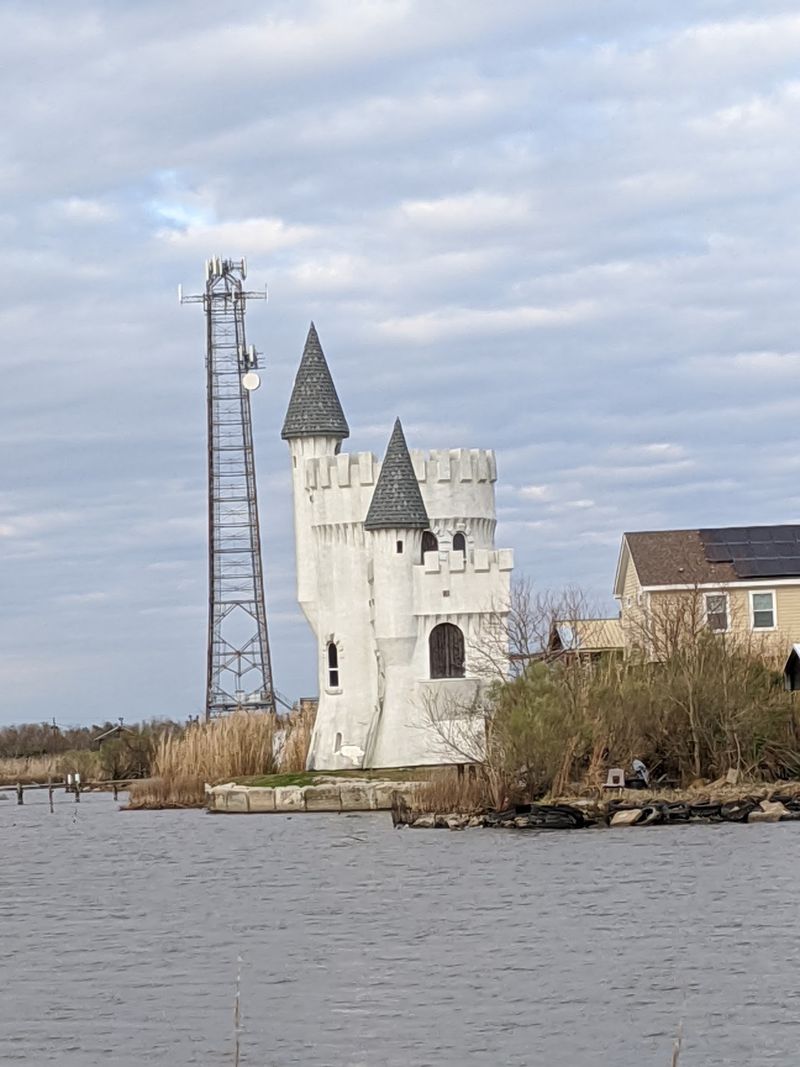
No drawbridge invitation comes with spotting those towers. Treat Fisherman’s Castle as private property unless the owner clearly states otherwise through a current, reliable source.
Online map categories and old attraction stories can create the wrong impression. A museum label, a sale listing, or discussion of a possible event venue does not establish public hours, tickets, or permission to enter.
Read posted signs and stay outside gates, yards, and private drives. Do not knock simply to request a look around, and never assume an empty-looking building is abandoned or available to explore.
Before planning anything beyond an exterior glimpse, seek direct confirmation from the owner or an authorized representative. Without that permission, keep the visit brief and outside.
Respectful curiosity protects both the property and the chance for future travelers to enjoy seeing this distinctive landmark from an appropriate public vantage.
Leave With A Photo Not A Risk
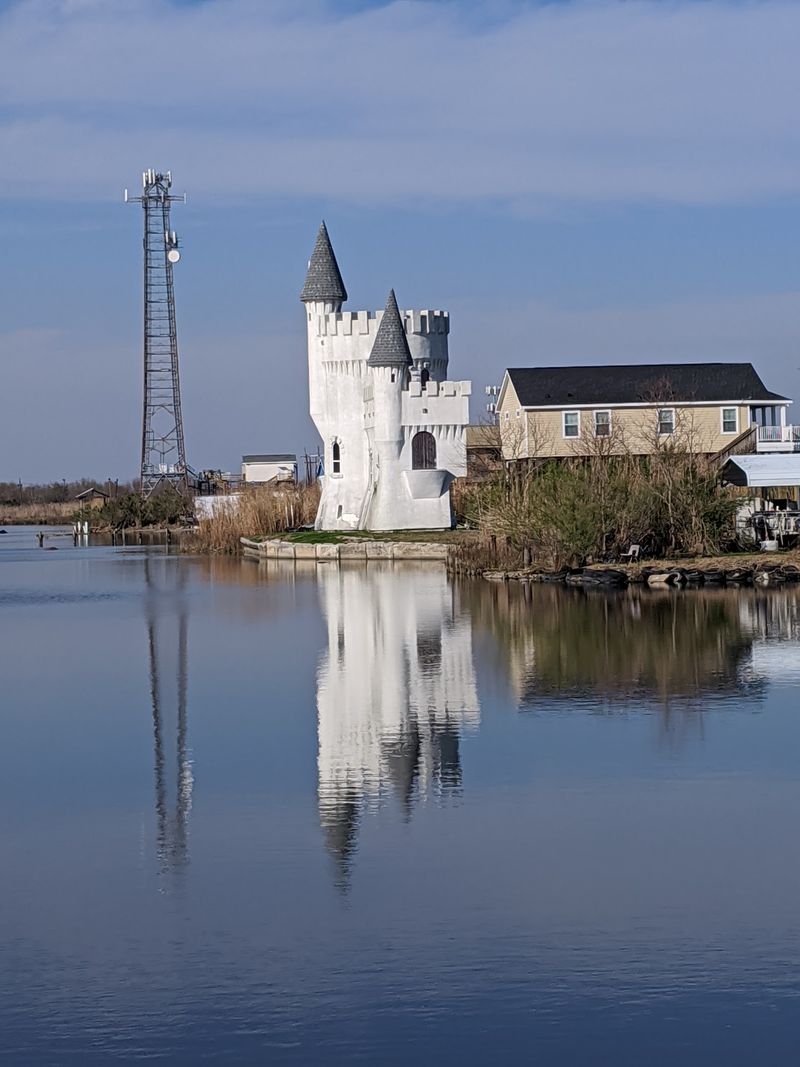
A good photograph is not worth an unsafe stop. Although the castle is visible from Interstate 10, drivers should keep their attention on traffic and never pull onto the highway shoulder for sightseeing.
Use local roads only where stopping is legal and safe. If no suitable public space is available, enjoy the passing view instead of forcing a photo opportunity or borrowing someone’s driveway.
From an appropriate spot, frame the towers with some surrounding water or landscape to show why the location feels unusual. A zoom lens can capture details without taking you closer to private land.
Check the weather, bring sun protection, and keep the stop modest. Leave no litter and avoid photographing nearby residents.
The strongest souvenir is a clear image paired with the true story: a small Louisiana castle, an exposed bayou setting, and a remarkable record of survival.