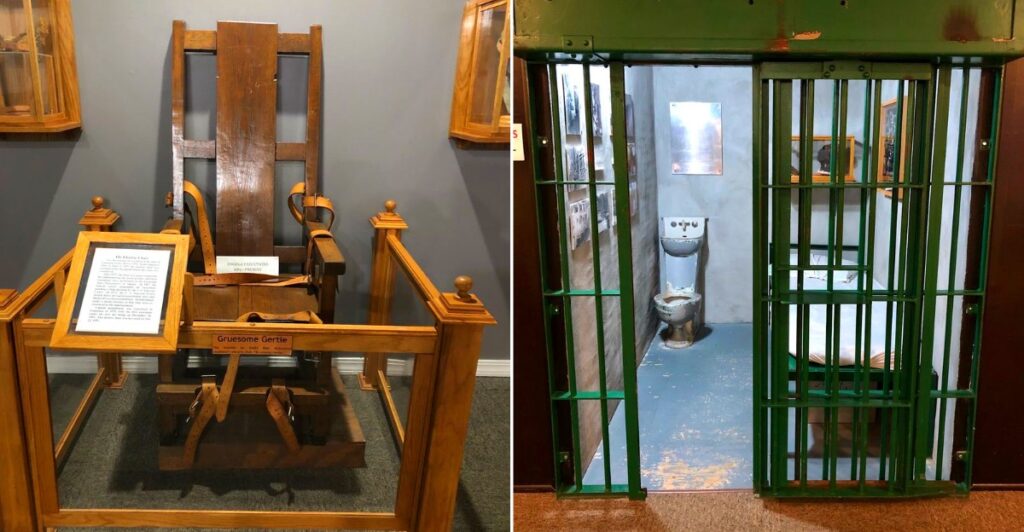
Eighteen thousand acres of former plantation land enclosed by fencing and guard towers house the nation largest maximum-security prison. Just outside the main gate sits a museum that displays the traveling electric chair known as Gruesome Gertie.
Louisiana transported it by van with a generator to whichever parish an execution was scheduled in between nineteen forty and nineteen fifty-six. The exhibits cover a convict leasing system that began in eighteen forty-four and lasted fifty-six years.
A protest where inmates slashed their own Achilles tendons drew attention to brutal conditions. A Red Hat cell block was built after a mass escape attempt.
Artifacts from the prison radio station and an award-winning inmate newsmagazine round out the collection. The museum opened in nineteen ninety-seven and sits in a former bank building.
A Louisiana prison museum housing the state electric chair forces a confrontation with history that no textbook can replicate and no visitor forgets.
Prepare For The Electric Chair Exhibit
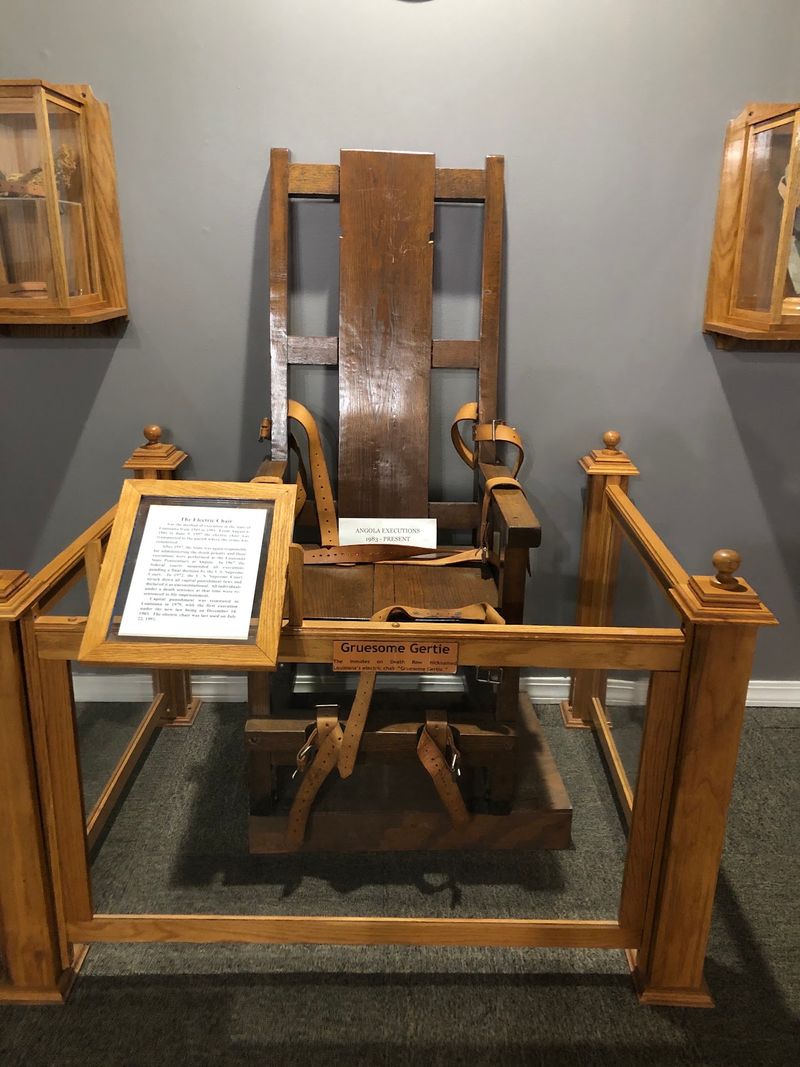
A hush settles over the electric chair display long before anyone reads the label. Old Sparky, also called Gruesome Gertie, is Louisiana’s solid oak electric chair, shown with leather straps, a face hood, and saline moistened sponges used to carry electricity.
It was last used in 1991, before the state changed to lethal injection. Knowing that 87 executions happened in this chair makes the room feel heavier than a normal museum gallery.
Parents should decide ahead of time how much younger visitors can handle, because the subject is blunt and emotionally hard. Read the panel slowly instead of taking a quick look and moving on.
The exhibit matters because it turns a distant topic into a real object, and that reality can be deeply unsettling, educational, and unforgettable for many first time visitors who expect something less direct than usual.
Tunica Trace Ends At The Prison Gates
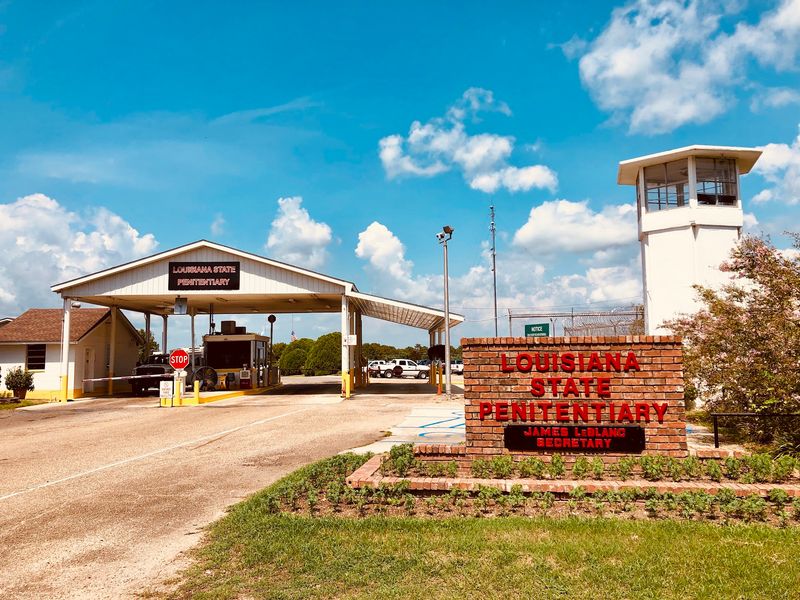
Louisiana Prison Museum & Cultural Center sits at 17544 Tunica Trace in Angola, Louisiana, beside Louisiana State Penitentiary. Tunica Trace, also known as Highway 66, is the road that carries you all the way in, and this is one of those drives where the destination really does wait at the end of the road.
The final stretch gets increasingly isolated as you head toward the penitentiary complex. Keep following Tunica Trace until the prison entrance comes into view; the museum building sits outside the main gates, so you do not need to drive into the secured prison grounds just to reach it.
Pull into the museum’s own parking lot beside the main building. If that lot is full, visitor parking at the penitentiary can be used as overflow, and both parking areas are free.
Give The Full Museum More Than A Quick Look
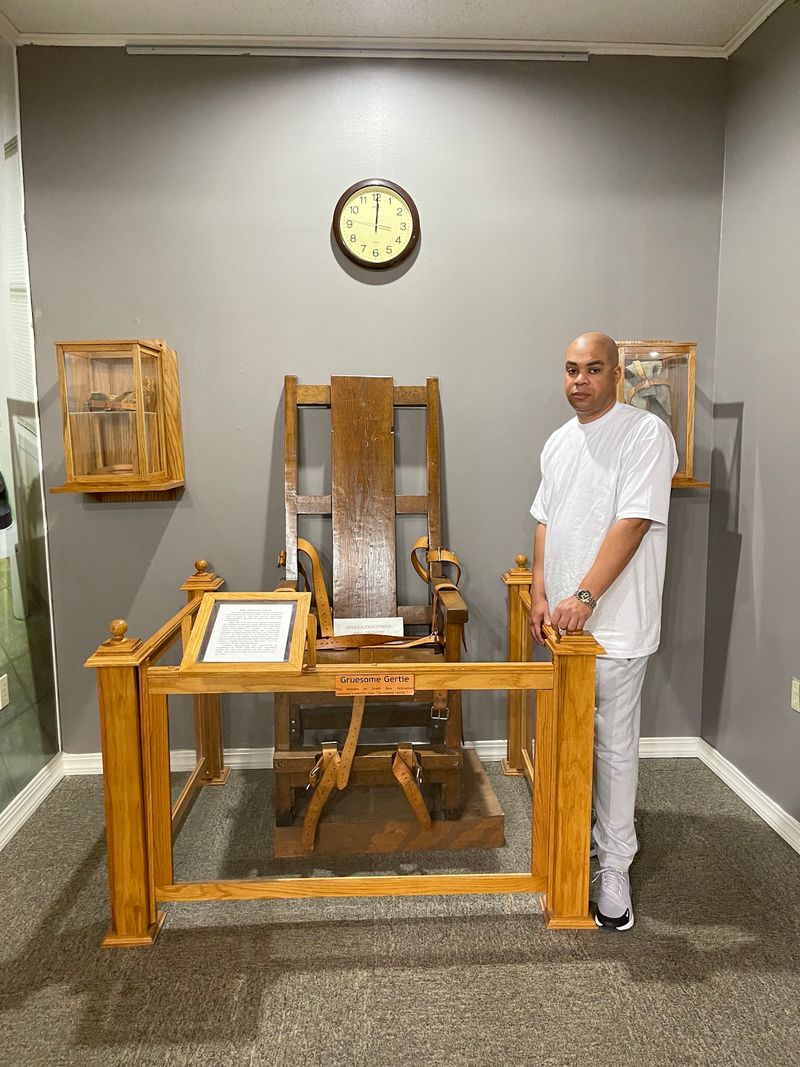
Plenty of people come expecting one famous artifact and leave talking about everything else. Beyond the electric chair, the museum covers the history of corrections and justice in Louisiana through exhibits on capital punishment, the Red Hat Cellblock, the Angola Prison Rodeo, music, filming, and the Louisiana Justice Hall of Fame.
That range keeps the museum from feeling like a single dark curiosity. It becomes a wider story about punishment, labor, culture, and public memory.
Start at the beginning and follow the exhibits in order if you can. The topics connect better that way, especially when one room explains something another room quietly echoes later.
A visit takes about an hour for most people, but readers of every placard will want longer. The details reward patience, and the museum is strongest when seen as a full narrative from start finish.
Study The Homemade Contraband Closely
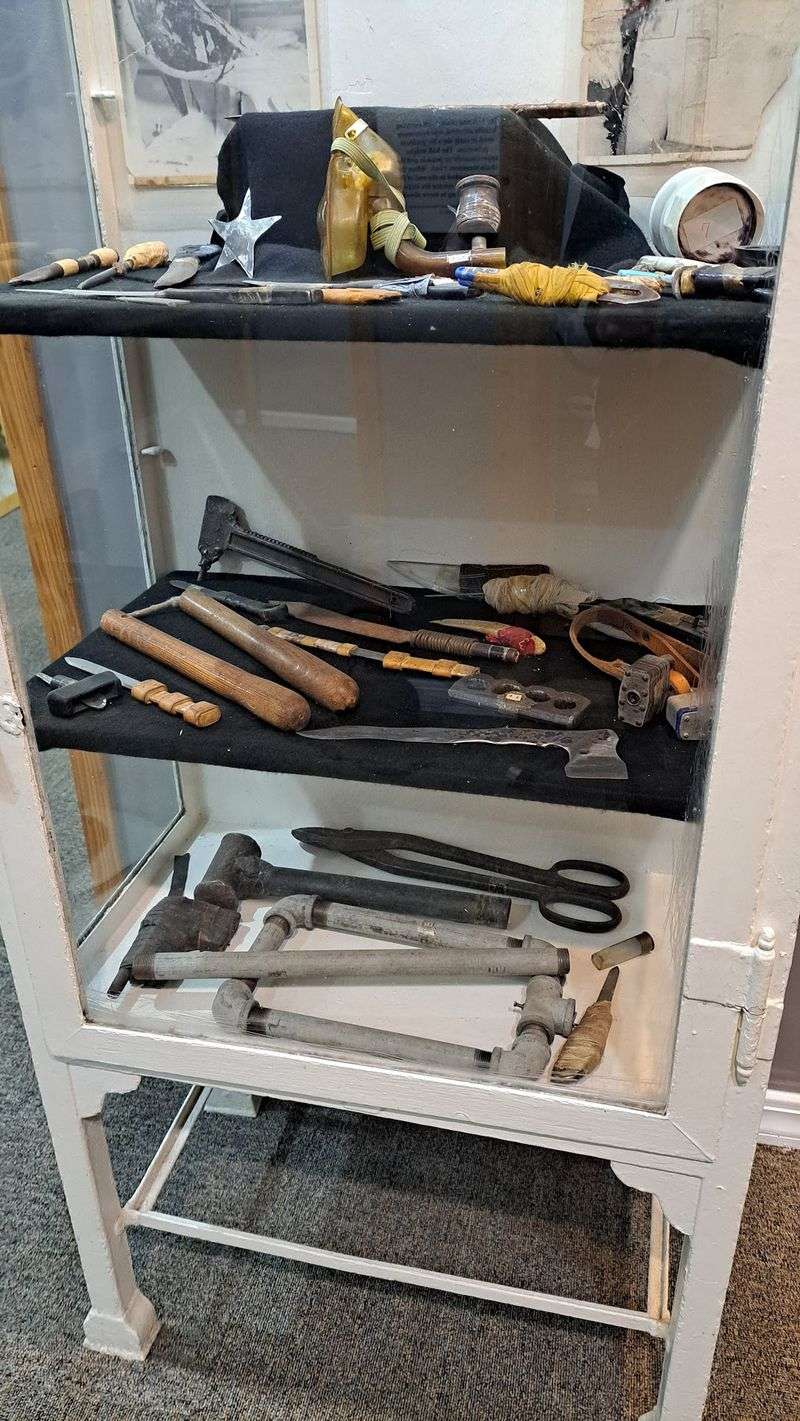
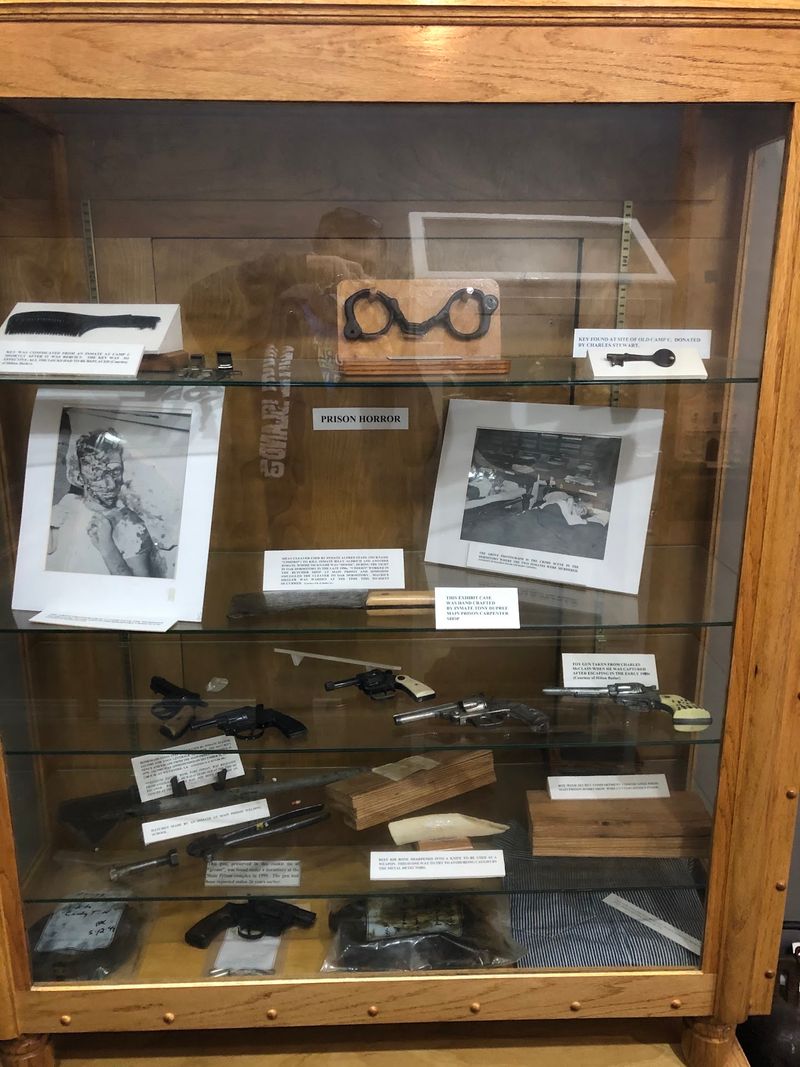
One of the strangest cases in the museum holds objects made from almost nothing. Displays of inmate fashioned contraband include crude weapons, makeshift tattoo machines, drug paraphernalia, and a reported skeleton key shaped from a comb.
Nearby pieces include a throwing star made from a tin can, a knife formed from bone, and nunchucks built from salvaged wood. The craftsmanship can be startling, even when the purpose behind it is troubling.
Look closely at the materials, not just the finished shape. The exhibit says a lot about resourcefulness inside a restricted place where ordinary items can become tools, art, or danger.
For younger visitors, this section may need more explanation than the labels alone provide. It is less about shock than about seeing how pressure, boredom, and ingenuity can produce objects nobody forgets after walking out into the bright daylight.
Learn The Plantation And Prison History
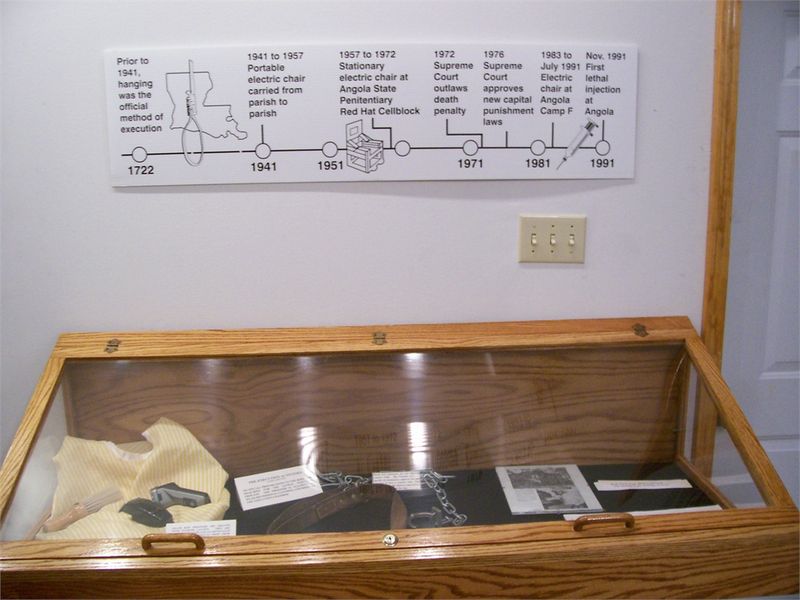
The name Angola carries a long, uneasy history, and the museum does not hide from it. Louisiana State Penitentiary was established in 1869 on the site of a former plantation, itself named for the African region tied to many enslaved people brought there.
The museum, opened in 1997, helps explain how convict leasing, prison labor, and violence shaped the place over time. Without that background, many later exhibits would feel disconnected or strangely incomplete.
Give the older photographs and timeline panels more attention than you think they need. They explain why Angola was once called America’s Bloodiest Prison, a name that still hangs over the grounds.
History here is not a side note before the dramatic artifacts. It is the framework that makes the whole museum understandable, and it asks visitors to sit with difficult continuity across generations there today.
Do Not Skip The Rodeo Section
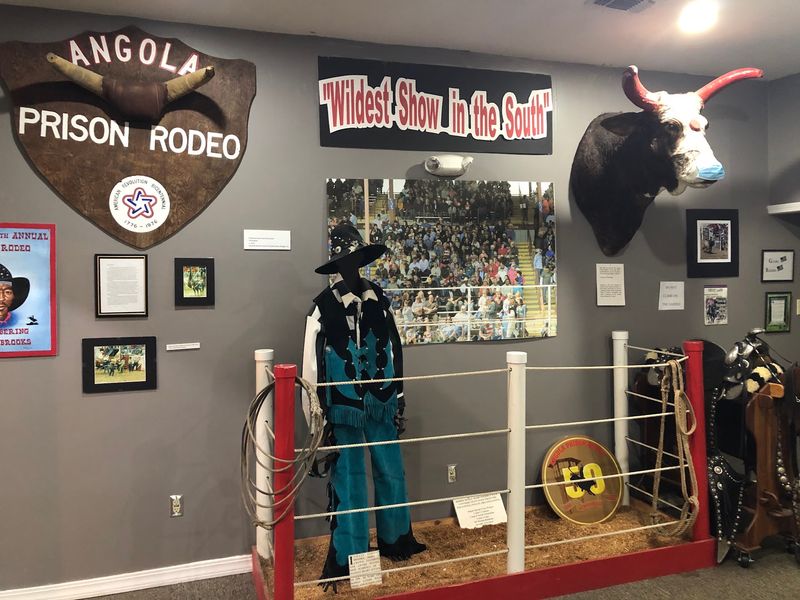
Dust, denim, and prison history meet in an unexpected way through the rodeo exhibits. The museum explains Angola’s biannual Prison Rodeo, held on Sundays in October and on select weekends in April, with displays that include uniforms and even a mounted bull head from a past participant.
Learning about events like convict poker inside the context of an active prison can feel surreal. Yet the rodeo is a part of Angola’s public identity and local culture.
Even if your visit is not during rodeo season, spend time in this section. It helps explain why so many people know the name Angola before they know about the prison’s history.
The related arts and crafts fair, where prisoners sell handmade work, also adds context. Few museums can move from execution history to rodeo culture and still remain coherent, but this one does.
Plan Around The Museum’s Weekday Hours
Hours matter more here than at many roadside museums. The Louisiana Prison Museum and Cultural Center is open Monday through Friday from 8:00 AM to 4:30 PM, and it is closed on weekends and state holidays.
Individual admission is 5 dollars, with a reduced 3 dollar rate for groups of ten or more. Most visitors can see the main museum in about an hour, especially because the regular visit is self guided.
Morning is the easiest time to go, especially if you want a pace and room to read every label. Group tours can be arranged, and special historical bus tours offer a drive past prison camps plus a visit to the historic Red Hat cellblock, though not the dorms.
Call ahead if you are counting on anything beyond the museum galleries. At Angola, small planning mistakes become detours fast.
Follow The Rules Like They Matter

Clothes become part of the travel plan before you even step inside. Because the museum sits next to an active maximum security prison, visitors must follow a dress code that bans mini skirts, halter tops, camouflage, and certain combinations of white shirts, gray sweatshirts, blue chambray, and denim pants.
Searches of visitors, vehicles, and possessions may happen without warning. Electronic devices are allowed only inside the main museum building, and the property is non smoking.
That may sound strict for a visit, but it helps to remember where you are. Keep your bag simple, leave anything unnecessary in the car, and double check clothing before the drive.
Following the rules makes the visit smoother and less stressful for everyone. In a place where security is not symbolic, ordinary habits need a adjustment, and that is part of the experience too.
Notice The Everyday Culture Inside The Story
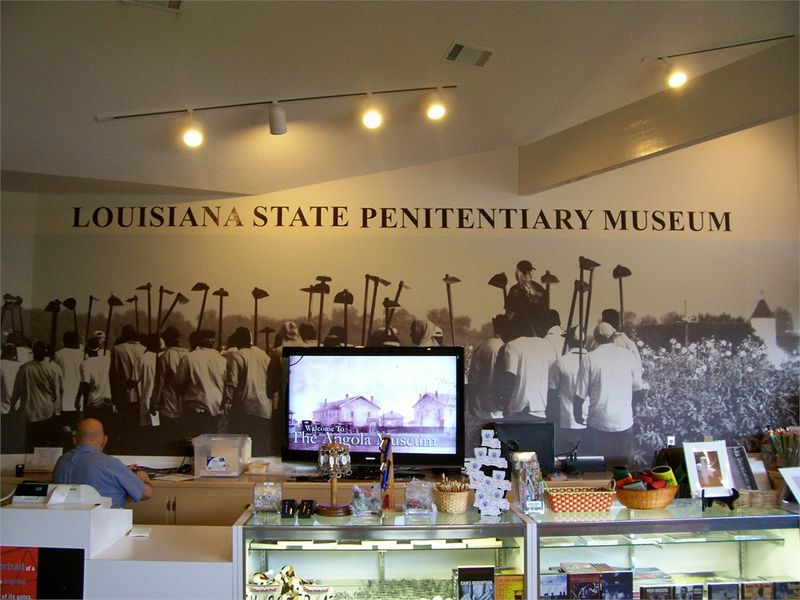
Some of the most revealing details are not the dramatic ones. The museum also points toward Angola’s living culture through KLSP, the inmate run radio station called The Incarceration Station, and through The Angolite, a bi monthly magazine produced by inmate staff and available by subscription to the public.
Those projects show communication and self expression inside a place usually described only in terms of control. That contrast stays with you.
After the harsher exhibits, this section changes the rhythm of the visit in a useful way. It does not erase the prison’s violence or punishment, but it does widen the story.
A museum about corrections can easily flatten people into symbols. Here, the material reminds visitors that institutions are built from voices, routines, and forms of creativity that persist even inside severe limits long after the gallery doors close.
Think About The Size Of Angola
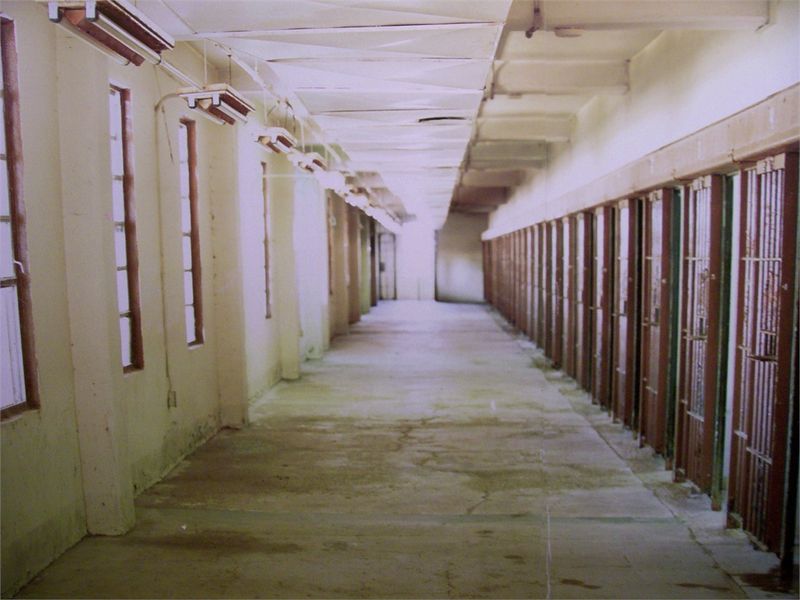
Space is one of Angola’s most startling facts, and the museum helps you feel it. The prison spans about 18000 acres, much of it agricultural land worked by inmates, and the broader property sits on a bend in the Mississippi River with water on three sides.
Even before any exhibit text, the geography explains part of the prison’s long isolation. The setting is practical, historical, and a little eerie all at once.
Bus tours, when available, add useful scale by passing prison camps and stopping at the historic Red Hat cellblock. They do not enter prison dorms, which is a good detail to know before arriving with the wrong expectation.
The museum itself is compact, but the landscape around it is anything but small. Keeping that contrast in mind makes the exhibits on labor, confinement, and movement feel more concrete.
Treat The Visit As A Lesson In Justice
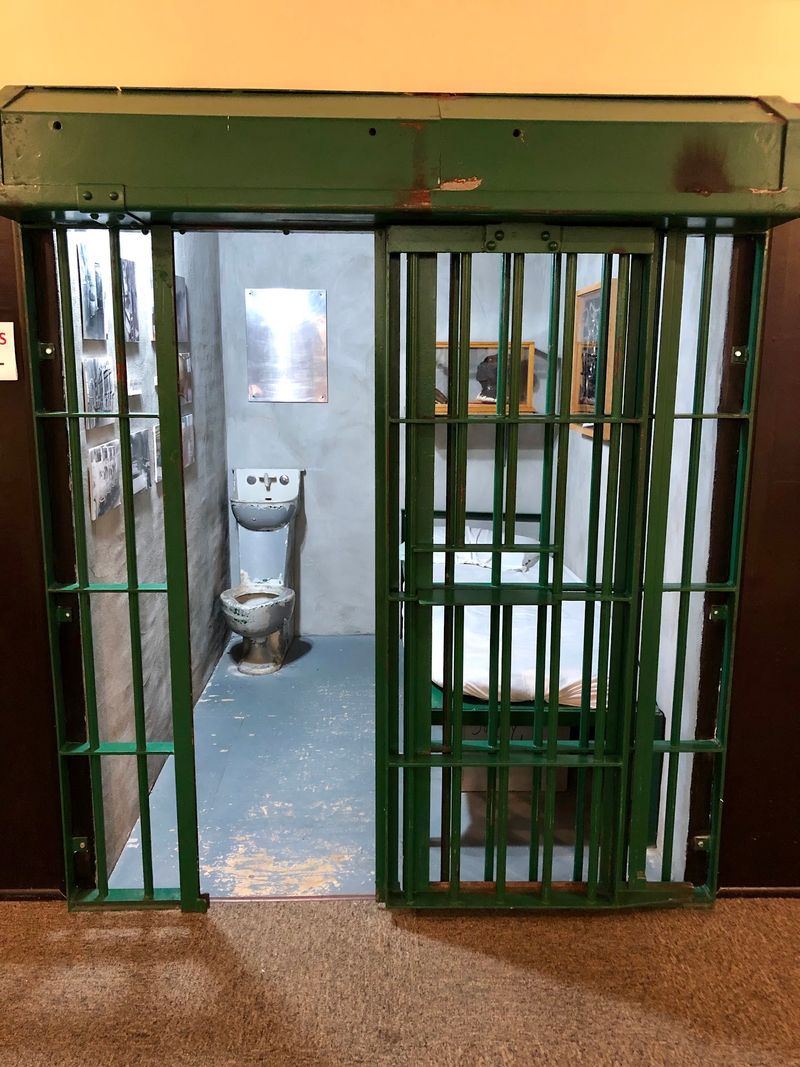
A visit works best when it is treated as more than a stop for morbid curiosity. The Louisiana Prison Museum and Cultural Center was created to preserve and document the history of corrections and justice in the state, but also to encourage thought about incarceration’s effect on prisoners, staff, victims, families, and communities.
That wider mission gives the museum its seriousness. The galleries ask for attention, not just nerve.
Bring curiosity, but bring humility too. Some exhibits are disturbing, some are unexpectedly moving, and some simply make the machinery of justice look more human and more complicated than many people expect.
That is where the museum earns its place. It does not offer easy comfort or neat answers.
Instead, it opens a conversation about how Louisiana has punished people, remembered that history, and continues to live with its consequences today.