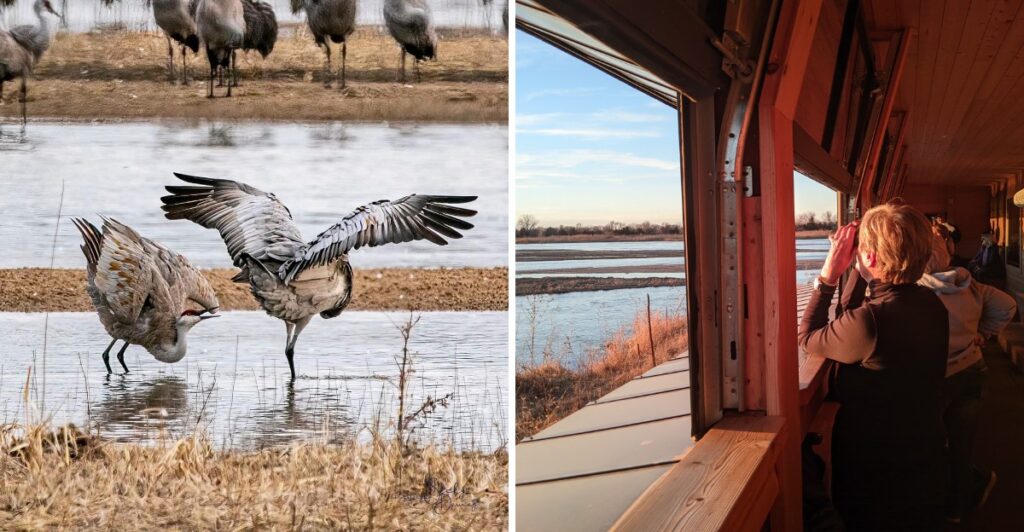
Imagine a million birds showing up at the same river, all talking at once. No reservations, no assigned spots, just absolute crane chaos.
That’s spring in Nebraska.
More than 80 percent of the world’s sandhill cranes gather along the Platte River during their annual migration. These birds stand over three feet tall, with wingspans reaching more than six feet.
And when that many start calling at sunrise? Forget sleeping in.
Here’s the really wild part. Fossils suggest their ancient relatives were hanging around Nebraska some ten million years ago.
Ten million years later, and their old neighborhood is still the place to be.
They start arriving around Valentine’s Day and head out near Tax Day. In between, there’s eating, dancing, and a whole lot of noise.
For a few weeks each spring, the river has more visitors than it knows what to do with.
And none of them are checking out quietly.
A Million Guests Book The Same River Every Spring
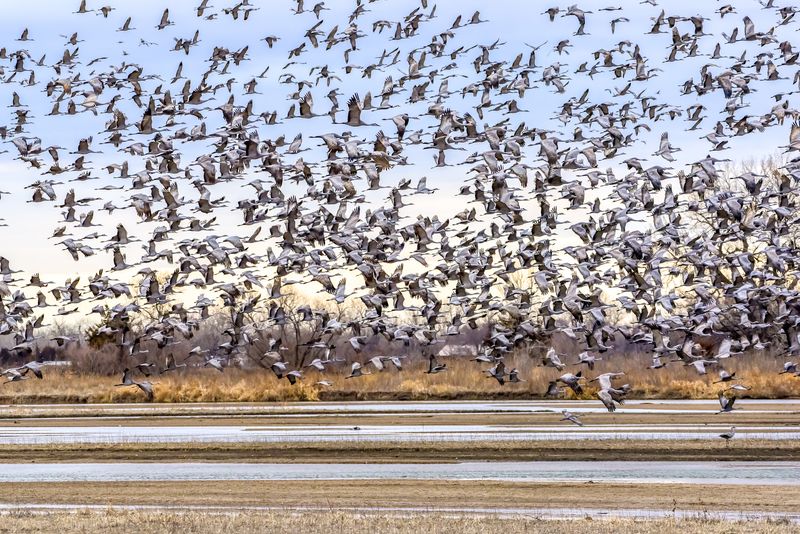
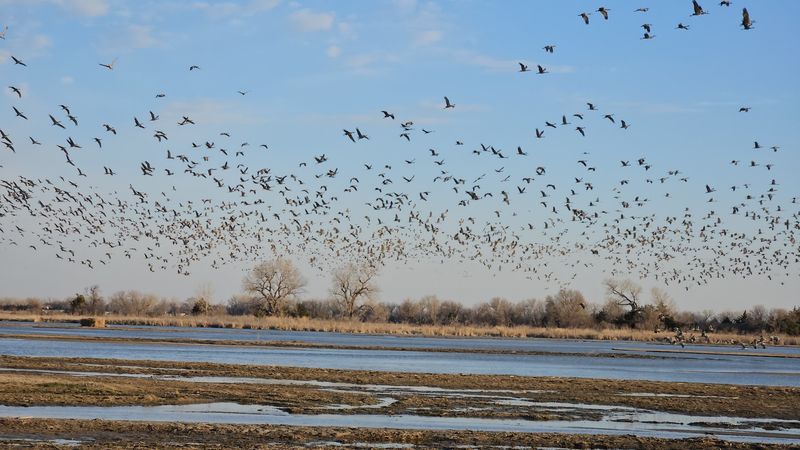
Few travel plans are as reliable as a sandhill crane’s. Every spring, hundreds of thousands to over a million cranes gather along the Platte River in central Nebraska.
The Iain Nicolson Audubon Center at Rowe Sanctuary sits right in the middle of this action. Its 3,000 acres along the river exist to protect cranes and other wildlife.
The timing is easy to remember. Birds start showing up around mid-February and stay four to six weeks.
Peak numbers usually hit in mid-to-late March. That’s your sweet spot if you want the full, noisy show.
Why this river? Its wide, shallow channels and sandbars give cranes a safe place to sleep at night.
Predators like coyotes have a hard time sneaking up through open water. The cranes basically pick the bedroom with the best security system.
Nearby farm fields and wet meadows supply the snacks. Cranes eat leftover corn and can gain up to 20 percent of their body weight here.
Then they head north to nesting grounds in Canada, Alaska, and Siberia. That’s a long trip, so the buffet stop matters.
Plan for March. The cranes already have.
Grab A Seat In A Riverside Blind At Sunrise Or Sunset
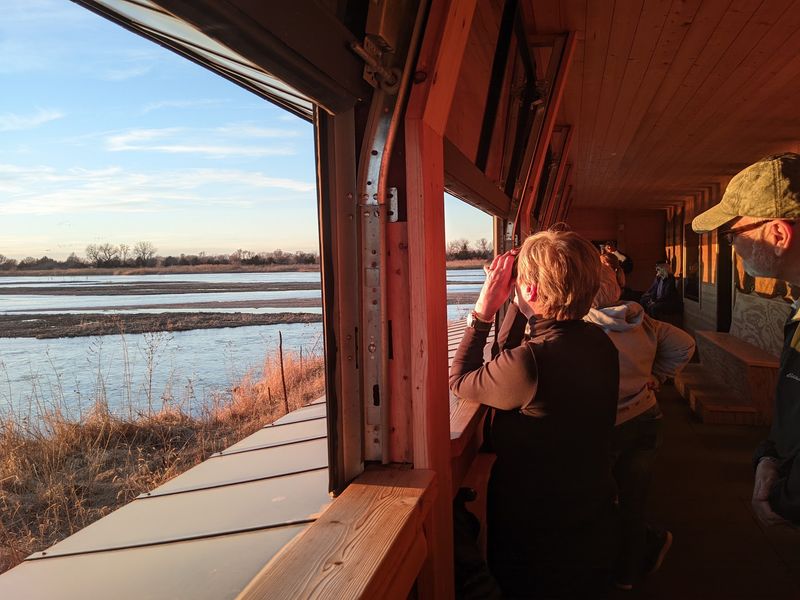
Front-row seats here come with wooden walls and a strict quiet rule. Guided tours run daily at sunrise and sunset from viewing blinds along the river.
The sanctuary calls them Discovery Stations. Each one holds up to 32 people and sits in a spot chosen for great views.
Getting there takes a little effort. You’ll walk a quarter to half a mile in low light.
The viewing areas are unheated, but each Discovery Station has an attached warming room with supplemental heat, so dress warmly. Layers, gloves, and a warm hat will make you a happier birdwatcher.
Sunrise and sunset feel very different. In the evening, cranes drift in to roost on the river.
In the morning, thousands may lift off together and head for the fields. The staff even admits there’s a friendly debate about which tour wins.
Easy fix? Book both and settle the argument yourself.
Guides keep things calm for a good reason. Loud noises can spook cranes into flying suddenly, which can lead to injuries from power lines.
Keep your voice low, your phone dim, and your eyes wide open. The birds handle all the noise anyway.
Photographers Get Their Own Special Setup
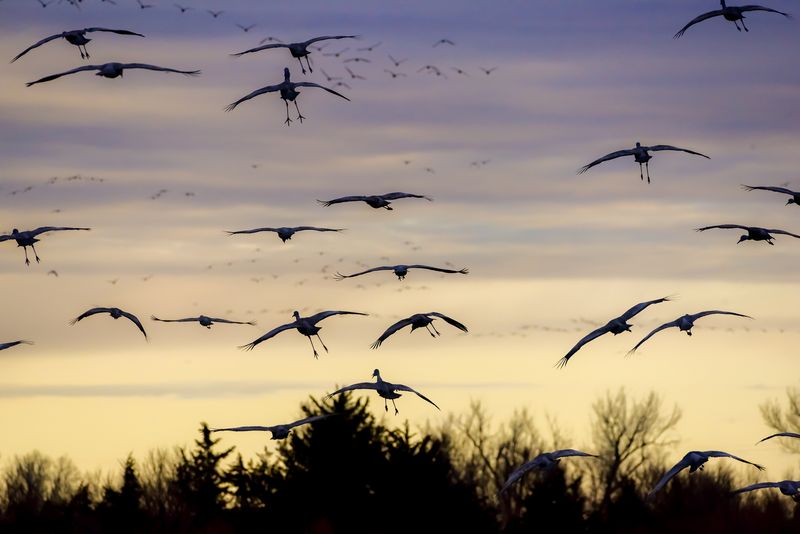
Long lenses and tripods get a warmer welcome on certain tours. The sanctuary offers dedicated photography experiences built for people serious about their shots.
Tripods are allowed on these tours. That’s a big deal when the light is low and the birds are far away.
Standard guided tours have tighter camera rules. Photography only starts once light sensors show your device won’t glow and bother the cranes.
Some mornings, the birds leave before that moment arrives. The sanctuary is upfront that wildlife sets its own schedule.
For the overachievers, there’s an Overnight Photography Experience too. It runs on select dates from March 11 to April 4, 2027.
The photography options cost more than general tours. Still, they’re the better bet if great images are your main goal.
Drones aren’t allowed anywhere at the sanctuary. Leave that gear at home and let your lens do the work.
Bring extra batteries, since cold weather drains them fast. A lens cloth helps when your breath fogs everything.
A little patience goes far here. The cranes won’t rush for anyone.
Mark January 7 On Your Calendar Right Now
Reservations open on January 7, 2027, at 9 am Central. Every guided tour and photography experience requires one, so that date matters a lot.
Guided Crane Experiences run from March 3 to April 6, 2027. That window covers the busiest weeks of the migration.
Photographers get their own calendar. Guided Crane Photography Experiences and Overnight Photography Experiences run from March 11 to April 4, 2027.
There’s also Indoor Crane Viewing on select evenings between March 3 and April 6. That’s a smart pick for anyone who prefers walls and warmth.
Crowds give you another reason to move fast. The center can welcome over 35,000 visitors during crane season.
That’s a lot of people competing for blind seats. Set an alarm, know your preferred dates, and have a backup day ready.
Mid-to-late March tends to bring the biggest crane numbers. Those dates are likely the first to go.
Lodging deserves early attention too. Locking in your tour first makes the rest of the trip easier to build.
Treat January 7 like concert ticket day. The headliners just happen to have feathers.
The Visitor Center Got A Glow-Up In 2024
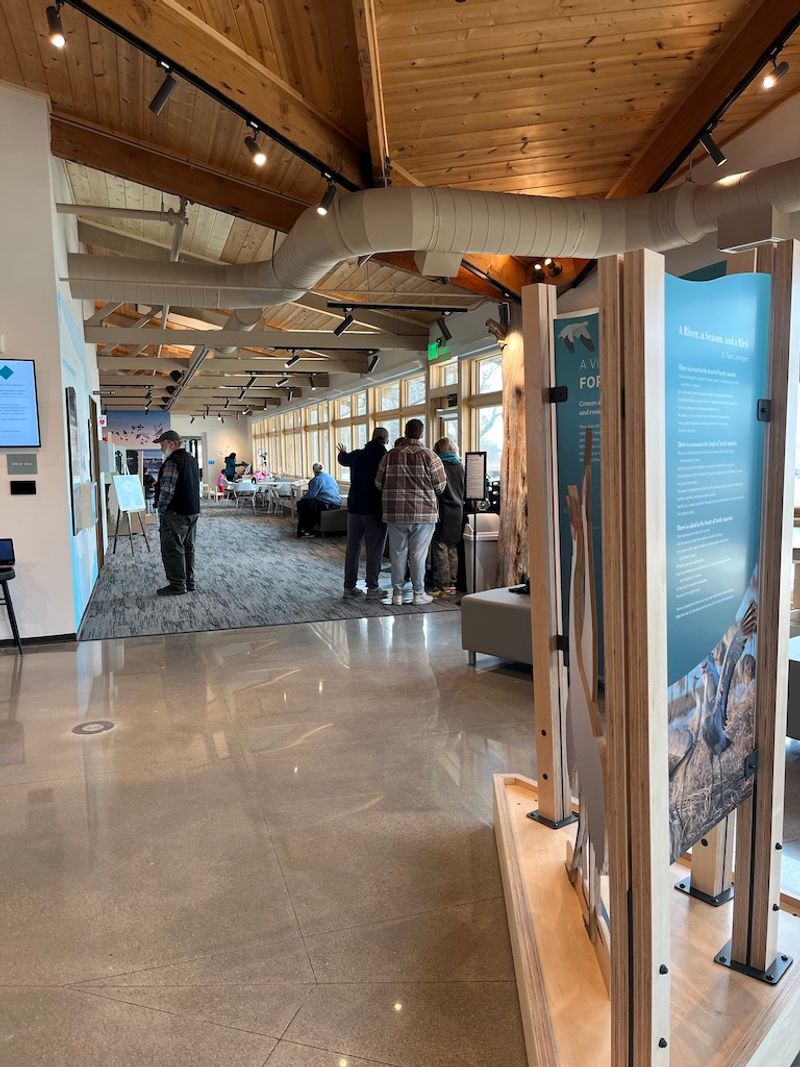
Big windows, river views, and a fresh new look greet you inside. The Iain Nicolson Audubon Center finished a major expansion in 2024.
The update added community and education spaces. It also created a 1,400-square-foot interactive exhibit hall about cranes and the river.
An outdoor pavilion and a new lab for programs came with the project. Accessible trails and viewing decks got improvements too.
The building has smart green features. Extended geothermal systems and an 86-panel solar array help power the place.
Even the parking lot was planned with cranes in mind. It was moved to keep car headlights from shining on roosting birds.
That’s thoughtful design. Most parking lots don’t worry about anyone’s beauty sleep.
A gift shop rounds out the visit. It’s a good spot for a crane souvenir or a field guide.
Admission to the building and trails is free all year. The center opens Tuesday through Saturday, 10 am to 5 pm.
Hours may shift during crane season. Check before you go so you don’t meet a locked door.
Crane Dances Are The Best Free Show In Nebraska
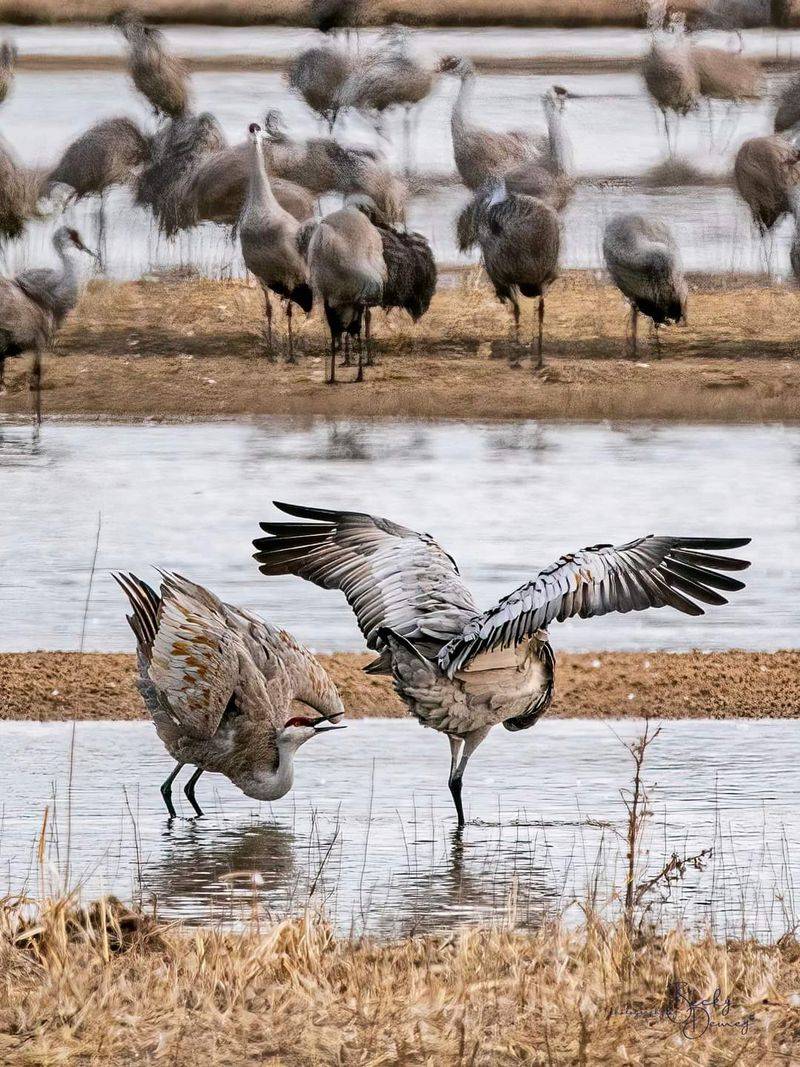
Jumping, bowing, and flapping, sandhill cranes put on quite a performance. Their dance-like courtship moves are one of their best-known traits.
Size adds to the drama. These birds stand over three feet tall with wingspans from 5.9 to 6.5 feet.
Picture a six-foot wingspan doing a happy hop. Now multiply that by thousands across a field.
The history behind them is wild. Crane fossils found in Nebraska date back more than nine million years.
That fossil evidence reveals the ancient history of the crane family on the Great Plains. They were here long before maps or roads.
The sound is part of the experience too. Cranes make a loud, rattling call that carries across the river valley.
Tour guides can explain what you’re seeing and hearing. Ask guides questions before or after the viewing experience, since silence is required during much of the tour.
Daytime is a great time to catch them dancing in nearby fields. Cranes spend those hours feeding and socializing.
A pair of binoculars will make the moves easier to enjoy. Keep your distance and let the dancers stay comfortable. Good manners earn you the best seats.
No Tour Ticket? You Still Have Options
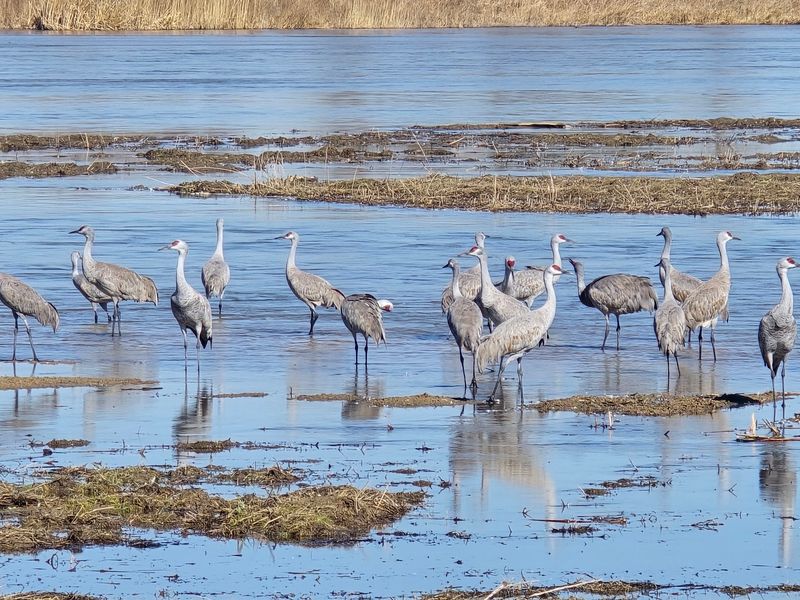
Missing out on a reservation doesn’t end your crane trip. Several public viewing spots let you watch without a guide.
Elm Island Road has roadside turnouts for crane spotting. Rowe Sanctuary also provides two roadside viewing lots.
Other popular spots include the Plautz Viewing Platform and the Fort Kearny Bridge. These can offer views of cranes on the river at sunrise and sunset.
During the day, look toward fields. Cranes spend hours there eating leftover corn and stocking up energy.
Roadside viewing has its own etiquette. Pull fully off the road, stay in or near your car, and keep noise down.
Trails at the sanctuary have limits during migration. They’re often open only from 10 am to 4 pm, and you can’t see river cranes from them.
Those rules protect the roosting birds. A disturbed flock is a stressed flock.
There’s even a live crane camera online. It’s handy for checking activity before you drive out.
You can also use it to relive the trip afterward. Watching cranes from your couch counts as research, right?
Finding Your Way To This Riverside Sanctuary
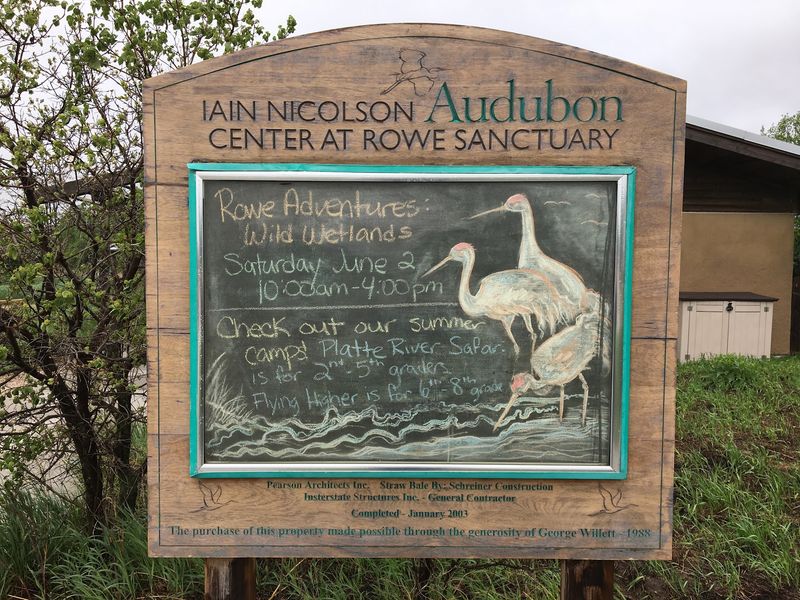
Plug 44450 Elm Island Road, Gibbon, NE 68840 into your map. That’s the home of the Iain Nicolson Audubon Center at Rowe Sanctuary.
It sits along the Platte River in central Nebraska. Country roads lead the way, so give yourself extra time.
Plan around the light. Sunrise tours mean an early wake-up, and sunset tours end in darkness.
Remember those walks to the blinds happen in low light. Comfortable, warm boots are a must.
The sanctuary has a long story. It began in 1974 as the Lillian Annette Rowe Sanctuary with 440 acres.
The National Audubon Society acquired the current 362-acre farm in 1988. The education center was finished in 2002 and named in 2003.
Electric car drivers have a perk here. There’s a ChargePoint station on site.
The building and lot use red lights at night. It’s another way to keep cranes calm after dark.
Pack layers, binoculars, and patience. Add a reservation, and you’re ready for one of the biggest wildlife gatherings anywhere. The cranes will handle the soundtrack.