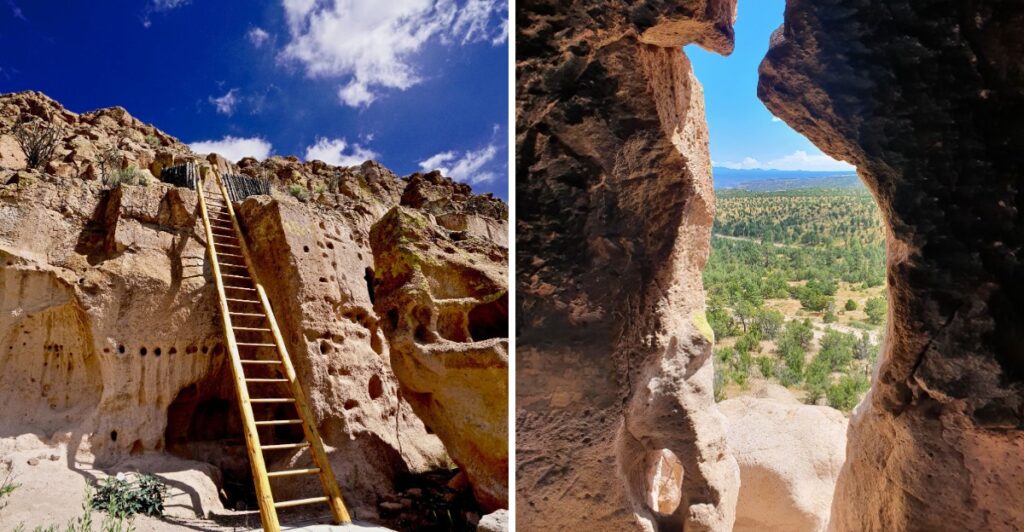
Centuries ago, families carved homes directly into pale volcanic cliffs in what is now northern New Mexico. Those spaces still remain, creating a trail where history feels close enough to reach out and touch.
The route passes beneath ancient openings in the rock before climbing toward a broad mesa with traces of a community that once lived high above the surrounding landscape. Guided visits make the experience feel more personal, adding context without taking away the sense of discovery.
The hike is not especially long, but a few steeper moments give it more excitement than the mileage might suggest. Higher sections open to wide views that make the climb worth the effort.
This is the kind of place that keeps revealing something new as the trail unfolds, making a short outing feel much bigger than expected and leaving plenty of the story to discover along the way.
Ancient Homes Cling To The Cliffside
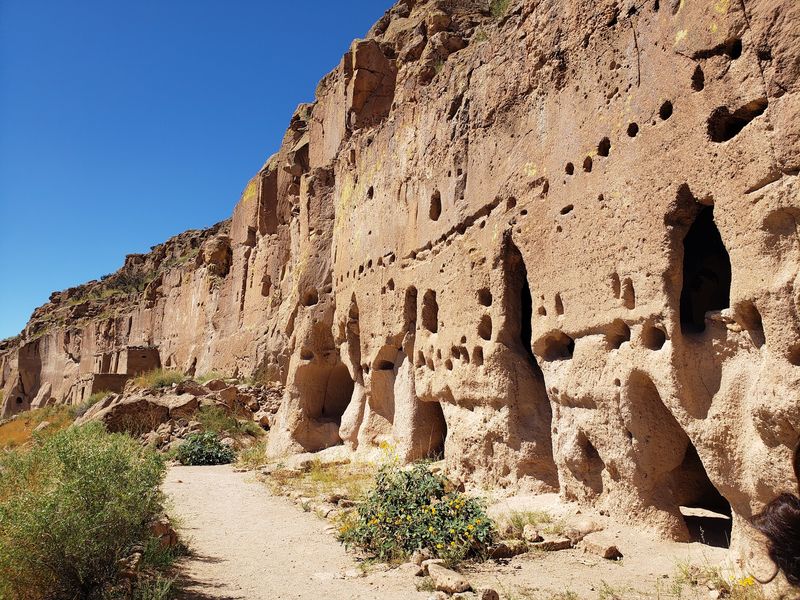
Long before anyone drew a map of this region, families carved homes straight into a soft cliff of volcanic stone. The rock, known as tuff, formed from ash that settled after huge eruptions in the nearby Jemez Mountains.
Tuff is soft enough to shape with harder stone tools, which made it a smart choice for building. People hollowed out rooms called cavates, and many still show smoke-darkened ceilings from old cooking fires.
The dwellings run along the cliff face in two main levels, stacked one above the other. Rows of small holes in the rock mark where wooden beams once held up rooms built against the outside wall.
To me, it is remarkable that so much of this handiwork has stayed in place for hundreds of years. Researchers believe the area was home to a large community between roughly the 900s and the late 1500s.
When drought and other pressures made life here harder, the people moved down toward the Rio Grande Valley. Their descendants still live nearby and hold this place close to their hearts.
Visitors can only enter the cliff area on a guided tour, which keeps the fragile rooms protected. Meet Puye Cliff Dwellings at NM 30 and NM 5, Santa Clara Canyon Rd, Los Alamos, NM 87544.
Follow The Trail Beneath Rock-Cut Rooms
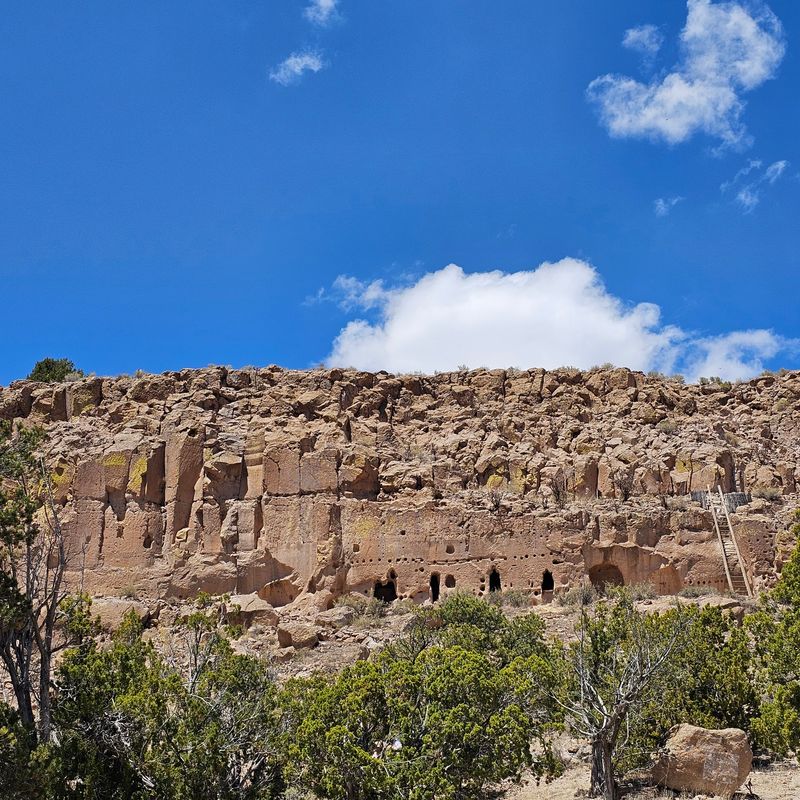
Footsteps have been shaping this rock for centuries, and today’s trail follows many of the same routes. The path winds along the base of the cliff, right beneath rows of doorways carved into the stone.
In some spots, the ancient walkways are sunken deep into the soft tuff. Those grooves formed as generations of people walked the same lines to reach their homes and fields.
Petroglyphs appear along the cliff as well, pecked into the rock surface long ago. Spirals and animal shapes show up for anyone who slows down and looks closely.
I love that the scenery doubles as an outdoor gallery here. Guides from the Santa Clara Pueblo share what these images and rooms meant to the people who made them.
The full walk covers about 1.5 miles, which sounds easy until the altitude joins the conversation. The site sits high on the Pajarito Plateau, so breath can run short faster than expected.
Uneven ground and loose gravel make sturdy shoes a smart pick. Water and a hat matter too, since shade is scarce once the sun climbs over the mesa.
Tours include plenty of stops for stories along the way, so the pace stays relaxed. Nobody earns a prize for racing past a thousand-year-old doorway.
Ladders Climb Straight Up The Stone Walls
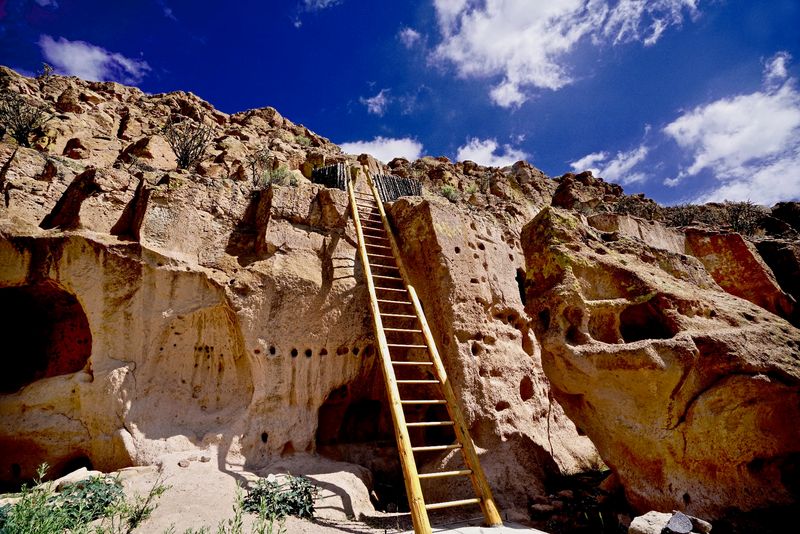
Nothing tests a sense of adventure quite like a wooden ladder pressed against a sheer wall of rock. Ladders connect the cliff levels at Puye, just as they did when families lived here.
Pueblo builders used ladders to reach upper rooms and even to enter homes through openings in the roof. Pulling a ladder up could also make a home much harder for outsiders to reach.
Today’s route includes tall ladders along with stone stairs cut directly into the cliff. Some steps have small handholds and toeholds worn into the rock by countless hands and feet over time.
I have to admire anyone who climbed these routes daily while carrying water jars or firewood. The modern version comes with better footwear and far lighter loads, thankfully.
Guides explain how to move safely, keeping three points of contact on the rungs at all times. Anyone uneasy with heights can talk with staff about options before the tour begins.
Photos snapped halfway up the cliff tend to become instant favorites. The view back across the canyon rewards every careful step and every slightly shaky knee.
The climb is short, but it delivers a real connection to daily life on the cliff. Few history lessons come with this much fresh air or this many rungs.
Mesa-Top Ruins Come With Huge Views
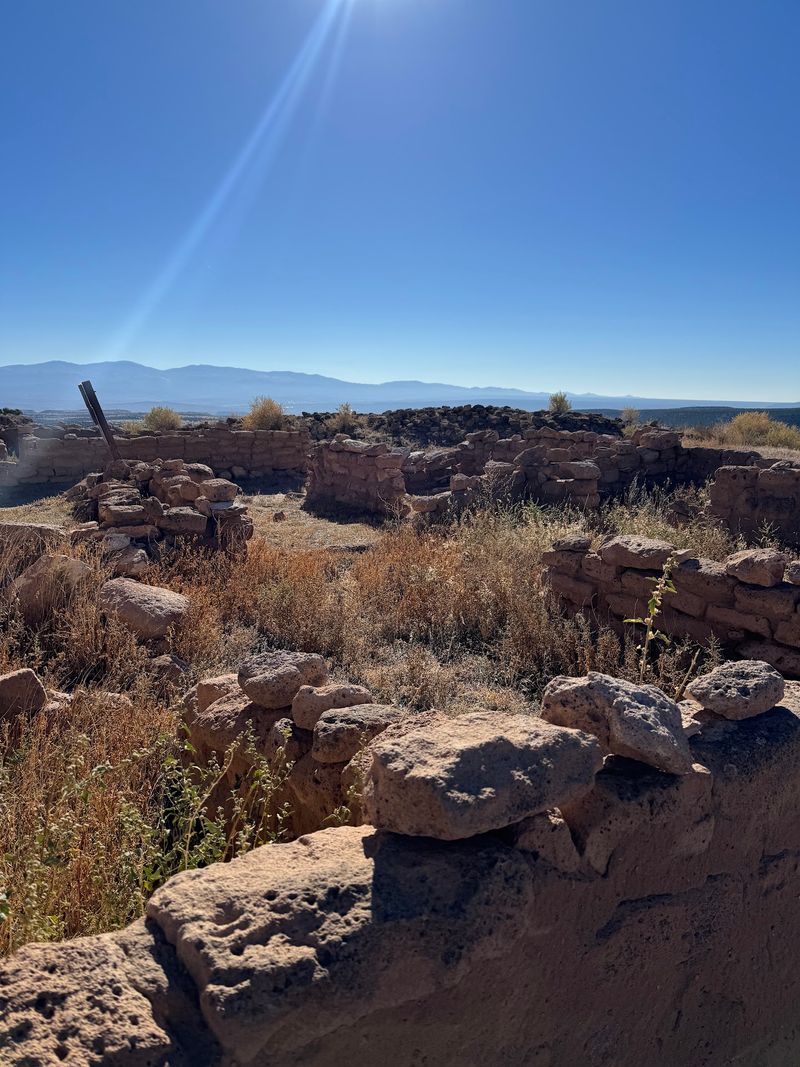
Up top, the landscape suddenly opens wide, and the ruins share the stage with the sky. The mesa rises above the cliff dwellings, and its flat summit once held a large pueblo village.
From the edge, the view reaches across the Rio Grande Valley toward the Sangre de Cristo Mountains in the east. The Jemez Mountains rise in the other direction, forming a dramatic backdrop.
Living on top made sense for the people of Puye. A high perch offered clear views of approaching visitors, along with steady sunshine for warmth in winter.
Scattered pottery shards still turn up across the ground, reminders of meals and daily chores from centuries past. Visitors are asked to leave every piece exactly where it lies, since each one belongs to the story of the site.
I can’t help smiling at the idea that ancient residents here had the best seats in the valley. Few modern homes can boast a front yard this dramatic.
Wind moves freely across the summit, so a light jacket can feel welcome even on sunny days. Sunscreen earns its spot in the bag too, since the high sun hits hard up here.
Height and history make a fine pair at Puye. The mesa top proves that some views truly stand the test of time.
Explore The Remains Of A 140-Room Pueblo
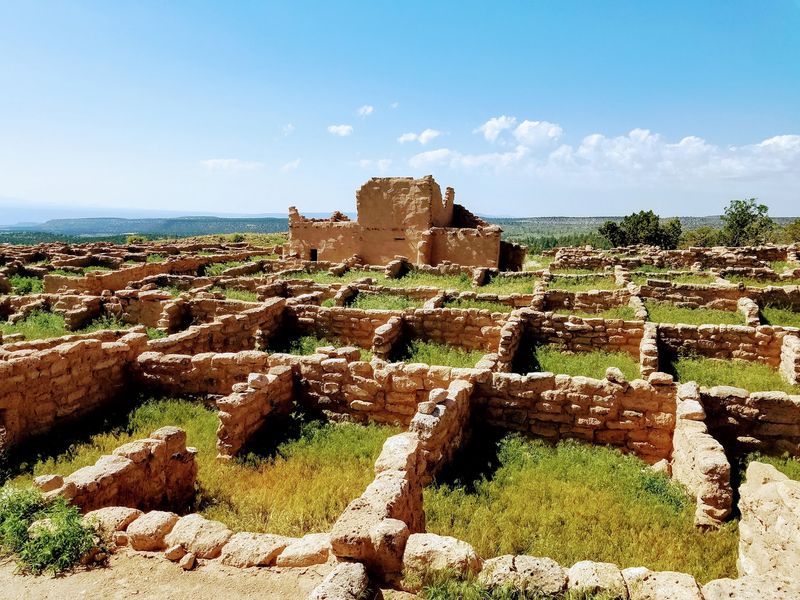
Picture a village with rooms stacked two and three stories high, all built from blocks of shaped tuff. That was the scene on top of the mesa when the pueblo was full of life.
Archaeologist Edgar Lee Hewett led excavations in New Mexico in the early 1900s, and his work drew attention to Puye. Those digs helped outsiders understand how the rooms fit together.
Rooms served different purposes, including living space and storage for corn and beans. Thick walls helped hold warmth through the chilly nights common at this elevation.
What remains today are low walls and room outlines that trace the old layout. With a little imagination, the empty spaces fill back up with voices and cooking smoke.
Tour leaders point out details that are easy to miss without help. Because they descend from the people who lived here, their stories carry a depth no sign could match.
Walking respectfully matters in New Mexico, since the pueblo remains sacred to its descendants. Staying on marked paths and leaving walls untouched keeps the ruins standing for future visitors.
A village this size once hummed with farmers and potters going about their day. Now the loudest sound is usually the wind slipping between the walls.
Stone Walls Still Outline The Old Plaza
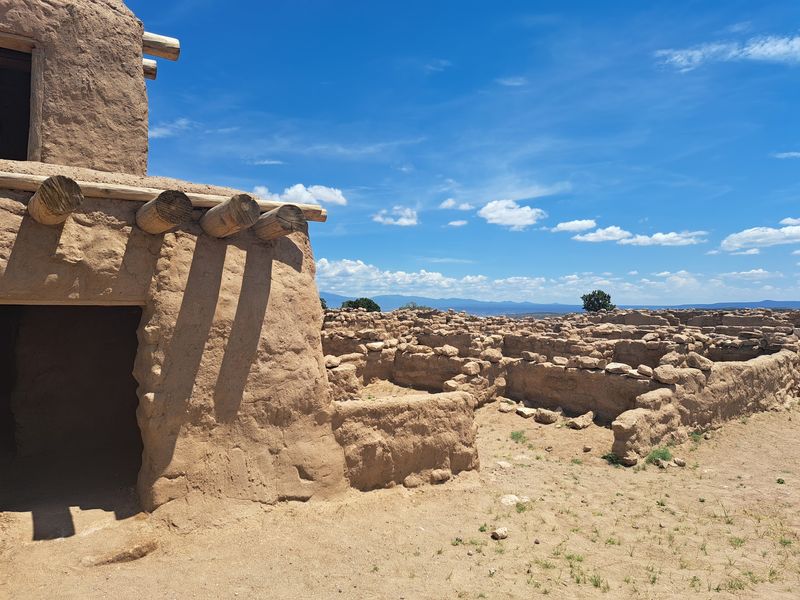
Every good village needs a gathering spot, and this one had a big open plaza at its center. Room blocks surrounded the space on all sides, forming a sheltered courtyard.
The plaza served as the heart of community life. Ceremonies and dances likely took place here, along with everyday chores in good weather.
Low stone walls still trace the edges of the square, so the shape is easy to spot. A slow walk around the perimeter shows just how large the village once was.
Plazas remain central at many pueblos today, including Santa Clara Pueblo near the Rio Grande. That living connection keeps this old square meaningful rather than frozen in the past.
It strikes me how a patch of open ground can say so much about the people who shared it. Nobody lived in the plaza, yet it tells a clear story about neighbors coming together.
Santa Clara Pueblo potters today are known worldwide for polished blackware and redware. That artistry grew over generations, and its roots reach back to villages such as this one.
The visitor center sits in a historic Harvey House building with exhibits about the site and its people. Seeing it first gives the plaza even more meaning later on.
A Historic Kiva Sits Above The Cliffs
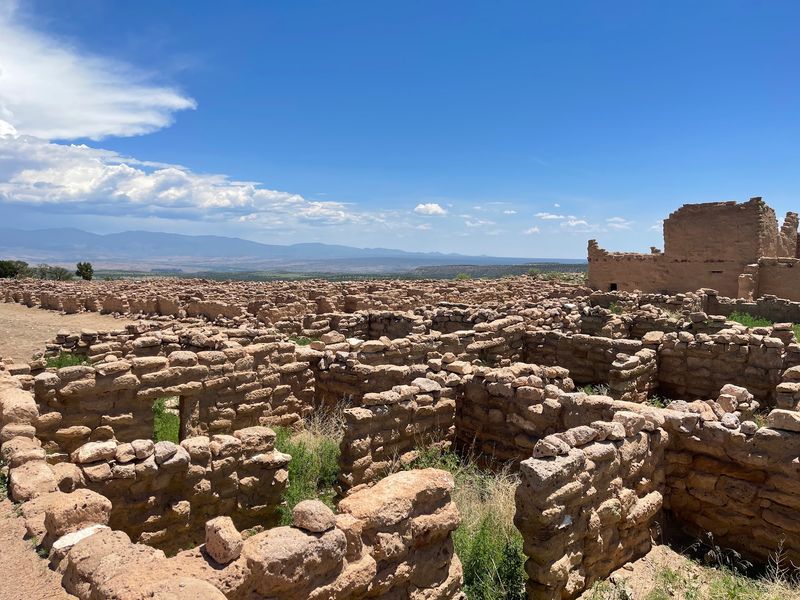
Round rooms hold a special place in Pueblo life, and a kiva near the mesa edge shows why. Kivas are ceremonial chambers, often built partly underground and entered from above.
Inside, communities gathered for ceremonies and for passing knowledge down to younger generations. Many details about kiva use remain private, and guides share only what is appropriate for visitors.
That respect for privacy deserves honor, since kivas remain sacred spaces in Pueblo culture today. Photos and behavior should follow the guide’s lead at every single stop.
The kiva’s round shape stands out against the rectangular rooms of the nearby pueblo. That contrast makes it easy to spot, even for first-time visitors with no background in archaeology.
Its location above the cliffs adds to the impression. From this high spot, the kiva overlooks the canyon and the farmland that fed the village for centuries.
Puye was named a National Historic Landmark in 1966, which recognizes its importance to the story of the Southwest. Features such as the kiva helped earn that honor.
Guided tours offer the only way to see the kiva up close, which helps protect it. A few quiet moments beside this ancient chamber can say more than a whole textbook chapter.
The High Desert Opens Up In Every Direction
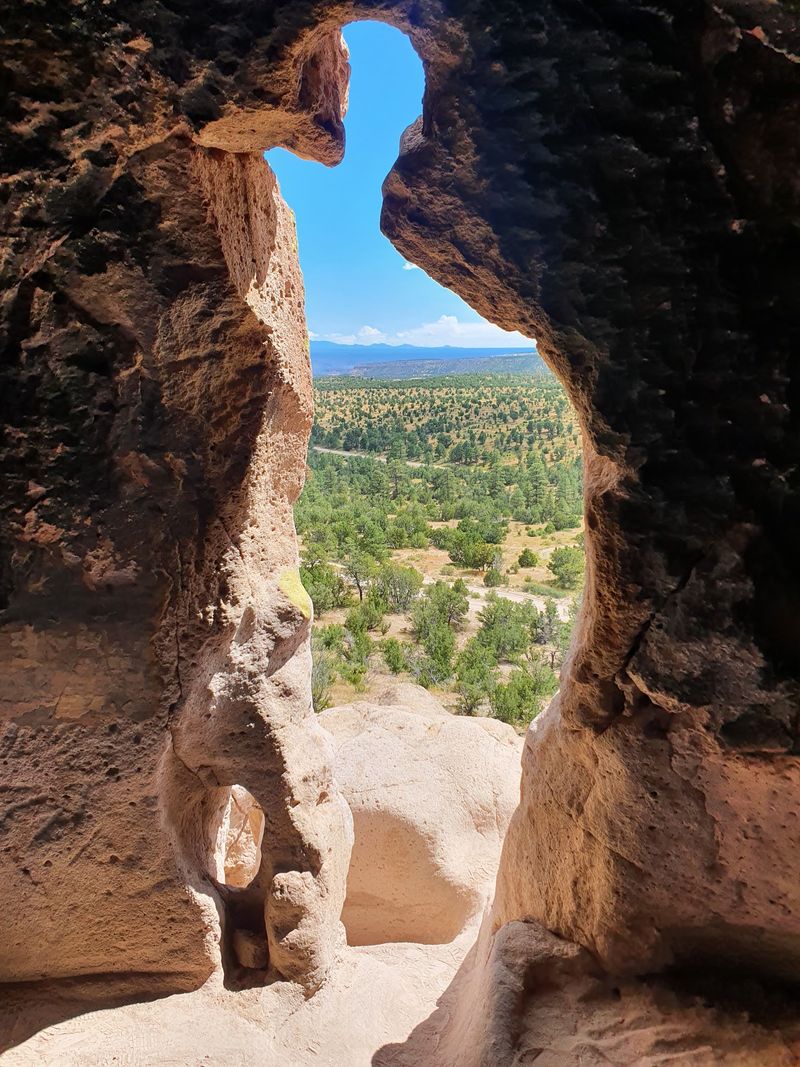
Big sky country might be a Montana nickname, but this stretch of New Mexico makes a strong case too. Blue sky stretches over pinyon pines and junipers dotting the mesas in every direction.
Colors shift throughout the day, with the pale cliffs turning golden in afternoon light. Summer afternoons often bring towering clouds over the mountains, which adds drama to an already striking scene.
Each season changes the mood here. Spring and fall bring mild temperatures, while summer can run hot and winter may dust the mesa with snow.
The site welcomes visitors Thursday through Monday from 8 AM to 4 PM and closes on Tuesdays and Wednesdays. Tours need time, so arriving well before closing makes sense.
Schedules can change, so checking the official website or calling 505-917-6650 before the drive is a smart move. The approach winds through Santa Clara Pueblo land with scenery that sets the tone nicely.
Out here, the quiet is a big part of the appeal. Wind and birdsong usually carry farther than any engine noise out on the mesa.
Carved rooms below and endless views above make Puye a place where history and landscape share equal billing. Few 1.5-mile walks pack in this many centuries.