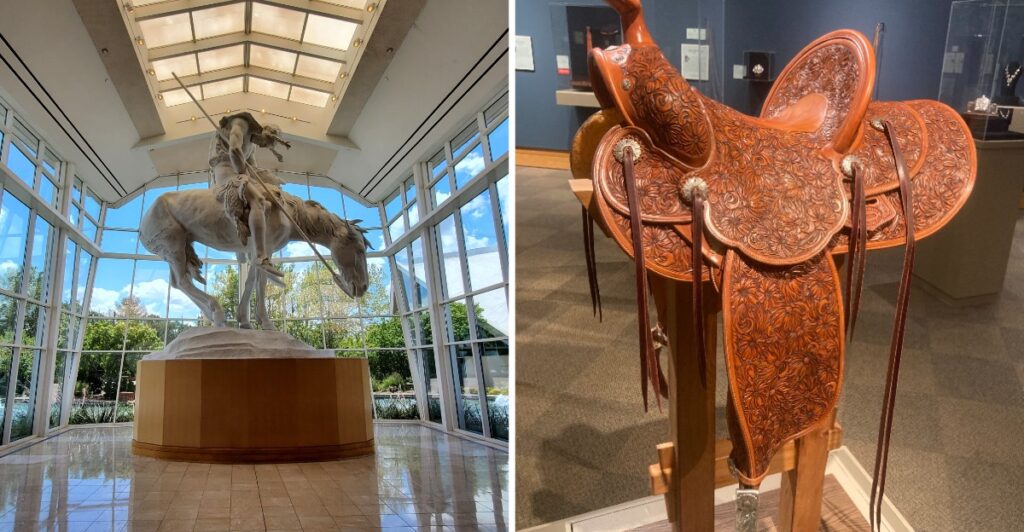
This museum has roughly 35,000 ways to ruin your schedule.
I mean that as a compliment.
You can walk in with one thing in mind, take a wrong turn on purpose, and end up spending twenty minutes somewhere you never planned to stop.
Oklahoma gives the American West a lot of room here, but you do not need to treat the visit like homework.
Pick one thing you really want to see. Then wander. The best part is not knowing what will stop you next.
And if you leave saying, “Wait, did we miss that whole section?”
Congratulations. You now have an excuse to come back.
About Thirty-Five Thousand Pieces Fill The Permanent Collection
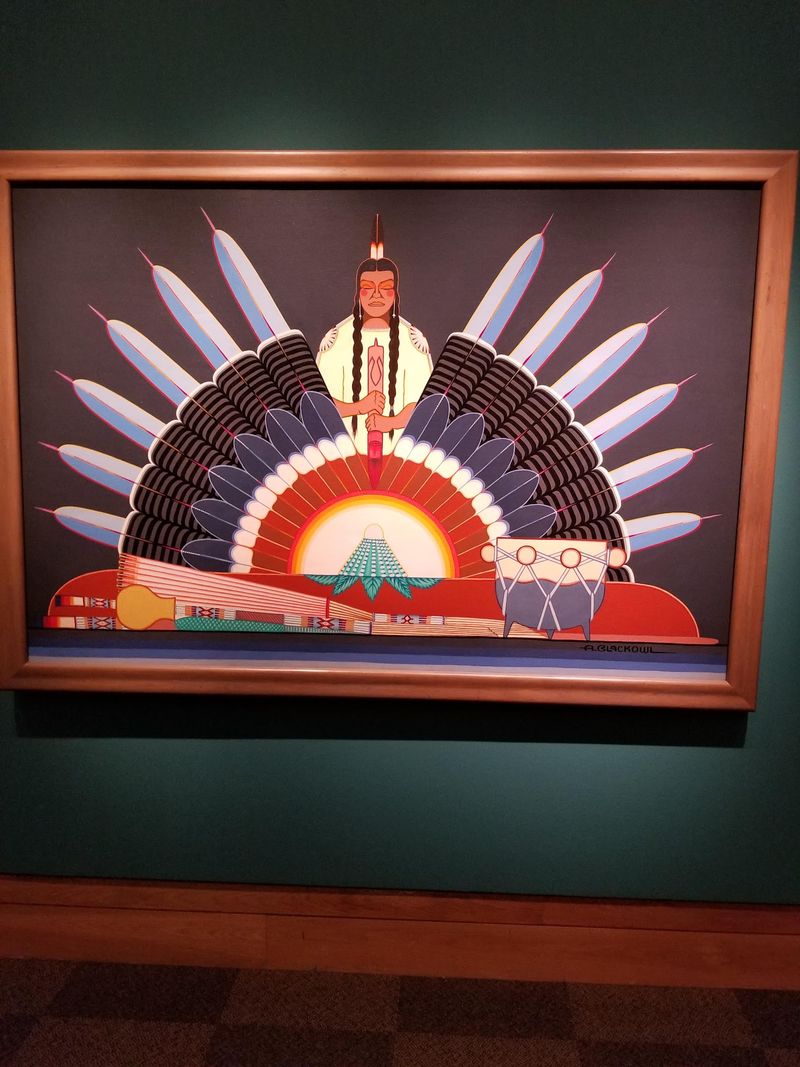
The permanent collection contains approximately 35,000 Western and Native American works of art and historic artifacts.
That scale gives you plenty of ways into the museum. You can begin with paintings and sculpture, move into rodeo history, spend time with Native American art, or follow the development of cowboy culture across different galleries.
Historic objects, fine art, contemporary work, rodeo material, and Native American art place different periods and perspectives side by side.
Historic material sits beside contemporary work, and familiar cowboy imagery appears alongside objects connected to ranching, performance, Native communities, rodeo, travel, and frontier life.
Trying to see every object with equal attention can turn a museum visit into a marathon. Pick two or three areas that interest you most, then let the rest unfold around them.
The building also includes outdoor sculpture areas and landscaped grounds, so comfortable shoes earn their keep before the day is over.
If you are visiting with someone who has very different interests, split your attention instead of your group. One person can linger over a painting while another studies saddlery, photographs, or historic objects nearby.
That variety gives you room to move through the collection at your own pace.
Remington And Russell Bring Western Art Into Focus
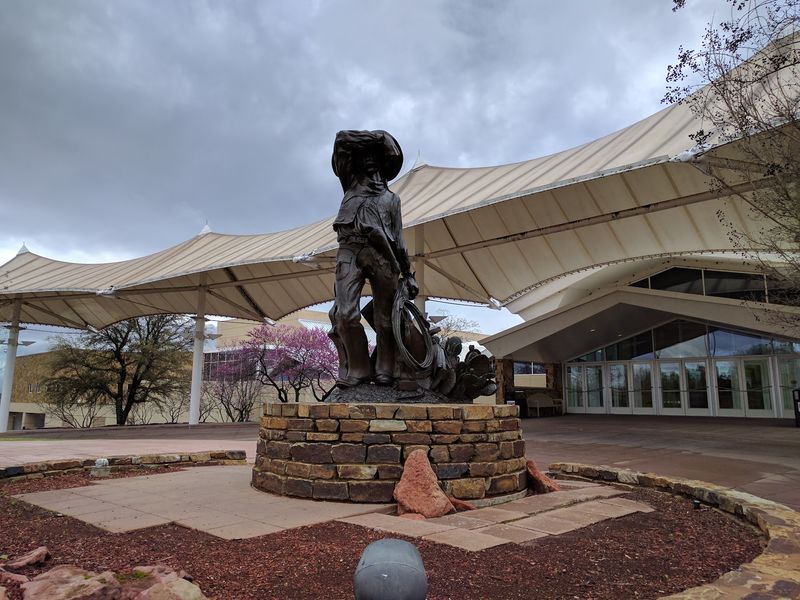
Frederic Remington and Charles M. Russell are among the major Western artists represented in the museum’s collection.
Both became closely associated with images of horses, cowboys, soldiers, Native people, open country, and the changing American West, although their careers and approaches were distinct.
Remington worked across painting, illustration, and sculpture, often building scenes around movement. Horses rear, riders lean, and figures seem caught in the middle of an action rather than posed after it.
Russell spent much of his life in Montana and produced paintings and sculpture informed by the people and landscapes he knew there.
Start with one work and notice where your eye lands first, how a horse is moving, or how weather changes the mood.
The museum also collects contemporary Western art, so the story does not stop with the names most often found in textbooks.
Moving between older and newer works lets you see how artists keep returning to Western subjects while changing the style, point of view, and questions they bring with them.
The End Of The Trail Commands Its Own Space
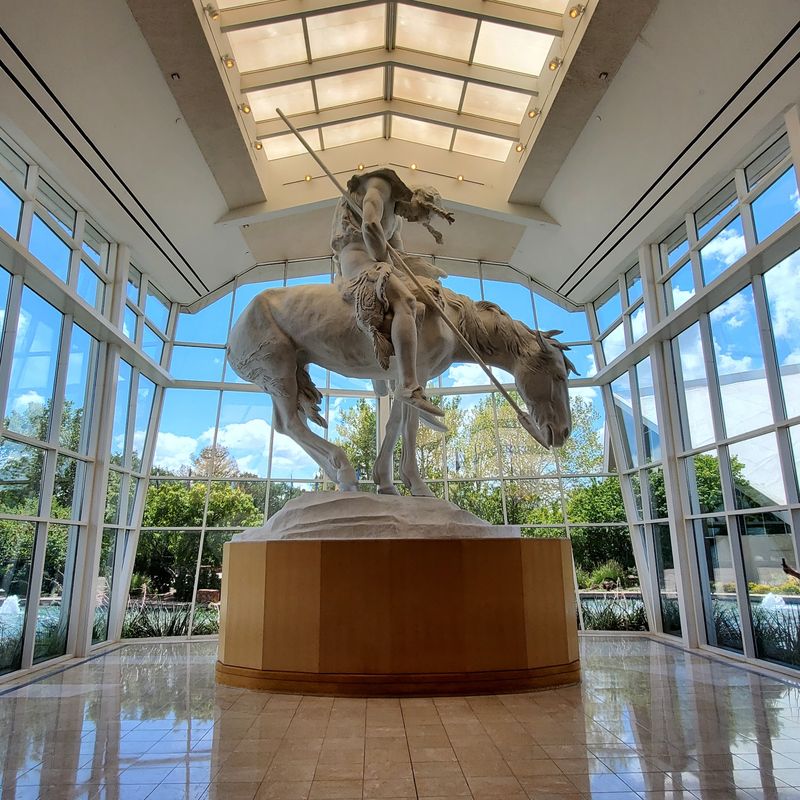
James Earle Fraser’s The End of the Trail is one of the museum’s signature works.
Created for the 1915 Panama-Pacific International Exposition, the monumental sculpture shows a weary Native American rider on an equally exhausted horse.
The rider bends forward, the horse’s head drops, and the entire composition carries the weight of a journey nearing its end.
The museum acquired Fraser studio material in 1968, including the monumental plaster version of the sculpture.
Walk around it slowly rather than taking in only the front view. The lowered head of the horse, the rider’s posture, and the long downward lines become more noticeable as your angle changes.
Fraser also worked in medal and coin design, including designs connected with the Indian Head, commonly called Buffalo, nickel.
At monumental scale, the lowered rider, bent posture, and exhausted horse become easier to examine from several angles.
Give it a few quiet minutes before moving on. The piece carries more than one layer of meaning, including Fraser’s own response to the displacement and suffering of Native peoples during westward expansion.
It is a strong place to slow the pace before heading into galleries filled with smaller objects and photographs.
Rodeo History Runs Through The Museum
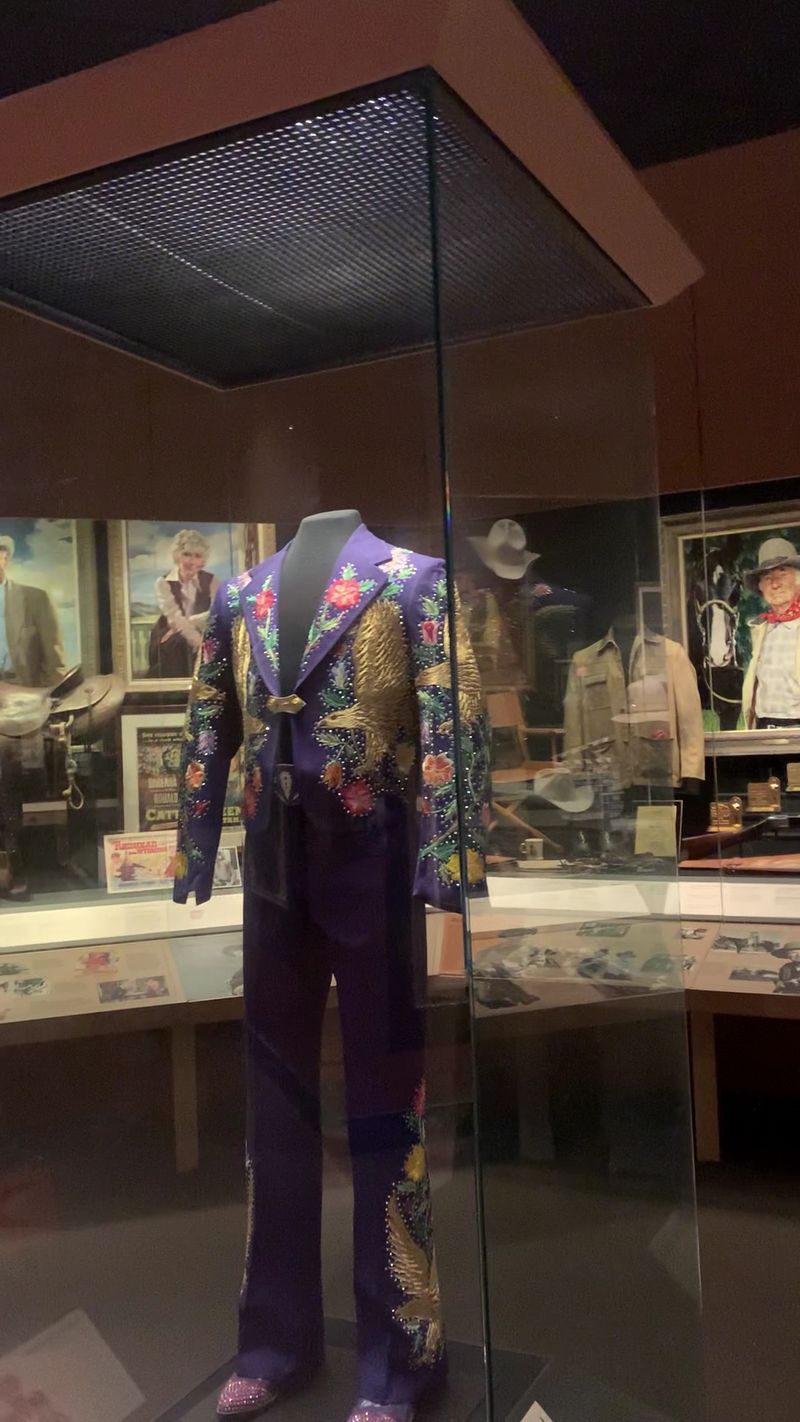
The museum is home to the National Rodeo Hall of Fame and a substantial collection devoted to rodeo history.
Its rodeo holdings include thousands of historic photographs, along with saddlery, early trophies, clothing, equipment, and objects associated with competitors and performers.
The Hall of Fame has honored figures from rodeo since 1955, and new inductees continue to be added.
If you already follow rodeo, names and events may feel familiar. If you do not, the photographs and artifacts still make the development of the sport easy to follow.
Look at how clothing, arenas, equipment, and riding styles change from one period to another. A row of photographs can show those shifts faster than a long timeline.
The museum’s research collections also preserve work by major rodeo photographers, including Ralph Doubleday, Bern Gregory, and Devere Helfrich.
You do not need to read every label in order. Choose one person, one photograph, or one object and follow that thread for a few minutes.
Rodeo history becomes easier to understand when it moves away from a list of dates and into the physical things people carried, wore, won, and used.
Bill Pickett And Lane Frost Appear Through Personal Objects
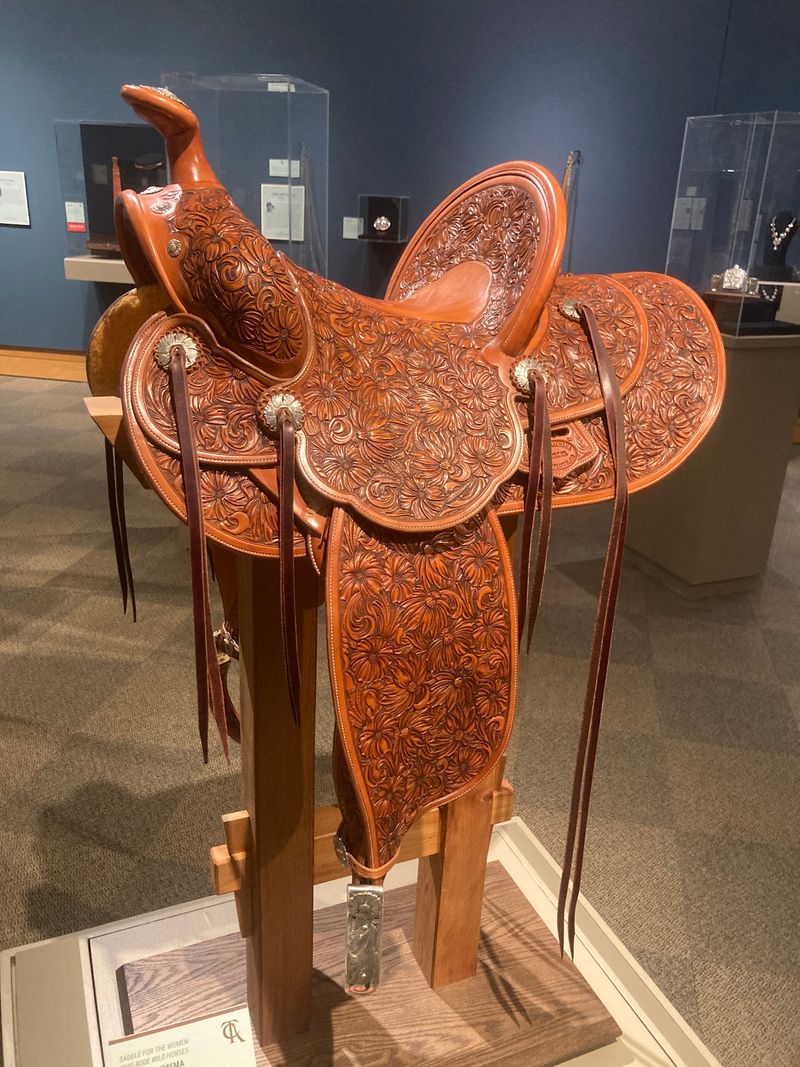
Two names give the American Rodeo Gallery an especially direct human connection: Bill Pickett and Lane Frost.
Pickett became famous for developing bulldogging, the technique that evolved into modern steer wrestling. His saddle is preserved in the museum’s rodeo collection.
A saddle can look simple at first glance, so spend a moment with the wear, shape, leather, and working details. It connects a famous name to the physical demands of a real career.
Lane Frost is represented through clothing associated with him, including a shirt, chaps, and hat.
Those pieces create a different kind of encounter from a photograph or biography. Clothing shows scale. Saddles show use.
Small marks and construction details remind you that rodeo history was made by people handling equipment day after day.
The gallery also places individual stories inside a much larger timeline of the sport.
If you are visiting with younger readers of rodeo history, let them choose one object and ask what it reveals before reading the label. That small guessing game slows everyone down just enough to notice details.
The names may be famous, but the objects keep the experience grounded in ordinary materials shaped by extraordinary careers.
Prosperity Junction Turns History Into A Walk
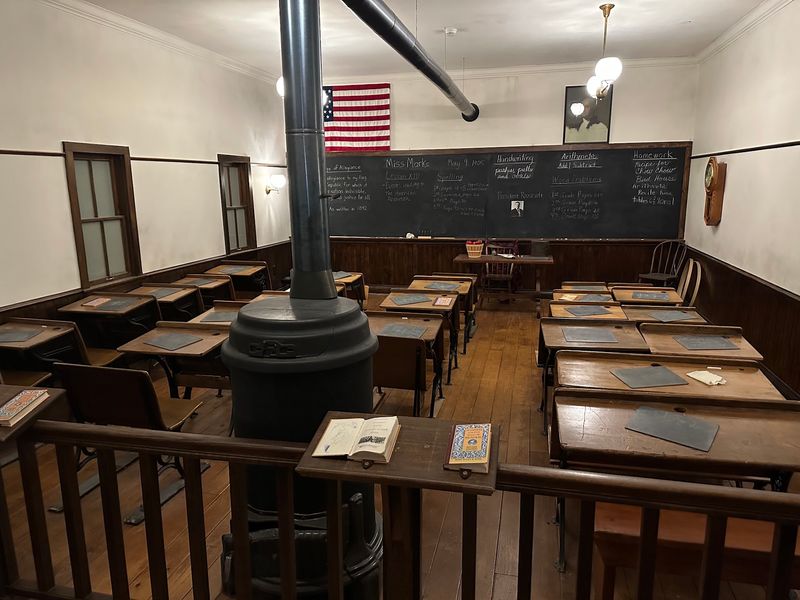
Prosperity Junction gives you a change of pace after rows of cases and framed artwork.
The indoor gallery recreates a turn-of-the-twentieth-century cattle town with rail connections, storefronts, a sheriff’s office, a blacksmith and livery area, a one-room schoolhouse, a church, a doctor’s home, and other civic spaces.
The setting is arranged around a main street, so you move through it more like a town than a traditional gallery.
A railroad depot and cattle car help connect the town to the movement of livestock, goods, workers, and travelers across the West.
Children can compare the schoolhouse with their own classrooms, while adults may notice how closely work, transportation, business, and community spaces sit together.
The museum is at 1700 Northeast 63rd Street, Oklahoma City, OK 73111.
Prosperity Junction is a good place to reset your attention before returning to object-heavy galleries. Instead of studying one artifact at a time, you can look at how buildings and services fit together.
Take the main street slowly and peek into the smaller spaces. The details make more sense when you imagine the town functioning as a connected community rather than as a row of separate displays.
Leave Time For More Than Cowboys And Saddles
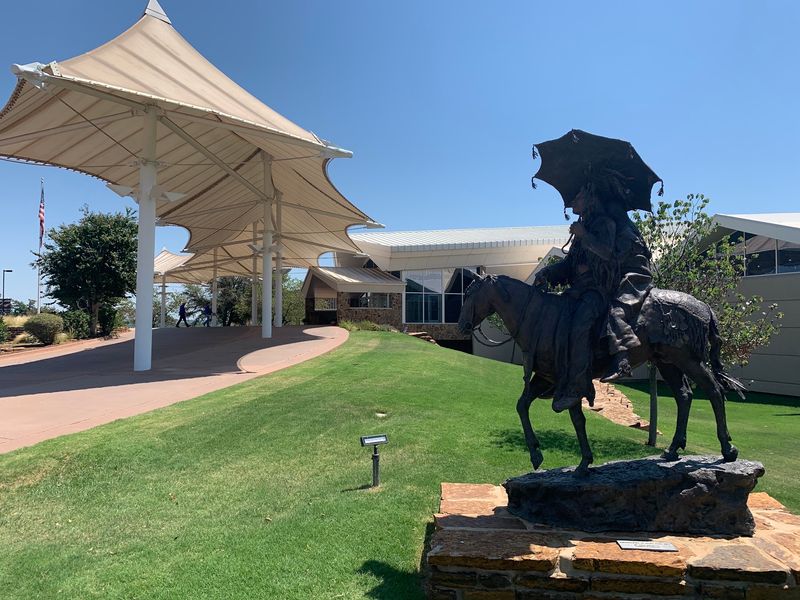
The museum’s name points toward cowboy history, but the visit reaches much further.
Galleries explore Native American art and culture, Western performers, frontier history, sculpture, rodeo, contemporary art, and the working lives connected to the West.
Outdoor sculpture areas extend the museum beyond the galleries, with works placed among trees, ponds, paths, and landscaped spaces across the grounds.
Families also have interactive and child-focused areas that give younger visitors room to explore Western history through something more active than reading labels.
The easiest way to plan a visit is to resist the urge to treat every gallery as mandatory. Start with the subjects that brought you through the door, then add one or two areas you know less about.
You might arrive for Remington and end up spending more time with rodeo photographs. You might come for cowboy history and stay longer with Native American art or Prosperity Junction.
That flexibility suits a collection this large.
Before leaving, give yourself one last pass through a favorite room rather than racing toward something new. A collection this broad leaves plenty of galleries and objects for another visit. The West here is not one story, one image, or one era.
It is a collection of many voices, objects, and traditions sharing the same roof.