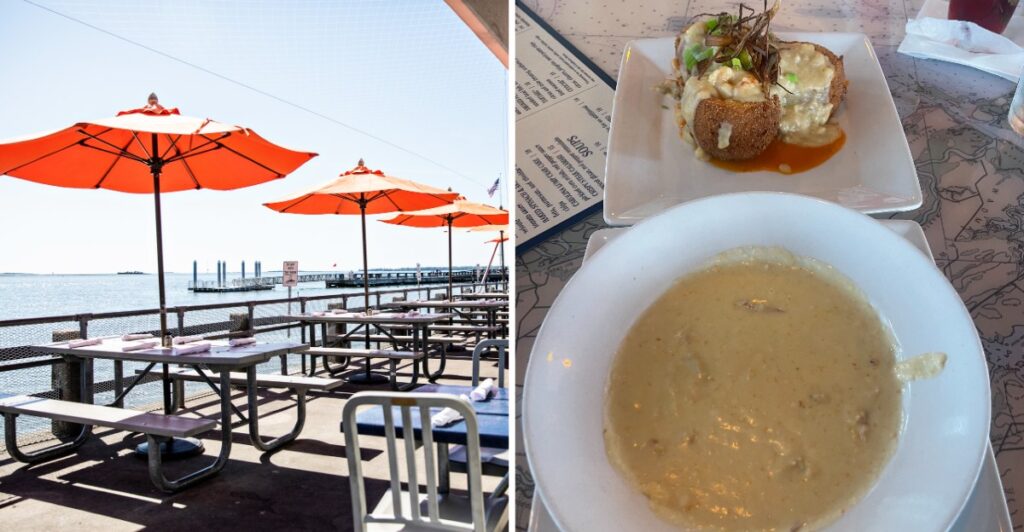
She-crab soup already sounds like it has a story to tell.
Here, it gets a pretty good backdrop too.
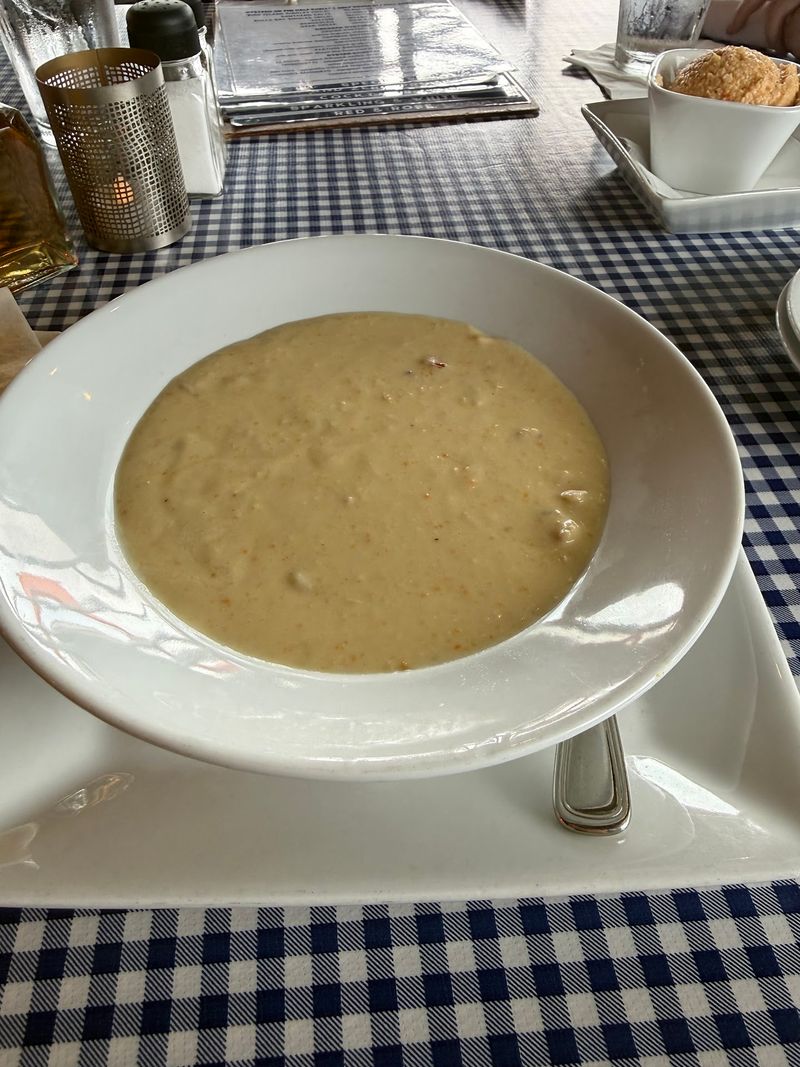
The bowl brings together crab, roe, and a creamy Lowcountry base. Around it, the building carries decades of Charleston history and a front-row view of the harbor.
That gives this South Carolina meal an unusual sense of place.
The water outside is not just scenery. It feels connected to everything happening at the table.
As for the soup, give it a little attention before racing ahead. This is one of Charleston’s classic dishes, and it deserves more than a quick spoonful between other orders.
Seafood can follow after that.
Meanwhile, the harbor keeps making a pretty convincing case for looking up from the bowl.
She-Crab Soup Gives The Meal A Lowcountry Starting Point
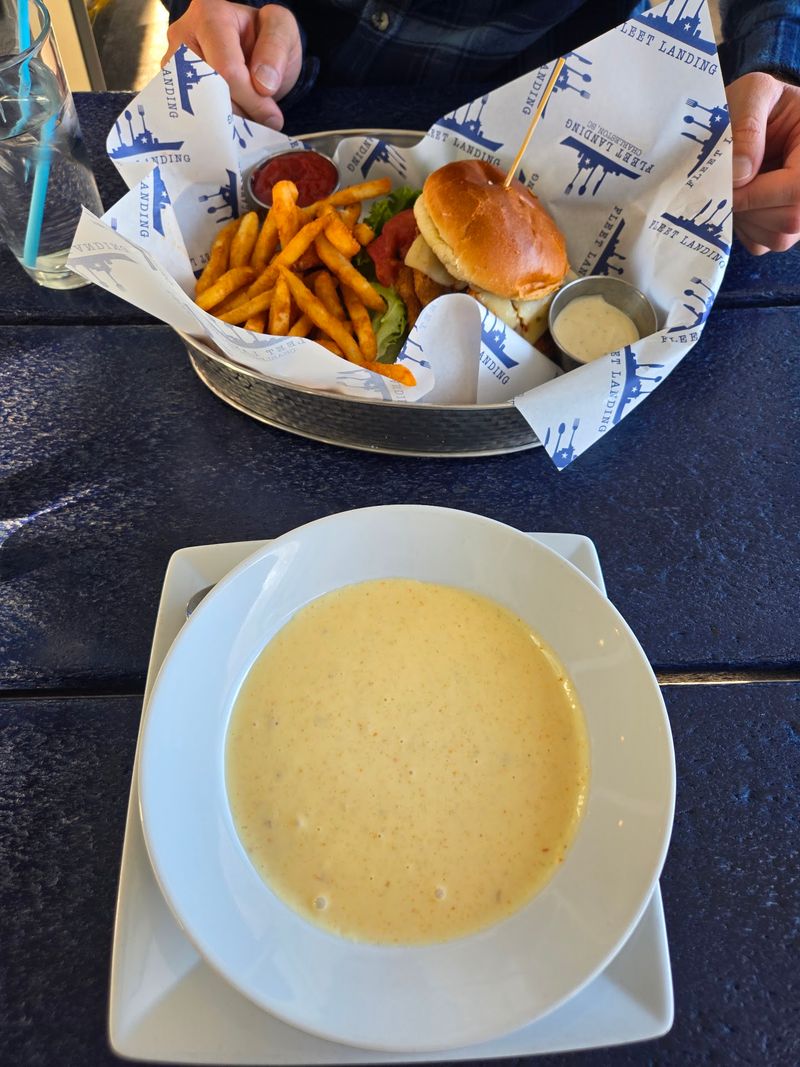
She-crab soup is served at dinner, with blue crab roe giving the dish one of its defining Lowcountry touches. That keeps the Charleston classic firmly in the regular lineup rather than pushing it into the category of an occasional special.
The restaurant’s version brings together crab meat, vegetables, dairy, shellfish stock, and crab roe when available. The combination gives the soup its creamy texture while keeping crab at the center of the bowl.
For a first visit, soup is an easy opening move because it leaves room for the rest of the meal. A bowl can lead toward oysters, shrimp and grits, a crab cake, or a fresh-catch plate without making everything feel repetitive.
If the soup is the whole reason for coming, let it stay simple. Pair the bowl with something that shifts texture, such as grilled fish or shrimp, and the meal gets more range.
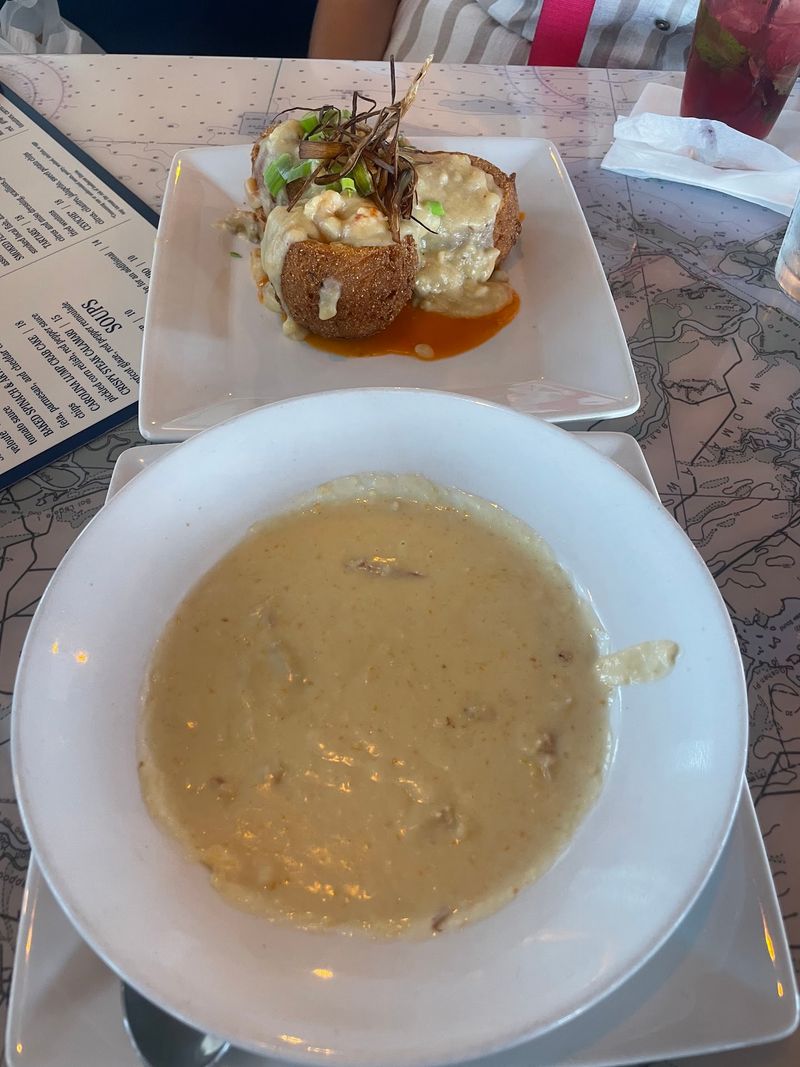
You can also add a Carolina lump crab cake to the soup for an extra charge. That suits a bigger appetite, but it turns the first course into something much more substantial.
The Restaurant Sits In A Navy Building From 1942
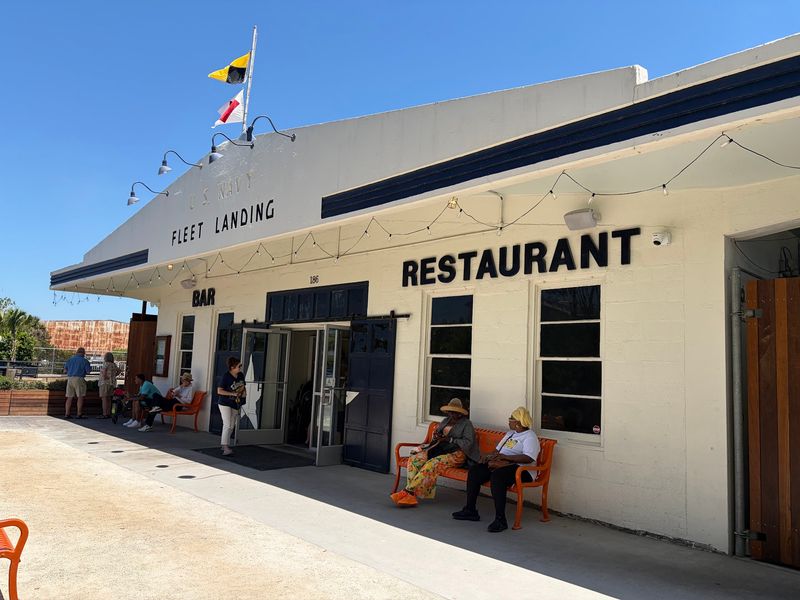
Long before anyone ordered seafood here, the waterfront site had a different job. Before 1940, the location served the Cooper River ferry, which carried passengers across the river toward Mount Pleasant and nearby barrier islands.
A hurricane damaged that ferry building, and the U.S. Navy constructed the current structure in 1942.
The Navy used the building for off-loading sailors, moving supplies, general maintenance, and resupplying ships. Around 1970, the Navy stopped using the property.
The concrete maritime structure later sat vacant before Tradd Newton and Weesie Newton transformed it into a restaurant that opened in 2004.
The building covers about 6,000 square feet and sits on a reinforced pier. Oversized windows face Charleston Harbor, so the water is part of the setting whether the meal happens near the glass or farther inside.
The old maritime bones are still an easy part of the experience to notice. Concrete, broad windows, and the pier setting give the dining room a sense of place without making it feel like a museum.
That history also explains why the water feels so closely tied to the meal. This was a working waterfront structure long before it became a place for crab cakes and shrimp and grits.
Lunch And Dinner Run Seven Days A Week
The schedule is straightforward. Lunch runs every day from 11 a.m. to 3:30 p.m., while dinner is served daily from 5 p.m. to 10 p.m. That consistency makes planning easier than at a restaurant with different weekday and weekend schedules.
For anyone planning around a particular dish, lunch or dinner should be chosen first rather than assuming every item is served all day.
Dinner includes she-crab soup, Carolina lump crab cake, stuffed hush puppies, Lowcountry seafood gumbo, chilled oysters, shrimp cocktail, seafood platters, shrimp and grits, fresh-catch choices, and seafood pasta.
Lunch covers many of the same coastal flavors while adding sandwiches and lighter midday options.
Reservations deserve some thought, especially for evenings and weekends. Smaller parties can book ahead, while groups of five to ten use a different reservation process.
The largest table accommodates ten guests, so this is not the place to arrive with a very large group and assume everyone can sit together.
A little timing goes a long way here. Lunch leaves more daylight for a waterfront walk afterward, while dinner gives the harbor a different mood as evening settles in. Pick the meal that fits the rest of the Charleston day rather than forcing everything around one reservation.
The Menu Moves Well Beyond One Bowl Of Soup
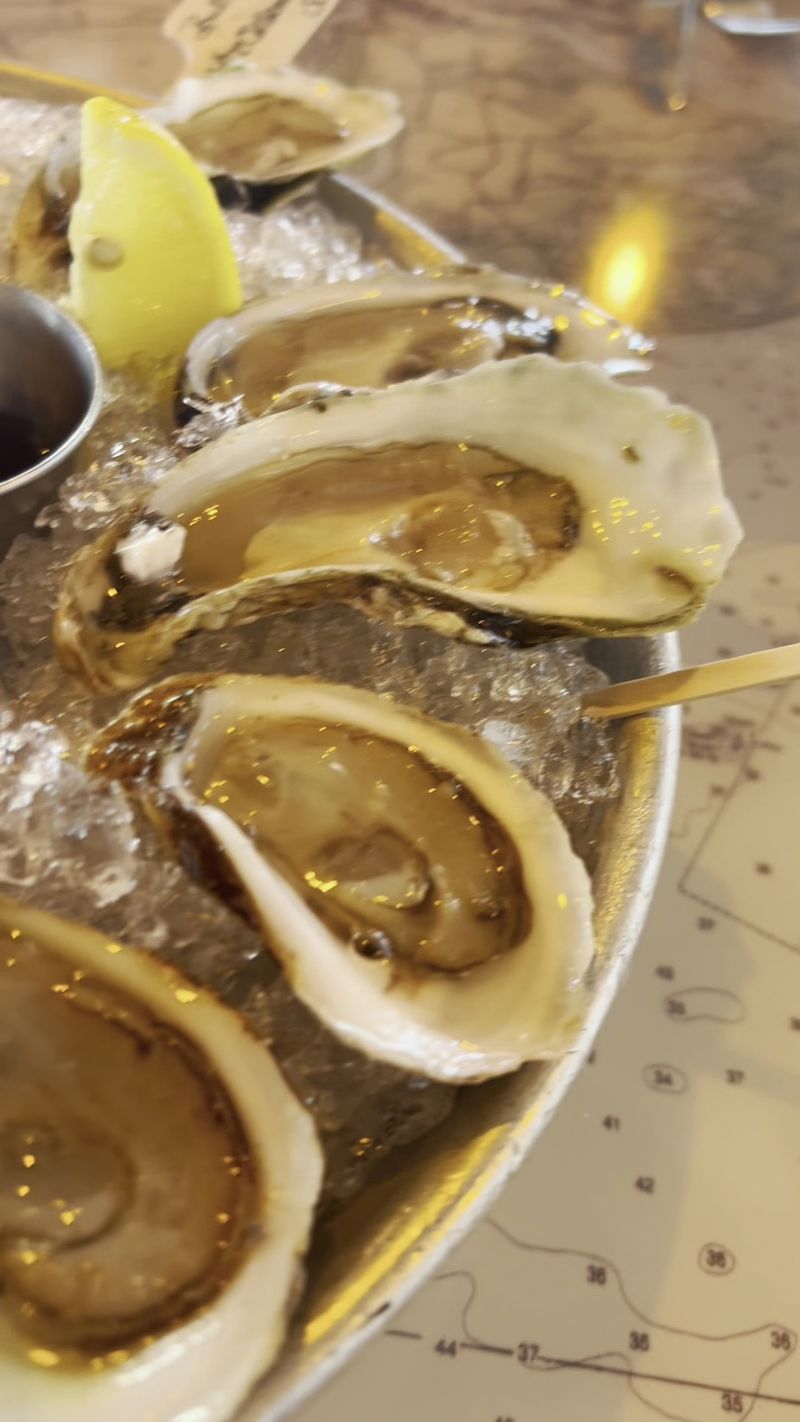
She-crab soup may start the conversation, but dinner spreads across several kinds of seafood.
Carolina lump crab cakes come with pickled corn relish and red pepper sauce, while the stuffed hush puppies bring lobster, shrimp, leeks, corn, and Creole tomato sauce into a richer starter.
Lowcountry seafood gumbo adds okra and rice, while chilled oysters keep the raw-bar side of the meal much lighter. A seafood tower combines several chilled items for sharing, which can change the pace of the table before anyone reaches an entree.
Main dishes give you several ways to keep the meal coastal without ordering the same style twice.
Charleston shrimp and grits remain part of dinner, while fresh-catch choices include fish, scallops, salmon, and shrimp prepared with a choice of cooking method, sauce, and sides.
Fried seafood platters cover shrimp, flounder, and oysters, and Carolina lump crab cakes return as a full entree. Lowcountry seafood pasta brings shrimp, scallops, crawfish, mussels, tomatoes, asparagus, and pasta together in one plate.
The easiest way through that much choice is to pick a direction. Start creamy with soup, then go grilled. Begin with oysters, then move toward shrimp and grits.
Ordering by contrast keeps the table more interesting than repeating the same ingredient in every course.
Harbor Views Shape The Pace Of The Meal
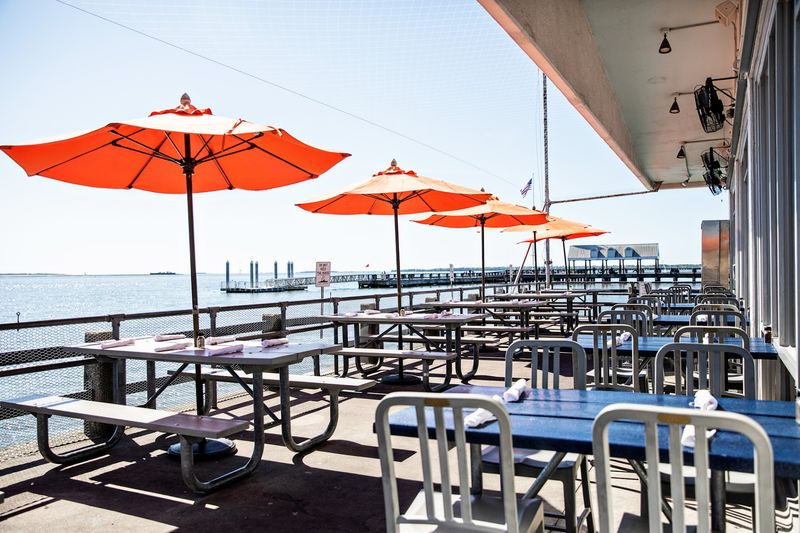
Fleet Landing juts over the marsh on a reinforced pier, and its oversized windows open the dining room toward Charleston Harbor. That waterfront position comes directly from the building’s original maritime purpose.
The restaurant is at 186 Concord St, Charleston, SC 29401, near Waterfront Park and within walking distance of other downtown stops.
Lunch brings bright water and moving boats into the background, while dinner shifts the focus toward the harbor as the light changes. There is enough going on outside that a pause between courses does not feel like dead time.
The better plan is to treat the view as part of the stop without making a specific table the entire goal. Seating depends on availability, and a meal can still make sense even if the exact spot you pictured is not open.
Waterfront Park is nearby, and the City Market is only a short walk away. That makes it easy to pair the restaurant with a walk before lunch or after dinner rather than treating the meal as an isolated destination.
The building’s broad windows also mean the water remains visible from inside. You do not need to build the entire visit around outdoor seating to get the harbor setting.
If the schedule allows, leave a little time before or after the reservation for the waterfront. Charleston Harbor makes more sense when you step outside and see the surroundings that shaped the building in the first place.
Reservations And Parking Need A Little Planning
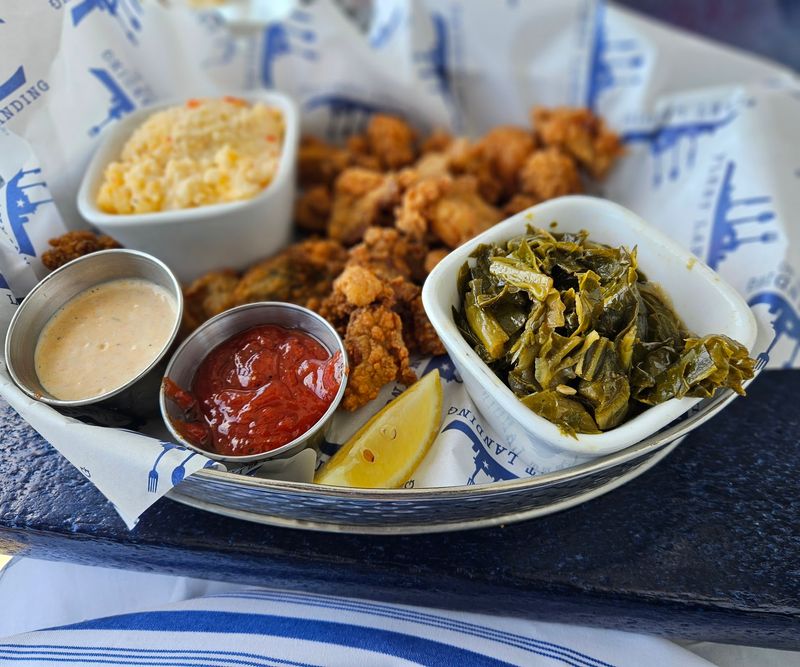
A meal here is easier when the practical details are settled first. Reservations are strongly encouraged, especially for nights and weekends. For parties of four or fewer, online booking is the simplest route.
Groups of five to ten need to contact the restaurant directly, and parties larger than ten cannot be accommodated at one table.
Walk-ins are still possible through the daily waitlist, but call-ahead seating is not offered. The restaurant also typically stops adding names to the waitlist about an hour before lunch or dinner service ends, so a very late arrival can limit the options.
Parking is available in the city garage across the street at the corner of Cumberland and Concord Streets. Metered street parking is also available along Concord Street. The garage is the easier default when you would rather not circle downtown looking for a curb space.
Takeout is not currently offered, so this is a sit-down meal rather than a quick pickup stop. That detail matters if you are trying to squeeze food between attractions or head straight back to a hotel.
The restaurant is fully ADA compliant, with an entry ramp, accessible bathrooms, and a dining room on one floor. Those details make planning simpler for anyone who needs a step-free route.
More Than Two Decades Connect The Past And Present
Fleet Landing opened in 2004 after Tradd and Weesie Newton turned the long-idle waterfront building into a restaurant. More than two decades later, the same former Navy structure still anchors the business.
The restaurant’s first cookbook arrived in 2025 with more than sixty recipes tied to its first twenty years.
The book adds another piece to the timeline, but the building remains the more interesting constant.
A site that once handled sailors and supplies now handles lunch, dinner, and a steady flow of Charleston seafood.
That long run also means the history does not have to be forced into every paragraph of the meal. You can notice the concrete structure, the pier, the oversized windows, and the harbor outside without needing a guided tour of the property.
For a first visit, the simplest plan is still the best. Pick lunch or dinner, make the reservation early, start with she-crab soup if that is the dish you came to try, and let the rest of the order move in another direction.
A crab cake, shrimp and grits, fresh fish, or oysters can take over from there. Then step back outside toward the harbor and let the building make a little more sense in context.
The restaurant has changed roles dramatically since 1942, but the waterfront remains the thread connecting every version of the place.