Tiny towns are excellent at keeping secrets.
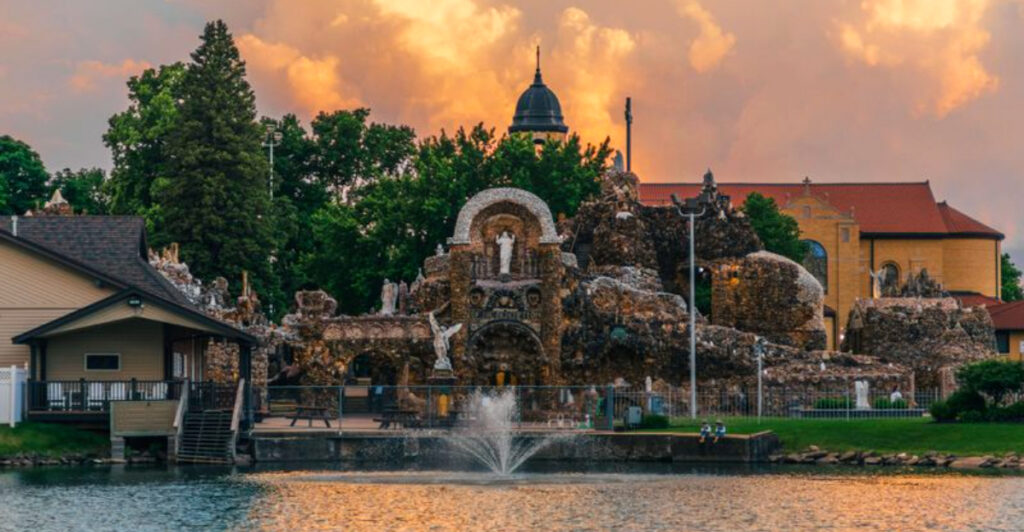
In northwest Iowa, one quiet community hides a sparkling surprise that feels almost impossible to explain from the road.
You do not expect a full city block of hand-placed stones, rare minerals, and glittering details to appear between small-town streets.
This tiny Iowa town hides a sparkling wonder in plain sight. It is the kind of stop that makes you pull out your camera, then lower it again because the real thing keeps winning.
Decades of patience went into this place, one stone at a time. Good luck calling it a quick visit once the walls start catching the light.
What the Grotto of the Redemption Actually Is
Before anything else, let me be clear about the scale of what sits in West Bend, Iowa. The Grotto of the Redemption is not a decorative garden feature or a simple roadside curiosity.
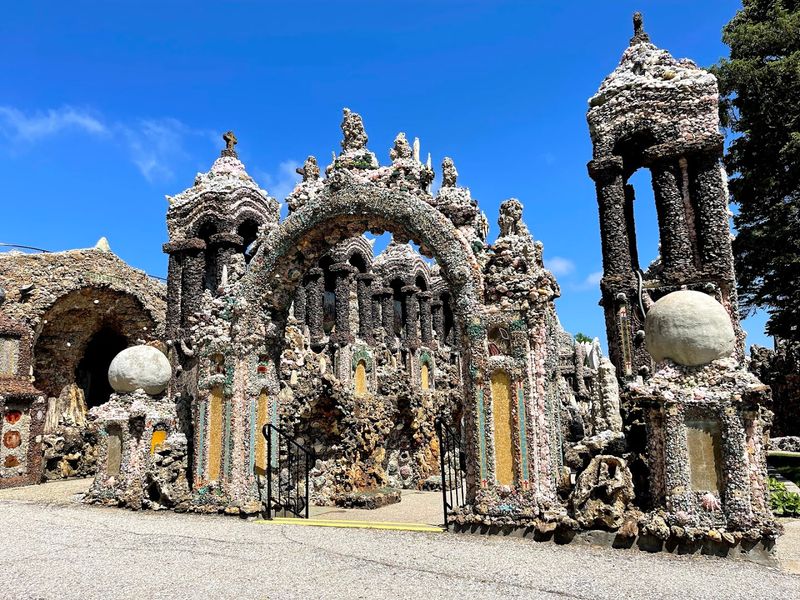
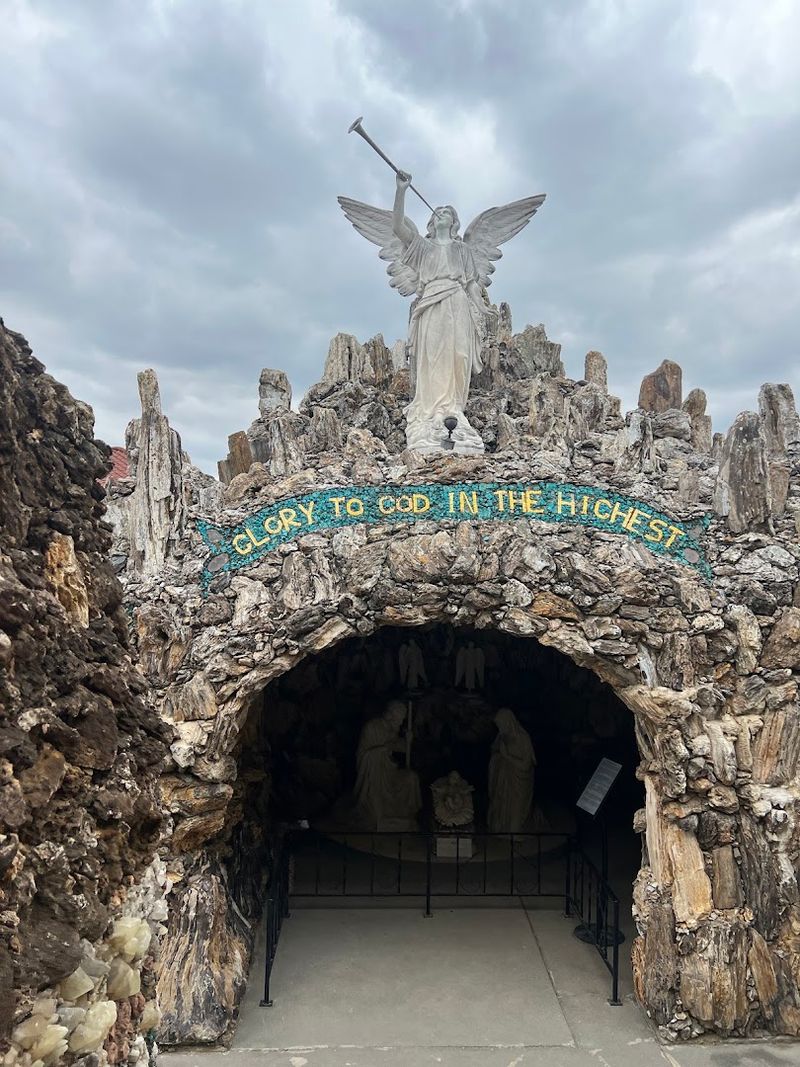
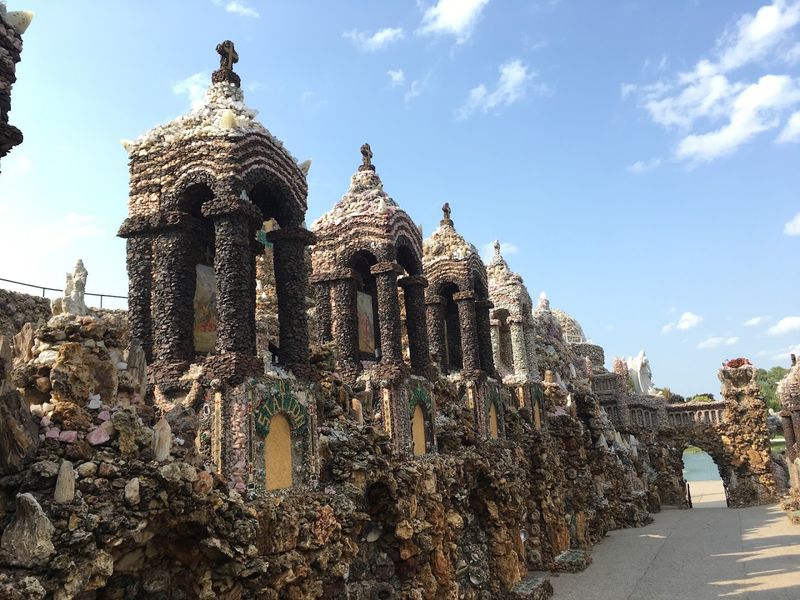
It is a series of nine separate grottos, each one depicting a scene from the life of Jesus Christ, all built by hand using an extraordinary collection of petrified wood, stalactites, stalagmites, fossils, shells, and precious gemstones.
The entire complex covers an entire city block. Geologists have estimated that the mineral and gemstone collection embedded in the structure is worth several million dollars.
You can see amethyst, malachite, Brazilian quartz, and even agate woven directly into the walls like decorative tile.
The address is 208 1st Ave NW, West Bend, Iowa 50597, and the shrine is open to the public throughout the year. A small museum on the grounds provides additional context and houses geological specimens connected to the collection.
The sheer density of what is packed into one block genuinely has to be seen up close to be fully appreciated.
The Priest Who Spent a Lifetime Building It
Father Paul Dobberstein started building the grotto in 1912 and continued working on it for more than four decades.
That is one man collecting stones, minerals, and gems from around the world and pressing them by hand into cement walls in small-town Iowa.
The story behind the project is worth knowing. As a young seminary student in Germany, Dobberstein fell seriously ill and made a personal vow that if he recovered, he would build a shrine to the Virgin Mary.
He recovered, emigrated to the United States, and was assigned to the parish in West Bend. He kept his word in a way that nobody expected.
He spent years collecting materials before laying the first stone. Parishioners donated gems and minerals.
Travelers brought him specimens from distant places. A local man named Matt Szerensce worked alongside him for decades, and Father Louis Greving also helped carry the project forward after Dobberstein.
The grotto stands today as a testament to what patient, obsessive devotion looks like when it takes physical form over half a century.
Walking Through the Nine Grottos
Each of the nine grottos tells a different chapter of the story of Jesus, from the nativity to the resurrection. As you walk the perimeter of the block, the scenes unfold in sequence.
The overall effect feels less like a garden stroll and more like moving through a very unusual outdoor museum where the walls themselves are the exhibit.
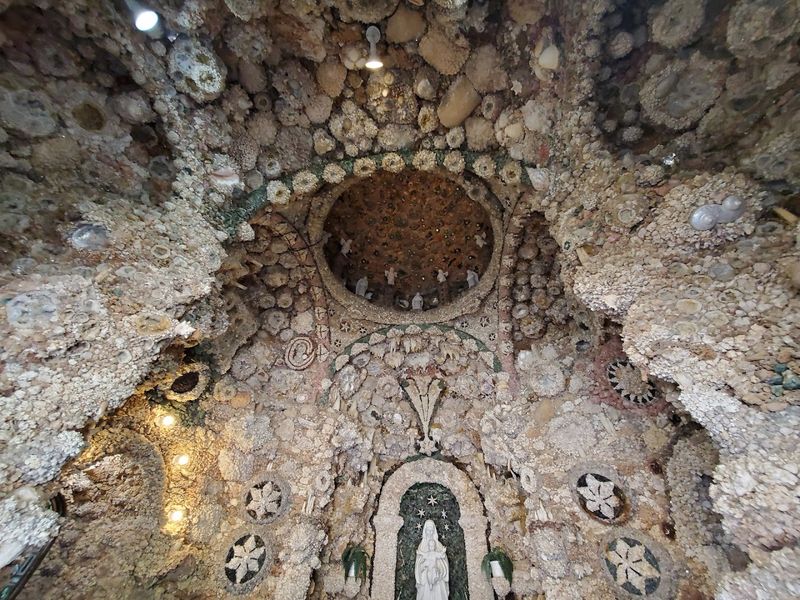
What catches your eye first is the color. The minerals embedded in the stone walls catch sunlight in unexpected ways.
Pale purple amethyst clusters sit next to deep green malachite. Chunks of rose quartz appear between fossil corals.
The craftsmanship is dense and deliberate, not decorative in a casual sense but layered with intention.
Each grotto has a slightly different character. Some feel enclosed and cave-like, with low ceilings made of stalactites.
Others open up to the sky with tall archways framing the religious figures inside. I spent well over an hour working my way around the full circuit, and I still felt like I had missed details on the way back.
Plan more time than you think you need.
The Geological Collection That Stuns Rock Enthusiasts
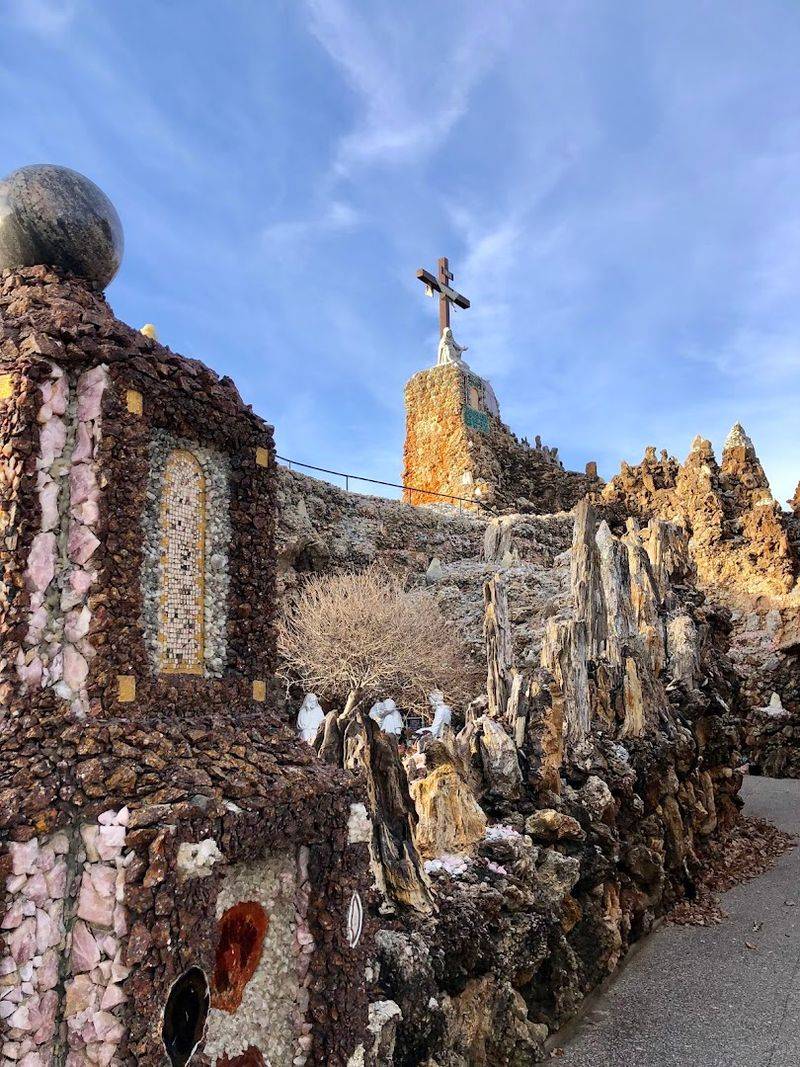
Rock collectors and geology fans tend to react to the grotto with a kind of reverent disbelief. The variety and quality of minerals built into the walls is not something you stumble across at a roadside rock shop.
Experts have catalogued specimens from dozens of countries represented in the structure, including rare forms of quartz, petrified wood from the American West, coral fossils, and semiprecious stones that would sell for considerable sums at a gem show.
Father Dobberstein was an obsessive collector. He corresponded with mineral suppliers, accepted donations from parishioners, and sourced materials from wherever he could find them.
The result is that the grotto functions as both a religious monument and an accidental geological archive pressed into cement.
The on-site museum expands on this theme with display cases of individual specimens and explanations of where specific materials came from.
If you have even a passing interest in rocks and minerals, give yourself extra time in the museum before or after the outdoor walk.
The indoor collection adds a layer of detail that makes the outdoor structure easier to read and appreciate.
Visiting as a Family With Kids
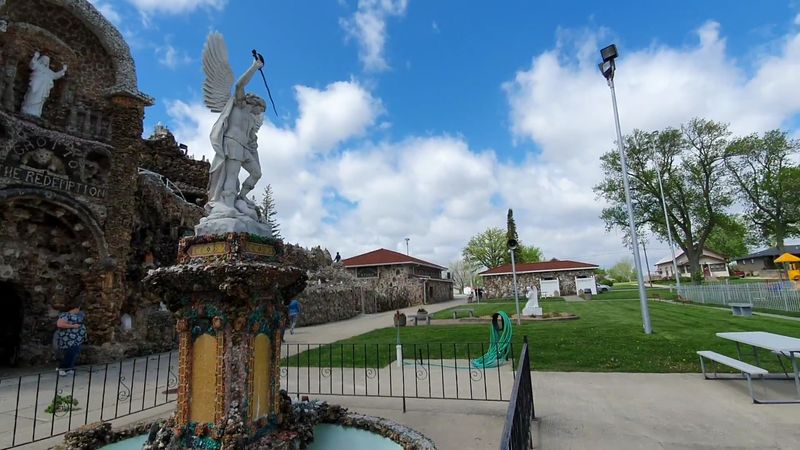
Bringing kids to the grotto works better than you might expect for a religious monument. The visual density of the place gives children something to hunt for at every turn.
My suggestion is to turn the walk into a scavenger hunt by pointing out different colors of minerals and asking kids to spot the most unusual texture or shape they can find in the walls.
The grounds are flat and easy to navigate. Strollers move around the perimeter without much trouble.
The open-air nature of the complex means kids are not stuck indoors trying to be quiet, which helps everyone relax. The religious figures and scenes also provide natural conversation starters about history, art, and storytelling.
West Bend itself is a small and quiet town, so the overall atmosphere is calm and unhurried. There is no crowded parking situation or long ticketed entry line to manage.
The grotto is freely accessible, which removes a lot of the stress that comes with family travel to paid attractions.
Families with curious kids who like texture, color, and scale tend to leave genuinely satisfied.
The Best Time of Year to Make the Trip
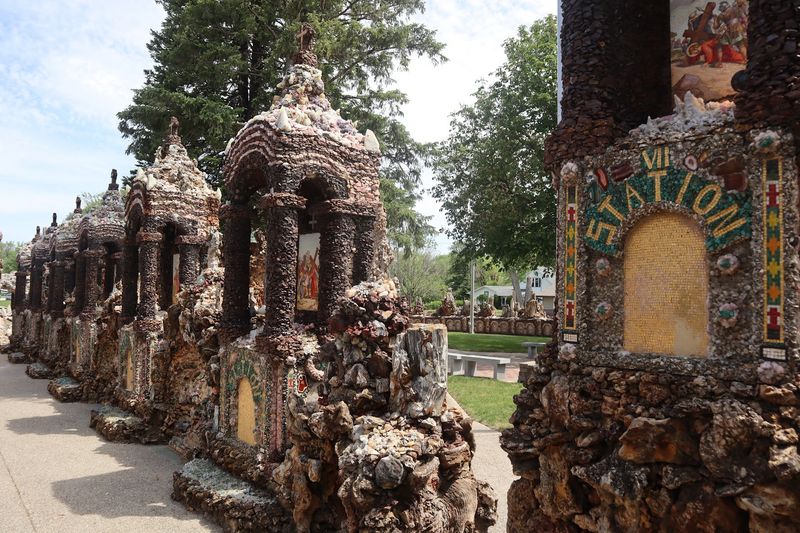
Late spring through early fall is the most comfortable window for visiting the grotto. The outdoor grottos are the main event, and cold Iowa winters make a long walking tour considerably less enjoyable.
Summer brings the best light for seeing the minerals in the walls, especially in the late morning when sunlight hits the embedded stones directly and the colors pop.
The grotto also hosts special events, including Come Rock at the Grotto, a community fundraiser with food, games, entertainment, tours, and auction activities. For 2026, that event is scheduled for June 13.
If you want to see the grotto during a more active community event, that date is worth watching.
Shoulder seasons like May and September offer quieter visits with comfortable temperatures and fewer people sharing the walkways. Fall color in northwest Iowa adds a pleasant backdrop to the stone structures.
Winter visits are possible since the shrine remains accessible, but the experience is considerably more stripped down without the warmth and light that make the mineral details easier to see.
What Else Is Worth Seeing in West Bend
West Bend is a genuinely small town, so managing expectations about surrounding attractions is fair. The population hovers around 800 people, and the commercial strip is modest.
That said, the town has a few practical stops worth knowing about if you are spending more than a couple of hours in the area.
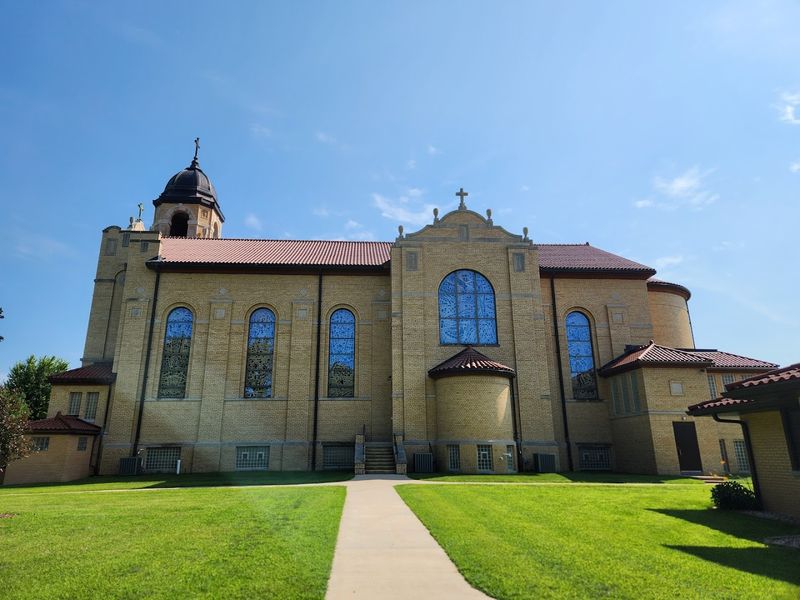
The local parish church, St. Peter and Paul Catholic Church, is directly adjacent to the grotto and worth a look on its own.
The interior contains additional artistic work connected to the grotto project, and the building itself has a presence that matches the scale of the outdoor shrine.
The broader Kossuth County area offers classic Iowa countryside that appeals to people who enjoy open farmland, county roads, and a slower pace.
The town of Algona, about 20 miles southeast, is the county seat and has more dining and lodging options if you are planning an overnight trip.
Emmetsburg to the west is another reasonable base. West Bend sits in the kind of flat, wide-open Iowa landscape that feels genuinely different from anything near a major city.
Practical Tips Before You Go
Admission to walk the grotto grounds is free, though donations are welcomed and genuinely support the ongoing preservation of the site.
The museum is worth visiting during posted hours for the additional context and the quality of the mineral displays inside.
Hours for the museum, tours, and gift shop vary by season, so checking the official grotto website before your visit saves confusion on arrival.
Comfortable walking shoes are a practical call. The paths around the grottos are paved and level, but you will be on your feet for a while if you explore thoroughly.
Bring water in warm months since there is limited shade along parts of the perimeter walk.
Photography is encouraged throughout the grounds. The mineral-embedded walls photograph well in natural light, and the enclosed grottos with their cave-like ceilings create interesting lighting conditions worth experimenting with.
Parking is free and easy to find near the site. If you are driving through northwest Iowa and have any curiosity about what one person can build with decades of patience and a serious collection of rocks, West Bend will not disappoint you.