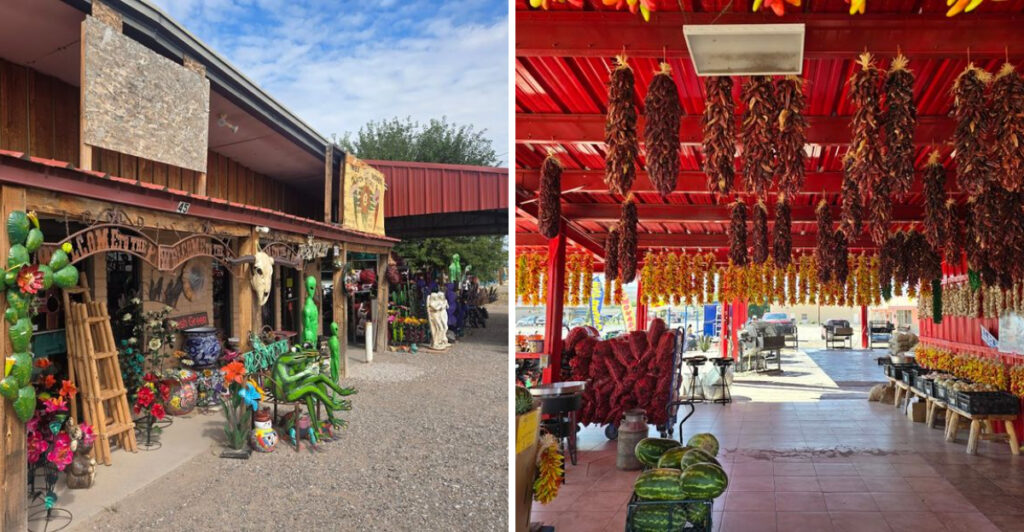
Somewhere in the southern stretch of New Mexico, a small village punches way above its weight when it comes to flavor, farming tradition, and fiery pride. I had heard about this place for years before I finally made the drive, and nothing quite prepared me for the way the smell of roasting chiles hit me before I even parked the car.
The fields, the roadside stands, the hanging ristras, and the locals who talk about their crop the way artists talk about their work, it all adds up to something genuinely unforgettable. If you love bold food, wide desert skies, and the kind of small-town character that feels completely authentic, keep reading because this place belongs on your travel list.
Roasted Chile Aromas Drift Through Dusty Roads
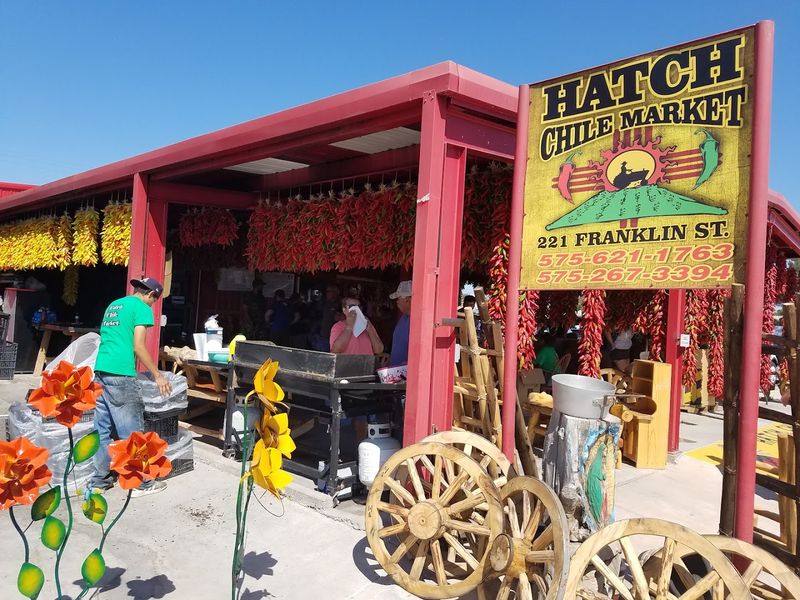
Before I even rolled down my window, the smell found me first, that deep, smoky, slightly sweet scent that wraps around you like a warm blanket on a cool desert morning.
During harvest season, the aroma was not just coming from one spot but from nearly every corner, every lot, and every open stretch of pavement where a roaster had been set up.
Large rotating drums tumble fresh green chiles over open flames, and the skins blister and blacken while releasing a fragrance that is almost impossible to describe to someone who has never experienced it.
Locals told me that the valley’s chile-growing traditions stretch back more than a century, and roasting season still connects generations of farming families to one of Hatch’s most beloved rituals each August and September.
The smoke drifts lazily across the dusty back roads and hangs in the air long after the roasters have shut down for the day.
By the time I stood there breathing it all in, I understood immediately why people plan entire road trips around this small agricultural village known as Hatch, New Mexico 87937.
Roadside Farm Stands Glow With Fiery Color
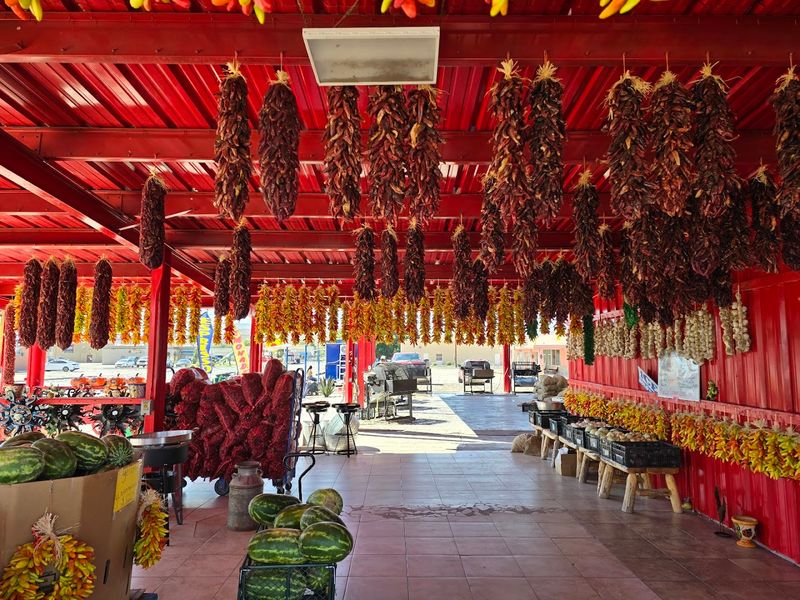
One stop at a roadside farm stand here felt like stumbling into a painter’s palette. Red, green, and orange chiles were piled high in wooden crates and mesh bags, practically glowing in the intense New Mexico sunlight.
These stands pop up along the roads surrounding the valley from late July or August into early fall. They follow the fresh harvest cycle, with green chile arriving first and red chile coming later as the pods ripen.
Some vendors have been running family stands for decades. They can describe the flavor differences between chile varieties with the kind of detail only long experience can teach.
Prices are remarkably fair compared to what you would pay for inferior chiles elsewhere, and most vendors are happy to let you smell and even taste before you buy.
Bags, boxes, and bushels of freshly harvested peppers line every available surface, and the whole scene has an energy that feels both festive and grounded in real agricultural work.
I left with the car loaded up, because resisting that much color, heat, and fresh harvest flavor felt genuinely impossible.
Ristras Hang Bright Against Desert Storefronts
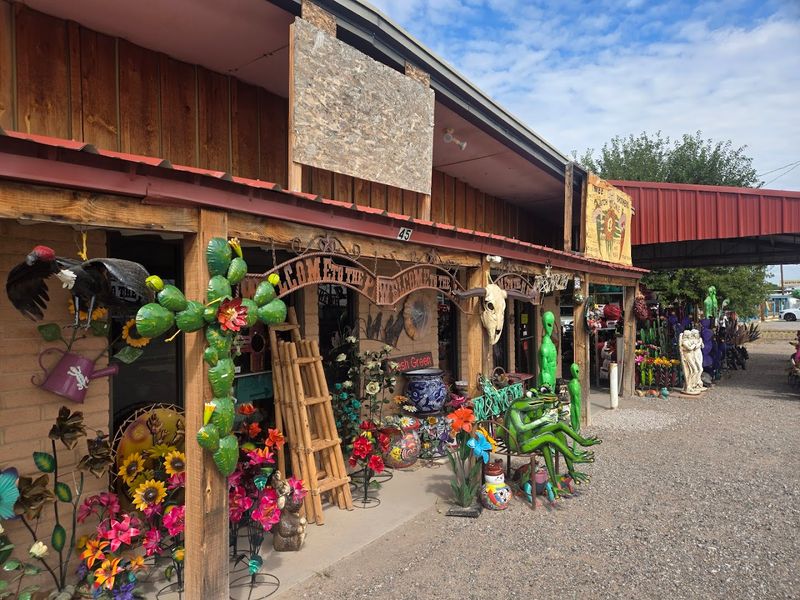
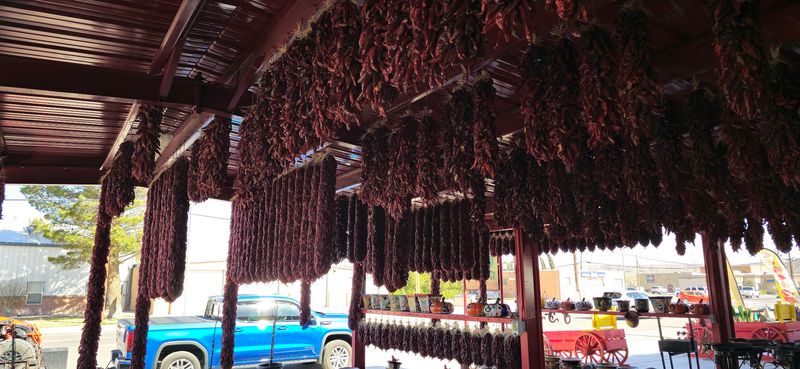
Ristras make this village feel almost theatrical, those long strings of dried red chiles draping from doorways, porches, and storefront beams like nature’s own version of holiday lights.
Traditionally, ristras were made to dry chiles for winter use, preserving the harvest so families could cook with them for months after the growing season ended.
Over time, they became a symbol of the region’s identity, and today you will find them everywhere from front doors of small homes to the facades of shops and restaurants throughout the village.
I spent one afternoon just walking slowly past storefronts, admiring how the deep crimson color of the dried chiles contrasted against the pale adobe walls and the impossibly blue desert sky above.
Vendors sell ristras in a range of sizes, from small decorative ones perfect for a kitchen wall to enormous statement pieces that stretch several feet long.
I bought one that I am still not entirely sure fit inside my car, but the drive home smelled absolutely spectacular, and that felt like a fair trade.
Green Chile Fields Stretch Beneath Wide Valley Skies
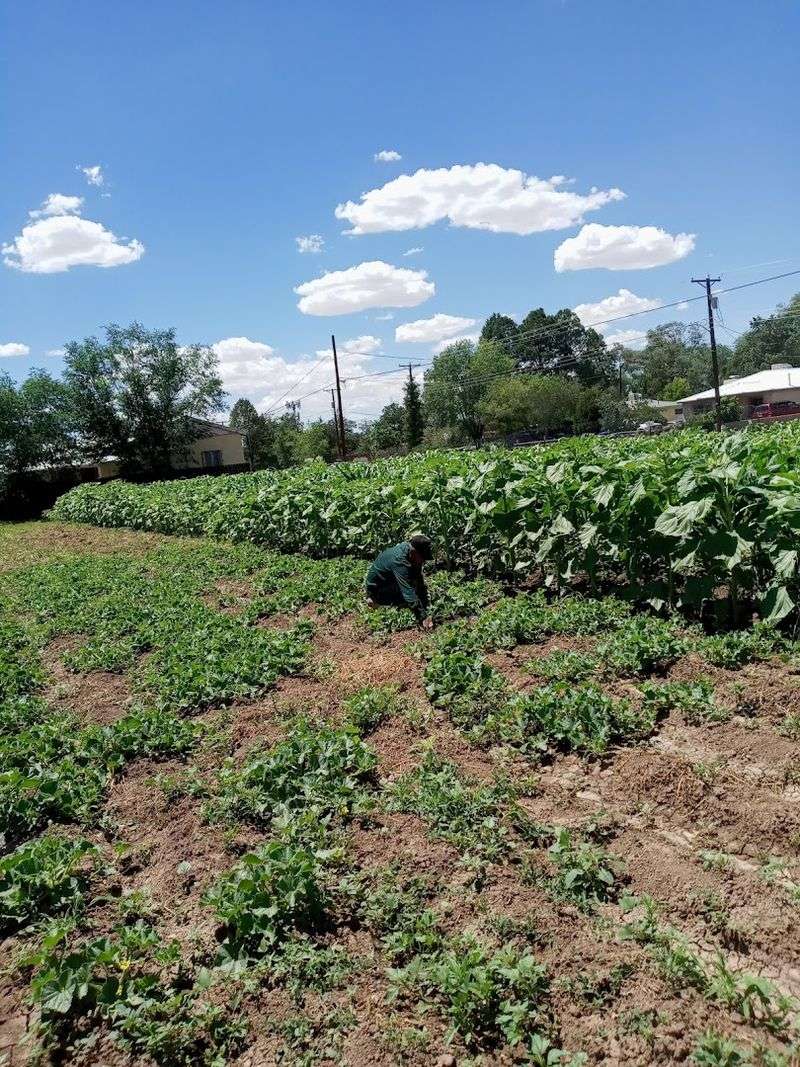
Nothing in a grocery store photograph prepares you for actually standing at the edge of a Hatch Valley chile field. Rows of plants seem to go on until the earth curves away beneath a sky that takes up more of your view than the land does.
The Hatch Valley sits at around 4,000 feet elevation, which means the days are intensely sunny and the nights cool down sharply, and that temperature swing is one of the key reasons these chiles develop such a distinctive earthy, smoky, slightly sweet flavor.
The valley’s fertile high-desert soil, bright sun, and cool nights all help shape the taste of the peppers, which is why growers and food lovers alike point to this region’s unique terroir as something that simply cannot be replicated elsewhere.
Commercial chile cultivation in this valley began more than a hundred years ago, with early immigrant farming families among the first to grow and transport chiles commercially from this region.
At the edge of those fields, I felt the history of the place underfoot as much as I saw it stretching out ahead of me.
Wide skies and deep roots make for a combination that stays with you long after you leave.
Pepper Roasters Turn Beside Open-Air Markets
A chile roaster beside an open-air market is one of those sensory experiences that earns a permanent spot in your memory, mostly because it fires up three senses at once.
The sight of chiles tumbling in a wire drum over a propane flame is unforgettable. The crackle of blistering skins and smoky fragrance rolling outward create an atmosphere no indoor kitchen could ever match.
During peak harvest season, these roasters operate practically non-stop beside market stalls where vendors sell fresh produce, handmade goods, and prepared foods rooted in New Mexican cooking traditions.
I watched one operator work his drum with the calm confidence of someone who has done this thousands of times, adjusting the flame and rotation speed by instinct rather than any timer or gauge.
Shoppers line up with their own bags and boxes, ready to take home chiles that go straight from the roaster into the freezer, preserving that fresh-roasted flavor for months of cooking ahead.
The whole open-air scene feels less like a farmers market and more like a community ritual that happens to involve fire, smoke, and a lot of very happy pepper fans.
Family Counters Serve Fiery Southwestern Plates
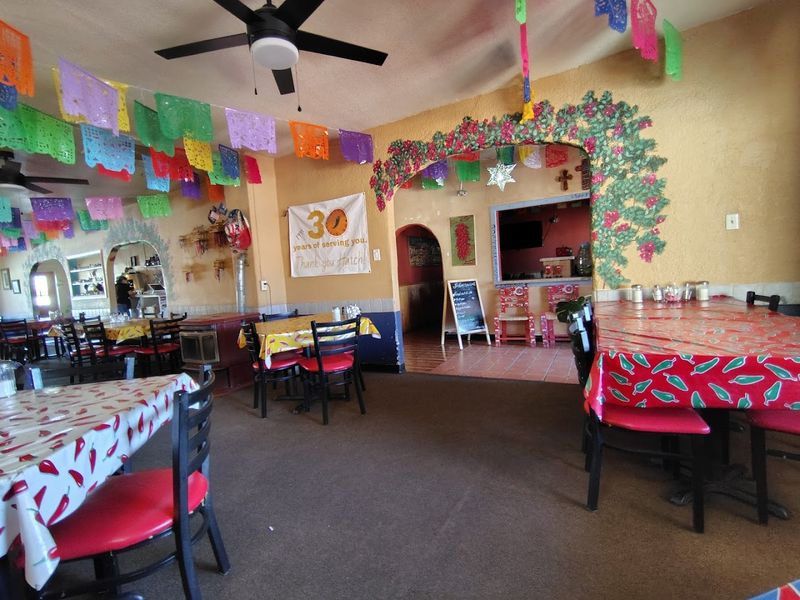
My first green chile cheeseburger at a family-run counter in this village felt like a small personal milestone. The first bite confirmed that I had been missing something significant for most of my adult life.
Hatch chiles are not just a garnish or a side note in the local cooking here. They are the main event, featured in everything from morning breakfast burritos to hearty red chile stews that simmer low and slow through the afternoon.
The green chile cheeseburger in particular has become something of a New Mexico icon. The versions served in Hatch have a special authority, thanks to chiles grown just a few miles from the grill.
Local restaurants are unpretentious places where the food does all the talking, and the menus reflect generations of Southwestern cooking knowledge rather than trend-chasing or fusion experiments.
I noticed that most tables around me had at least one dish featuring roasted chiles in some form, and the conversations happening over those plates felt warm and unhurried.
Food this deeply connected to the land it was grown on brings a particular kind of satisfaction, and these family counters deliver that feeling every single time.
Desert Mountains Frame The Farming Valley
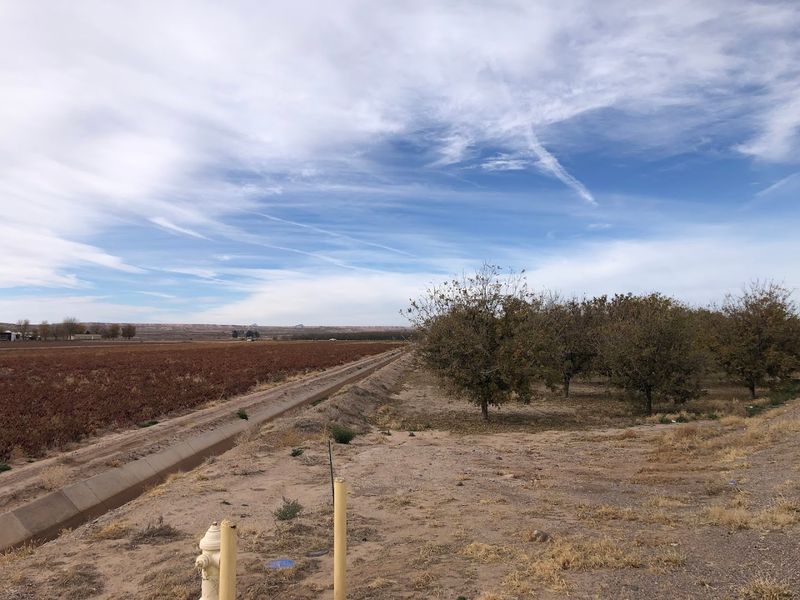
Early morning in the valley, I looked up and realized that the mountains surrounding this farming community do something remarkable: they make the whole place feel both sheltered and enormous at the same time.
The Hatch Valley is cradled by desert mountain ranges that catch the early light and shift color through the day, moving from pale gold at sunrise to deep purple shadow by late afternoon.
This dramatic backdrop gives the agricultural landscape a visual scale that photographs struggle to capture, because the contrast between the orderly rows of chile plants and the raw, jagged mountain ridges behind them is genuinely striking.
The valley’s high-desert setting also plays a practical role in the farming, helping create the warm days and cool nights that are so important to developing the flavor profile that makes Hatch chiles famous worldwide.
I spent one evening just sitting on a low wall near the edge of a field, watching the mountains change color as the sun dropped toward the horizon.
No roasters, no market noise, just farmland, mountain ridges, and the kind of quiet that reminds you why places like this deserve to be visited slowly and on their own terms.
Small-Town Tables Celebrate A Legendary Chile Harvest
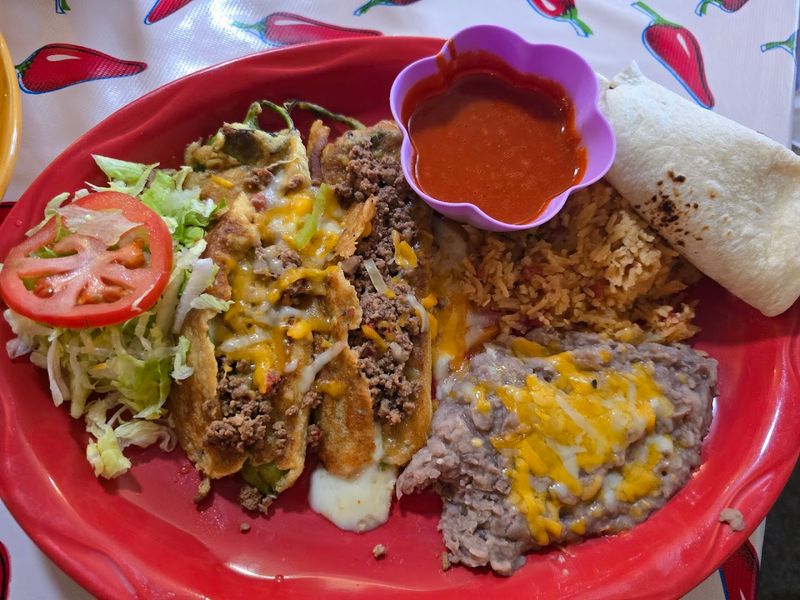
Every Labor Day weekend, this small village of roughly 1,500 people pulls off something that feels almost improbable. The festival draws thousands of visitors from across the country to celebrate a single crop with music, competitions, food, and a communal energy that is hard to find anywhere else.
The Hatch Chile Festival transforms the village into a buzzing outdoor event where the smell of roasting chiles hangs over everything and the sound of live music mixes with the sizzle of cooking pans on open grills.
Cooking competitions, chile-eating contests, and vendor booths stretch across the festival grounds, and the whole thing feels genuinely festive rather than commercialized, because many of the people involved are closely tied to the farming community being celebrated.
I wandered through the festival for most of a day and kept meeting people who had been making this trip annually for a decade or more, treating it like a personal tradition rather than just a casual outing.
The pride in this harvest runs deep, and it shows in every dish served, every ristra sold, and every conversation had over a shared plate of something fiery and delicious.
Hatch earns its title as the Chile Capital of the World not just through production numbers but through the kind of small-town celebration that makes a place truly worth traveling to.