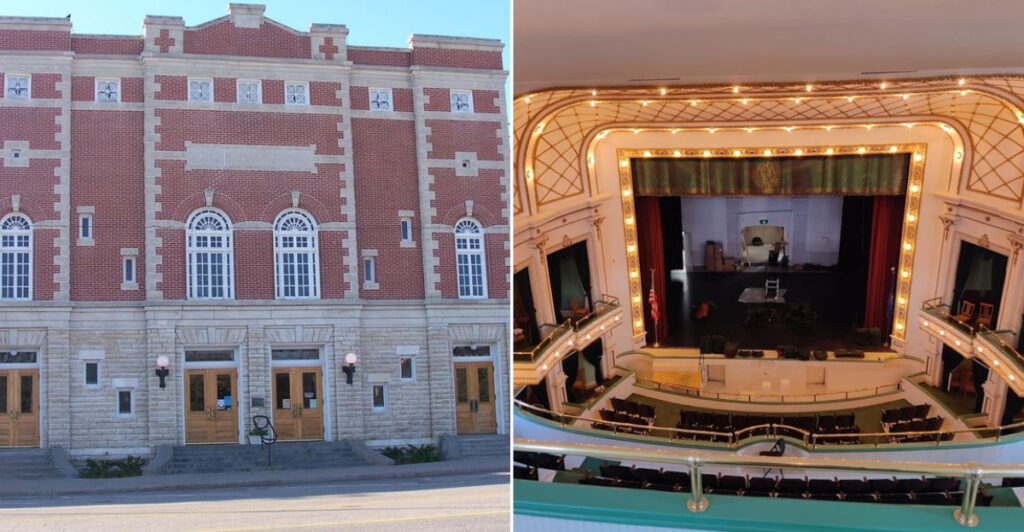
Old theaters have a way of making time feel wonderfully out of order.
In Kansas, this architectural gem carries that rare kind of grandeur that makes you lower your voice the moment you step inside, as if the walls are still holding applause from another century.
Think ornate details, dramatic curves, vintage elegance, glowing stage lights, and the quiet thrill of standing somewhere built to impress long before screens fit in our pockets.
It is not just a building, it is a reminder that entertainment once came wrapped in velvet, craftsmanship, and real ceremony.
Places like this turn a simple visit into a small act of time travel.
I always feel a little spellbound inside historic theaters, because they make me imagine every ticket held, every curtain raised, and every audience member who sat there waiting for the room to come alive.
The Famous Hand-Painted Napoleon Curtain
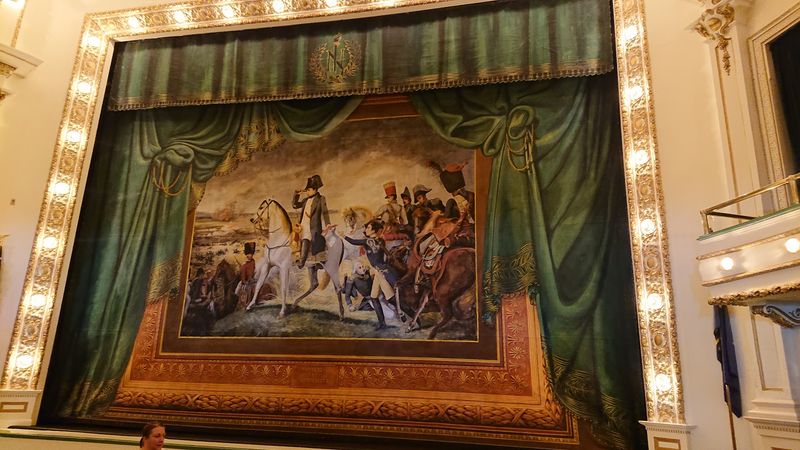
Few theatrical details anywhere in the country match the sheer drama of this one.
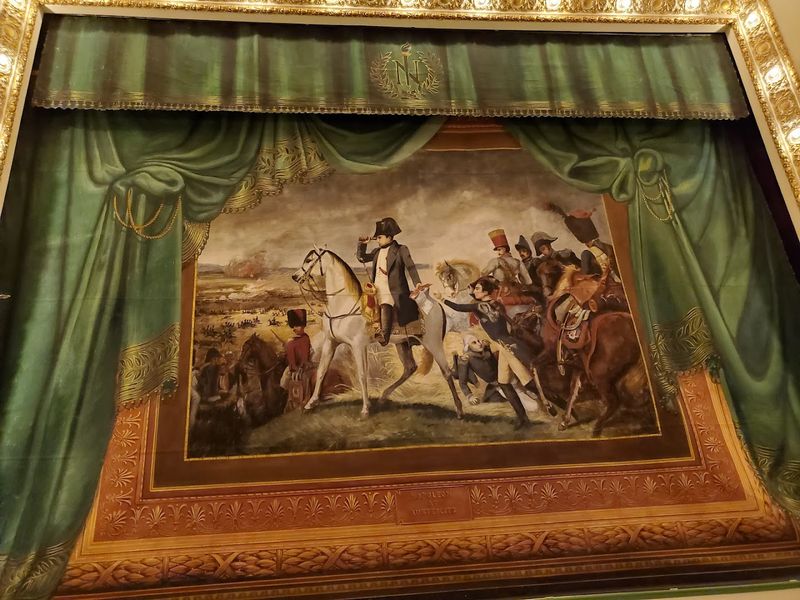
The Brown Grand Theatre is home to an extraordinary stage curtain featuring a dramatic scene of Napoleon Bonaparte on horseback, rendered in sweeping, vivid detail.
The original curtain still hangs above the stage, making it a genuinely rare surviving artifact of early American theatrical design, though it suffered permanent staining and damage after a 1967 tornado.
Most theatres of this era replaced or lost their original curtains long ago.
Seeing that historic curtain inside the theatre adds a powerful visual link to opening night and the era that created the building.
For history lovers and art enthusiasts alike, the Napoleon curtain alone is worth the trip to Concordia, Kansas.
A Victorian Showpiece Built In 1907
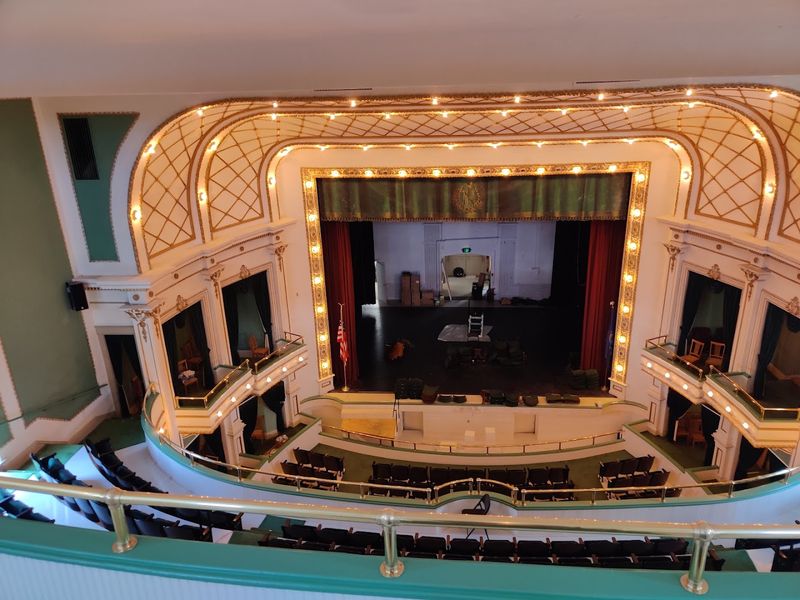
Long before multiplexes and streaming services, a Kansas town built something extraordinary.
The Brown Grand Theatre opened its doors in 1907, making it well over a century old and still standing strong in Concordia, Kansas.
Colonel Napoleon Bonaparte Brown commissioned the building as a gift to his community, and the result was a structure that rivaled theatres found in much larger cities.
The Renaissance-style architecture gave the exterior a bold, dignified presence that turns heads even today.
Back then, live performance was the main form of public entertainment, and Colonel Brown wanted Concordia to have a venue worthy of that excitement.
The theatre drew large audiences in its early years and quickly became the cultural heart of north-central Kansas.
Knowing this history makes every visit feel like stepping into a living chapter of American small-town pride.
A Restoration Story Worth Celebrating
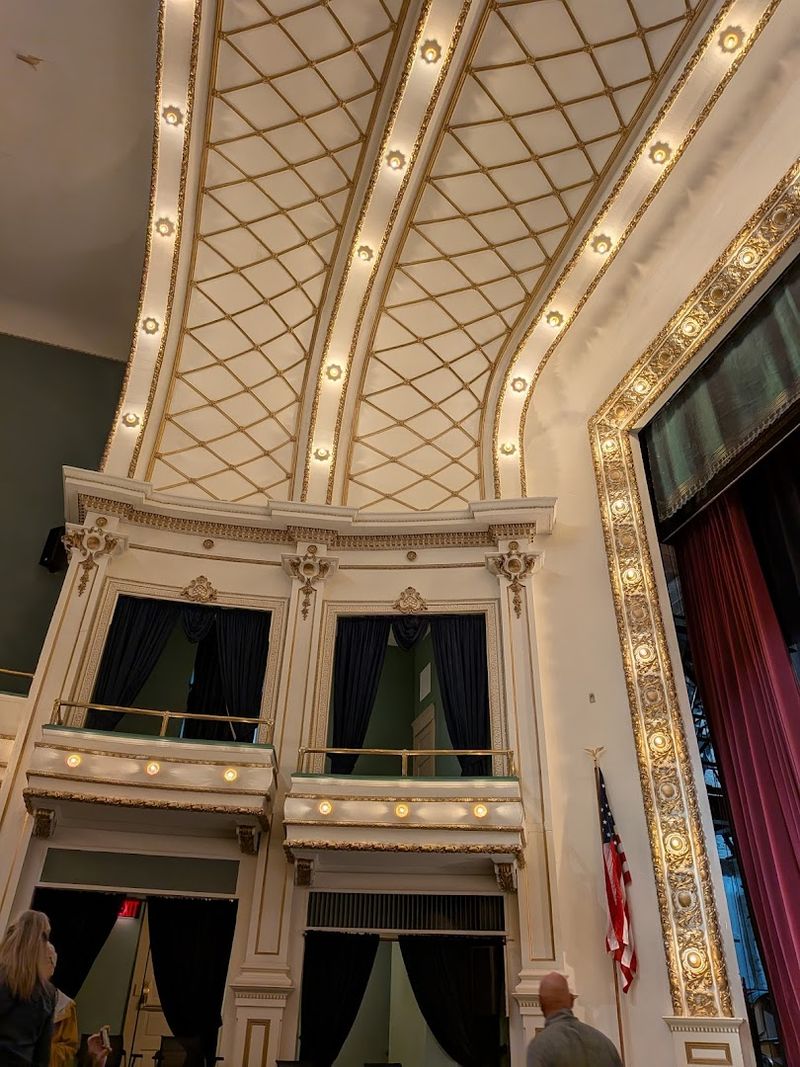
The road from faded relic to fully functioning showplace was not a short one.
By the mid-twentieth century, the Brown Grand Theatre had transitioned into a movie house, and over the decades it lost some of its original grandeur to wear, updates, and changing tastes.
A major community-driven restoration effort began in the 1970s, fueled by local pride and a fierce desire to reclaim what made the space so special.
Restorers worked meticulously to preserve original architectural details, from the ornate plasterwork to the Victorian-era color palette throughout the interior.
What makes this story even more impressive is that the work has never really stopped. Each year, the theatre adds modern improvements while carefully protecting its historic character.
It is a balancing act that the community of Concordia has handled with remarkable skill, proving that small towns can accomplish extraordinary things when they pull together.
Acoustics That Rival Big-City Venues
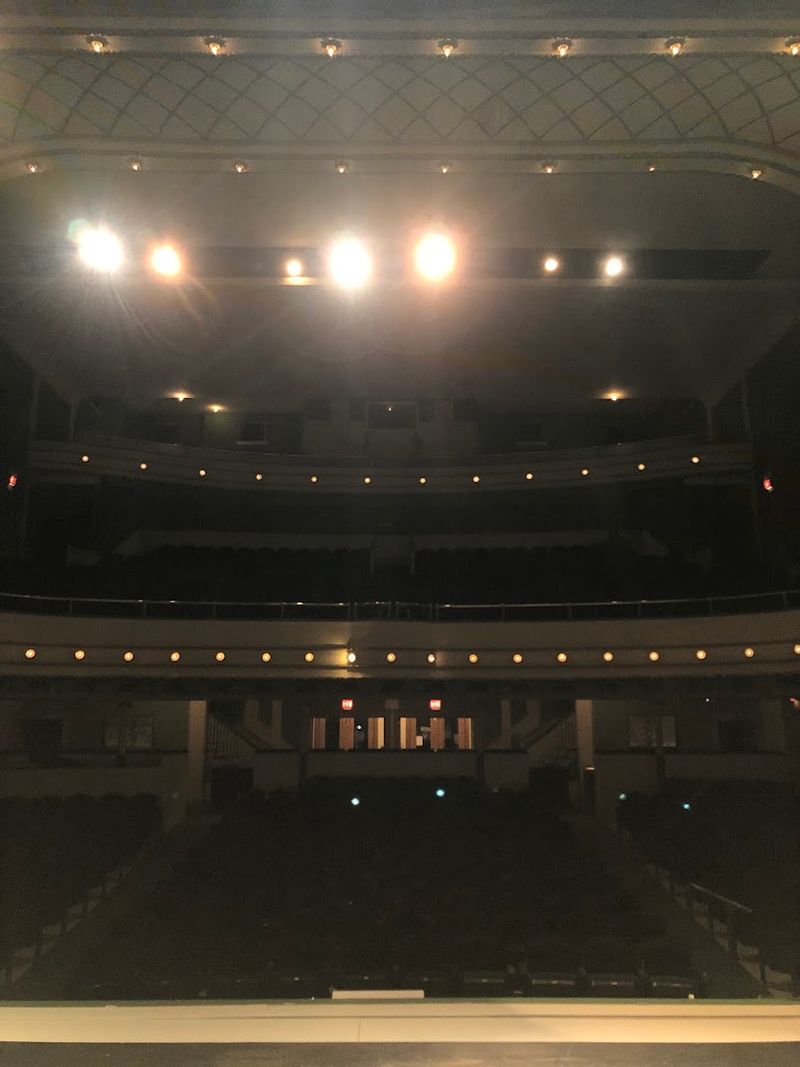
A beautiful room means nothing if the sound is muddy. Fortunately, the Brown Grand Theatre delivers on both fronts, and the acoustics inside this historic space have drawn consistent praise from performers and audiences alike.
The original construction methods and materials used in 1907 actually contribute to the natural sound quality.
High ceilings, curved balconies, and dense plasterwork all work together to distribute sound evenly across the seating area.
Modern sound equipment has been added thoughtfully without compromising the room’s natural resonance.
Tribute bands, stand-up comedians, orchestras, and ballet companies have all taken that stage and found the acoustics more than up to the task.
It is the kind of sonic experience you might expect from a major concert hall in a big city, not from a beautifully preserved theatre on the plains of north-central Kansas. The room genuinely sings.
A Surprisingly Diverse Events Calendar
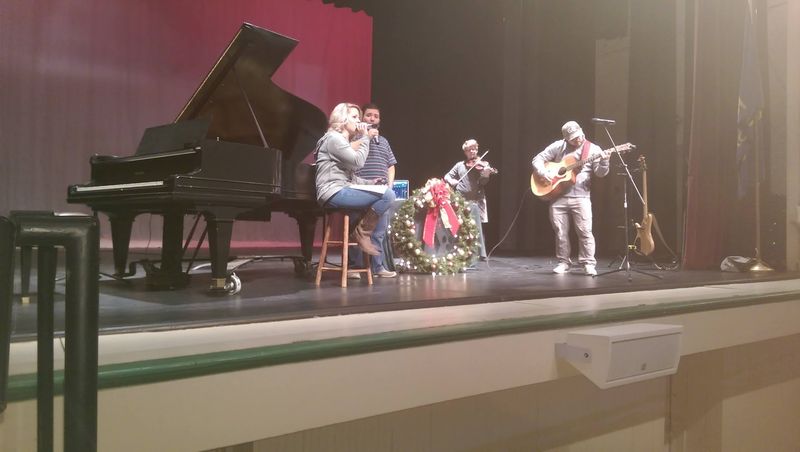
One look at the Brown Grand Theatre’s events calendar and you quickly realize this place refuses to be put in a box.
The programming ranges from tribute band concerts and stand-up comedy to ballet recitals, holiday vespers, and community theatre productions.
The variety is genuinely impressive for a venue in a town the size of Concordia.
Performers have returned year after year, which speaks to both the quality of the space and the enthusiasm of the audiences that fill it. Some acts have made the Brown Grand a regular stop on their touring schedule.
This commitment to diverse programming is also part of a broader mission to bring cultural opportunities to rural Kansas.
Young people in the region get access to live performance art that they might otherwise have to travel hours to experience. The calendar keeps the theatre alive, relevant, and buzzing with energy throughout the year.
The Ornate Victorian Interior That Shocks First-Time Visitors
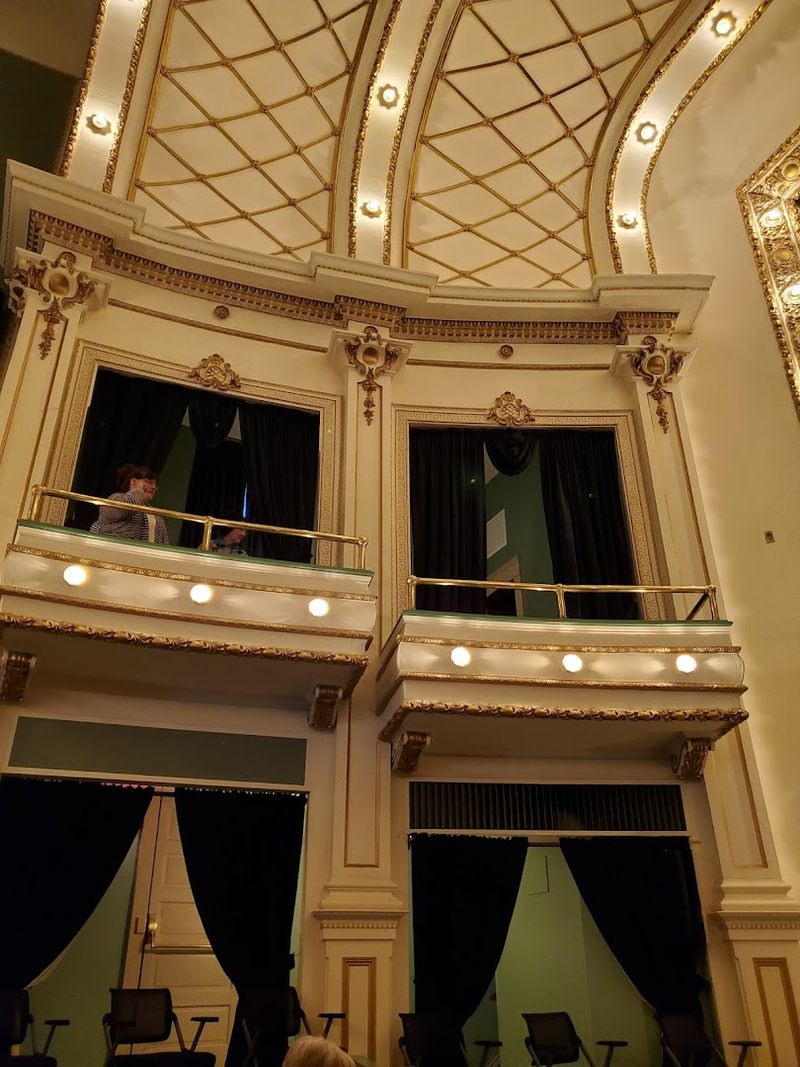
From the outside, the building is handsome but relatively modest. That restraint makes what happens when you step inside all the more jaw-dropping.
The interior of the Brown Grand Theatre is a full-on Victorian sensory experience.
Gilded plasterwork, tiered balconies, decorative ceiling details, and rich color schemes greet you the moment you cross the threshold.
Visitors who expected a quaint small-town hall often find themselves stopping mid-step just to take it all in.
The contrast between the unassuming exterior and the lavish interior is one of the theatre’s most talked-about qualities.
The restorers paid careful attention to maintaining the authenticity of these details, sourcing period-appropriate materials and techniques wherever possible.
The result is an interior that genuinely transports you. It does not feel like a recreation or a theme park version of Victorian design.
It feels like the real thing, because it is.
A Community Institution With Deep Local Roots
What keeps a century-old theatre alive in a small American town? Community.
The Brown Grand Theatre has survived because the people of Concordia, Kansas have chosen to invest in it, volunteer for it, and show up for it generation after generation.
Local youth programs use the theatre to nurture interest in performance arts, giving young people in north-central Kansas a stage to develop their talents.
Holiday programs like the beloved Christmas Vespers have become annual traditions that bring families together and fill the house every year.
The staff and volunteers who run the place are known for being exceptionally welcoming and knowledgeable.
Tours are offered during the week, and guides take genuine pride in sharing the building’s history with curious visitors. That warmth is not accidental.
It reflects a deep sense of ownership that the entire community of Concordia feels toward this remarkable shared space.
The Ghost Stories That Add A Spooky Layer
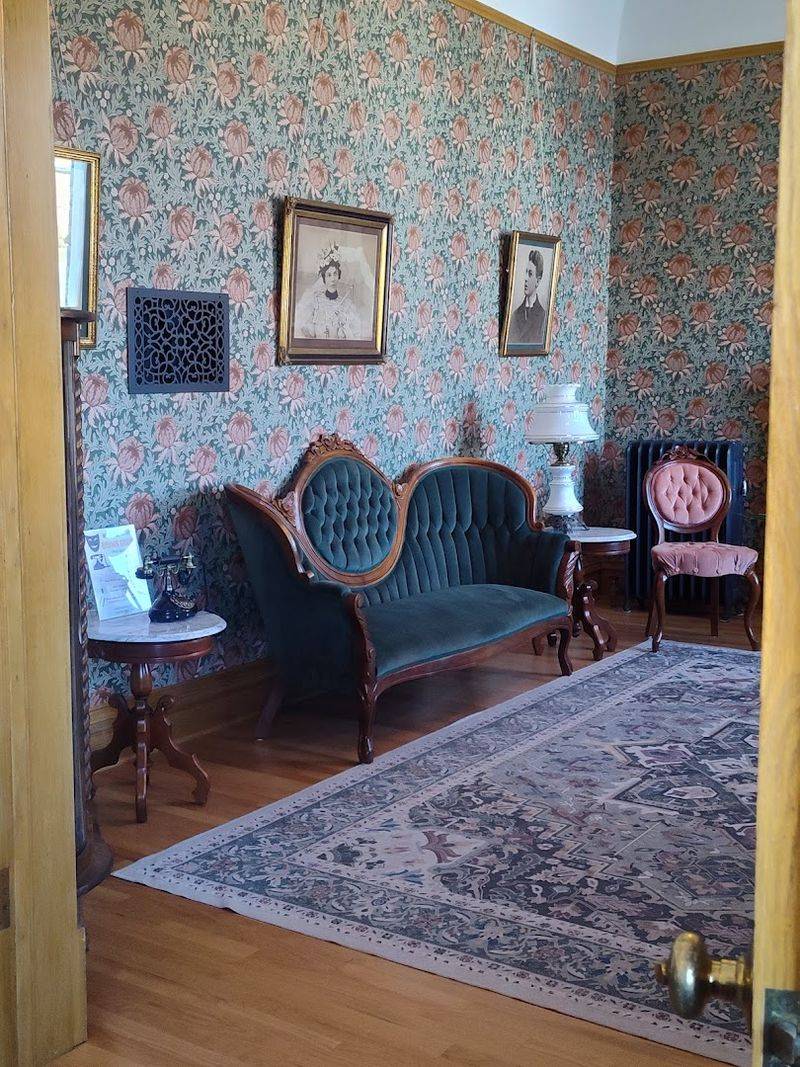
Not every theatre fact involves curtain calls and standing ovations. The Brown Grand Theatre has a spookier side that has attracted paranormal investigators and ghost-hunting enthusiasts for years.
Local legend holds that a former maintenance worker named Jim, who had a deep love for the building, still lingers in the theatre long after his time here ended.
Overnight ghost hunts have been organized at the venue, drawing visitors who are as interested in the supernatural atmosphere as they are in the architecture.
The combination of age, history, and dramatic Victorian spaces makes it an ideal setting for that kind of exploration.
Whether or not you believe in the paranormal, there is something undeniably atmospheric about walking the darkened corridors and balconies of a 100-plus-year-old theatre after hours.
The Brown Grand Theatre manages to be both a vibrant performance space and a genuinely eerie experience when the lights go down.
Practical Visitor Information Worth Knowing
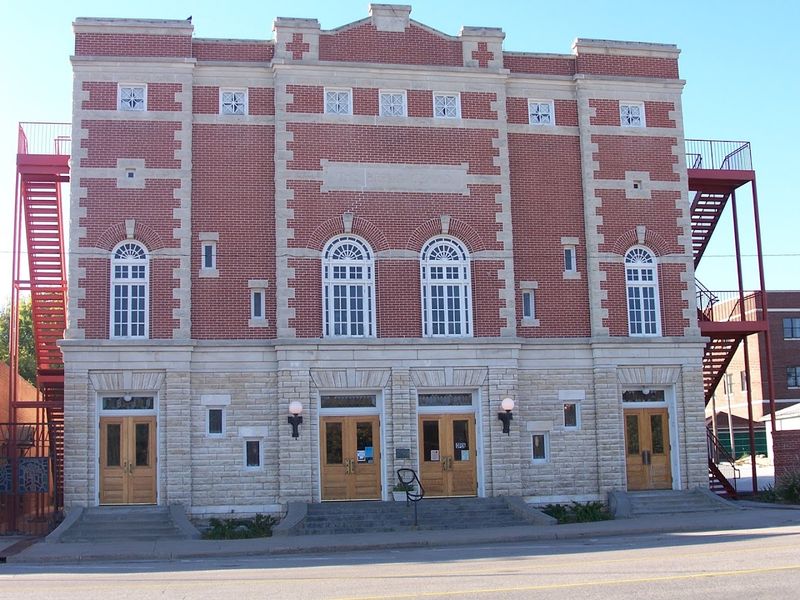
Planning a trip to the Brown Grand Theatre is straightforward once you know the basics.
The theatre is located at 310 W 6th St in Concordia, Kansas, right in the heart of this welcoming north-central Kansas town.
The building is generally open Monday through Friday from 8 AM to 4 PM, and historic tours are available by appointment only.
If you want to attend a live performance, checking the events calendar at browngrand.org ahead of your visit is strongly recommended, as shows sell out and schedules change seasonally.
Concordia sits in a part of Kansas that many travelers pass through without stopping, but this theatre alone makes it a destination worth a deliberate detour.
Parking is easy, the town is friendly, and the experience of standing inside this space for the first time is one you are unlikely to forget quickly.
Why This Theatre Stands Apart From Bigger Venues
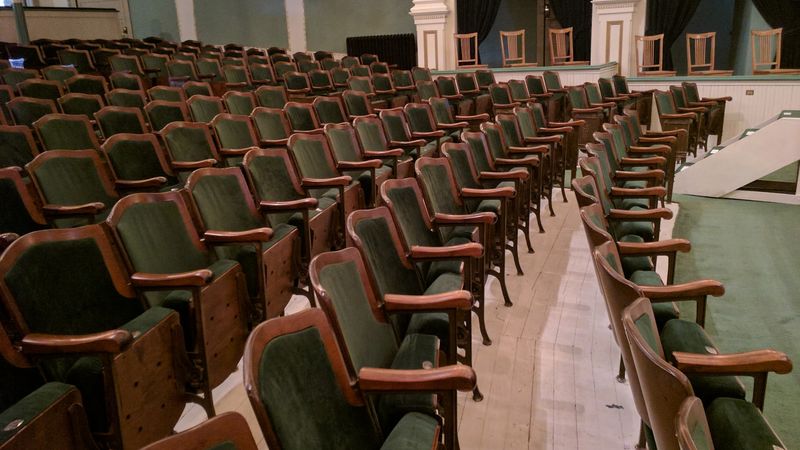
Large concert arenas have their appeal, but something gets lost when a venue grows too big.
At the Brown Grand Theatre, the intimacy of the space is one of its greatest strengths, and it is something that performers and audiences notice immediately.
The relatively compact seating arrangement means that even the balcony seats feel close to the action. There is no bad view in the house, and the energy between the stage and the audience builds quickly in a space this size.
That connection between performer and crowd is something money and square footage simply cannot manufacture.
Visitors who have attended shows at major venues in larger cities often come away from the Brown Grand Theatre surprised by how much more alive the experience felt.
It is a reminder that scale is not the same as quality. Sometimes the most powerful performances happen in the most unexpected, perfectly proportioned rooms.