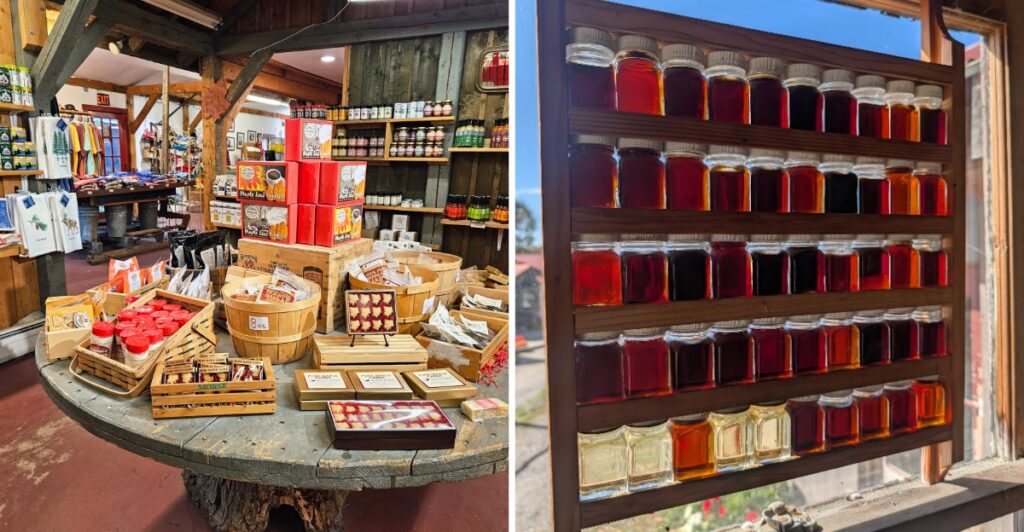
Do me a favor: do not pick your maple syrup before you taste it.
You may think you already know which bottle is coming home.
Then the spoon gets involved.
At this Vermont farm, tasting turns into a tiny test of loyalty. A few samples can make your usual choice feel far less settled than it did five minutes earlier.
And that is before you start poking around the rest of the property.
There is enough happening beyond the counter to stretch a quick stop into something much longer, but I would let the syrup have the first word.
No studying required. No maple expertise necessary.
Just taste, compare, and try not to look too surprised when your favorite changes.
The spoon may know you better than you do.
Four Maple Syrup Grades Give Visitors Plenty To Compare
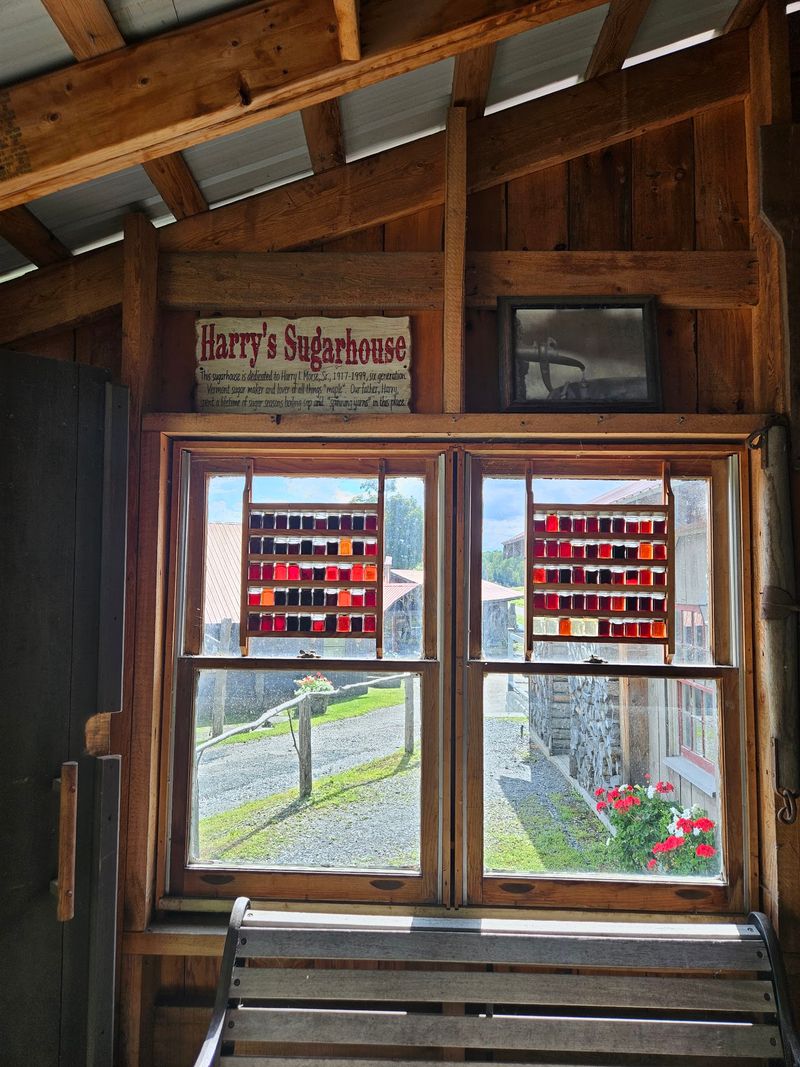
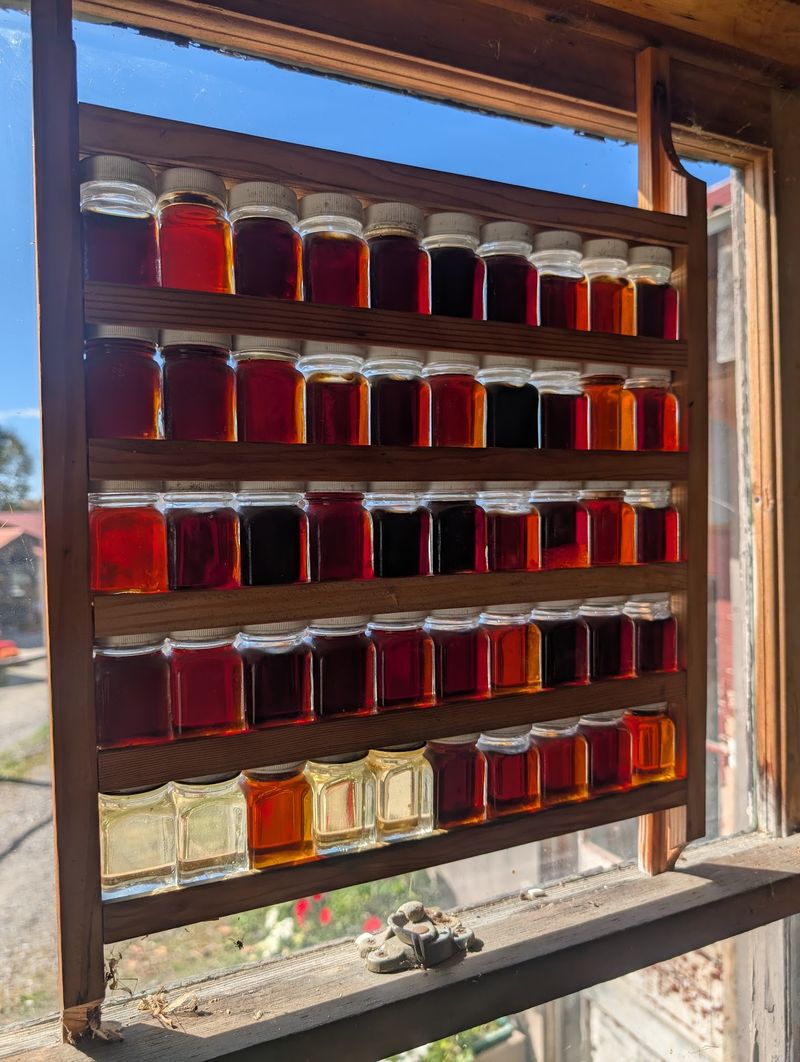
The lineup starts with four names that are easier to understand once you taste them in order: Golden Delicate, Amber Rich, Dark Robust, and Very Dark Strong.
Vermont’s grading system links color with flavor intensity. Golden is the lightest color and carries the most delicate maple taste. Amber moves into a richer profile, Dark has a more robust flavor, and Very Dark brings the strongest maple character of the four.
Each grade meets Vermont standards, and the choice comes down largely to how much maple flavor you want.
Morse Farm makes that decision easier by offering samples of the grades at the farm. Start light and move darker so the change in intensity is easier to notice.
Do not worry about memorizing a tasting chart before you arrive. The useful question is simpler: do you want maple to sit quietly in the background, or do you want it to announce itself?
Once that answer becomes clear, the four bottles stop looking like nearly identical breakfast supplies and start behaving more like four different ingredients.
Golden And Amber Keep The Flavor On The Lighter Side
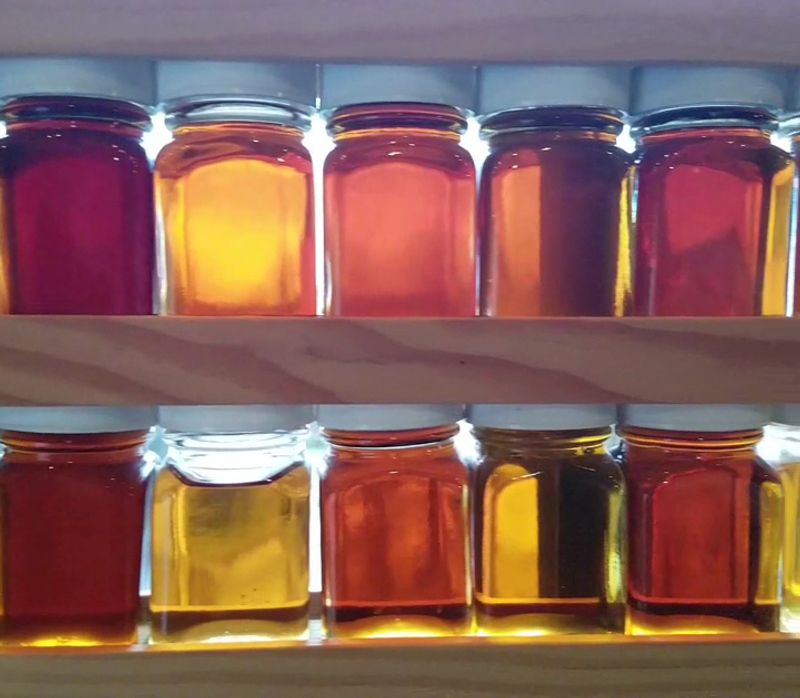
Golden Delicate sits at the palest end of the lineup. Vermont’s current grade standard places it in the lightest color range, and its flavor is correspondingly delicate.
That makes Golden a sensible place to begin a tasting. Try it first, then compare everything else against that lighter baseline. Moving directly from Golden to Very Dark makes the contrast obvious, but stepping through Amber first lets you notice the smaller changes too.
Amber Rich is the next stop. It carries a fuller maple flavor than Golden without reaching the intensity of Dark or Very Dark. Amber offers a useful middle ground when you want maple flavor to be noticeable without moving to the strongest end of the spectrum.
If two people at the counter disagree, that is useful information rather than a problem. One bottle does not have to satisfy every maple preference in the car.
Take another small taste before deciding. Syrup color is helpful, but your own palate gets the final vote. That is the advantage of choosing a grade after sampling instead of buying by label alone.
Dark And Very Dark Bring More Maple Forward
Dark Robust moves the flavor another step upward. It has a more pronounced maple character than Amber, making it useful when you want the syrup to remain noticeable alongside other ingredients.
Dark works for both table use and cooking, so the same bottle can move from breakfast to sauces, glazes, or other recipes where maple flavor needs to stay present.
Very Dark Strong sits at the deepest end of the spectrum. Its color is substantially darker, and its maple flavor is the most intense of the four grades.
That strength is especially useful in cooking because the maple character can carry through a finished dish instead of disappearing among stronger flavors. It can also work as a sweetener in coffee, or anywhere you deliberately want maple to stand out.
Taste Very Dark after the lighter grades, and the progression becomes much easier to understand. What looked like a row of brown liquids suddenly has a clear order.
There is no rule saying the strongest grade belongs only in a mixing bowl, either. Anyone who prefers a deeper maple flavor can use it at the table.
The point of tasting is not to find an official winner. It is to figure out where your own preferred stopping point lands.
Sampling Before Buying Takes The Guesswork Out
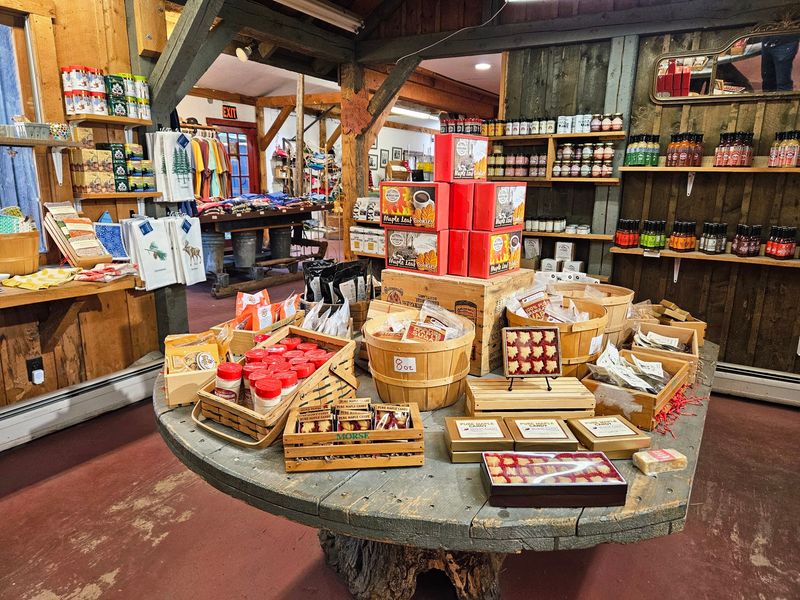
Standing in front of four grades is much easier when you can taste them. Morse Farm invites visitors to sample its maple syrup lineup, so choosing a bottle does not have to depend on color, package size, or somebody else’s preference.
A simple tasting order works well: Golden, Amber, Dark, then Very Dark. That progression moves from delicate to strong and keeps the flavor change easy to follow.
If your attention starts drifting toward sweetness rather than maple intensity, pause for water before the next sample. A reset helps keep Amber from disappearing into Dark or Very Dark after several tastes.
The farm also sells a four-bottle grading sampler containing small bottles of Golden, Amber, Dark Robust, and Very Dark. Availability can change, so the in-person tasting remains the simplest way to compare what is being poured that day.
Think about how the syrup will actually be used once it gets home. A bottle destined mostly for the breakfast table may lead you in one direction, while baking and cooking may push you toward a darker grade.
That is enough of a guide for most first visits. Taste in order, notice when the maple flavor reaches the level you like, and choose from there.
No scorecard required.
The Sugarhouse Explains Where The Syrup Starts
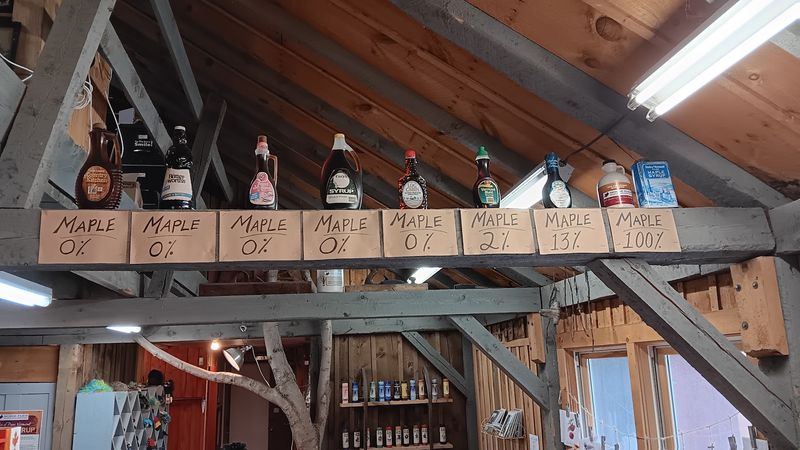
The tasting makes more sense after seeing how much work happens before syrup reaches a bottle. Morse Farm includes a sugarhouse and a short sugarmaking presentation that introduces visitors to the process.
Maple syrup begins as sap collected from maple trees. The sap is concentrated and heated until enough water has been removed to produce syrup at the required density.
What begins as a clear, lightly sweet liquid becomes the familiar amber product through that concentration process.
The farm’s busiest maple-making period falls in late winter and early spring. During sugaring season, roughly from mid-February into April, the sugarhouse is open to the public and can be active with the work of the season.
At other times of year, the Woodshed Theatre provides an introduction to sugarmaking through a video presentation. The building itself uses walls of sugar wood and includes maple-stump seating and farm artifacts.
The property also has a maple trail winding through the sugarbush, along with folk art, antique farm implements, and goats named Rex and James.
That gives you several ways to connect the bottle in the store with the trees outside. Take the short walk before shopping, or save it for afterward when a little movement sounds useful after several syrup samples.
The Farm Store Goes Well Beyond A Bottle Of Syrup
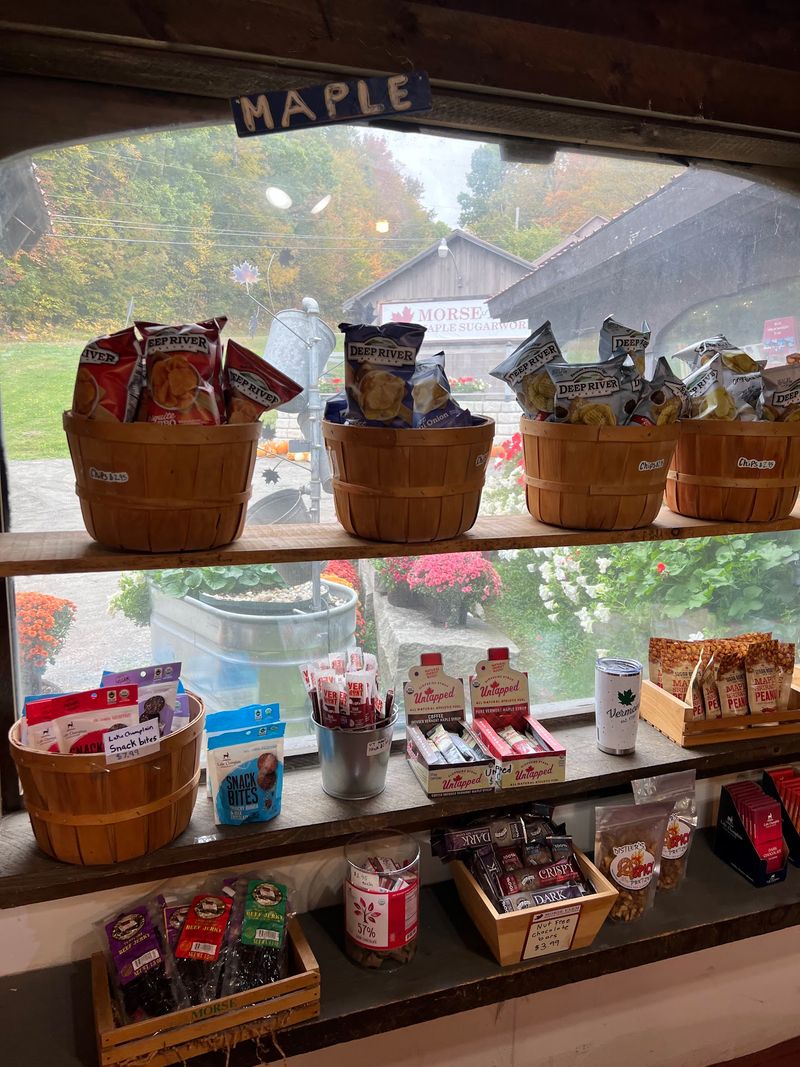
Maple syrup may start the visit, but it does not occupy every shelf. Morse Farm makes candy, cream, maple butter, and other maple products throughout the year, while the store also carries Vermont specialty foods and gifts.
Maple cream takes syrup in a spreadable direction, while maple candy offers a small, easy-to-pack version of the same central ingredient. Maple sugar gives cooks another way to bring maple flavor into recipes without pouring from a bottle.
The farm’s maple creemees are also available year-round rather than disappearing with summer. That matters in Vermont, where a frozen dessert in cold weather apparently does not require an apology.
The current store schedule is daily from 10 a.m. to 5 p.m. as of September 2026. Hours shift seasonally, with longer summer days in a typical year, and the farm closes all day on Thanksgiving and Christmas.
You will find the property at 1168 County Road, Montpelier, VT 05602, about 2.7 miles outside the city.
Parking includes room for ordinary vehicles as well as pull-through space for RVs and vehicles towing trailers, which makes the stop easier to work into a longer Vermont drive.
Two Centuries Of Sugaring Sit Behind The Counter
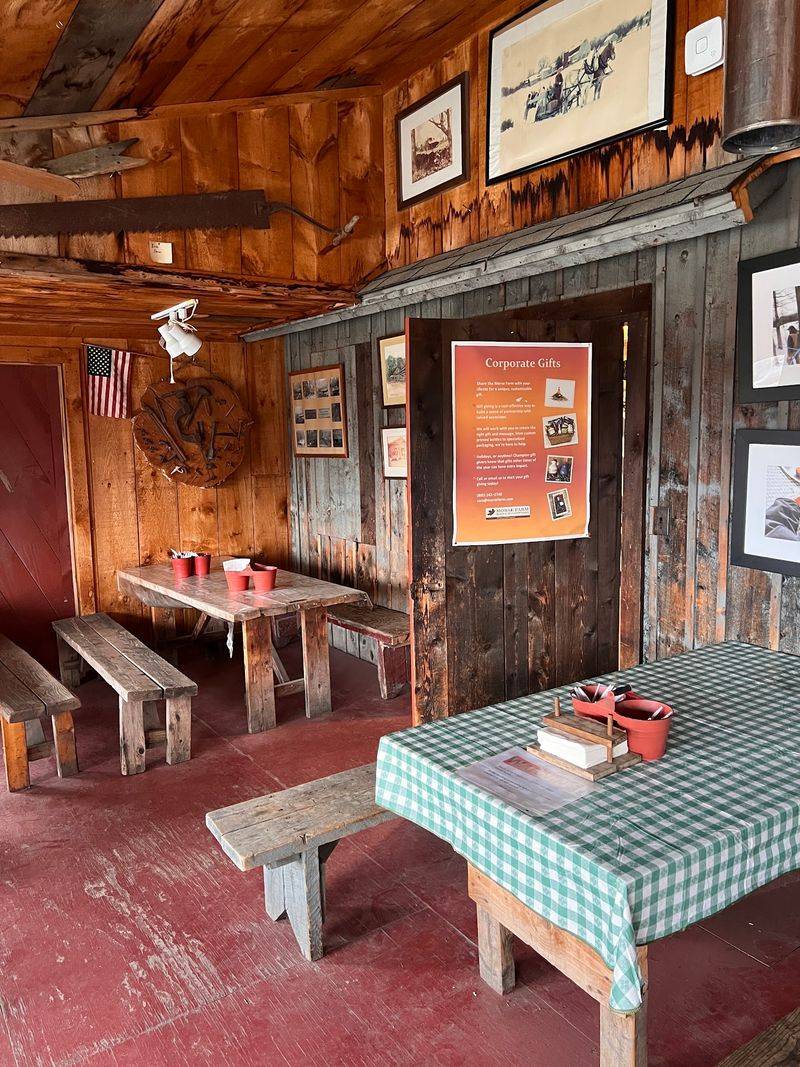
The Morse family’s connection to maple sugaring reaches back generations, while the current farm attraction took shape much later.
Morse Farm Maple Sugarworks was established in 1966 when Harry Morse Sr. shifted from dairying toward a sugaring operation and small store focused on maple and Vermont products.
Harry “Burr” Morse Jr. later ran the business for nearly four decades before retiring in 2022. Jake Shattuck, a Morse through his mother’s side of the family, became the third owner of the long-running family business.
That history gives the property several layers beyond the store counter. Sugaring, farm exhibits, the sugarhouse, walking trail, maple products, and family history all overlap on the same hillside.
A first visit can stay very simple. Watch the sugarmaking presentation, walk through part of the property, taste the four syrup grades, and decide which flavor level belongs in the bag.
If the answer changes after a maple creemee, nobody has to know.
Maple syrup is not a single flavor wearing different shades of brown. Golden, Amber, Dark, and Very Dark offer a real progression in intensity, and tasting them side by side makes that difference easy to understand.
Breakfast may never look quite as straightforward again.