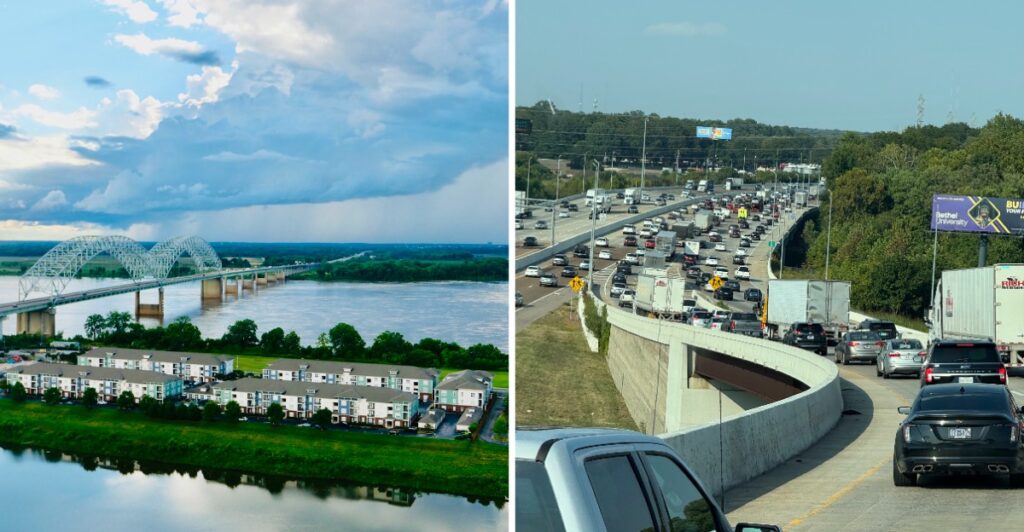
A few minutes behind the wheel can hide a ridiculous amount of engineering.
Cross the Mississippi between Tennessee and Arkansas and those giant steel arches grab your attention first. Fair enough. They are doing a lot of visual heavy lifting.
But that quick drive has a much bigger story underneath it.
Thousands of vehicles rely on this crossing every day, including plenty of trucks. Most drivers probably never think about what it takes to keep all that traffic moving above one of America’s biggest rivers.
Then you learn a little more.
Suddenly the bridge is not just scenery through the windshield. Its history includes engineering challenges, major upgrades, and one moment that brought the crossing to a complete stop.
I love places that look ordinary until you know what happened there.
Ready to see what those arches have been carrying besides traffic?
About 48,200 Vehicles Cross This Memphis Bridge Every Day
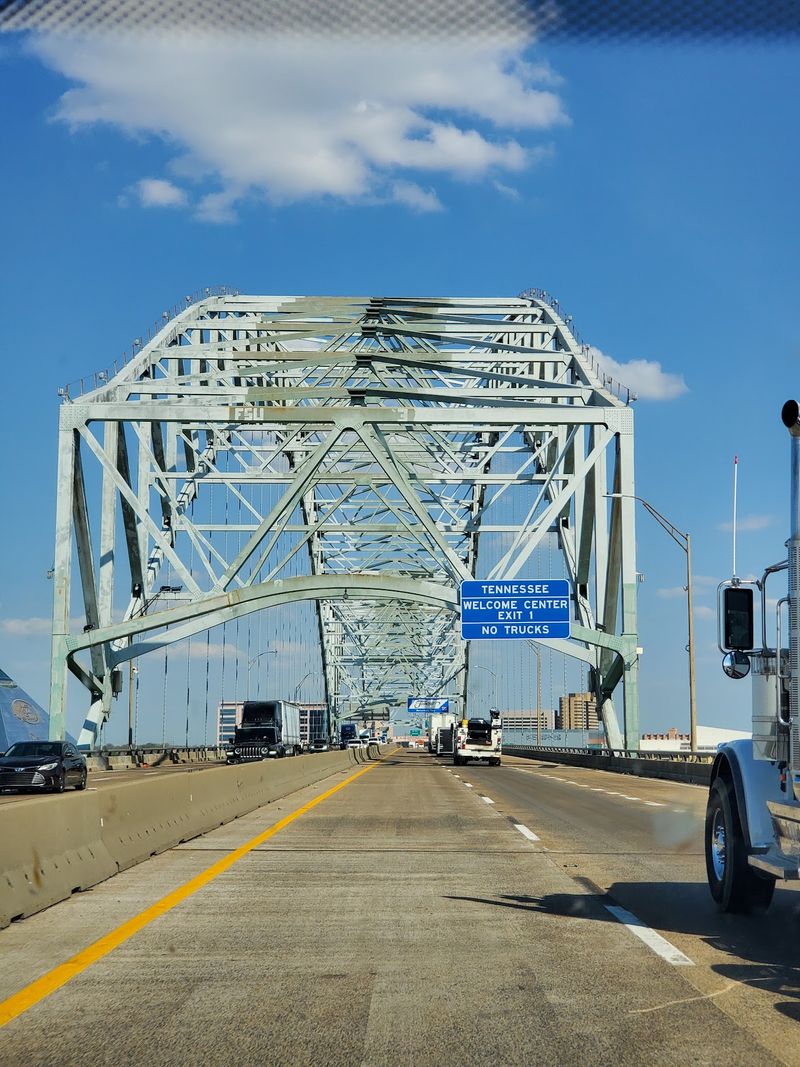
Picture the steady flow of traffic moving across the Mississippi from morning through night. The Hernando de Soto Bridge carries about 48,200 vehicles on an average day, making it a major highway connection between Tennessee and Arkansas.
The bridge has six traffic lanes, with three running in each direction. That gives Interstate 40 a direct route between Memphis and West Memphis without sending drivers south to the other major interstate crossing in the area.
Behind the wheel, those numbers are easy to miss. The arches rise above you, the river slips underneath, and within minutes you are already on the other side.
The bridge serves very different trips at the same time. Local traffic shares the lanes with cross-country travelers and commercial trucks using one of the nation’s major east-west interstate corridors.
That mixture helps explain why short lane closures can affect traffic quickly. Tens of thousands of vehicles depend on the crossing every day.
I know I’d look at the traffic a little differently after realizing how many other drivers make that same crossing every day.
Roughly 12,000 Trucks Depend On This Mississippi River Crossing Daily
Trucks make up about 29% of the bridge’s average daily traffic. Applied to the current traffic count, that works out to roughly 12,000 trucks crossing on an average day.
Those trucks matter because the bridge carries Interstate 40, one of the country’s major east-west routes. Freight moving through Memphis can continue across the Mississippi without leaving the interstate network.
Look at a line of semis on the bridge and you are seeing more than local deliveries. The corridor supports long-distance freight movement reaching far beyond Tennessee and Arkansas.
The importance became especially clear when the bridge closed in 2021. Traffic shifted to the I-55 Memphis-Arkansas Bridge and other routes, creating major delays around the nearby interstate alternative.
The bridge handles ordinary daily travel between two states while also carrying a substantial amount of commercial traffic through the Memphis area.
A slowdown here can affect more than a morning commute because freight moving across several states can be caught in the same delay.
Seeing a line of semis beside you suddenly means more when you realize how much long-distance freight is moving across the river at the same time.
Two Massive Steel Arches Make The Bridge Impossible To Miss
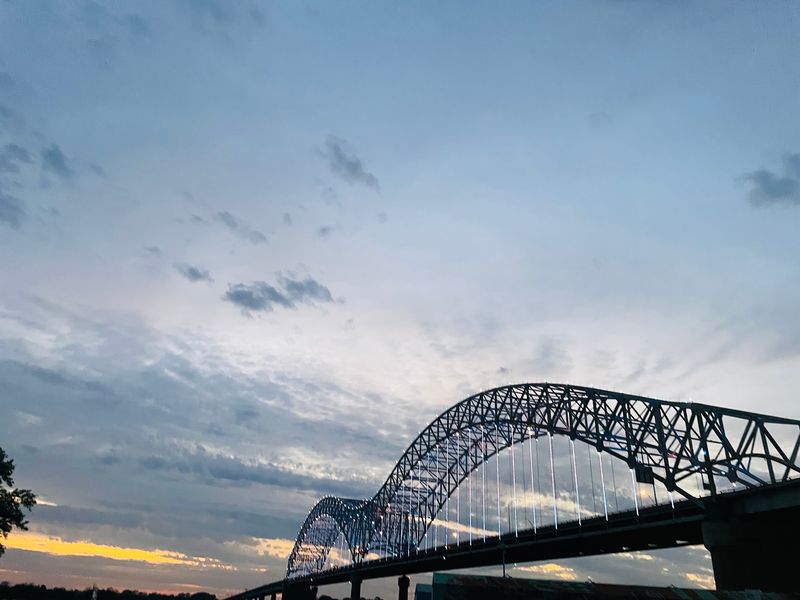
The Hernando de Soto Bridge is instantly recognizable because of its two tied steel arches. Each main arch span stretches 900 feet, creating the double curve that has become part of the Memphis riverfront.
The shape explains one of the bridge’s familiar nicknames. Seen from the riverfront, the paired arches resemble a giant letter M, so the crossing is often called the M Bridge.
The arches are not simply decoration. They are the defining structural elements of the two main river spans, carrying the roadway across the Mississippi.
From inside a car, the view is different. You travel beneath and between the steel members, so the shape that looks clean from a distance becomes a much larger framework overhead.
The Hernando de Soto Bridge, I-40, Memphis, TN 38103, puts drivers directly beneath the tied-arch structure before the roadway continues toward the opposite bank.
At night, lighting outlines the arches and makes their shape easy to pick out from the Memphis side of the river.
Which view would catch your attention first, the full double arch from the riverfront or the steel rising above the highway?
The Crossing Reaches Far Beyond The Twin 900-Foot Arches

The two 900-foot tied-arch spans are the visual centerpiece, but they are only part of the full crossing. Long approach structures carry Interstate 40 toward the main river spans from both Tennessee and Arkansas.
The roadway rises toward the Mississippi, crosses the main channel, then continues across approach sections before returning to ordinary ground.
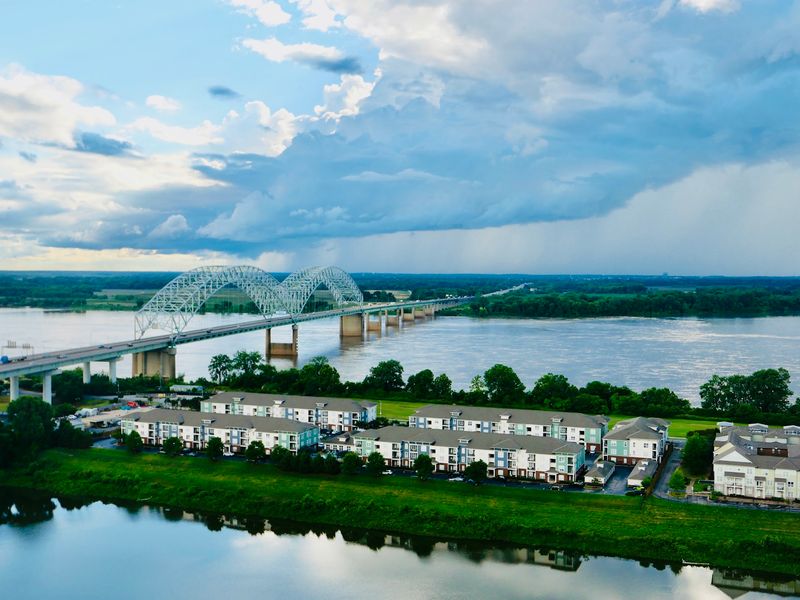
The broad river setting makes the scale clearer from outside the car. Barges and other river traffic move below while six highway lanes pass overhead, placing two major transportation systems at different levels in the same corridor.
That separation matters in Memphis, where the Mississippi remains an active commercial waterway. Highway traffic needs a dependable crossing, while river traffic needs clear passage beneath it.
The structure has to span the river, carry interstate traffic, accommodate heavy truck volume, and remain open above a working navigation channel.
The approaches are part of what makes the entire crossing function, carrying traffic from ground level toward the elevated main spans and back down again on the opposite side.
I’d probably start noticing the approach much earlier now, because the famous arches are only one piece of a much larger crossing.
This I-40 Bridge Has Connected Tennessee And Arkansas Since 1973
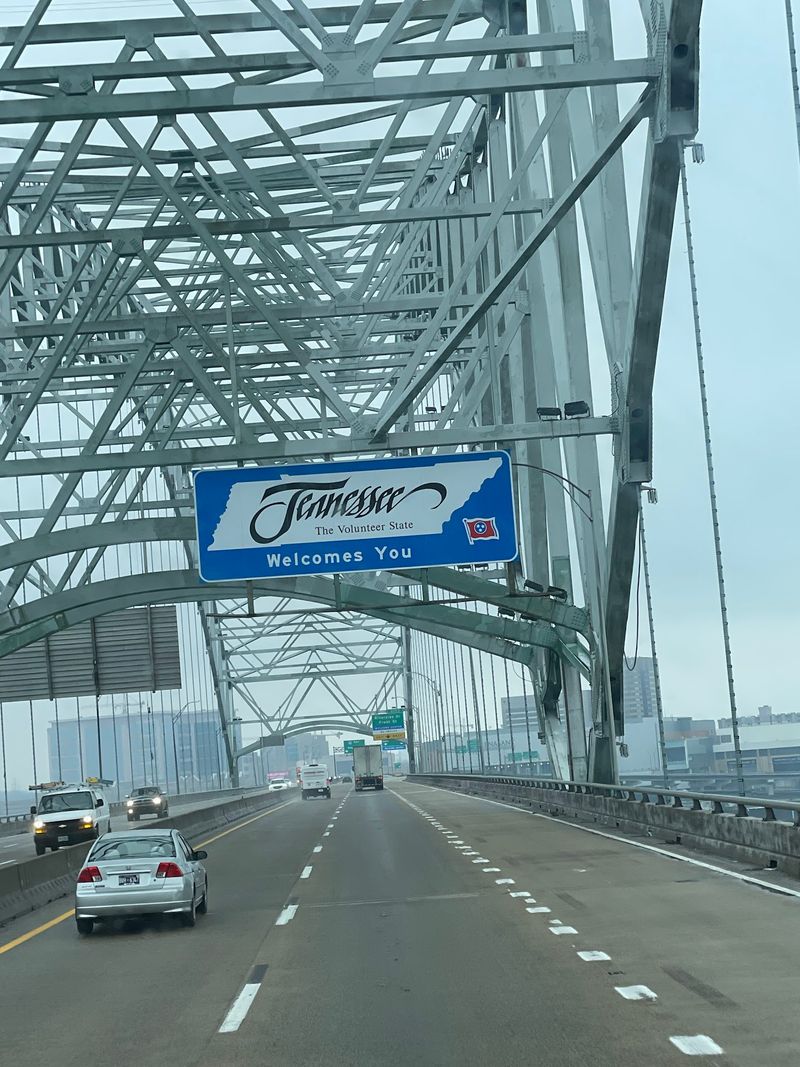
Construction on the Hernando de Soto Bridge began in 1967, and automobile traffic started using the new crossing in August 1973. The bridge opened to traffic on August 2, followed by a formal dedication later that month.
That gave Memphis another major highway connection across the Mississippi River and placed Interstate 40 on a direct route between Tennessee and Arkansas.
The crossing has six lanes and remains one of only two major interstate highway bridges over the Mississippi in the Memphis area. The other is the I-55 Memphis-Arkansas Bridge farther south.
Cars using the bridge may be making a short local trip or traveling hundreds of miles along I-40, while trucks can be moving freight through multiple states.
The bridge carries the name of Hernando de Soto, the 16th-century Spanish explorer whose expedition traveled through the region around the Mississippi River.
More than half a century after the first cars rolled across, the bridge still performs the same basic job on a much busier transportation network.
Traffic numbers have changed, vehicles have changed, and the surrounding metro area has grown, but the paired arches remain a familiar part of the crossing.
Can you imagine how many individual trips have passed beneath those arches since August 1973?
Engineers Spent 15 Years Strengthening It Against A Major Earthquake
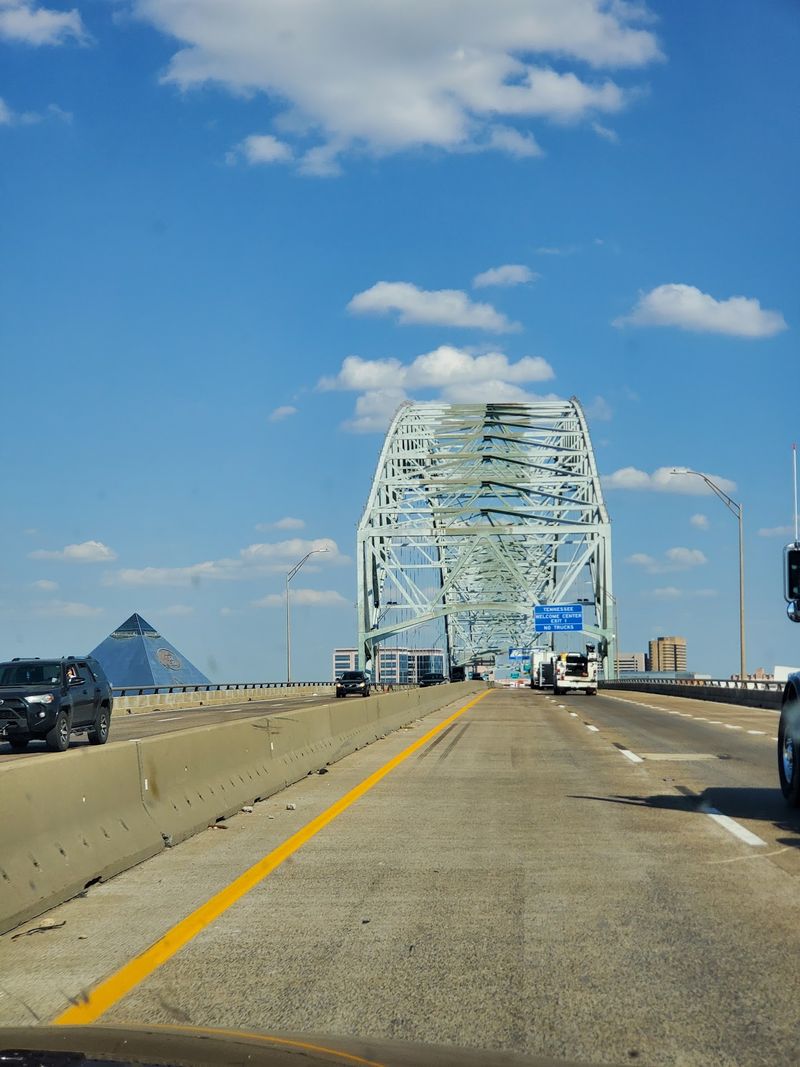
Memphis sits near the southeastern edge of the New Madrid Seismic Zone, so earthquake resilience became a major concern for the Hernando de Soto Bridge.
A 15-year seismic retrofit strengthened the bridge and its approaches for the possibility of a powerful earthquake. The work was designed around an event as strong as magnitude 7.7.
The project required cooperation between Tennessee and Arkansas and involved well over $200 million in spending by its completion in 2015.
Most of that work is not obvious during an ordinary drive. The arches still dominate the view, while the strengthening measures are part of the bridge and approach systems beneath and around the roadway.
The investment goes beyond local commuting. Interstate 40 is a national freight and travel corridor, and losing this Mississippi River crossing after a major earthquake would affect movement far outside Memphis.
The structure opened in the 1970s, but engineers spent years adapting it to seismic risks that became a major focus decades later.
Knowing how much engineering sits beneath an ordinary few-minute drive makes the crossing much more interesting to me.
One Unexpected Discovery Shut The Entire Bridge Down In 2021
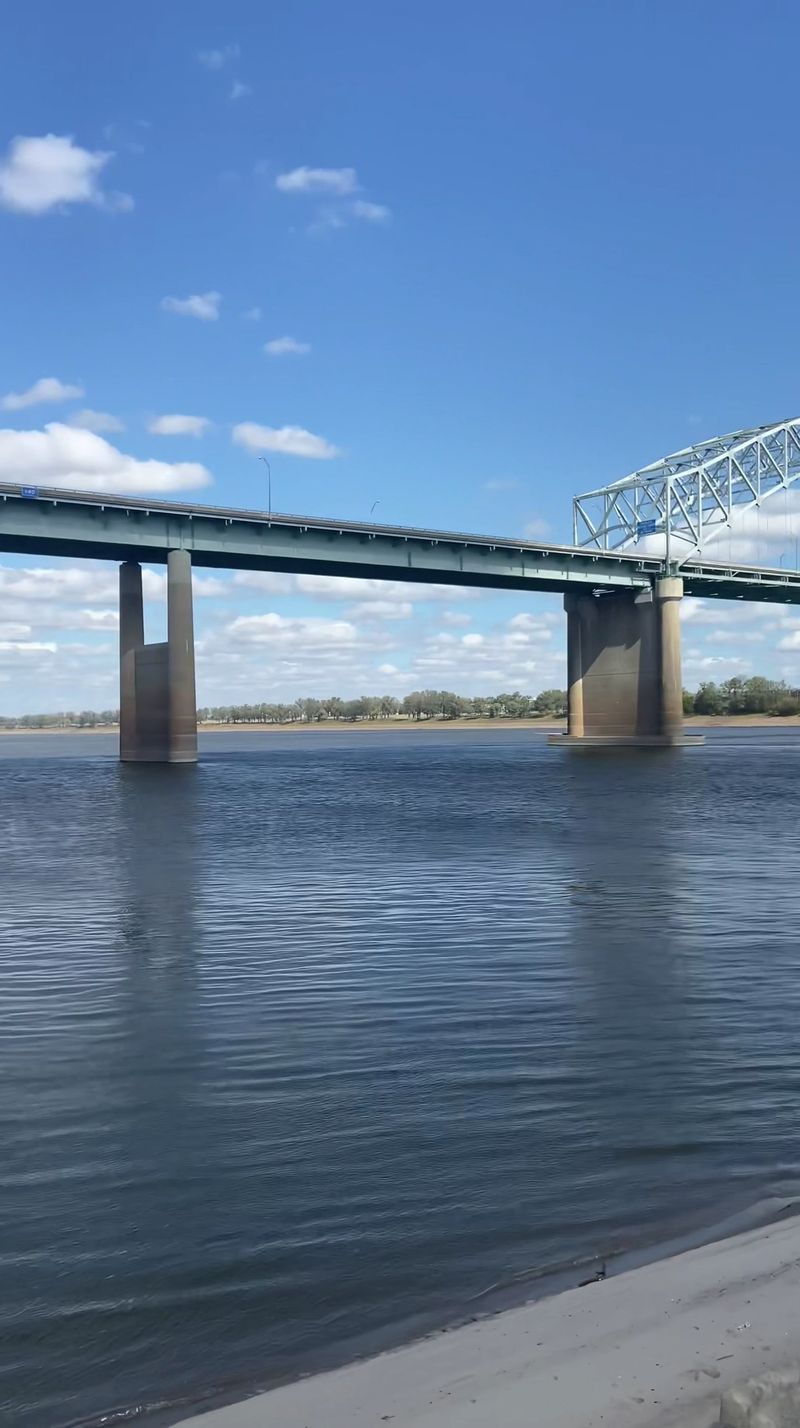
A routine bridge inspection on May 11, 2021, uncovered a partially fractured tie girder in one of the main spans. The finding led to the immediate closure of all six interstate lanes while the structure was inspected and repaired.
A bridge carrying tens of thousands of vehicles on an average day suddenly had no normal traffic, and drivers had to shift to other routes across the Mississippi.
The inspection did not stop with the visible fracture. Crews examined the lower portions of the tied-arch spans and used ultrasonic testing on roughly 500 welds, leading to additional steel reinforcement at 17 locations.
Repairs and specialized inspections cost about $10 million. Reopening happened in stages, with eastbound lanes reopening on July 31, 2021, followed by westbound lanes on August 2.
The closure lasted 83 days and showed how quickly one structural problem could reshape traffic around Memphis.
Inspection and maintenance remain part of the bridge’s life. In August 2026, temporary westbound lane closures were scheduled for traffic-camera repair work, a much smaller interruption than the complete shutdown five years earlier.
For a structure crossed by about 48,200 vehicles on an average day, that 2021 silence was extraordinary.
The strangest part may be picturing a bridge this busy sitting almost completely silent for weeks.