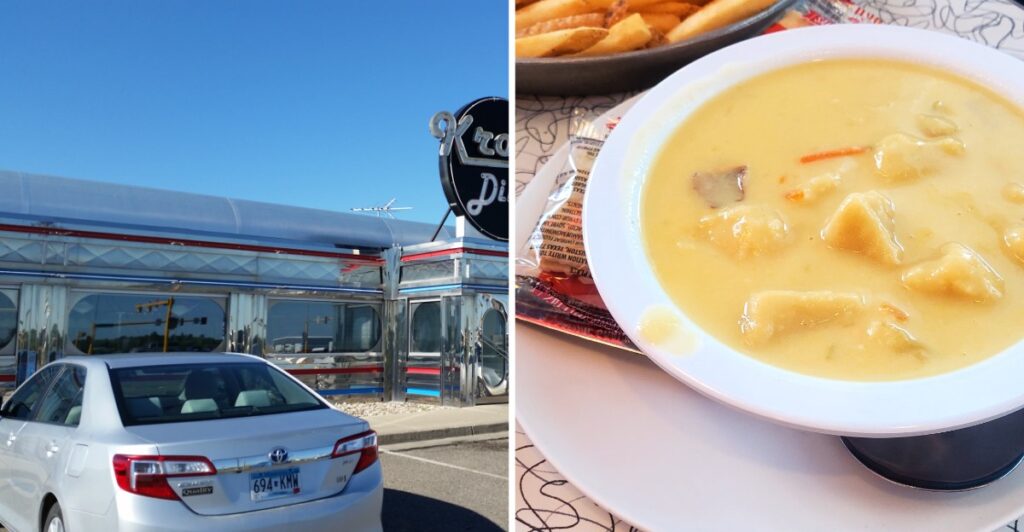
Some soups are starters, but Knoephla walks in like it pays rent.
This North Dakota favorite has potatoes, dumplings, cream, and the kind of staying power that turns one bowl into the main event pretty quickly.
At this Minot diner, the recipe has been in the family for more than fifty years and still gets made daily. That is a lot of soup history for one spoon to carry.
The first spoonful already tells you this is not background soup.
Those dumplings have too much personality for that.
The diner has plenty more going on, including German-Russian dishes and old-school breakfast fare, but knoephla is the order that puts North Dakota right on the table.
By the bottom of the bowl, the only mystery left is whether soup was ever supposed to be this filling.
The Knoephla Recipe Goes Back More Than Fifty Years
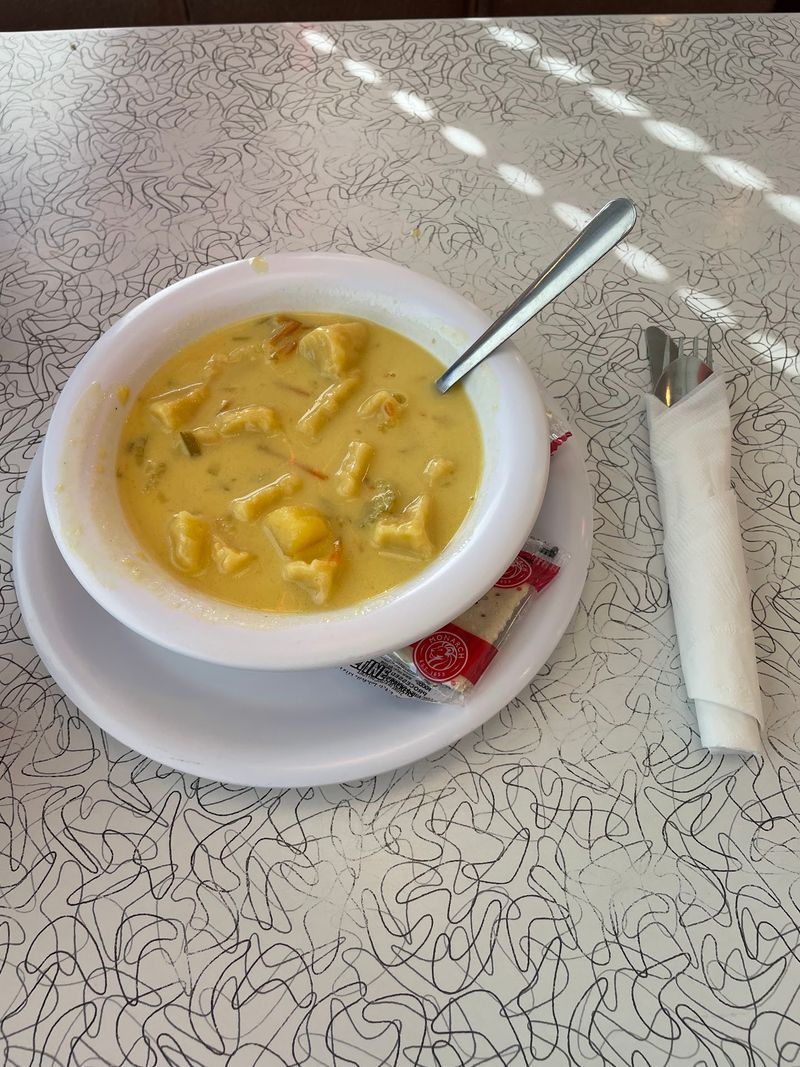
Knoephla sits at the center of the story here. The soup is made from a family recipe that has been around for more than fifty years, tying the current bowl to the Glatt family that helped shape Kroll’s into a North Dakota restaurant group.
Former owner Keith Glatt traced the recipe to his parents, Jim and Alvina, and said it may have come from one of his grandmothers.
That makes the safest version of the history pleasantly simple: this is a family recipe carried forward for generations, not a dish invented recently to fit a regional menu.
The soup itself follows a familiar German-Russian comfort-food format. Soft dumplings meet a creamy broth with potatoes and onions, creating the thick, filling style that has become closely associated with North Dakota cooking.
There is no need to dress that history up further. The appeal is in the continuity. Order a bowl and you are getting a recipe that existed long before the Minot diner opened its doors.
For a first visit, soup is the obvious starting point. A cup leaves room for another dish, while a larger portion can easily become the center of the meal when something warm and substantial sounds better than a sandwich.
The Minot Diner Has Been Here Since 1997
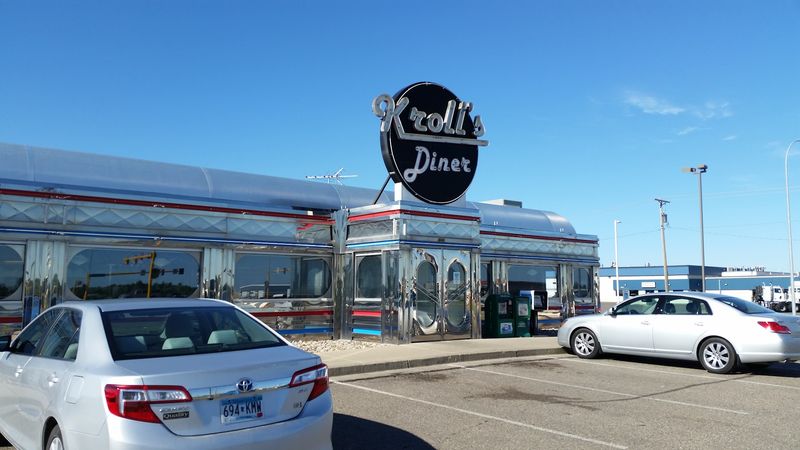
Kroll’s opened its Minot diner in 1997, after the company introduced its retro diner concept in Mandan the previous year. The Minot building carries that same old-school roadside look, with the chrome-and-booth atmosphere associated with classic American diners.
That makes the setting an interesting match for a menu that mixes regional German-Russian food with familiar American breakfast, lunch, and dinner choices.
One side of the menu can lead toward knoephla and fleischkuechle, while another heads toward burgers, omelets, pancakes, or a shake.
The diner is at 1221 20th Ave SE, Minot, ND 58701. It is currently open daily from 7 a.m. to 8:45 p.m., giving breakfast, lunch, and dinner plenty of room on the same schedule.
Kroll’s Diner also continues to operate as part of a North Dakota group with locations in several cities across the state. The Minot branch, however, has its own long run behind it now, with nearly three decades in Minot.
If the soup is your main reason for going, timing does not need to be complicated. It is a regular menu item rather than a once-a-week special.
The Soup Is Made Daily
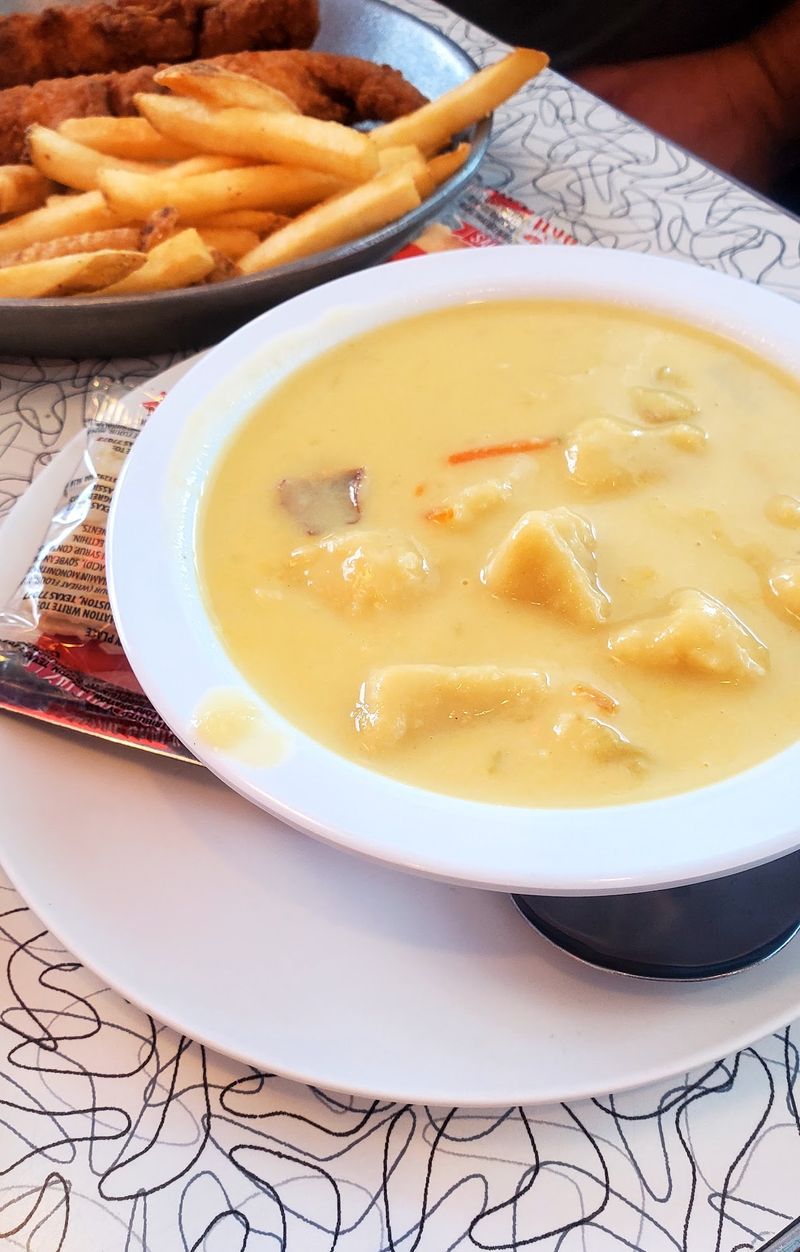
The kitchen makes the knoephla every day, which keeps it in a different category from a rotating soup special that may appear only once or twice a week. For anyone planning around one particular dish, that regular availability makes the choice easier.
The recipe uses dumplings made in North Dakota along with fresh onions, potatoes, and heavy cream.
Those ingredients keep the bowl fairly direct.
The dumplings provide the chew, potatoes make it more substantial, onions add another savory layer, and the cream gives the broth its body.
That combination also explains why the soup works as either a starter or a meal. A smaller serving can sit beside something else, while a larger bowl is enough to slow down the rest of the order.
The menu gives you plenty of ways to build around it. Pair the soup with a burger, a German-Russian specialty, or a breakfast plate later in the day, depending on appetite and timing. The soup can stay central without making the rest of the meal feel repetitive.
A useful approach is to decide how hungry you are before the rest of the menu starts competing for attention. Soup plus a German specialty makes a much bigger meal than soup by itself. Leave room accordingly.
More Than One Hundred Gallons Are Made Each Week
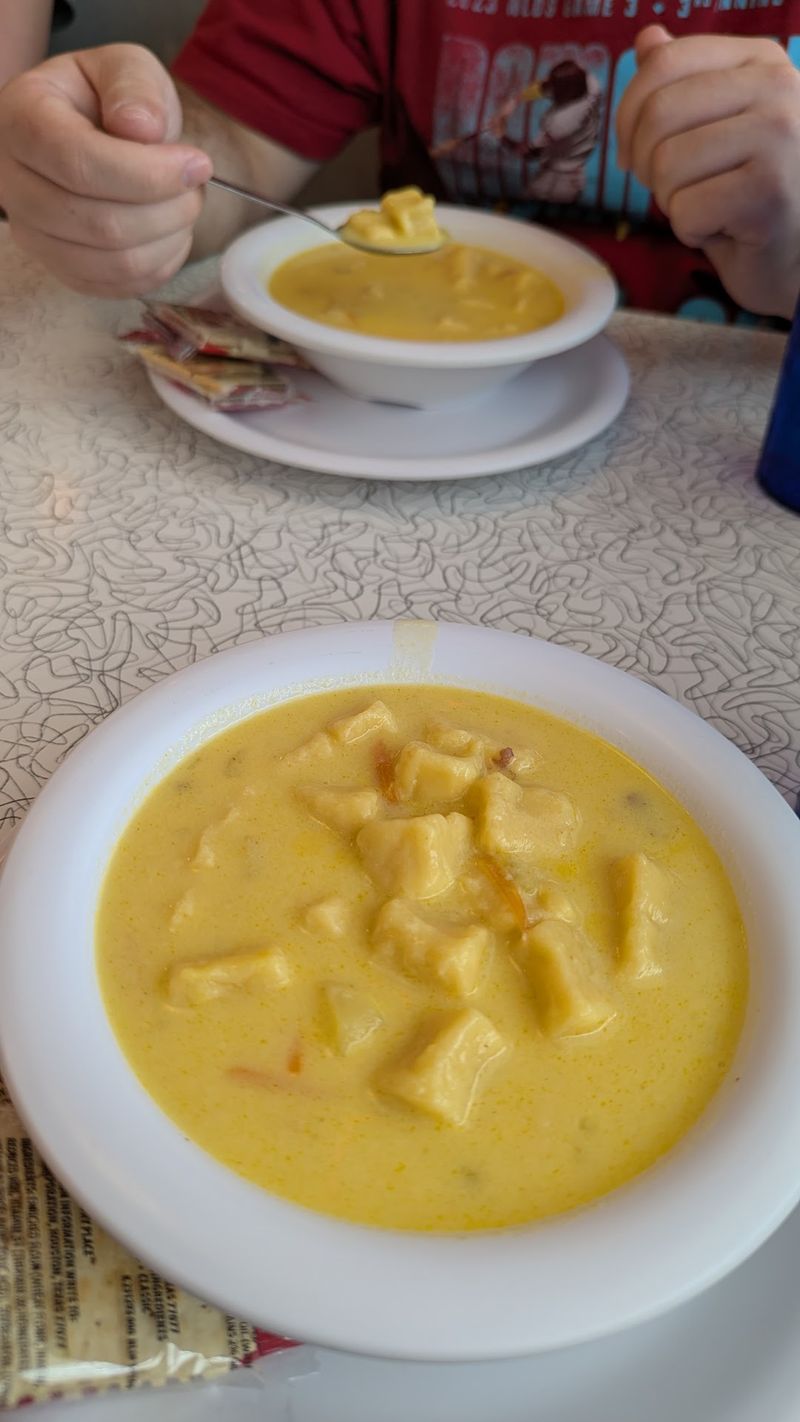
The scale of the soup operation is unusually large for a diner item. Kroll’s produces more than one hundred gallons of knoephla each week, putting the dish’s role in the restaurant into perspective.
That number says something concrete without relying on ratings or customer opinions. Knoephla is not an occasional seasonal experiment here. The restaurant prepares it in serious volume and keeps it on the regular menu.
The weekly production figure also helps explain why the soup appears so prominently in the Kroll’s story. It is made day after day rather than saved for a special menu cycle, which keeps the family recipe tied closely to the diner’s everyday routine.
Still, there is no reason to order by volume alone. Start with the amount that matches the meal. A cup beside a burger or fleischkuechle gives you variety, while a bowl makes more sense when the soup itself is the point.
The production figure may sound enormous, but from the diner booth the decision stays small: make the soup the centerpiece, or let it share the table with something else. That is probably the better way to think about it when the menu arrives.
German-Russian Dishes Go Beyond The Soup
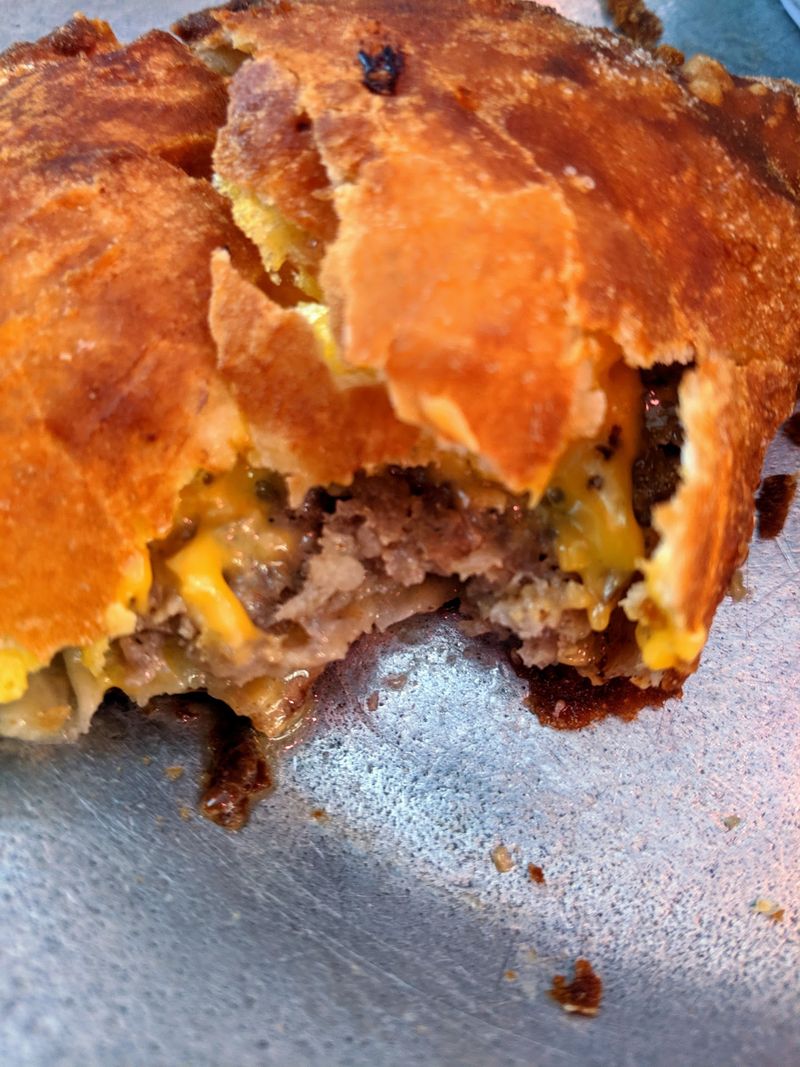
Knoephla may get the first look, but it is not the only regional food on the menu. Kroll’s continues to offer a German specialties section, keeping several dishes tied to the German-Russian food traditions that are familiar across North Dakota.
Fleischkuechle is one of the clearest examples. The dish wraps seasoned ground beef inside pastry before cooking, giving you a much different texture from the creamy soup. Order the two together and the meal moves from spoonfuls to something crisp and filling.
Other German-influenced choices across Kroll’s menus include sauerkraut-based dishes and kuchen, a fruit-and-custard pastry associated with German-Russian food traditions in the region.
Menu selections can evolve, so a particular specialty is worth checking before making a trip around that one dish.
That wider selection gives a table room to split directions. One person can stay with soup, another can order a German specialty, and someone else can ignore the regional side entirely and go for a standard diner meal.
If you are curious but not ready for a full German-Russian plate, pair a cup of knoephla with something familiar. It is an easy way to try the regional side of the menu without making every part of the order new.
Breakfast And Diner Classics Fill Out The Menu
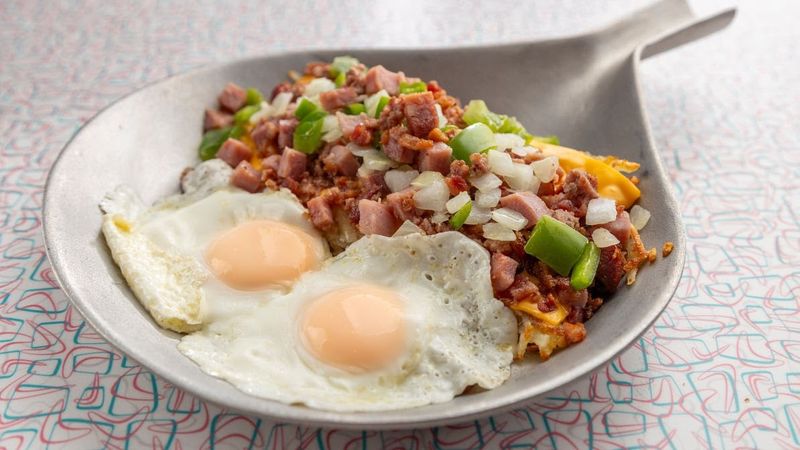
The restaurant does not wait until lunch to get busy with comfort food. Breakfast is a major part of the Minot menu, with omelets, skillets, pancakes, French toast, eggs, and other diner staples available alongside the German specialties.
That makes morning a completely different kind of visit. Instead of beginning with knoephla, you can start with eggs or pancakes and decide whether soup belongs later.
A six-egg omelet remains one of the larger breakfast choices, while smaller combinations make more sense when lunch is not far away.
Burgers, melts, sandwiches, salads, chili, and dinner plates fill in the rest of the day. Group-style combinations and larger take-home choices are available too, so the diner is not limited to single plates at a booth.
The easiest order is the one that does not try to sample everything at once. Choose one lane. Breakfast calls for eggs or pancakes.
Lunch can lean toward soup and a sandwich. Dinner leaves more room for German specialties or a heavier plate.
That sounds obvious until a bowl of knoephla and a shake start competing for attention. A diner menu can make restraint surprisingly useful.
Shakes And Malts Keep The Retro Side Going

The old-school diner theme continues after the savory part of the meal. Kroll’s is also known for hand-scooped shakes and malts, a fitting match for the retro setting and the broader American diner menu.
That gives dessert a simple fork in the road. You can stay with the German-Russian side and look for a pastry such as kuchen, or switch fully into diner mode with a shake or malt.
Hand-scooped hard ice cream has long been part of the Kroll’s shake format, and shakes remain on the menu alongside other fountain-style sweets. The result is the kind of finish that works better when the earlier order leaves some space.
Knoephla followed by fleischkuechle and a shake is a serious amount of food, so portion planning matters more than ambition. A cup of soup instead of a bowl can be the difference between dessert sounding fun and dessert sounding impossible.
That is a good summary of the Minot diner overall. The menu gives you several directions, but the strongest visit does not require taking all of them.
Start with the family-recipe knoephla, choose one more thing that fits your appetite, and let the rest wait for another trip.