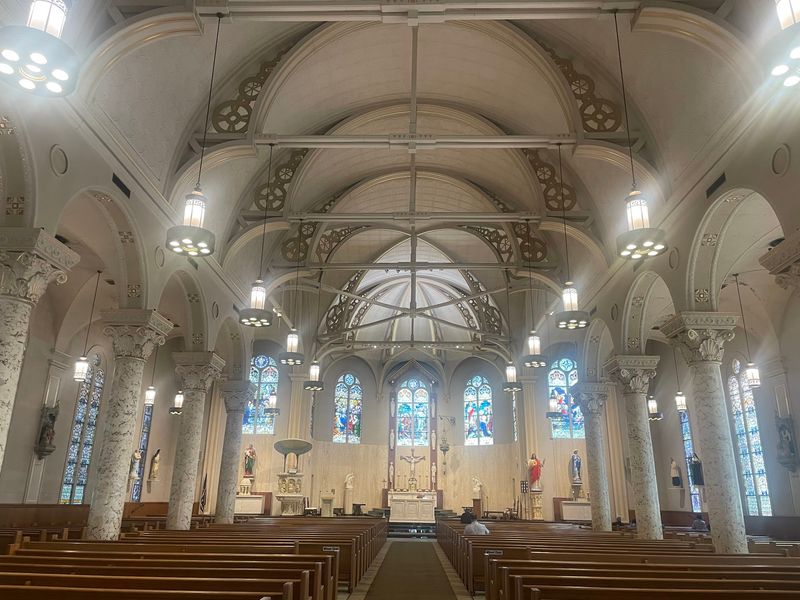
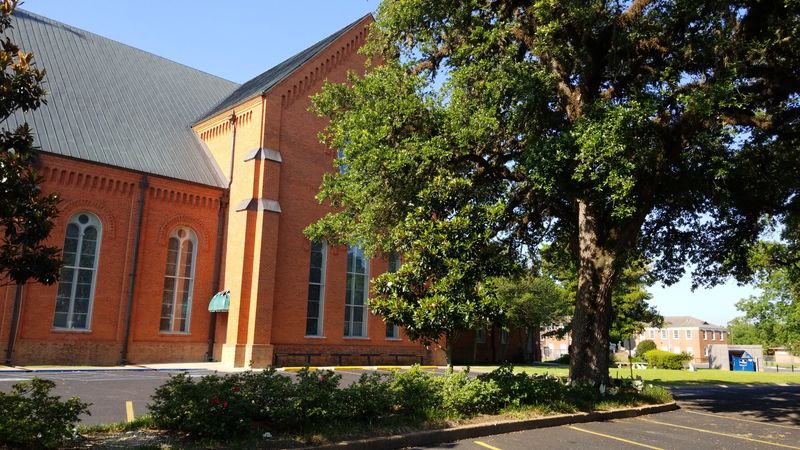
On the corner of North Main Street in Opelousas, a Gothic church holds handwritten baptism, marriage, and burial books reaching back to the 1770s. St. Landry Catholic Church was founded in 1770, and bricks from its 1828 chapel, the one that served the town through the 1840s, now sit in the foundation of the building standing today.
For genealogists chasing French and Spanish colonial ancestors, those registers can be the only written trace of a family. For everyone else, the church offers soaring ceilings, German-made stained glass, and a cemetery full of surprising names.
A Cathedral-Sized Church on North Main Street
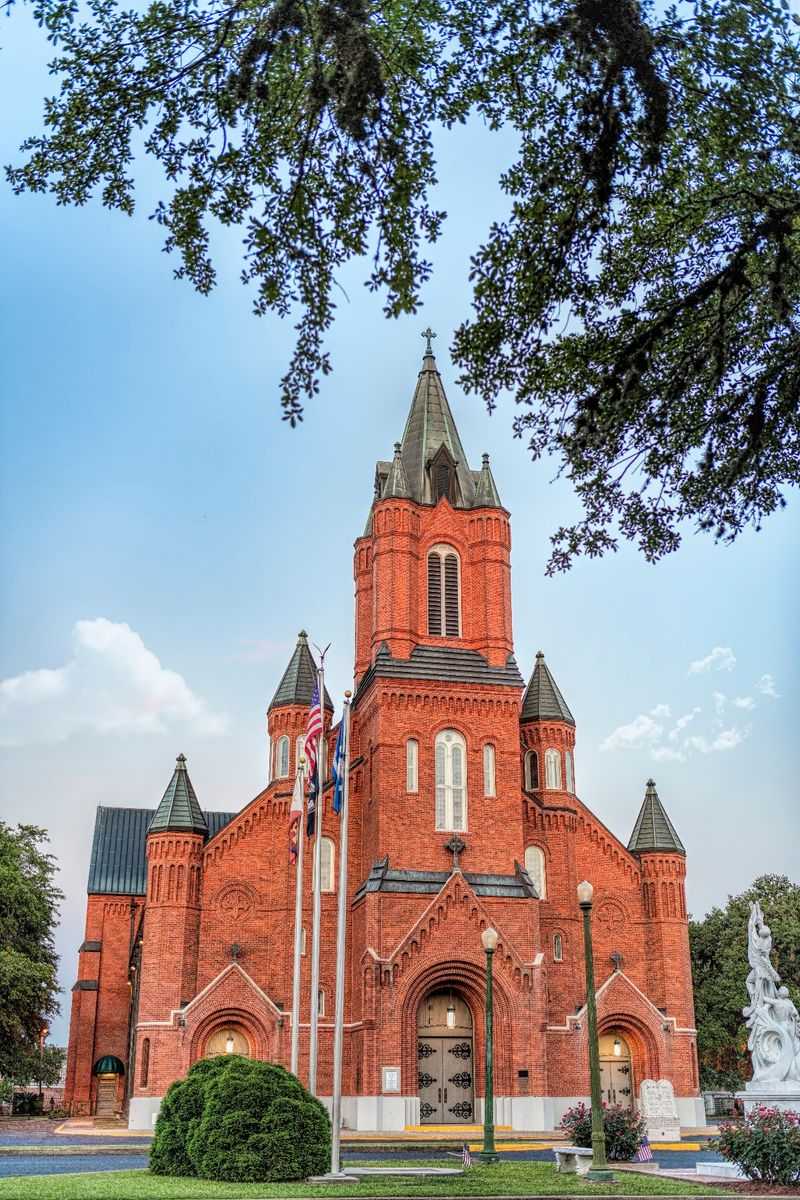
Drive north on Main Street through Opelousas and the steeples announce themselves long before the parking lot does. St. Landry Catholic Church sits at 1020 N Main St, and its scale surprises people who expect a small-town parish.
Visitors often describe it as cathedral-sized, and the description fits.
The present church went up between 1908 and 1909, built in a Gothic style layered with Romanesque motifs. It remains an active parish, which matters for anyone planning a stop.
People come here for Mass, weddings, and funerals, and the building works as a place of worship first and a landmark second.
Opelousas itself is one of the oldest towns in Louisiana, and the church has shaped its identity from the start. The parish name, St. Landry, honors Saint Landry, a Bishop of Paris, and when Opelousas County was reorganized in 1805, the civil parish borrowed the church’s name.
Few Louisiana parishes can trace their map label so directly to a single congregation.
That is the thread running through this story. The building on Main Street is only about a century old, yet what it protects, including its records, its foundation bricks, and its cemetery, carries the town back nearly two hundred and fifty years.
Capuchin Friars and a 1756 Baptism
Sixteen years before the parish officially existed, a priest named Father Pierre Didier baptized a child in the home of Jacques Courtableau. The date was May 16, 1756, and it stands as the earliest recorded Catholic ritual in Opelousas.
There was no church yet, only a frontier post and families who wanted the sacraments anyway.
French Capuchin friars formally established the church in 1770. That makes St. Landry the second oldest church parish in what is now the Diocese of Lafayette.
The Opelousas Post territory it served was enormous, and St. Landry was once the largest parish in Louisiana.
Those early decades explain the nickname that still follows the church: the Mother Church of Acadiana. Congregations across the prairies and bayous grew out of the territory first served from Opelousas.
When newer parishes formed, the older sacramental history stayed behind here.
One regular visitor points out that the parish community predates the Declaration of Independence. It sounds like trivia until you realize what it means for records.
The paperwork began under French and Spanish rule, in a colonial world that looked nothing like the American Louisiana that came later, and much of it survived.
The 1828 Brick Chapel Under Today’s Floor
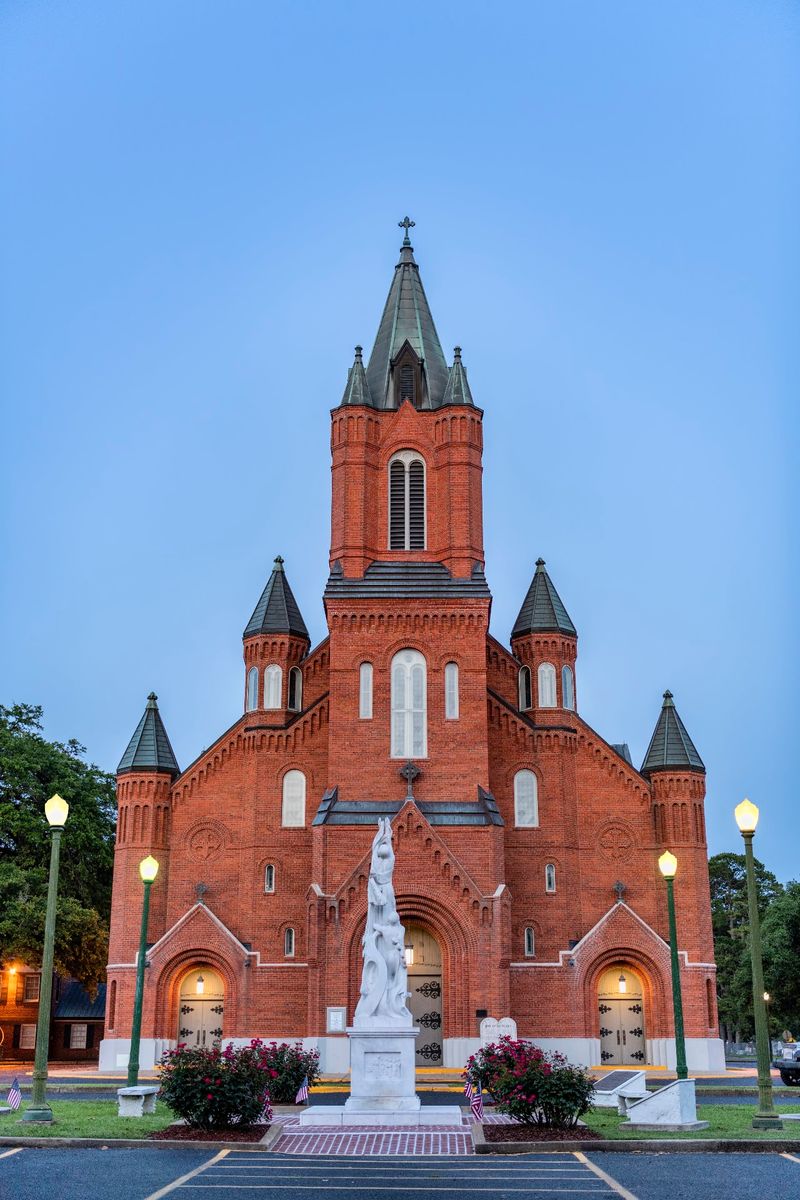
Brick was a statement in 1828 Opelousas. That year the congregation built its first brick church at the corner of Main and Church streets, replacing whatever humbler structures came before.
It was the church that carried the town through the 1840s, the chapel the headline refers to.
During those decades, Opelousas grew into a regional center of courts, commerce, and plantations. The brick church handled the baptisms, marriages, and funerals of a booming community, and every one of those events ended up in the parish books.
Here is the detail worth remembering. When the current church was built in 1908 and 1909, workers did not simply haul the old bricks away.
They incorporated them into the foundation of the new building.
So the 1840s chapel never fully disappeared. It sits underneath the present church, literally holding it up.
You cannot see those bricks from the pews, and nobody gives tours of the foundation, but knowing they are there changes how the building reads.
It is a practical kind of preservation, the sort a Louisiana parish would choose: reuse good material, honor the past, and keep going. The old chapel’s shape is gone, while its substance remains beneath every Sunday service.
Sacramental Registers Dating to the 1770s
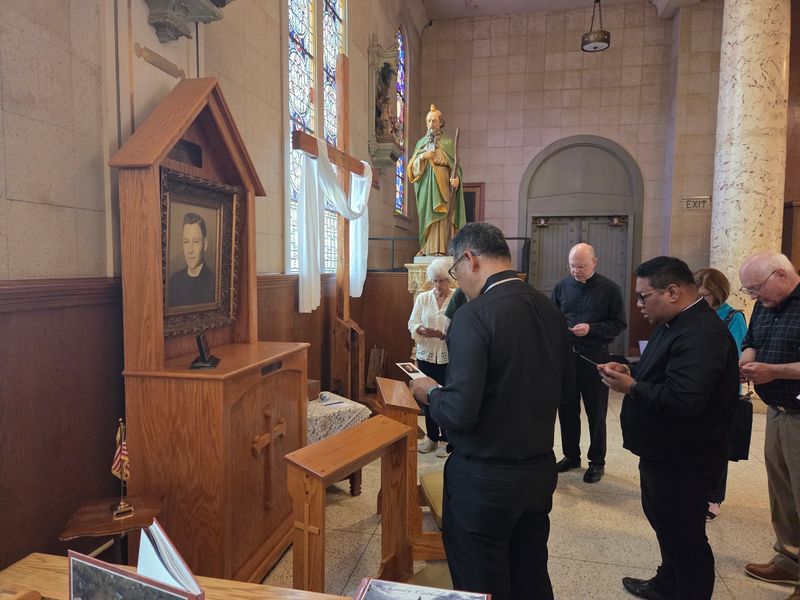
Ink on old paper does not sound thrilling until it turns out to be the only proof your ancestor existed. Behind the church, in the former convent of the Marianite Sisters of Holy Cross, St. Landry keeps archives that stretch back to the 1770s.
The collection centers on sacramental registers. Baptisms, marriages, and burials were written down by priests, often in French or Spanish, long before civil authorities kept comparable records.
In many cases the church entry predates any courthouse document by years.
Researchers place these archives alongside records from other colonial centers such as New Orleans, Mobile, and Natchitoches. That is solid company.
Opelousas was a frontier post, but its paperwork holds up next to the older capitals of the Gulf South.
What makes the entries valuable is the detail. A baptism might name parents, godparents, and the family’s origin.
A marriage record can reveal where a bride and groom came from, sometimes across an ocean. Stack decades of those entries together and a whole community takes shape on the page.
Surviving hurricanes, fires, and humidity for roughly 250 years is not automatic in Louisiana. These books lasted because the parish kept tending them, generation after generation.
Why Genealogists Keep Calling Opelousas
Ask a Cajun or Creole family historian where their trail goes cold, and Opelousas often comes up. The St. Landry registers are among the most consulted sources for tracing lines through Southwest Louisiana and beyond.
The reason is geography as much as age. The old Opelousas Post covered a massive stretch of prairie country.
Families who later settled in places like Lafayette, Eunice, or Ville Platte may have first appeared in these books when all of that land fell under one parish.
The records reflect a mixed frontier society. French settlers, Spanish administrators, Acadian arrivals, Creole families, and Indigenous people all moved through the region.
For many individuals, a line in a St. Landry register is the only written account that survives.
Practical note for researchers: the archives belong to a working parish, not a public reading room. The sensible first step is to call the church office at 337-942-6552 or check stlandrycatholicchurch.com before showing up with a list of names.
Many families also start with published abstracts and online genealogy databases that draw on these colonial records.
Patience helps. Spelling in the 1700s was flexible, and a surname might appear three different ways on one page.
Stained Glass, Statues, and Soaring Ceilings
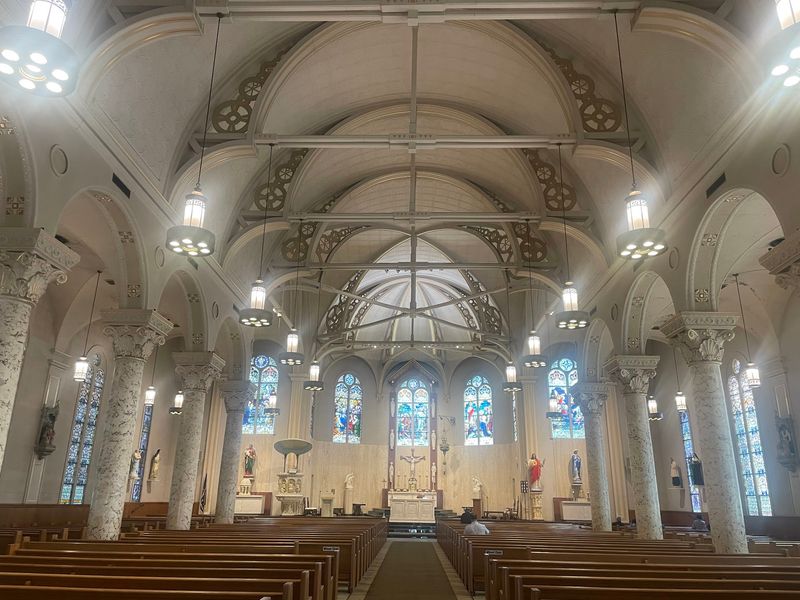
Colored light is the first thing to notice once your eyes adjust. The stained-glass windows were crafted by German artisans working in France, and they wash the nave in shifting blues and reds as the sun moves over Opelousas.
Visitors return again and again to the same features: the statues and the ceilings. One churchgoer says the windows and saints help with meditation on the life of Christ and the examples of holy people, which is exactly what they were designed to do.
A woodworker who spent a career in custom millwork and cabinetry described the craftsmanship as beyond exceptional. When a tradesman praises the joinery, it tends to carry more weight than generic admiration.
The carved details reward a slow walk down the side aisles.
Several visitors mention driving past the church for years before finally stepping inside, and being glad they did. The exterior impresses, yet the interior is where the building earns its reputation.
Restoration has been ongoing. A former pastor, Father Brady, was credited by parishioners with many of the repairs, and one recent visitor noted that some areas still could use attention.
Old buildings in humid climates always ask for more work.
A Governor, Napoleonic Soldiers, and Jim Bowie Connections
Next door, the churchyard cemetery reads like a footnote section to Louisiana history. Visitors report finding the graves of a former governor and his wife, along with soldiers who served under Napoleon.
One mentions a Napoleonic general among them.
Those names make sense once you remember what Opelousas was. It served as the state capital for about nine months in 1862 during the Civil War, and for much of the 1800s it drew politicians, lawyers, and veterans of European campaigns looking for a new start on the prairie.
A parishioner who married here also points to Jim Bowie as part of the area’s story. Bowie spent time in the Opelousas region before his Texas fame, and his name still turns up whenever locals talk about the town’s past.
The cemetery is old, with weathered tombs and inscriptions softened by time. Conditions can vary.
One visitor years ago found the grass overgrown, so expectations should stay realistic about upkeep in a working parish graveyard.
Walk gently and read the stones slowly. Many of the people buried here likely also appear in the registers inside, making the cemetery and the archive two halves of one record.
Music, Homilies, and a Welcoming Congregation
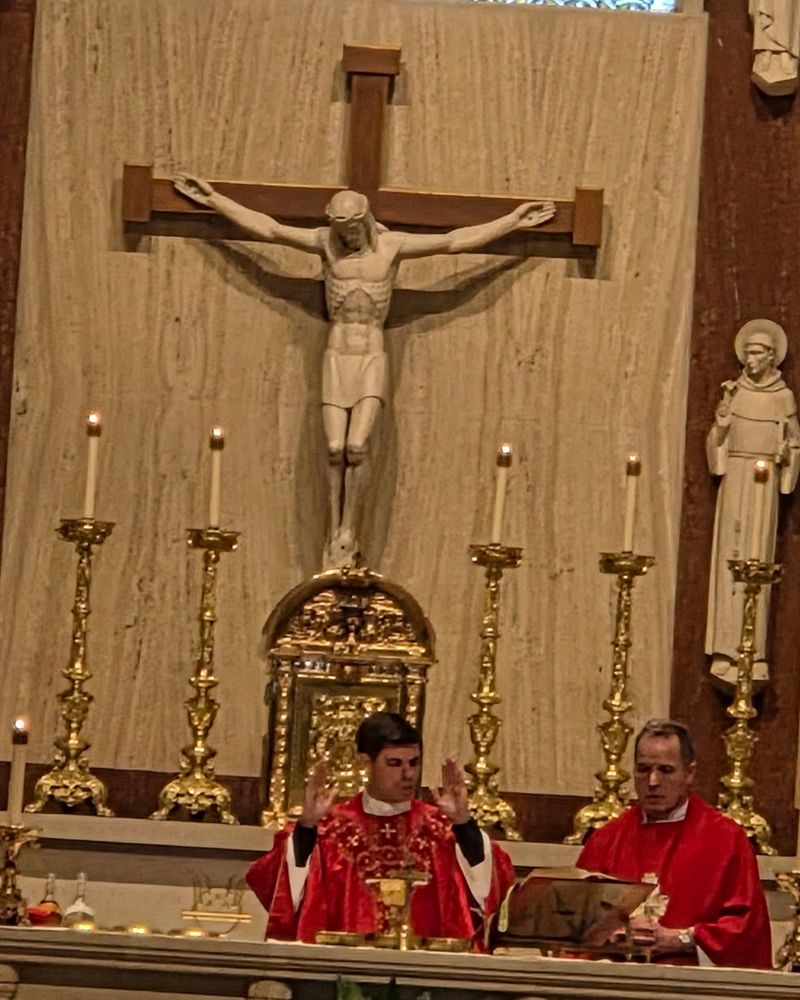
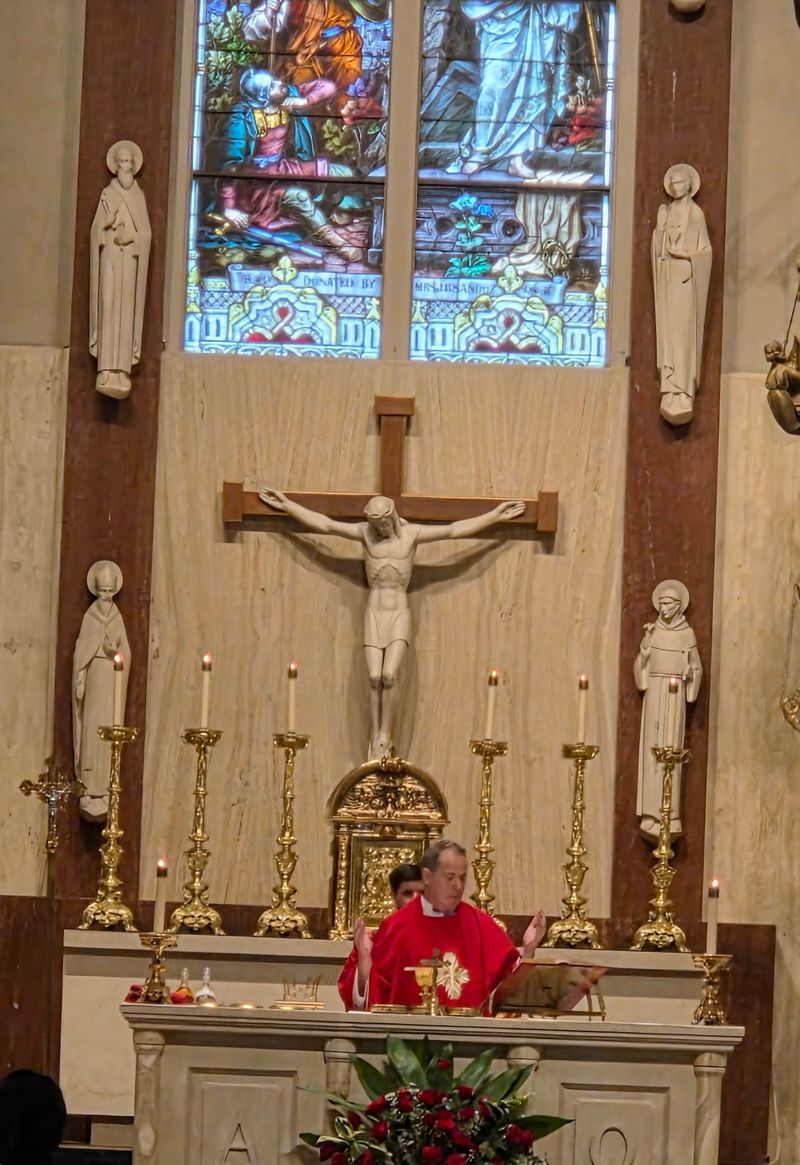
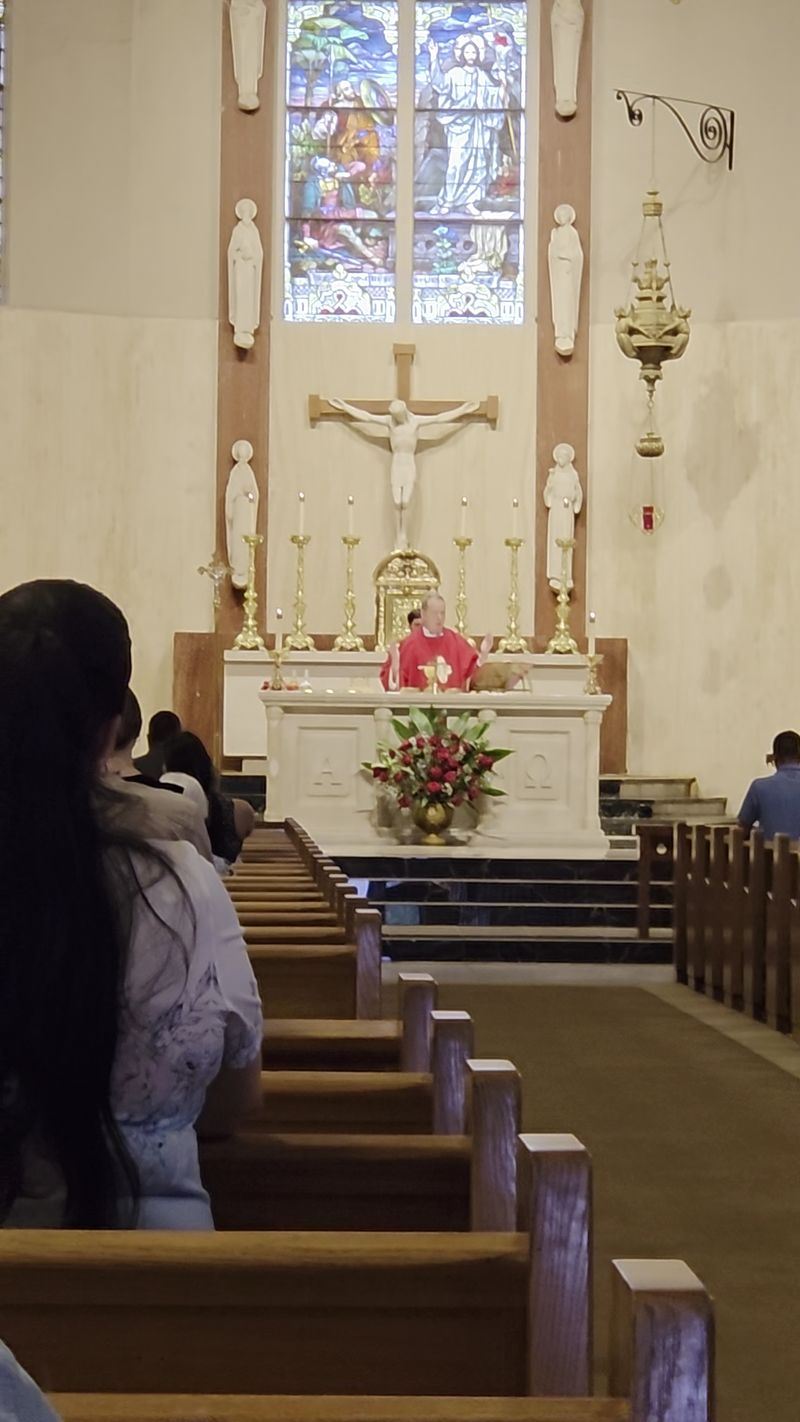
Sunday morning is when the building makes the most sense. St. Landry remains a living parish, and people who attend Mass describe reverent liturgies, thoughtful homilies, and music worth mentioning afterward.
Travelers passing through have stopped for Mass and felt welcomed, according to their own accounts. Others praise a kind older priest and a friendly congregation.
Longtime members speak with obvious loyalty, and one says they have no intention of ever attending anywhere else.
The church also hosts the big moments of family life. A visitor who attended a funeral here praised the service and the three priests who led it.
Weddings happen here too, and couples who married at St. Landry tend to stay attached to the place.
Who does the church suit? History buffs, architecture fans, genealogists, and Catholic travelers who want to attend Mass somewhere with deep roots.
Photographers will appreciate the windows, though respect during services comes first.
If you are not Catholic, you are still welcome to visit respectfully. Dress modestly, keep voices low, and avoid wandering during liturgies.
The best experience comes from treating the church as what it is: a home for a congregation that happens to hold centuries of history.
Planning a Stop in Opelousas
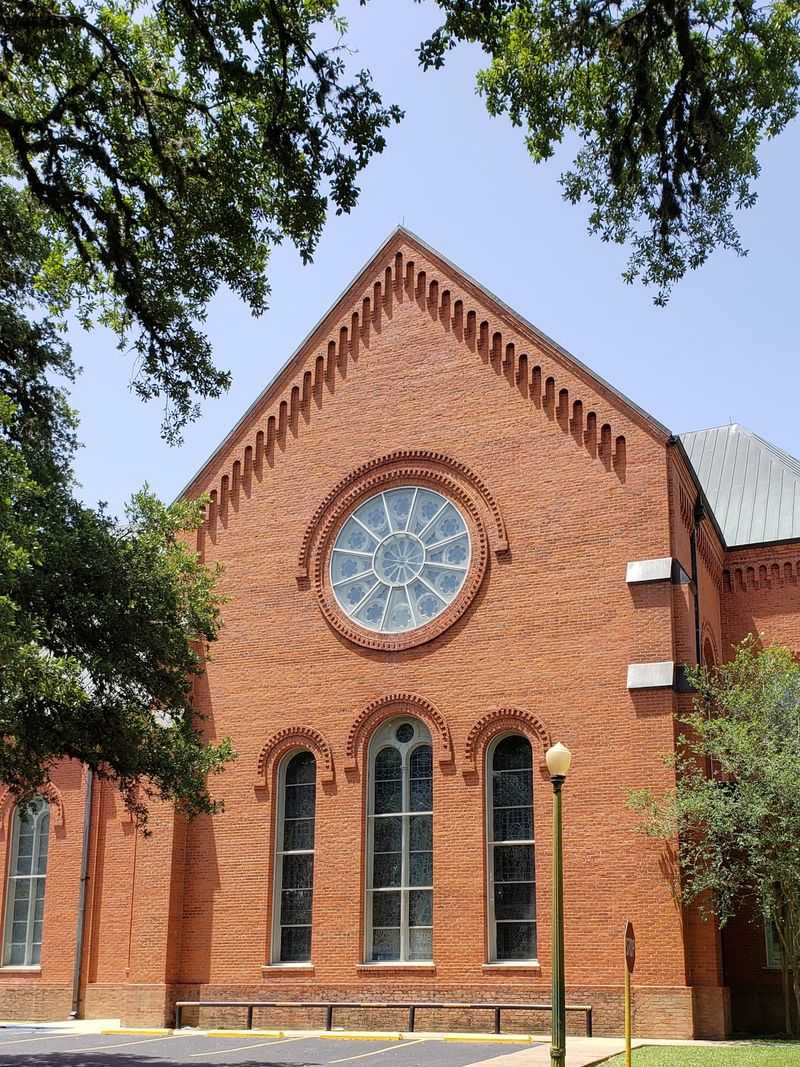
Getting there is simple. Opelousas sits just north of Lafayette, off Interstate 49, and the church is at 1020 N Main St, easy to reach from downtown.
Parking is generally close by, though big services and funerals fill the area.
Mass times shared by parishioners some years ago listed a weekday noon Mass around 12:05 and Sunday Masses at 8:00, 10:00, and 5:00 p.m. Schedules change, so confirm current times before planning around them.
The parish office phone is 337-942-6552, and the website is stlandrycatholicchurch.com.
No admission price applies to attending Mass, and the available information lists none for visiting. Whether the doors stay open outside service hours is not guaranteed, which is another reason to call ahead.
Arriving shortly before or after Mass often gives the best chance of seeing the interior.
Genealogy requests need extra lead time. The archives are housed in the old convent behind the church, and access depends on parish staff, so arrange research visits in advance rather than hoping to browse.
Pair the stop with a walk around downtown Opelousas and the courthouse square, where the town’s role as a colonial post and brief state capital still shows in its streets.
Bricks Beneath, Books Behind
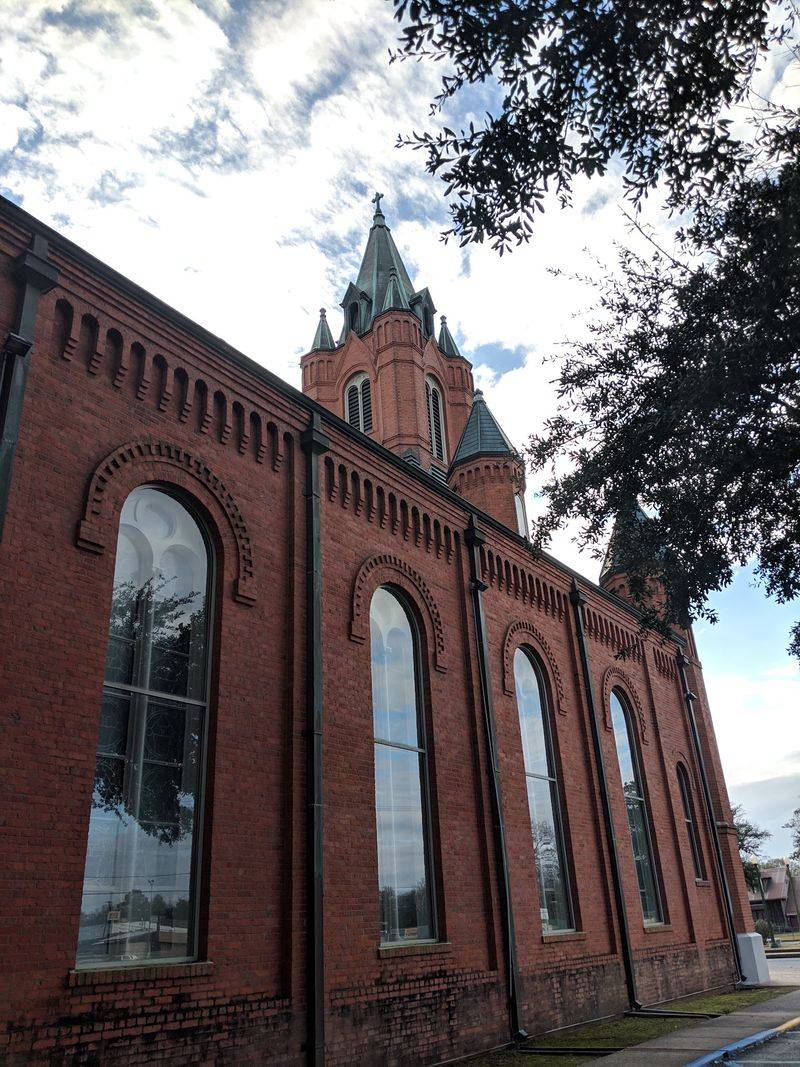
Plenty of Louisiana churches are beautiful. Fewer can say their foundation contains the actual walls of the chapel that came before, or that a short walk behind the altar leads to registers written under French and Spanish rule.
St. Landry offers both, and it does so quietly. There is no museum wing, no gift shop spectacle, just a working parish that kept its bricks and its books when it would have been easier to let them go.
For a casual traveler, the reward is a half hour among stained glass, statues, and carved wood, plus a stroll through a cemetery holding a governor and soldiers of Napoleon. For a genealogist, it may be the place where a family line finally appears on paper.
Either way, plan around Mass, call ahead, and give the building time. Its history does not announce itself on a plaque at the door.
It shows up in details, a date in faded ink, a worn tombstone, a window that shifts color at noon.
Somewhere under the floor, the 1828 bricks are still doing their job. Upstairs, the congregation keeps doing theirs, adding new names to books that started in the 1770s.