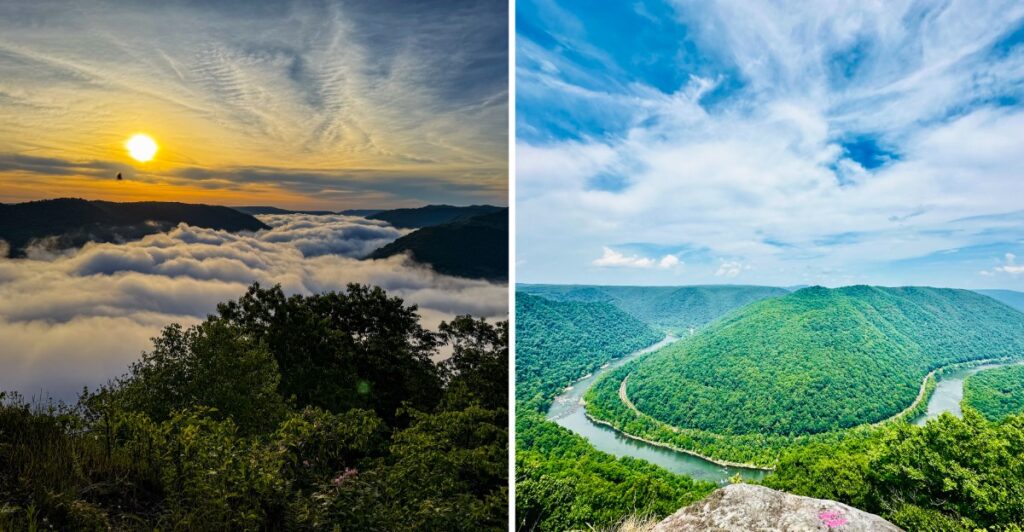
This view feels like somebody skipped a few miles of hiking on your behalf.
The rim sits about 1,400 feet above the river, yet reaching the main overlook does not require a backcountry expedition.
That is a very generous arrangement.
From up here, the New River curves through miles of forest and disappears between distant ridges. On a clear day, roughly seven miles of the river and its watershed can stretch into view.
West Virginia turns the contrast up even further in fall.
Summer green gives way to layers of orange, red, and gold across the gorge, while the river keeps threading through the middle.
You can stop there or follow the rim a little farther.
Your boots barely get a vote.
The Main Overlook Gives You A 1,400-Foot Perspective
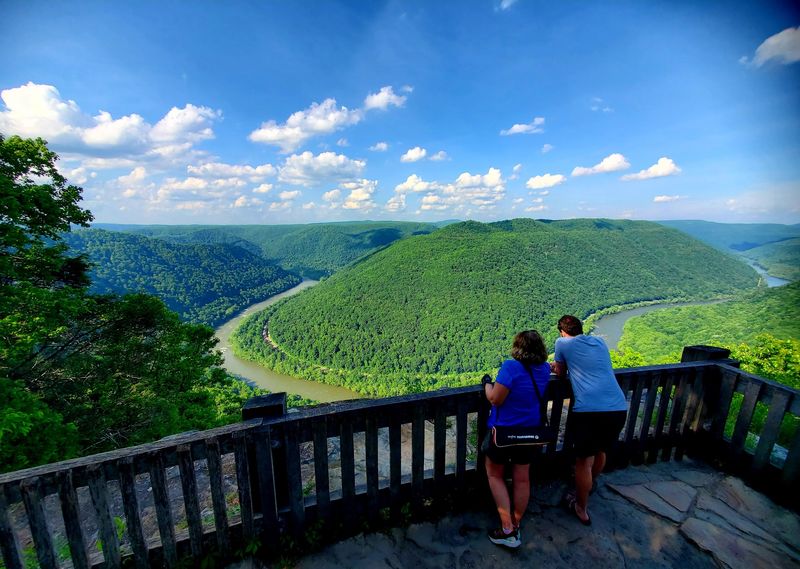
The scale becomes obvious as soon as the trees open and the gorge drops away. Grandview Main Overlook sits about 1,400 feet above the New River, putting the water far below the rim and giving the surrounding ridges plenty of room to fill the horizon.
That height is one reason this section of the park feels so different from stops closer to the river. Down in the gorge, the landscape is defined by water, rock walls, railroad tracks, and steep slopes. From Grandview, those same features become part of a much larger pattern.
The river curves through the forest in a broad horseshoe bend, while ridge after ridge stretches away behind it. During late spring and summer, rafters may be visible far below when conditions and timing line up.
Birdwatchers can also get an unusual angle from the open rim. Birds moving through the gorge may appear below eye level instead of overhead.
Grandview sits at the highest elevation in the park, which helps explain why the outlook feels so expansive compared with lower river access points. Light moves across the ridges, clouds slide through the gorge, and the river can look different from one hour to the next.
Give yourself enough time to stand, look, and let the scale settle in before moving on.
Clear Weather Can Open Up Seven Miles Of River
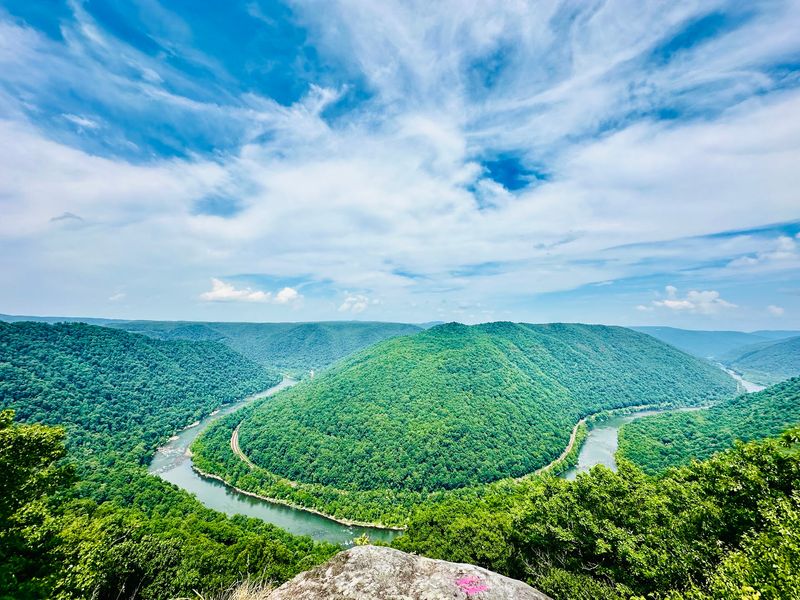
A clear day changes what you can pick out from the Main Overlook. The view can extend across roughly seven miles of the New River and its watershed, with the river winding through the deepest part of the gorge beneath Grandview.
Weather can shorten that view in a hurry. Clouds and fog sometimes settle into the gorge, especially during cooler or wetter conditions, and distant ridges may disappear behind haze.
A brighter afternoon can reveal a completely different scene from the one visible earlier that morning.
That makes the forecast useful, but not something that needs to control the whole trip. Grandview is open year-round, and each season shifts what stands out from the rim.
Spring brings fresh foliage and rhododendron blooms around the Grandview area. Catawba rhododendrons typically flower around mid-May, while white great rhododendrons generally bloom later. Exact timing changes with weather.
Summer fills the gorge with dense green. October can layer the slopes with fall color, while leafless winter trees expose more of the landforms and river corridor.
If photography matters, give the weather some flexibility. If it does not, changing conditions simply become another part of the view.
The Walk To The Overlook Is Short But Not Completely Smooth
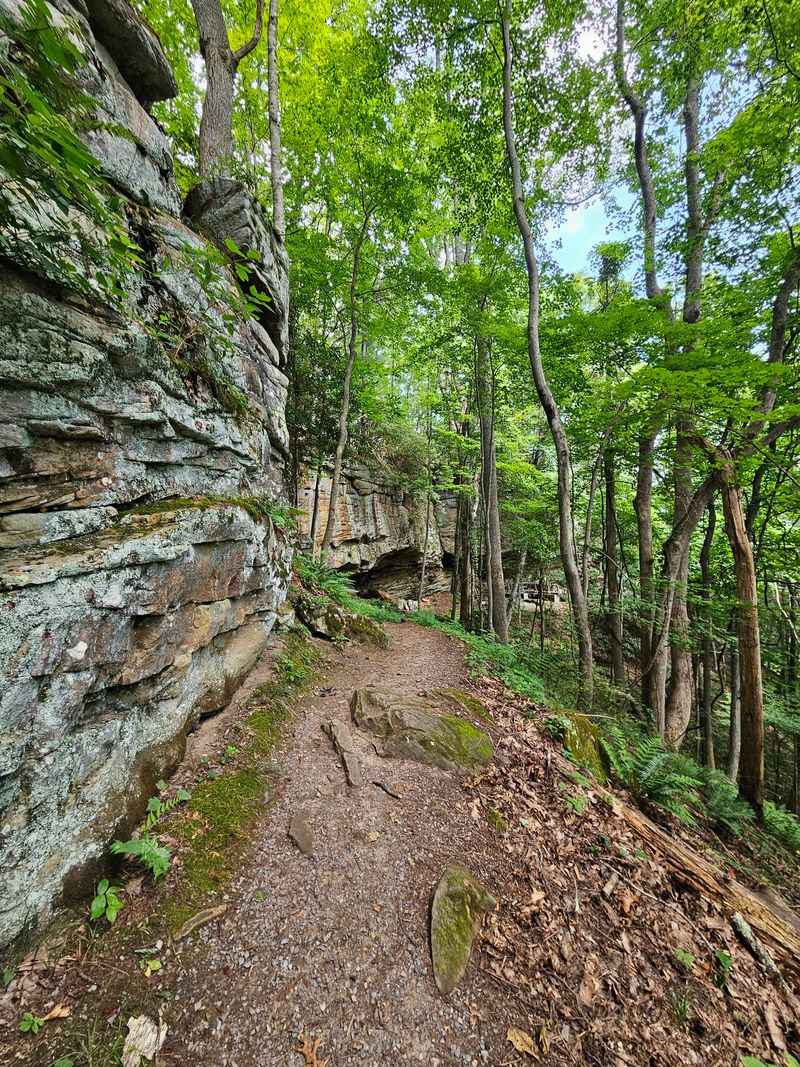
Reaching the Main Overlook does not require a long trail, but the approach deserves more attention than a perfectly flat sidewalk would. The overlook is a short walk from the main Grandview parking area, with the visitor center also nearby.
Accessibility conditions vary along the route. The Main Overlook has a designated viewing platform for wheelchair users, while the path from the parking area includes large, uneven stones.
That makes the surface important for anyone using a mobility aid or preferring consistently smooth footing.
The viewing area includes a large, mostly flat rock overlooking the gorge. Wet, snowy, or icy conditions can make stone surfaces slippery, so footwear with decent traction is useful even when the visit is mostly about standing still.
For anyone traveling with children or a mixed-age group, the advantage is simple: the first major view does not require committing to a long hike.
The developed Grandview area also includes restrooms, picnic tables, shelters, parking, and a playground, making it easy to extend a short overlook stop without immediately heading onto a trail.
Take the approach at an easy pace, spend as much time at the rim as you like, and then decide whether everyone still has energy for more walking.
Railroad History Is Visible Far Below
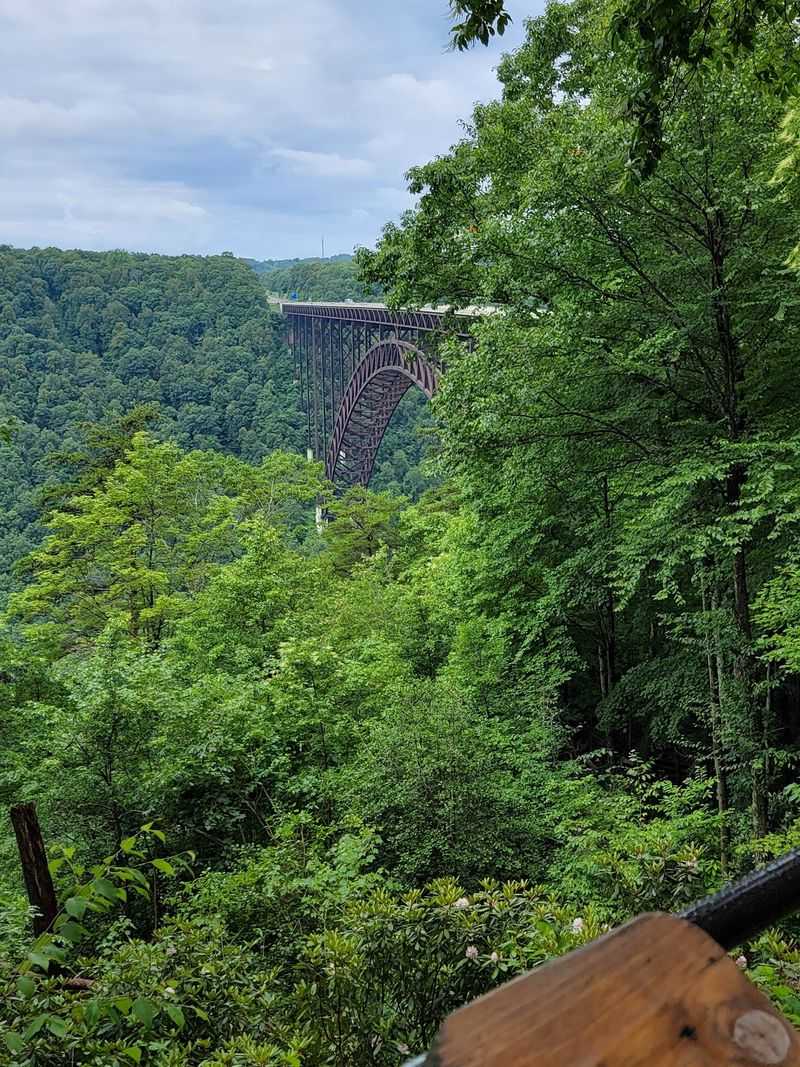
Look carefully toward the river corridor and Grandview becomes more than a landscape stop. An active railway follows the gorge below, and the historic community of Quinnimont can also be seen from the overlook.
Railroads reshaped this part of West Virginia in the late 1800s by connecting isolated communities and industrial operations with larger markets.
Quinnimont holds an important place in that story because the first coal shipped out of the New River Gorge left from there in 1873.
From 1,400 feet above the river, the infrastructure looks small compared with the surrounding forest. That contrast makes it easy to miss unless you know where to look.
Binoculars can help with the finer details, particularly the tracks and developed areas along the river. A passing train is possible because the railway remains active, though there is no reason to plan a visit around catching one.
Grandview itself has a longer recreational history too. West Virginia purchased 52 acres here in 1939 to create a day-use park, and Civilian Conservation Corps crews built roads, shelters, and a picnic area that remain part of the landscape.
Grandview transferred to the National Park Service in 1990.
The overlook brings those layers together: forested gorge, working railway, historic community, and a recreation area shaped over decades.
Grandview Has Several Trails Beyond The Main View
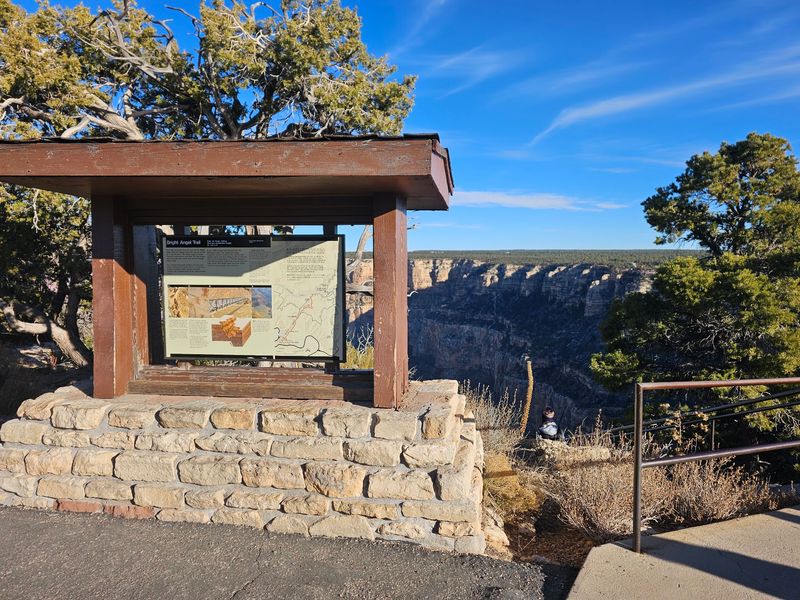
The Main Overlook can be the whole outing, but it also works as the starting point for more time on foot. Grandview has several hiking trails, including the Grandview Rim Trail, which connects the Main Overlook with North Overlook and Turkey Spur.
The Rim Trail runs 1.6 miles one way and is rated moderate. It follows the ridge through forest, with additional views of the gorge along the route and several steeper hills as it approaches Turkey Spur.
A shorter option is the Tunnel Trail, a 0.5-mile one-way route through a shaded section of forest with sandstone walls and rock overhangs. The tunnels themselves are currently closed for safety concerns, but the remainder of the trail stays open.
That gives visitors an easy way to match the day to available time. Stay close to the Main Overlook for a brief stop, add part of the Rim Trail for more walking, or continue farther toward Turkey Spur.
Turkey Spur brings another viewpoint, although reaching its overlook requires climbing wooden steps that can become slippery in wet or snowy weather.
Grandview also has picnic areas, playgrounds, restrooms, and shelters, so hiking does not have to be the only reason to linger. A packed lunch can turn a quick overlook visit into an easy half-day outdoors.
The Visitor Center Follows A Seasonal Schedule
Grandview itself stays open throughout the year, but the visitor center does not follow the same schedule.
During the current fall period, from September 12 through October 26, 2026, the Grandview Visitor Center is open Saturdays and Sundays from noon to 5 p.m. and closed Monday through Friday.
That distinction matters if the plan includes talking with a ranger, picking up information, or stepping inside the visitor center. The overlooks and outdoor Grandview area remain available even when the building is closed.
The Grandview area is at 4700 Grandview Road, Beaver, WV 25813.
From Beckley, the drive follows I-64 east to Exit 129B, then Route 9 north for about six miles to Grandview.
Once there, parking, restrooms, picnic facilities, and trail access are grouped around the developed area. The visitor center itself has a wheelchair ramp, although it does not have automatic door openers.
An early start works well for hikers, while a weekend afternoon lines up better with current fall visitor-center hours. Let the purpose of the trip decide the timing rather than forcing the whole day around one schedule.
Every Season Changes What You See From The Rim
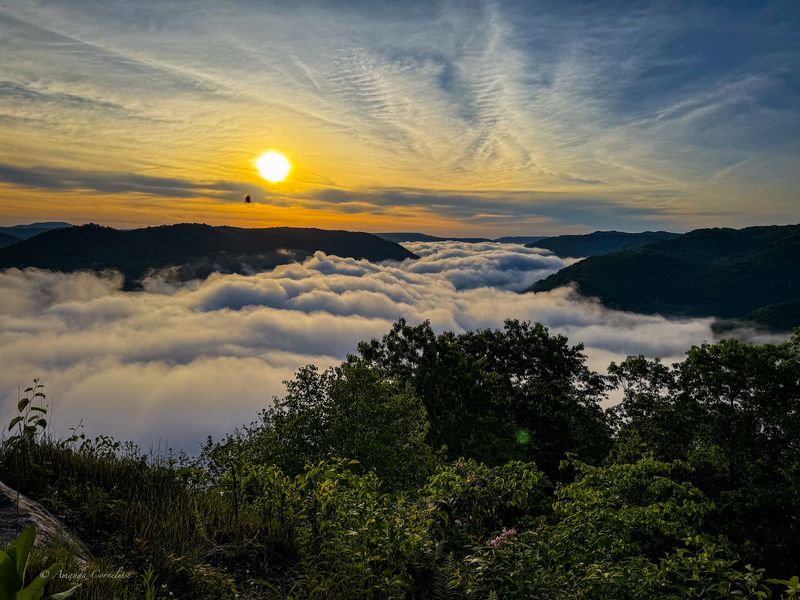
Grandview does not need an October-only label to earn a place on a West Virginia road trip. The overlook is open year-round, and each season changes both the color and visibility across the gorge.
Catawba rhododendrons typically bloom around mid-May, followed later by white great rhododendrons. Summer brings the fullest tree canopy, and October often delivers a broad sweep of fall color across the ridges.
Winter strips away much of that foliage. The colder months can make the underlying shape of the gorge easier to read, though snow, ice, and changing road conditions deserve extra attention.
The Main Overlook is also only one perspective within Grandview. Turkey Spur and North Overlook add different angles, while the Rim Trail links the viewpoints for anyone who wants to spend more time on the ridge.
Start with the 1,400-foot view and see how long it holds you there. A quick scenic stop can turn into a trail walk, a picnic, or another overlook before the car moves again.
The biggest panorama arrives early, so there is no pressure to build an elaborate itinerary around it. See the gorge first, then let the weather, available time, and everyone’s energy level decide what comes next.