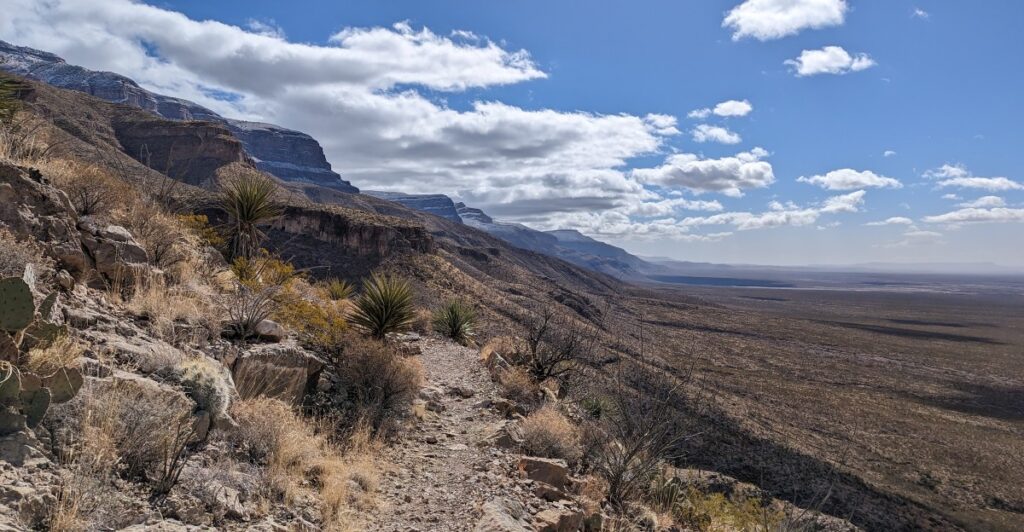
The road into this park does not look especially dramatic at first. Then the mountains begin to rise, the desert opens wider, and the scenery starts to feel much more remote.
That is where the appeal kicks in. Old stone ruins hint at stories that go back generations, while trails lead deeper into a landscape that feels far removed from the busier stops nearby.
The setting has a rugged quality without needing a big attraction at every turn. You can spend time exploring near the base of the cliffs or simply take in the huge views stretching across southern New Mexico.
By evening, the light changes the entire scene and makes the desert feel even more isolated. It is the kind of place that can easily slip under the radar, yet once you arrive, there is plenty here to make a short stop turn into a much longer visit.
Old Ranch Ruins Still Guard The Desert
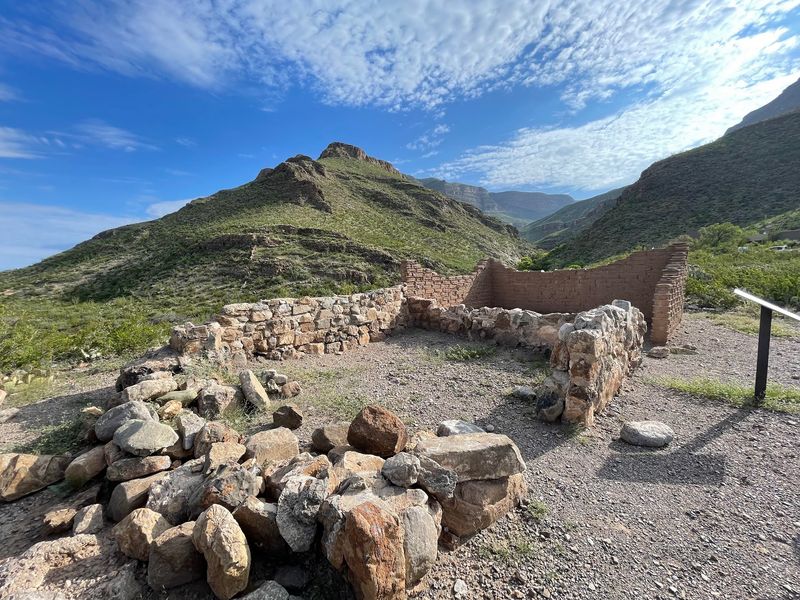
Adobe walls rarely brag, yet the old ranch house at the foot of these cliffs has plenty to say. It stands as a restored reminder of a cattle operation built in the late 1800s.
Oliver Lee arrived in the area in the 1890s and built his ranch headquarters here, raising cattle across the dry basin below. Water was the prize, and the springs of nearby Dog Canyon made the whole operation possible.
Today the house stands reconstructed from ruins, offering a look at Lee’s ranch headquarters. It is undergoing renovations, and displays are not intact, so visitors should check the park’s tour schedule before arriving.
I find it oddly comforting that a building this plain has outlasted so many flashier structures. Simple adobe, it turns out, is tough stuff in a land with very little rain.
The ranch also played a role in the rough politics of the old Southwest. Range disputes and courtroom drama followed the family for years, which makes the quiet setting feel even more surprising.
Behind the house, the western face of the Sacramento Mountains climbs steeply toward the sky. Below it, the desert rolls out toward the glittering white dunes on the horizon.
The rancher’s name lives on, too. His legacy waits at Oliver Lee Memorial State Park, 409 Dog Canyon Rd, Alamogordo, New Mexico 88310.
A Forgotten Corner Beneath The Cliffs
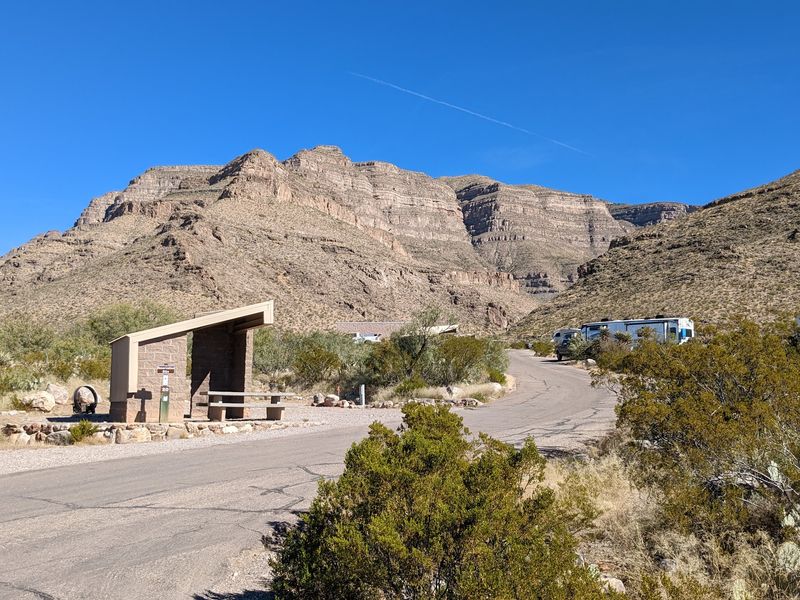
Maps make this spot look like a tiny green dot, but the cliffs above it tell a bigger story. The park sits right where the Sacramento Mountains break sharply away from the flat Tularosa Basin.
That sudden wall of rock is called an escarpment, and it towers high above the campground and trails. Layers of ancient limestone stack up the face, each one marking a different chapter of deep time.
Many travelers speed past on the highway without ever noticing the side road. The route in crosses a plain stretch of desert, so the arrival feels like a pleasant surprise.
A visitor center greets people near the entrance with displays about the land and its history. Outside, a desert garden shows off native plants with handy labels, which beats guessing at every spiky shrub.
A labeled cactus garden might be the most polite way to teach botany. Nobody has to poke anything to learn the difference between a yucca and an agave.
Those small touches help explain how life survives in such a harsh place. Every living thing here learned to lean on the few reliable water sources at the base of these cliffs.
The mountains block the morning sun for a little while, giving the canyon mouth a cool start. By afternoon, though, the desert reminds everyone exactly who is in charge.
Dog Canyon Feels Lost In Another Era
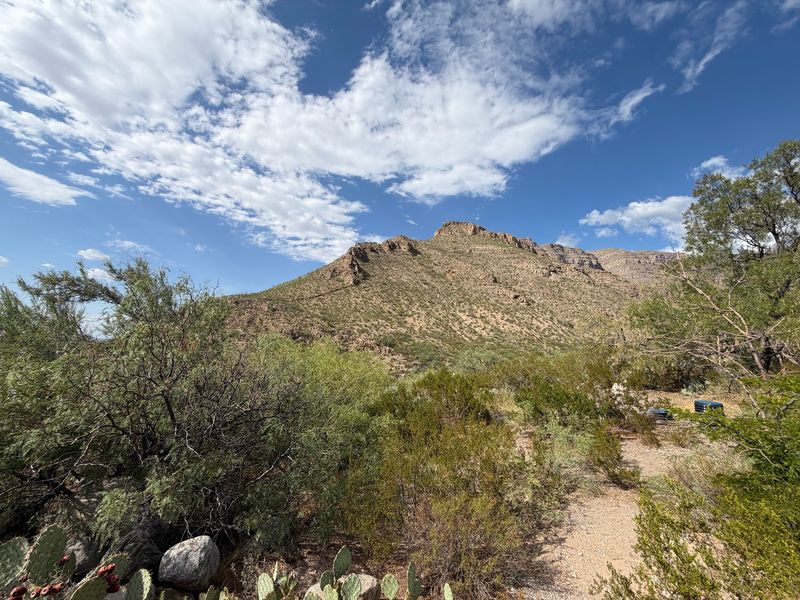
Long before any rancher showed up, people traveled through this canyon on foot. The Mescalero Apache used it as a route between the high mountains and the basin below.
Its steep walls and hidden ledges made it a natural stronghold during the frontier era. Army troops and Apache groups clashed here more than once in the 1800s, according to local history.
Today the Dog Canyon Trail follows that same rugged path up the mountain. The park map lists 5.2 miles to the top with 3,200 feet of elevation gain.
That climb is no stroll, and hikers usually plan a full day for the round trip. Early starts help, since shade is scarce once the sun clears the ridge.
One stretch called the Eyebrow runs along a narrow ledge high above the canyon floor. I have to admit, the name alone makes my knees feel a little wobbly.
Loose, rocky footing covers much of the route, so sturdy boots make a big difference. The rocks can also be rough on dog paws, despite the canyon’s friendly name.
Farther up, the route passes an old line cabin once used by cowhands working the high country. It is a quiet reward for a very loud workout on the legs.
Historic Stone Walls Hold Onto The Past
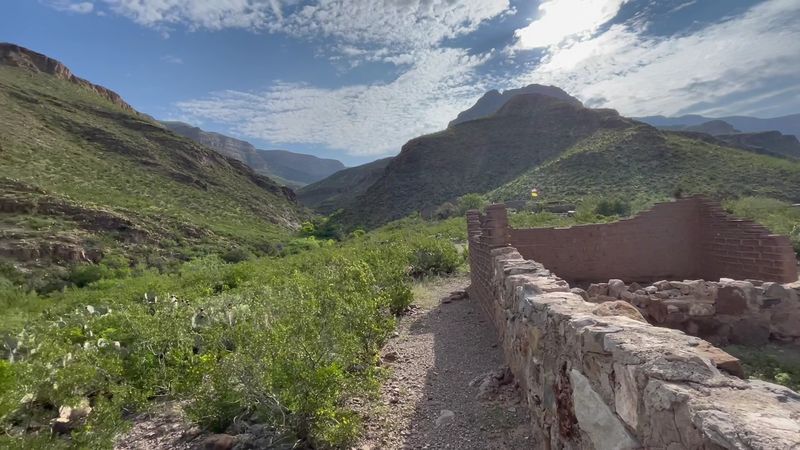
A Frenchman nicknamed Frenchy made his home at the mouth of this canyon in the 1880s. François-Jean Rochas built a small rock cabin and lived here quietly for years.
Pieces of his stone walls still stand near the trailhead, stacked by hand without modern tools. Some of his rock fences once kept cattle close to the precious spring water.
He also tended fruit trees, which is quite a feat in a place that gets so little rain. The canyon’s springs made that small orchard possible, turning dry dirt into something green.
I really admire the patience it took to fit those heavy rocks together one by one. Each stone had to be hauled and set by hand under a scorching sun.
The ruins now sit along a short trail near the visitor center, easy for families to reach. Interpretive signs explain how the cabin looked and how its owner made a living.
The walls are fragile, so staying on the path helps protect them for future hikers. Climbing on historic stones might make a fun photo, but it wears them down fast.
The cabin is small, but its story fills the whole canyon. Quite a legacy for a pile of carefully stacked rocks.
Desert Trails Lead Into A Quieter World
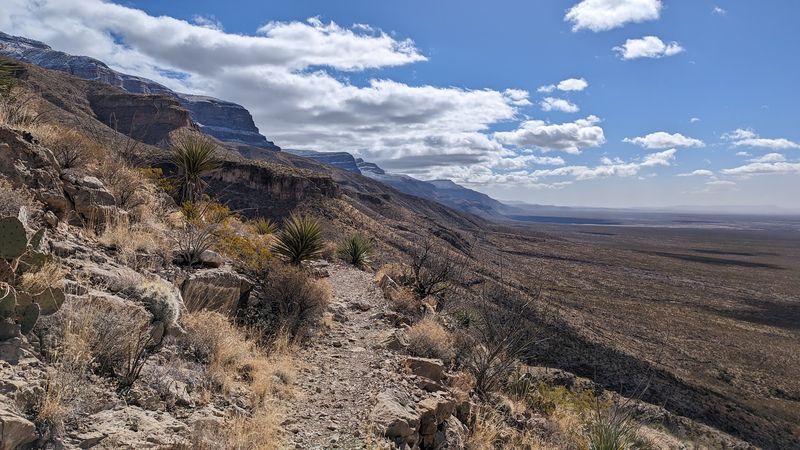
Not every path at the park requires lungs of steel. A short nature trail loops near the visitor center and suits hikers who prefer gentle ground.
The loop is less than a mile long, making it a good fit for kids and casual walkers. Along the way, signs point out plants and the history of people who relied on this water.
Another path links the campground to the Dog Canyon Trail, so campers can start hiking right from their site. That shortcut saves a drive and adds a nice warm-up before the steeper climb.
Silence is the real surprise out here. On a calm morning, the loudest sound may be a lizard rustling through dry leaves.
The desert has a way of turning tiny sounds into big events. A single bird call can echo off the rocks and seem to fill the whole canyon.
Cactus and sotol dot the slopes, and many plants bloom after spring and summer rains. Those bursts of color make the trails feel brand new every season.
Water and sun protection matter on every route, even the short ones. The desert rewards preparation, and it rarely forgives a missing water bottle on a hot afternoon.
Cottonwoods Shade A Hidden Canyon Escape
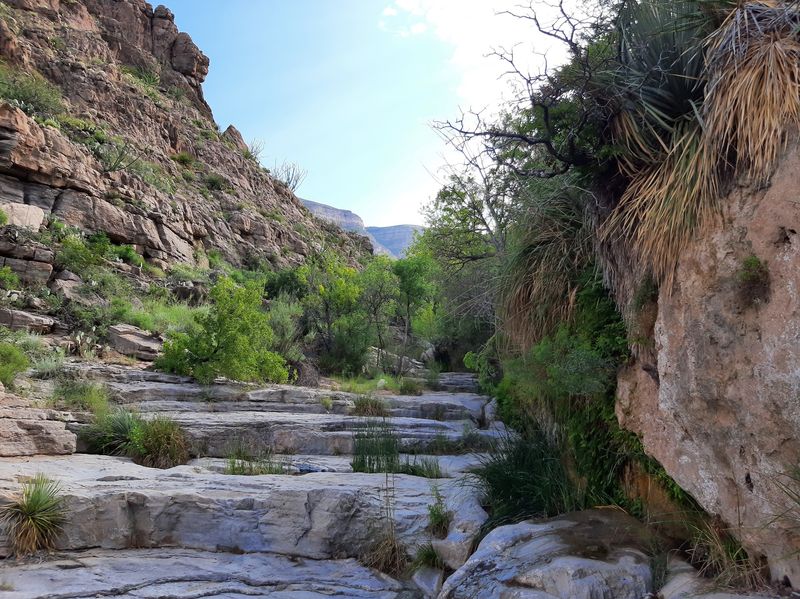
Green is a rare color in the Chihuahuan Desert, which makes this canyon’s spring area feel like a secret. Water trickles out of the rock and feeds a narrow strip of lush plant life.
Leafy trees, including cottonwoods, cluster along the wet ground and throw welcome shade. Ferns and mosses cling to damp spots that would otherwise be baked dry.
The flow changes with the seasons, and in dry years the springs can shrink to a whisper. After good rains, though, the sound of running water returns to the canyon floor.
Birds love this spot, and birdwatchers often find plenty of feathered traffic near the trees. Deer and other animals also visit, since reliable water is hard to find for miles.
It still amazes me that a few gallons of spring water can shape an entire ecosystem. Every leaf in this little oasis depends on that slow trickle from the mountain.
The same water drew ranchers and homesteaders long ago, which explains why history clusters here. Without it, the stone walls and ranch buildings probably would never have existed.
A step onto the shady path brings a noticeable drop in temperature on hot days. It is a small escape, but in the desert, small escapes feel enormous.
Campsites Look Out Over Endless Desert
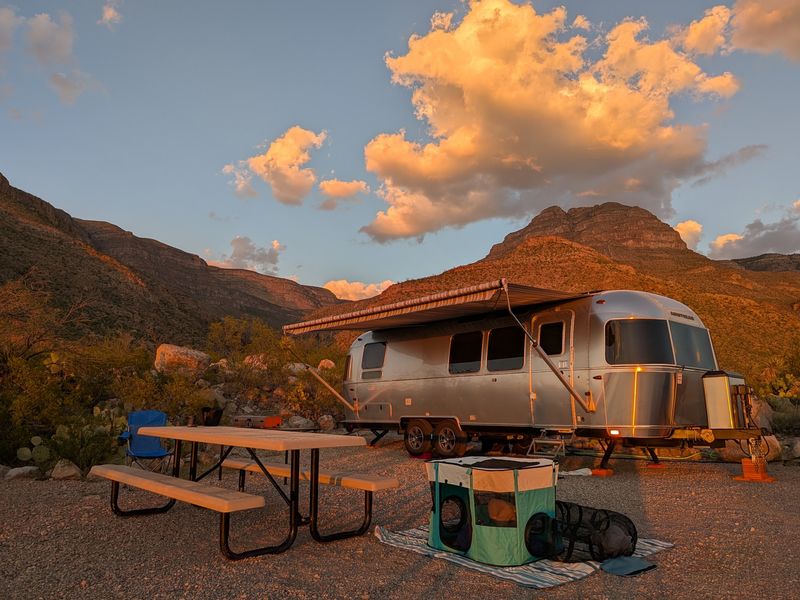
Front-row seats to the whole Tularosa Basin come standard at this campground. Sites line a paved loop on a gentle slope, so most face west toward the open desert.
Some sites include electric and water hookups for RVs, while others suit tent campers who like to keep things simple. Many feature covered picnic tables that offer shade during the hottest hours.
A comfort station with restrooms and hot showers serves the campground. That hot water feels like luxury after a long, dusty climb up Dog Canyon.
On clear days, the white dunes of White Sands National Park shimmer far across the basin. The drive there takes about half an hour, making the campground a handy home base.
Nights bring another show, since the dark skies here are great for stargazing. The Milky Way easily outshines any campfire story told around the loop.
Wind can roar across the slope, so solid tent stakes are a smart packing choice. The ground is rocky and hard, which means flimsy stakes tend to give up quickly.
Summer afternoons can also get very hot, and spring brings strong gusts. Cooler months tend to fill the loop with happy campers chasing mild weather.
Sunset Makes The Landscape Feel Timeless
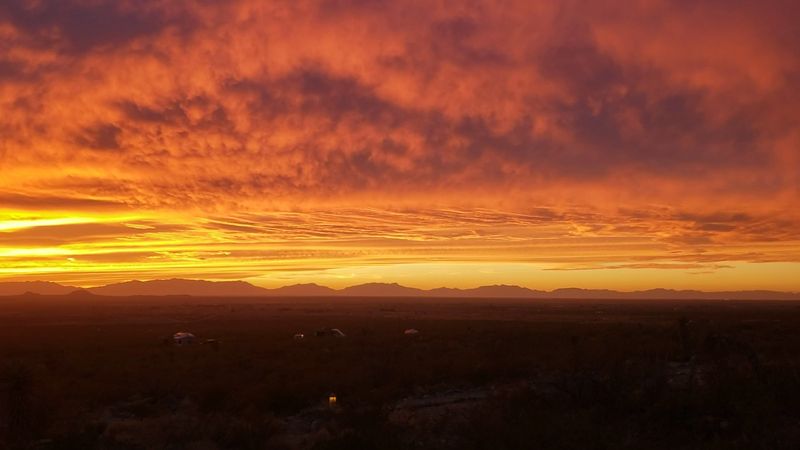
Evening is when this corner of the desert really shows off. As the sun drops, the cliffs behind the park glow in shades of orange and deep red.
Out west, the jagged Organ Mountains turn into a dark silhouette against the fading sky. The white dunes far below catch the last light and seem to glow softly.
The campground’s west-facing slope gives nearly every site a clear view of the show. Nobody needs to hike far or fight for a spot to enjoy it.
I find it remarkable that the same sunset once lit up the ranch house and the Frenchman’s cabin. The view has barely changed in well over a century.
Photographers often wait for the moment just after sunset, when colors soften and shadows stretch. That glow lasts only minutes, so cameras usually come out early.
Once darkness settles, the stars take over and the canyon grows remarkably quiet. Coyotes sometimes sing in the distance, adding a soundtrack older than any building here.
Moments like this explain why the park feels frozen in time. Southern New Mexico keeps its oldest stories right here, glowing at the edge of every evening.