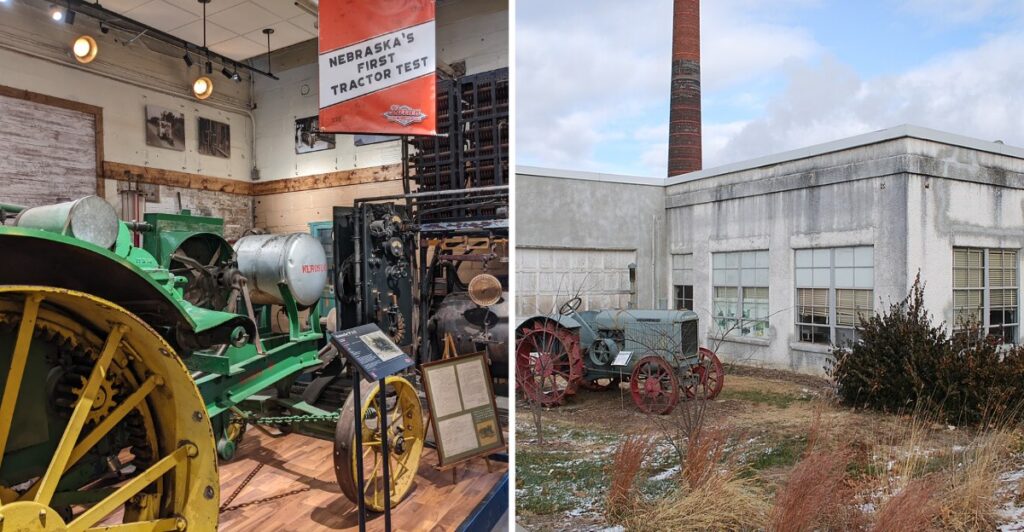
Apparently, tractors once needed to prove themselves.
Not in a field, but in a test lab.
Back in 1920, Nebraska started checking whether manufacturers’ horsepower claims actually held up. The little white building tied to that job is still standing today.
Now it holds the machines and records that show how much farm power has changed.
Some of the earliest tractors look almost skeletal beside what came later. Bit by bit, the designs got smarter.
The best twist?
The testing never really left.
Modern tractors are still put through their paces nearby.
So look at the old machines first.
Then remember that somewhere close by, a brand-new tractor may be getting graded on its homework.
The Museum Occupies The Original Nebraska Tractor Test Laboratory
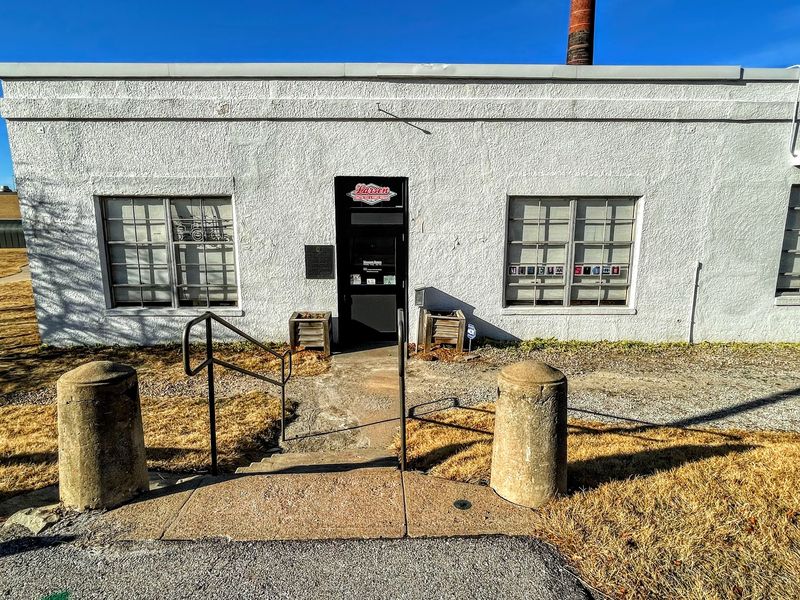
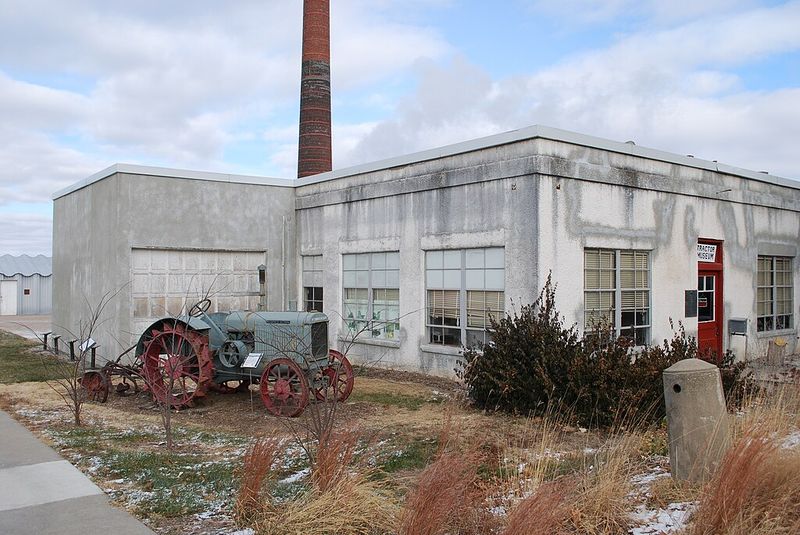
The Larsen Tractor Museum is housed in the building constructed in 1919 for Nebraska’s new tractor-testing program.
Early tractors were tested here rather than displayed in an unrelated exhibition hall decades later. This was the facility where the state’s testing program began.
The original laboratory included space and equipment for measuring tractor performance, while an outdoor track allowed machines to be tested under load.
Tractor testing later moved into a newer facility, and the historic building became a museum. It was recognized as a historic agricultural engineering site and dedicated for museum use in 1980.
In 1998, the museum was officially named for Lester F. Larsen, who served as engineer-in-charge of the Nebraska Tractor Test Laboratory from 1946 to 1975 and helped build the collection of historic tractors and test equipment.
Original functions changed as testing technology moved forward, but the compact laboratory still shows how early performance testing was organized before tractors became the enormous, computer-equipped machines used today.
Look at the older testing equipment as closely as the tractors themselves. The machinery used to measure power and pulling ability helps connect the building with the work once carried out inside it.
Official Tractor Testing Began In Nebraska In 1920
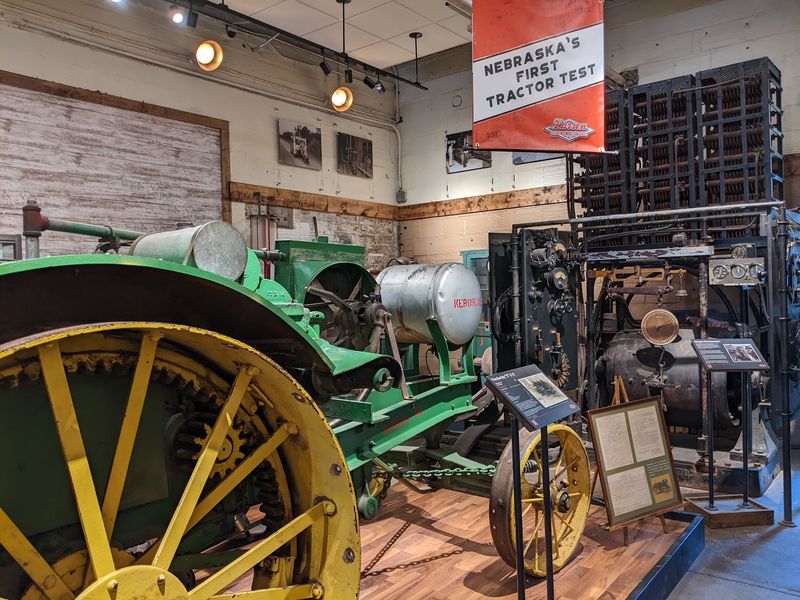
Nebraska’s tractor-testing program grew from the Nebraska Tractor Test Act of 1919.
The law required agricultural tractors sold in the state to have manufacturers’ performance claims verified through official testing.
Wilmot F. Crozier, a Nebraska farmer and state legislator, had personal experience with tractors that failed to perform as advertised. He worked with State Senator Charles J.
Warner as the testing law moved through the legislature.
Testing began on the Lincoln campus soon afterward.
The first tractor to successfully complete the official program was a John Deere Waterloo Boy Model N. Its test concluded on April 9, 1920.
Early testing focused on practical measurements. Engineers checked drawbar horsepower, belt horsepower, and fuel consumption rather than relying on advertising claims alone.
Drawbar testing measured how much pulling work a tractor could perform. Belt testing measured power available for equipment driven by a belt, an important feature when tractors also served as stationary power sources for farm machinery.
Those measurements gave farmers standardized information they could compare before buying expensive equipment.
Modern testing uses different technology, but the central process remains familiar: measure what a tractor actually does under controlled conditions.
Early Tractors Show How Quickly Farm Power Changed
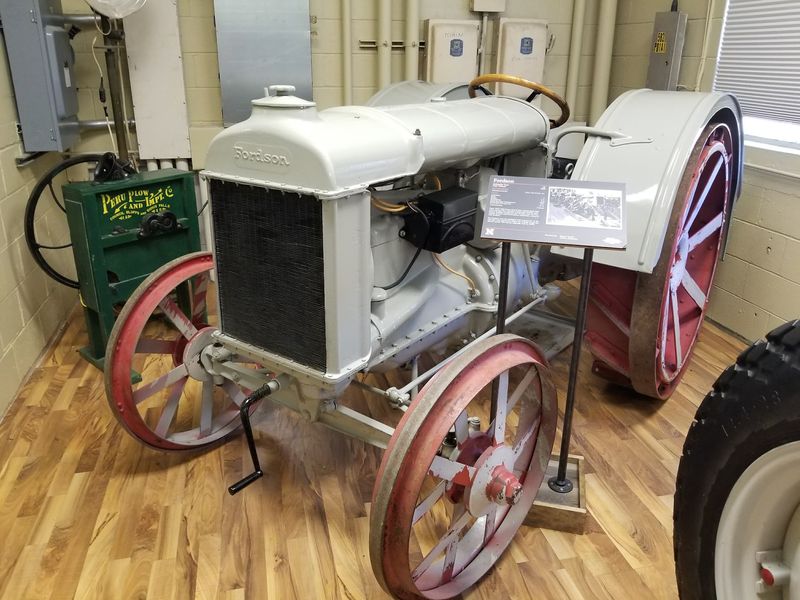
The earliest machines connected with Nebraska testing look very different from modern tractors.
Open operator stations, exposed mechanical parts, steel wheels, simple controls, and large engine housings reflect a period when tractor design was still developing quickly.
The test records from 1920 include manufacturers such as Case, Rumely, Huber, Minneapolis, and John Deere’s Waterloo Boy.
Comparing those machines shows how manufacturers approached the same basic problem in different ways as mechanized farming expanded.
Tractors gradually replaced some work previously done with horses and other draft animals, but the transition was not instantaneous. Farmers had to weigh purchase price, fuel use, maintenance, reliability, and the amount of work a machine could actually complete.
Walk slowly around the older tractors and look at the operator’s position. Many offered little protection from weather, noise, dust, or moving parts.
Then compare those designs with later tractors in the collection. Enclosed cabs, improved seating, better controls, quieter operation, and new power systems show how engineering priorities expanded beyond simple pulling strength.
The differences are especially clear when you move from machine to machine rather than looking only at the oldest examples.
Steel wheels give way to later tire designs, controls become more organized, and operator spaces gradually become more enclosed and comfortable.
The Waterloo Boy Became Test Number One
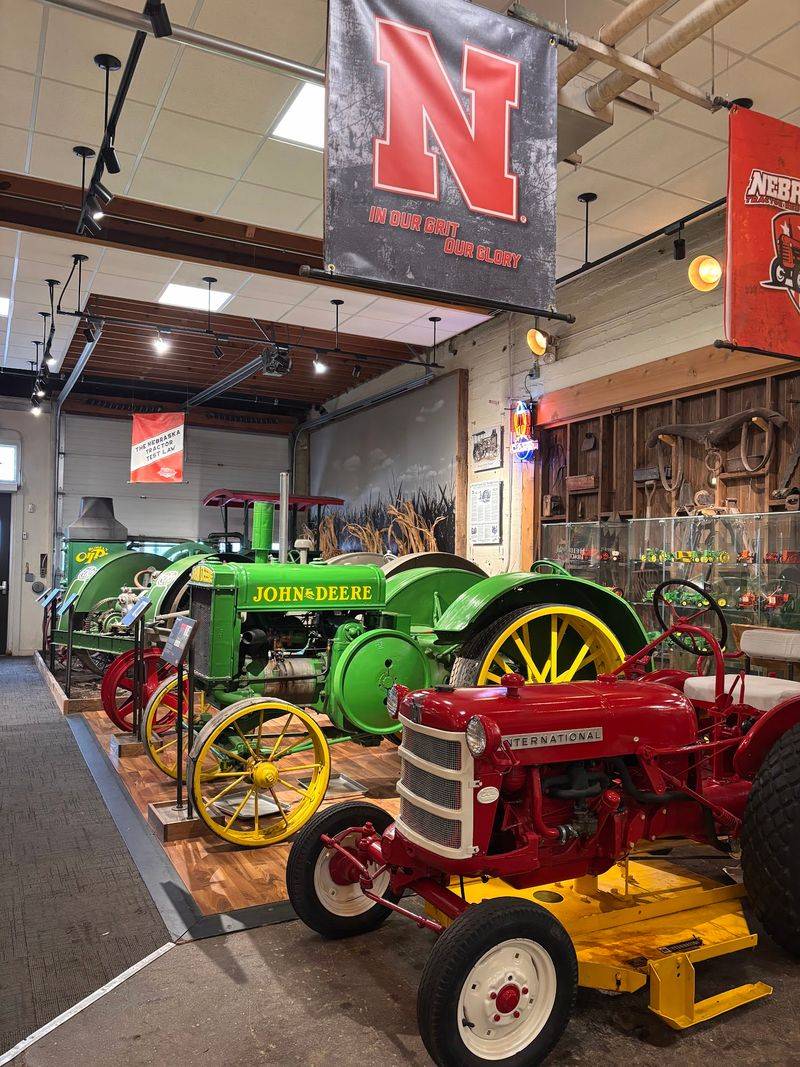
The Waterloo Boy Model N holds a central place in Nebraska tractor-testing history.
Testing on the tractor began in late March 1920 and was successfully completed on April 9. It became Nebraska Tractor Test Number One.
The Waterloo Gasoline Engine Company had already been purchased by Deere & Company in 1918, connecting the Waterloo Boy directly with the later development of John Deere tractors.
The tractor had to be a regular production machine rather than a specially prepared demonstration model. Engineers then measured performance under controlled conditions and recorded the results.
The museum’s broader archive contains decades of Nebraska Tractor Test reports, making it possible to trace changes in manufacturers, models, horsepower, fuel use, and testing methods over time.
If you enjoy mechanical details, spend some time with the test equipment and documentation as well as the tractors.
The numbers, gauges, dynamometers, and reports show how engineers turned a machine pulling across a track into standardized measurements.
That makes the Waterloo Boy more than an early tractor in the collection. It also marks the beginning of the numbered test record that continued as new machines arrived on the Nebraska campus.
Tractor Testing Still Continues On East Campus
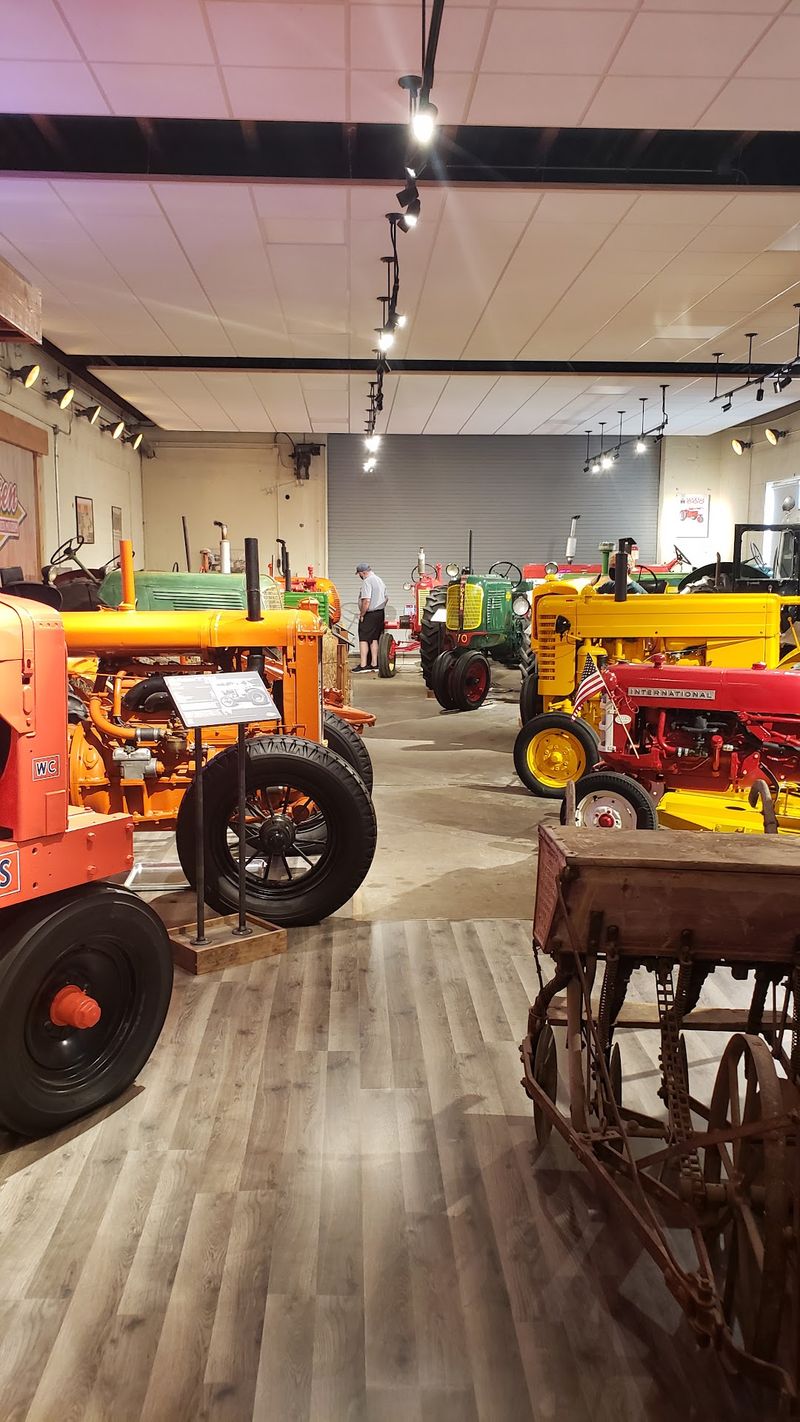
Nebraska Tractor Test Laboratory work did not end when the original building became a museum.
The modern laboratory operates nearby, in the west end of Splinter Laboratories directly north of the museum.
Testing methods have changed dramatically since 1920.
Early engineers measured belt horsepower and drawbar pull with equipment suited to tractors of that era.
Modern testing can examine power take-off performance, drawbar power, fuel use, hydraulic systems, lift capacity, sound levels, and other characteristics of contemporary machines.
The laboratory has tested thousands of tractor models since the program began.
Its work also extends beyond Nebraska. The laboratory serves as the officially designated tractor testing station for the United States within international testing systems.
Lab tours may be available during a museum visit when engineers are present, so ask at the museum if seeing the current facility interests you.
The Larsen Tractor Museum is at 35th and Fair Street on the University of Nebraska-Lincoln East Campus, Lincoln, NE 68583.
Visitor parking is available in the lot directly south of the museum. An accessible entrance is on the north side of the building, with accessible parking available nearby.
Save the museum name in your navigation rather than relying only on the street intersection, since the building sits within the larger East Campus complex.
The Collection Goes Beyond Full-Size Tractors
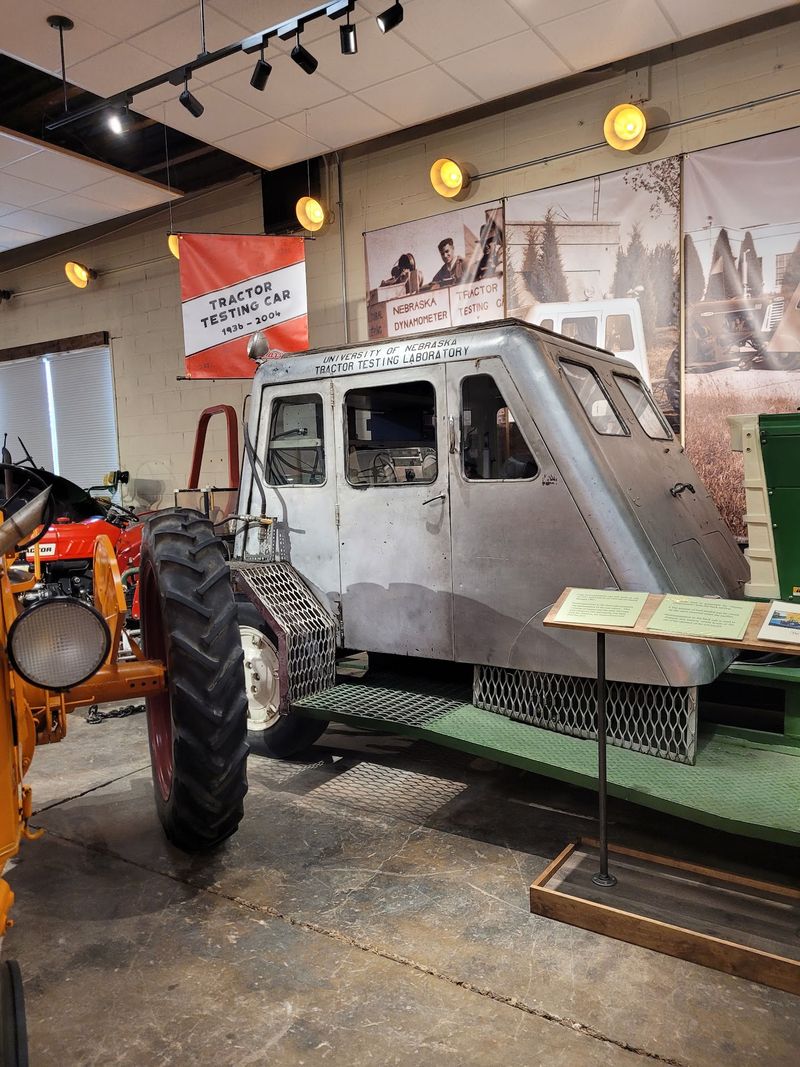
The museum’s focus is broader than rows of restored machines.
Historic tractors remain the largest visual pieces, but testing equipment, engines, components, photographs, documents, and other agricultural technology fill in the story around them.
The collection includes equipment associated with the development of Nebraska’s test procedures as well as tractors representing important changes in design.
A children’s area includes a tractor cab where younger visitors can explore without climbing onto historic machines.
Smaller mechanical displays can also reward a closer look. Components such as carburetors and engine parts show how fuel delivery and other systems changed as tractor technology developed.
The museum also preserves records connected with the Nebraska testing program.
The records preserve horsepower claims, fuel-consumption measurements, test dates, and engineering procedures.
Spend part of the visit looking at machinery from a distance, then move closer to the supporting displays. Testing equipment, documents, and mechanical components provide details that are easy to miss if you focus only on the full-size tractors.
If one brand or period interests you most, use the surrounding records to compare it with machines tested before and after it.
The collection is compact enough to move between tractors and smaller displays without rushing from room to room.
What To Know Before Visiting The Larsen Tractor Museum
The museum currently operates Tuesday through Friday from 9 a.m. to 4 p.m. It is closed on Mondays, weekends, and university holidays or closures.
Because university schedules can affect access, check the current calendar before making a long drive to Lincoln.
Admission is based on a suggested donation for adult visitors.
The museum is compact, so you do not need to set aside an entire day, but the amount of time you spend depends heavily on how closely you read the testing history and mechanical displays.
Comfortable shoes are enough for the indoor visit. If you also plan to see the modern laboratory when a tour is available, allow additional time.
Families can use the children’s tractor-cab area while keeping hands off the historic equipment.
If agricultural engineering is your main interest, start with the 1920 testing story and follow the machines forward chronologically. If you are more interested in design, compare operator stations, wheels, controls, engines, and cab development across several decades.
The museum is also easy to combine with other East Campus stops rather than treating it as an isolated destination.
Before leaving, take another look at the original test building from outside. The original facility stands beside the modern laboratory, placing the program’s 1920 beginnings close to the facilities used for tractor testing today.