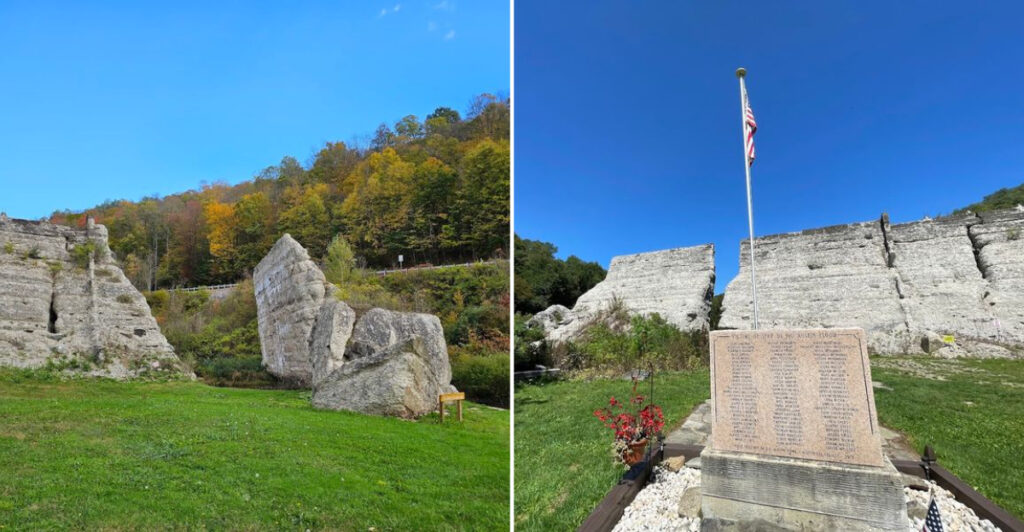
Somewhere in the forested hills of Pennsylvania, a massive concrete structure stands broken but still standing, almost frozen in time. Decades have passed since it served its original purpose, yet much of it remains strikingly intact. That is what makes it so hard to ignore.
This is not just another abandoned site slowly disappearing into the landscape.
It is a reminder of how solidly some things were built, and how long they can linger after the people who relied on them are gone. The setting adds to the mystery, but the real draw is the structure itself and the questions it leaves behind. Why was it built here, what happened to it, and how has it managed to last this long?
If you enjoy history, outdoor exploration, or simply want to witness something that makes you stop and think, this place deserves a spot on your travel list.
The Catastrophic 1911 Collapse That Changed Everything
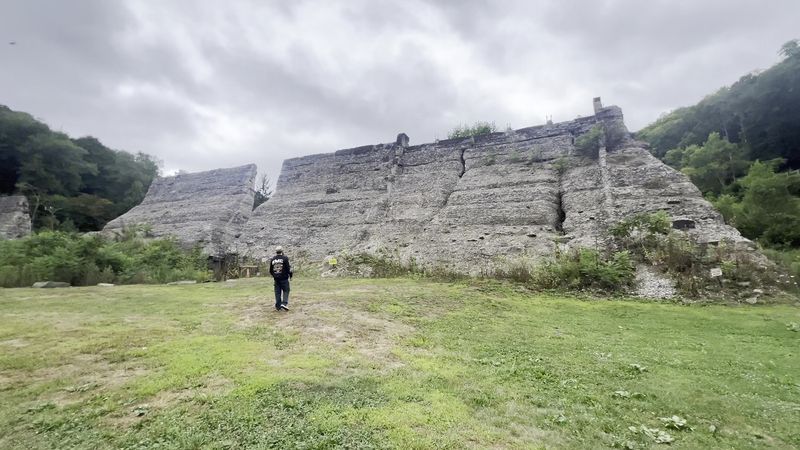
Few disasters in Pennsylvania history hit as hard and as fast as the Austin Dam collapse of September 30, 1911. The dam, built to hold back Freeman Run and supply water for a paper mill, gave way after years of structural concerns went largely ignored.
When it broke, a wall of water estimated at over 300 million gallons surged down the valley toward the town of Austin.
Entire streets were swept away in minutes. Homes, businesses, and lives vanished before residents had any real chance to escape.
The tragedy drew national attention and sparked early conversations about dam safety standards across the country.
What makes the story even more painful is that locals had warned officials about the dam’s instability long before the collapse.
Cracks had appeared in the structure, and residents had actually evacuated once before during a scare in 1909, only to return when the dam held.
Understanding this backstory makes standing near the ruins feel genuinely significant, not just like visiting another roadside attraction.
How These Ruins Have Lasted So Long
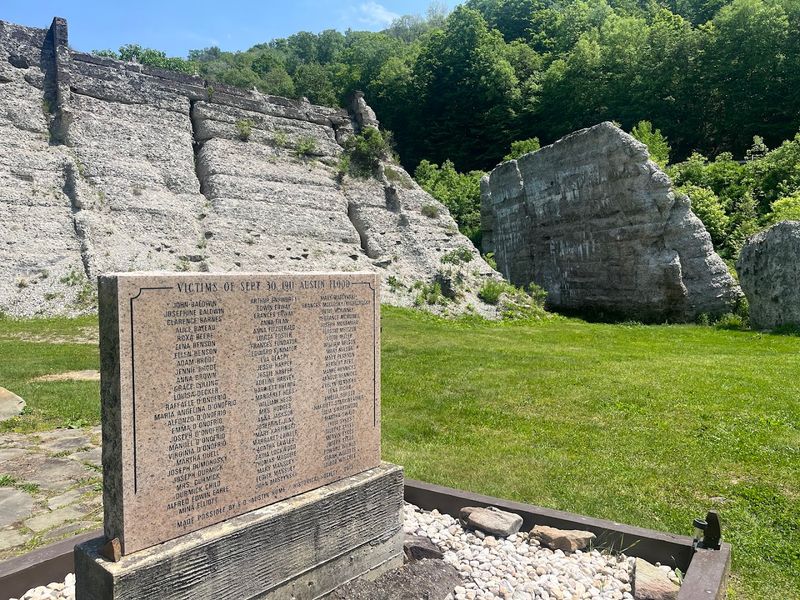
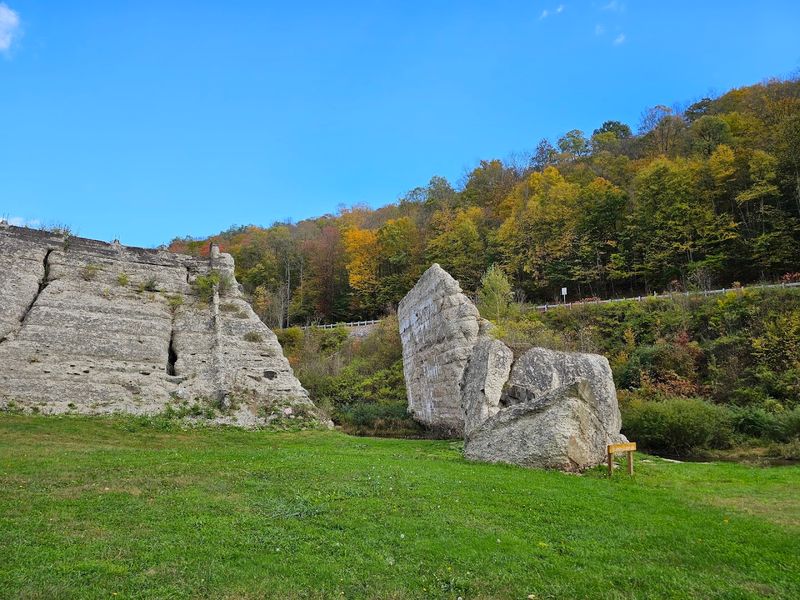
At first glance, the ruins of the Austin Dam look almost too well preserved for a structure that failed over 110 years ago. Huge slabs of concrete still stand upright, some tilted at dramatic angles, others nearly vertical.
The scale of what remains is genuinely surprising, especially when you consider the force of water that tore the dam apart.
The reason the ruins look so intact comes down to a mix of the dam’s original thickness and the way it broke. Rather than crumbling into small pieces, large sections of the structure toppled as single units.
The concrete was dense and thick, even if it was poorly engineered by modern standards. Visitors often notice the oversized aggregate mixed into the concrete.
Those large stones and gravel reflect the rough construction methods used at the time.
Nature has also played a role in preservation. Moss and vegetation have grown into the cracks, which actually helps stabilize some surfaces.
The creek that once powered the paper mill still flows nearby, but it no longer threatens the ruins. Take a closer look at the structure and you will notice just how massive each broken section truly is.
The sheer weight of the remaining pieces keeps them anchored firmly in place, year after year.
What Greets You At The Site
Pulling up to Austin Dam Memorial Park at 5384 PA-872, Austin, PA 16720, you get the sense that this place takes its history seriously. The park is well maintained, with clean restrooms, marked trails, and informational plaques that walk you through the timeline of the dam’s construction and collapse.
It does not feel neglected or forgotten.
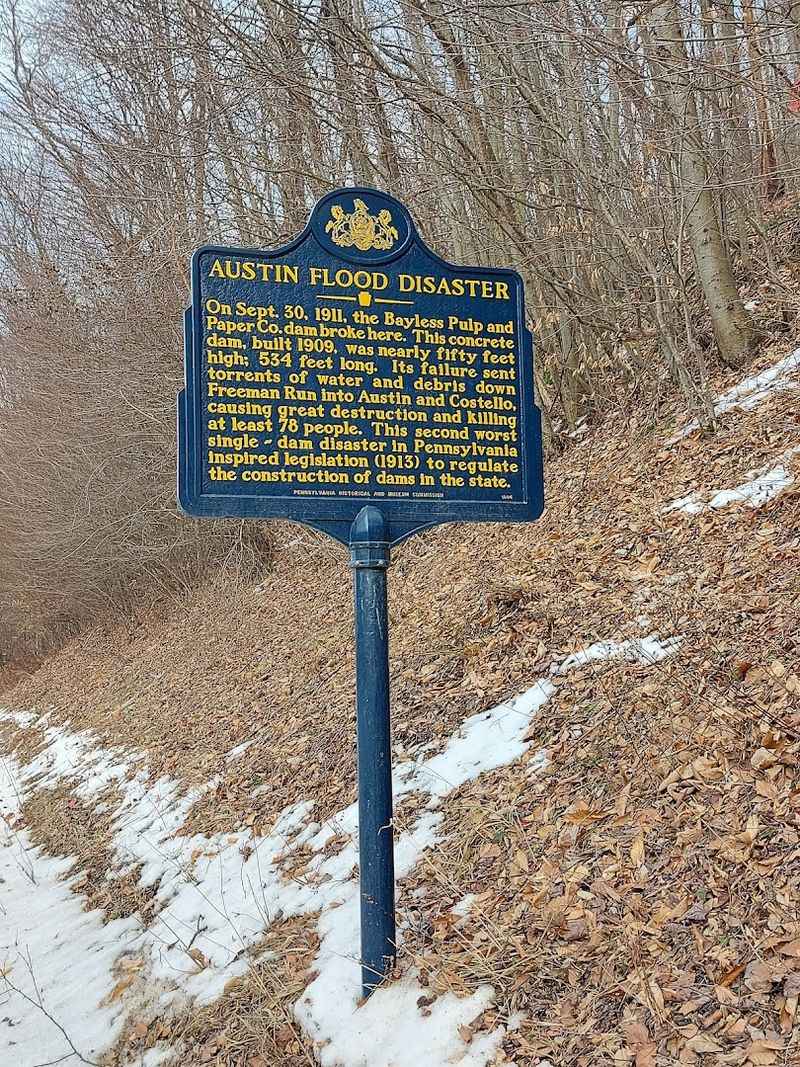
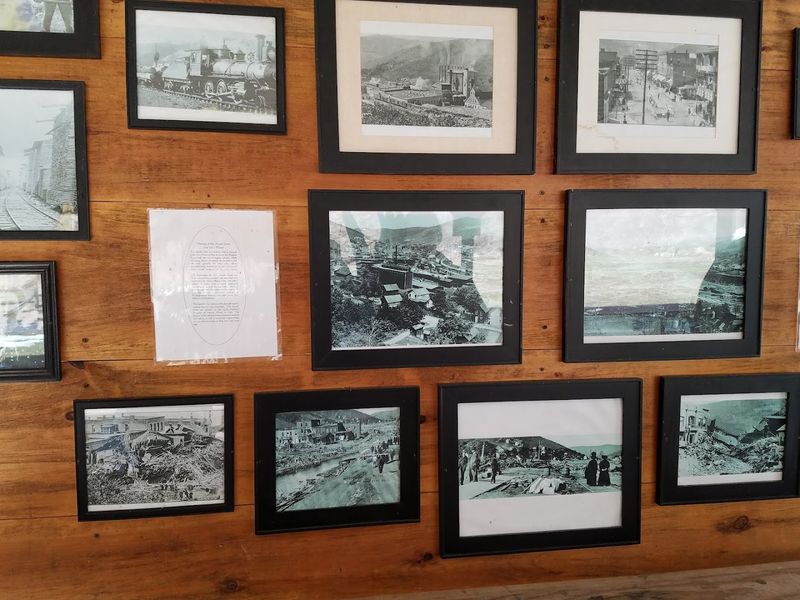
The memorial area is near the park entrance and includes markers honoring those affected by the 1911 flood. Historical photos are displayed, giving you a side-by-side look at what the valley looked like before and after the disaster.
These visuals make the story feel real in a way that reading about it alone never quite does.
A short walk brings you directly to the ruins themselves, which loom up from the valley floor in a way that stops you in your tracks.
The trail system is manageable for most fitness levels, though some paths can get overgrown during summer months. The park is open daily from 8 AM to 8:45 PM, giving you plenty of time to explore at a relaxed pace.
Cell reception is limited in the area, so download a map or check the official site before you head out.
An Abandoned Paper Mill Many Visitors Miss
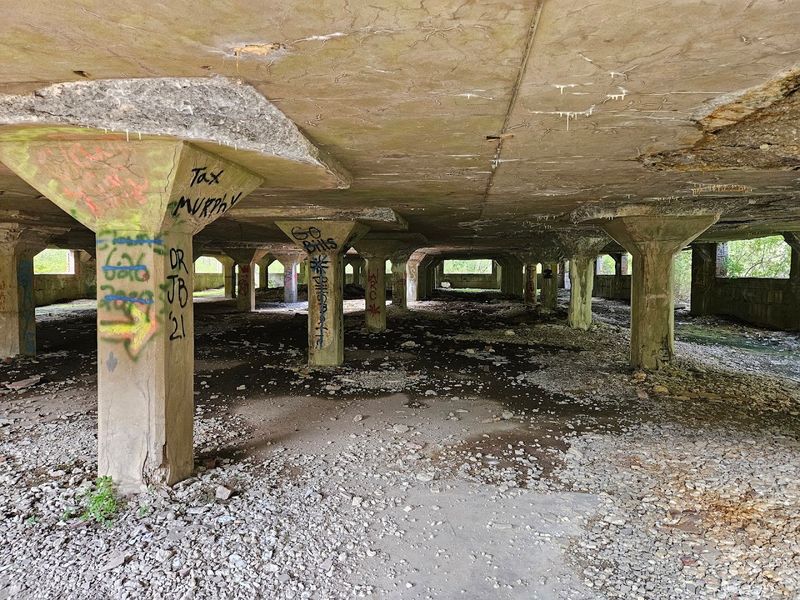
Just a few yards south of the memorial, the remains of the paper mill that once relied on the dam still stand. Most visitors focus entirely on the dam ruins and miss this second layer of history entirely.
The paper mill was the reason the dam existed in the first place, built to provide a steady water supply for manufacturing operations in the early 1900s.
The Bayless Pulp and Paper Company operated the mill, and it was the company’s decision to build the dam that set the tragedy in motion. After the flood, the mill was destroyed along with much of the town.
The ruins that remain today give you a sense of the industrial scale that once defined this small Pennsylvania valley.
Exploring the mill site adds real context to the overall story. You start to understand that this was not just a scenic reservoir but an active industrial operation tied directly to the local economy.
Workers, families, and an entire community depended on that infrastructure. Stay aware of your surroundings when exploring the mill area, as the terrain can be uneven and some surfaces are unstable.
Bringing sturdy footwear makes the experience much more comfortable and safe.
What Went Wrong In The Design And Construction
One of the most striking things about the Austin Dam story is how avoidable the whole disaster was. Engineers and local residents raised concerns about the dam’s construction quality almost from the moment it was completed in 1909.
The concrete mix contained oversized aggregate. In simple terms, the stones mixed into it were too large for the amount of cement used to hold everything together.
This created weak points throughout the dam wall. Add to that the fact that the dam was built directly on a shale foundation, which is not an ideal base for a heavy water-retaining structure.
Water seeping through cracks in the shale gradually undermined the dam’s stability over the two years it stood.
The company behind the dam repeatedly downplayed safety concerns, and state oversight at the time was minimal. When the dam finally gave way, the failure happened in the middle of the day, which at least allowed some residents to flee.
Had it collapsed at night, the disaster would almost certainly have been even worse. Looking at the ruins today, you can actually see the oversized stones jutting from the broken concrete edges.
It is a visible, tangible reminder of what happens when cutting corners on critical infrastructure becomes acceptable practice.
Helpful Things To Know Before You Arrive
Getting the most out of a trip to Austin Dam Memorial Park takes a little preparation, especially since it is in a rural part of Pennsylvania with limited cell service.
Spring and fall tend to offer the best visiting conditions. Summer can bring overgrown trails that make navigation trickier.
In winter, roads leading to the park can turn icy and may be harder to manage without four-wheel drive.
Autumn is particularly scenic, with the surrounding hills turning rich shades of red and gold that frame the ruins beautifully.
Wear comfortable shoes with good grip, especially if you plan to walk down to the base of the dam. The view from the bottom is far more powerful than looking down from the road.
Pack water, snacks, and a portable charger since amenities are limited beyond the restrooms. The park opens at 8 AM daily, so arriving early on weekends helps you avoid the midday crowd.
A nearby campground offers a peaceful overnight option if you want to stay longer and explore the surrounding PA Wilds at a slower pace.
A Quiet Place Of Remembrance Near The Ruins
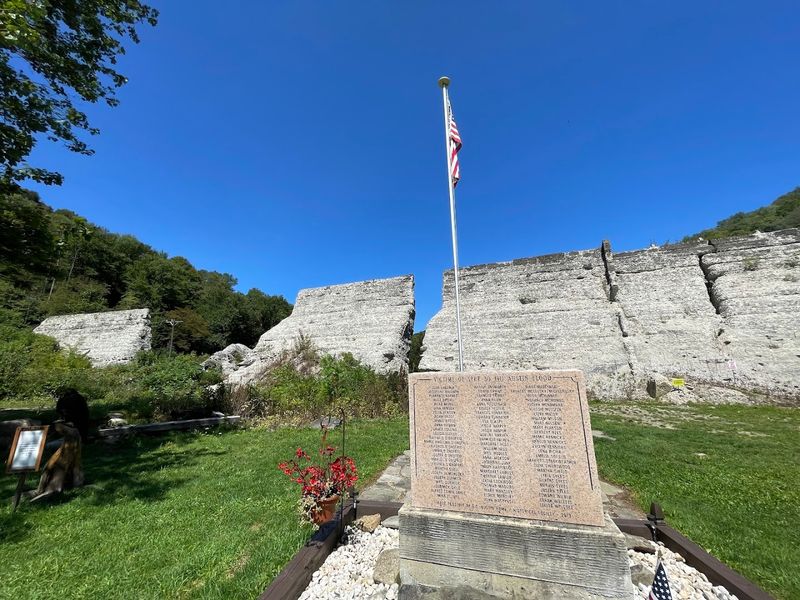
Beyond the dramatic ruins, the heart of the park is its memorial section dedicated to those affected by the 1911 flood. Plaques and markers list names, offering a personal and sobering counterpoint to the raw physical spectacle of the broken dam nearby.
Standing in front of those names makes the scale of the tragedy feel deeply human.
The memorial was created to ensure that the Austin flood does not fade into forgotten local history. Entire families were wiped out.
Neighbors who had lived side by side for generations were suddenly gone.
The community that rebuilt afterward carried that weight for decades.
Visiting the memorial area gives the trip a purpose beyond sightseeing. You are not just looking at ruins; you are acknowledging a real event that shaped real lives.
Take a few minutes to read the plaques rather than rushing past them to get to the dam. The combination of the memorial and the physical ruins creates a complete story that neither element could tell on its own.
It is the kind of place that stays with you long after you drive back down PA-872 and return to everyday life.
Why More People Should Know About This Place
Most people outside of north-central Pennsylvania have never heard of it. That is a gap worth closing.
The combination of dramatic ruins, genuine historical weight, and a well-maintained park makes this one of the more rewarding stops in the PA Wilds region.
History buffs will find plenty to absorb between the informational displays, old photographs, and the ruins themselves. Outdoor enthusiasts get a scenic walk through a forested valley with a genuinely unique destination at the end of the trail.
Families can turn the visit into an educational outing that covers engineering, disaster history, and community resilience all in one afternoon.
There is also something quietly powerful about a place that does not oversell itself. No gift shop, no admission fee, no long lines.
Just a well-kept park, a remarkable set of ruins, and a story that deserves to be told more widely.
If you find yourself anywhere near Austin, Pennsylvania, make the detour. The ruins of the Austin Dam are the kind of thing you cannot fully appreciate from a photo or a description.
You need to stand next to those broken slabs of concrete to understand just how much force, history, and human consequence they represent.