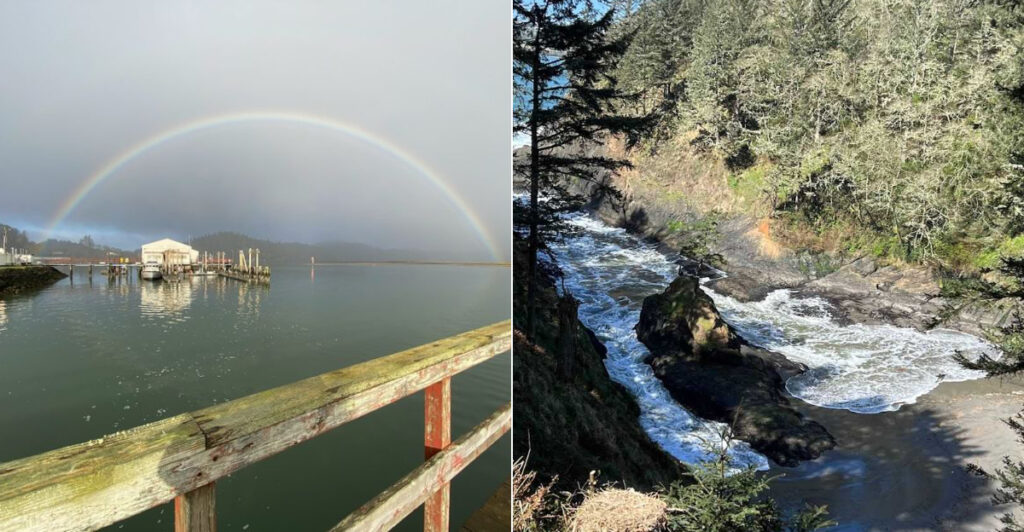
Washington has beaches that impress. And then there is this one, which does something else entirely.
A small cove framed by rocky cliffs and towering trees, with a tiny island that only appears at low tide like the Pacific is playing a trick. It was closed to the public for over two decades and only reopened in 2022.
Most people still have no idea it is even there. Have you ever found a place so stunning it genuinely felt like a personal discovery? A short but steep hike leads down to a beach that fits the word perfect a little too well.
The silence hits first. Then the scenery. Then the very clear realization that this is exactly the kind of place a person needs to visit at least once.
Why keep saving the good trips for someday? Washington is offering something rare right now, and the trail is short enough to have no excuses.
A Cove With A Story
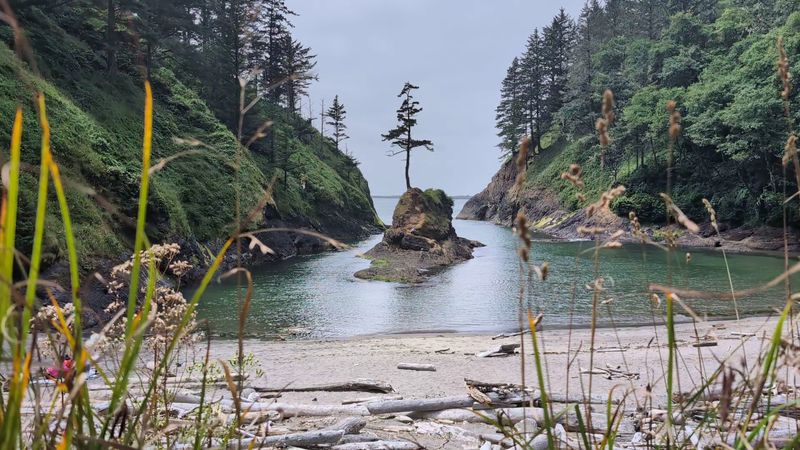
Long before tourists discovered this place, sailors feared it. The cove earned its striking name from the wreck of the bark Vandalia in 1853, when the bodies of sailors reportedly washed ashore along this very stretch of coastline.
That history is part of what makes standing here feel so powerful. You are not just looking at a pretty beach. You are standing inside a story that the Pacific Ocean has been telling for over 170 years.
Cape Disappointment itself was once called the Graveyard of the Pacific by sailors who understood the danger of these waters. The Columbia River bar nearby is one of the most treacherous river mouths in the world, responsible for countless shipwrecks over the centuries.
Knowing all of this while you sit on the sand adds a strange and wonderful depth to the experience. The waves sound different when you know what they have witnessed.
Visitors often say the cove carries an unsettling silence that feels almost respectful, as if the place itself remembers.
The Hike Down
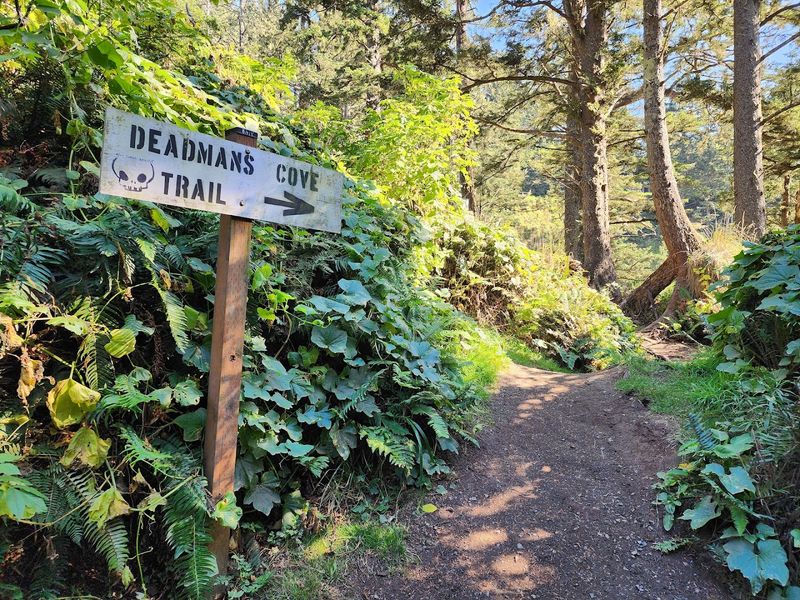
Getting to Deadman’s Cove is an adventure before the adventure even begins. The path is not long, but it is not gentle either.
You will encounter steep wooden steps, exposed roots, dirt slopes, and a descent that will absolutely test your footwear choices. Shoes with solid grip are not optional here, they are essential.
Park at the Lewis and Clark Interpretive Center at 244 Robert Gray Dr, Ilwaco, WA 98624, and follow the trail toward the cove from there.
Visitors who have made the trip say the hike is short but challenging, and wet conditions make the trail noticeably more slippery. Mud is a real possibility, especially during Washington’s wetter months, which is most of them.
The good news is that the trail has seen improvements over recent years, and the effort is completely worth it. Once you reach the bottom and the cove opens up in front of you, the physical effort becomes a distant memory almost immediately.
Can you handle a steep descent with uneven terrain? If the answer is yes, you are in for one of the most rewarding short hikes in the entire state.
If mobility is a concern, the view from the trail above is still genuinely breathtaking and worth every step to reach it.
What The Beach Looks Like
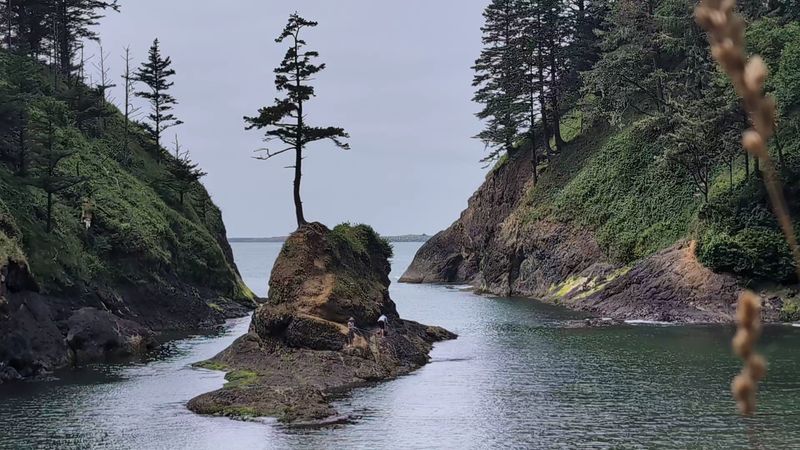
The first look at this beach from above is the kind of moment that makes people stop walking and just stare. Rocky walls rise sharply on either side, draped in green trees that cling to the cliffs like they have been holding on for centuries.
The beach itself is compact, less than 350 feet from end to end. That small size is actually one of its greatest qualities. It feels private and personal in a way that long open beaches simply cannot replicate.
Driftwood is scattered across the sand in the kind of natural arrangement that no designer could recreate. One of the most striking features is a small sea stack rising just offshore, topped with a single resilient tree that somehow grows from solid rock.
At low tide, you can walk out to that little island and stand on it while the ocean moves around you on all sides. Jellyfish have been spotted along the shoreline during certain seasons, adding an unexpected bit of marine theater to the visit.
What would it feel like to have this entire cove to yourself? Several visitors have described arriving to find nobody else there, just the waves, the cliffs, the driftwood, and the sky.
That kind of quiet is increasingly rare, and this cove still offers it on a good day.
Tides Are Everything Here
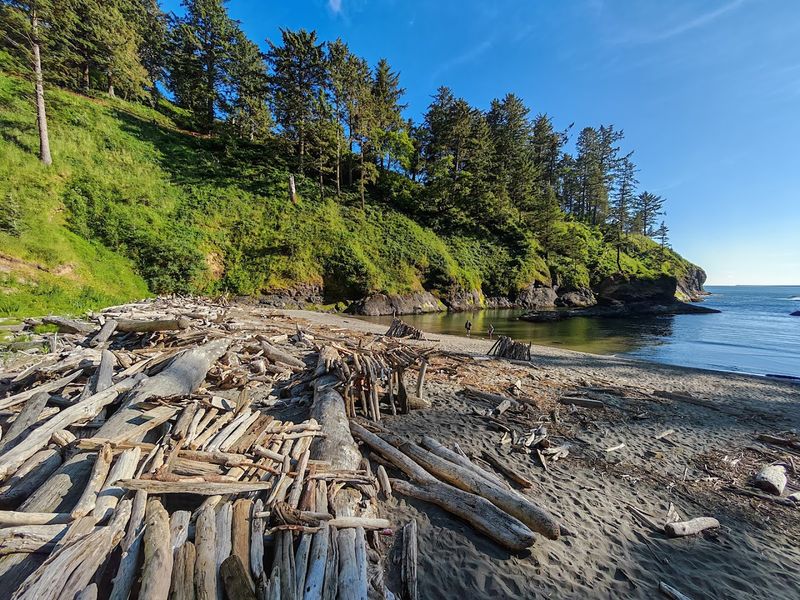
Timing your visit around the tides is not just a suggestion at Deadman’s Cove, it is the difference between two completely different experiences. At low tide, the cove opens up and reveals the small rocky island with its iconic tree, accessible on foot across the exposed seafloor.
At high tide, that island disappears beneath the water, and access into the cove itself can become limited or even risky. Checking a tide chart before you go is one of the smartest moves you can make for this trip.
Washington’s coastal tides shift significantly throughout the day, so a quick look at a free tide app the morning of your visit will tell you exactly what to expect. Low tide windows are often the best for photography, exploration, and general enjoyment of everything the cove has to offer.
Sunrise visits during low tide create a particular kind of magic, with soft light filtering through the trees on the cliffs and the water sitting calm and clear below. Sunset visits are equally spectacular, with the sun dropping over the open ocean directly in front of the cove’s mouth.
Photography Worth The Trip
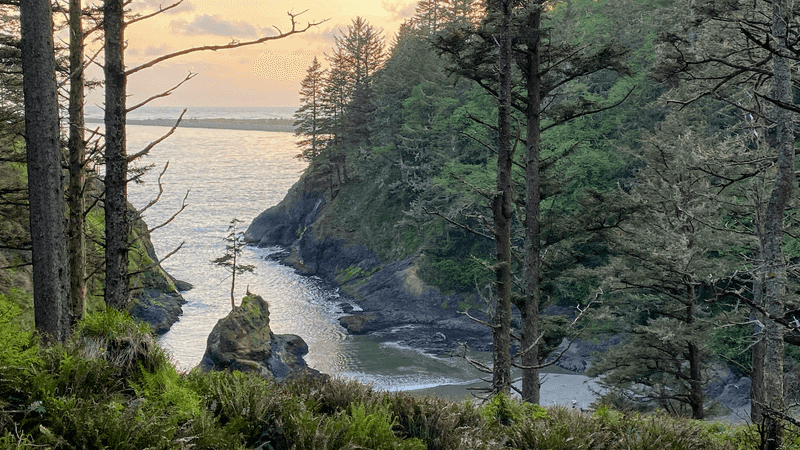
Photographers have been quietly losing their minds over this place since it reopened in 2022. The combination of vertical rock walls, dense green forest, a sandy beach, a sea stack, and direct ocean access creates a composition that practically builds itself.
Sunset is widely considered the prime shooting window. The sun sets directly over the ocean in front of the cove’s opening, which means the light pours straight in and lights up the cliffs, the water, and the sand in warm tones that feel almost theatrical.
Sunrise has its own appeal, with soft filtered light coming through the trees on the cliff tops and a calm, misty quality to the air that makes early morning shots feel dreamlike. Both ends of the day offer something genuinely different and worth waking up or staying late for.
Even midday visits produce striking images because of the dramatic contrast between the shaded cliff walls and the bright open ocean beyond. The cove frames the Pacific like a natural window, and almost any angle from the beach produces a compelling shot.
Wildlife You Might Spot
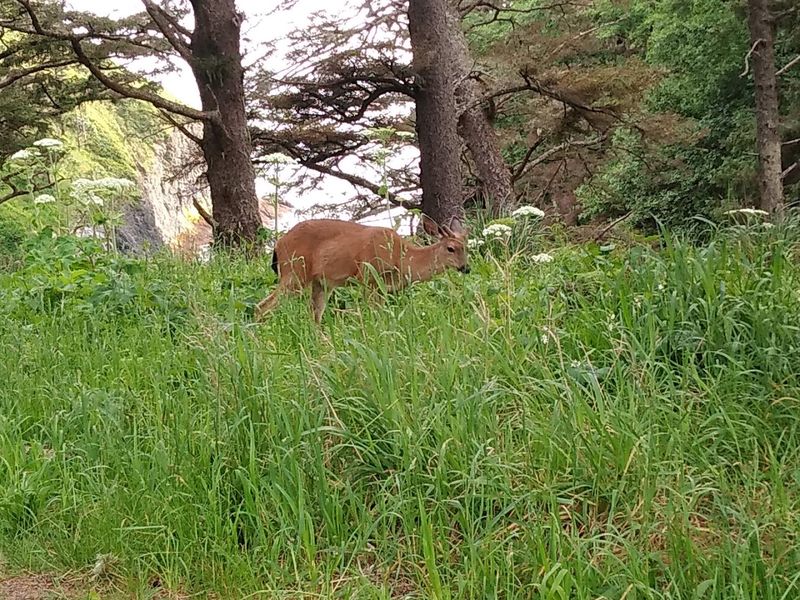
The cliffs and trees surrounding Deadman’s Cove are not just scenery. They are a working habitat for a remarkable variety of birds and marine life that visitors encounter regularly during their time at the cove.
Bald eagles are among the most exciting sightings here. Multiple visitors have spotted them circling above the cliffs or perching in the tall trees that line the trail.
Buzzards and smaller coastal birds also frequent the area, making the cove a genuinely rewarding spot for anyone who enjoys watching wildlife.
Deer have been spotted along the surrounding trail, casually moving through the forest as if the hikers are the ones out of place. The Pacific Northwest’s natural abundance is on full display in and around Cape Disappointment State Park.
Along the shoreline, jellyfish occasionally drift close to the beach during warmer months, creating an unexpected and colorful marine display right at the water’s edge. Tide pools near the base of the cliffs can also reveal small crabs, anemones, and other intertidal creatures.
Have you ever stood on a beach and watched a bald eagle pass directly overhead? It is one of those moments that feels almost cinematic, and the cliffs of this cove seem to attract exactly that kind of encounter.
The wildlife here is not a background detail, it is part of the main event.
Practical Tips For Visiting
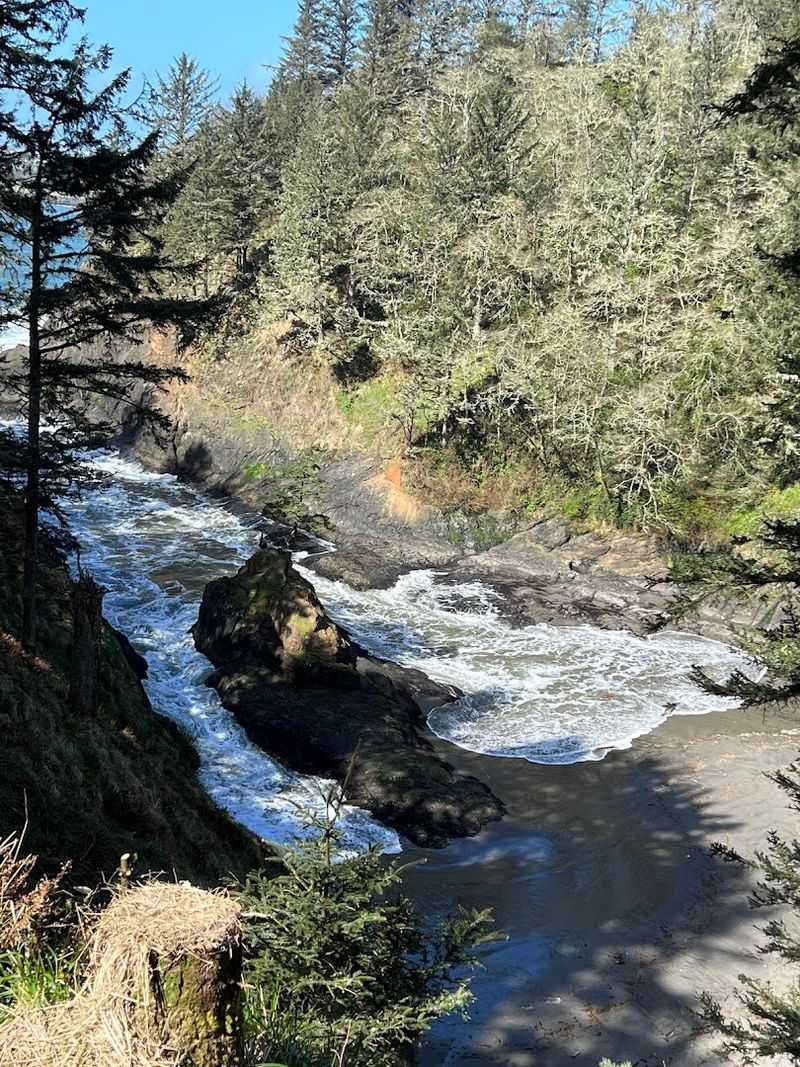
A few simple preparations will make a significant difference in how much you enjoy this visit. The cove is open daily from 7 AM to 8 PM, so there is plenty of time to plan a morning or afternoon adventure without feeling rushed.
Parking at the Lewis and Clark Interpretive Center requires either a Washington State Discover Pass or a $10 day-use fee. That single payment also gets you access to the nearby Cape Disappointment Lighthouse trail, which many visitors combine with their cove visit for a full day out.
Wear shoes with real traction. This cannot be said enough.
The trail down to the cove involves dirt, roots, uneven wooden steps, and potentially slippery mud. Sandals or smooth-soled shoes will make the descent genuinely difficult and the return climb even harder.
The beach is small and fills up faster than you might expect on sunny weekends. Arriving early on busy days almost always means a quieter, more personal experience.
Visitors who arrive mid-morning on weekdays often find themselves alone on the sand.
Combining It With More
One of the most satisfying things about visiting Deadman’s Cove is that it fits naturally into a larger day of exploration without any complicated logistics. The Cape Disappointment Lighthouse is a short trail away, and the two destinations work together beautifully as a single outing.
The lighthouse is one of the oldest operating lighthouses on the West Coast, and the views from the top of the trail above the cove are jaw-dropping on their own. Visitors who continue past the cove to the lighthouse often describe the full loop as one of the best hikes they have done anywhere in Washington.
The Lewis and Clark Interpretive Center at the parking area is also worth exploring before or after your hike. It tells the story of the Corps of Discovery’s journey to the Pacific with well-designed exhibits that add real historical weight to the landscape around you.
Fort Canby, located within the same park, adds another layer of history to the visit with its old military structures and ocean-facing gun emplacements. The whole area around Ilwaco rewards slow exploration and an unhurried pace.
Could one parking fee really unlock this much? At Cape Disappointment State Park, the answer is genuinely yes.
A single visit here can fill an entire day with history, scenery, wildlife, and the kind of coastal beauty that keeps people coming back to Washington year after year.