A Hollywood actor owns a nine-foot white pyramid tomb in a cemetery that’s over 230 years old. It’s inscribed with a Latin phrase meaning “Everything From One.” I still can’t get over that.
That’s just one odd detail hiding in Louisiana burial grounds. One cemetery sits on an old horse racetrack, and its paths still follow the oval. Another is all that’s left of a swamp village wiped out by a 1915 hurricane.
The stories get stranger from there. People talk about a polite ghost asking for directions home. Others mention a phantom dog, a chapel filled with crutches, and a priestess who supposedly predicted her town’s fate.
I love how history and legend blur together in these places. Some tales are tender, some are spooky, and a few are flat-out bizarre.
9. St. Louis Cemetery No. 1
A polite ghost who asks for directions? Only in New Orleans would the spirits mind their manners.
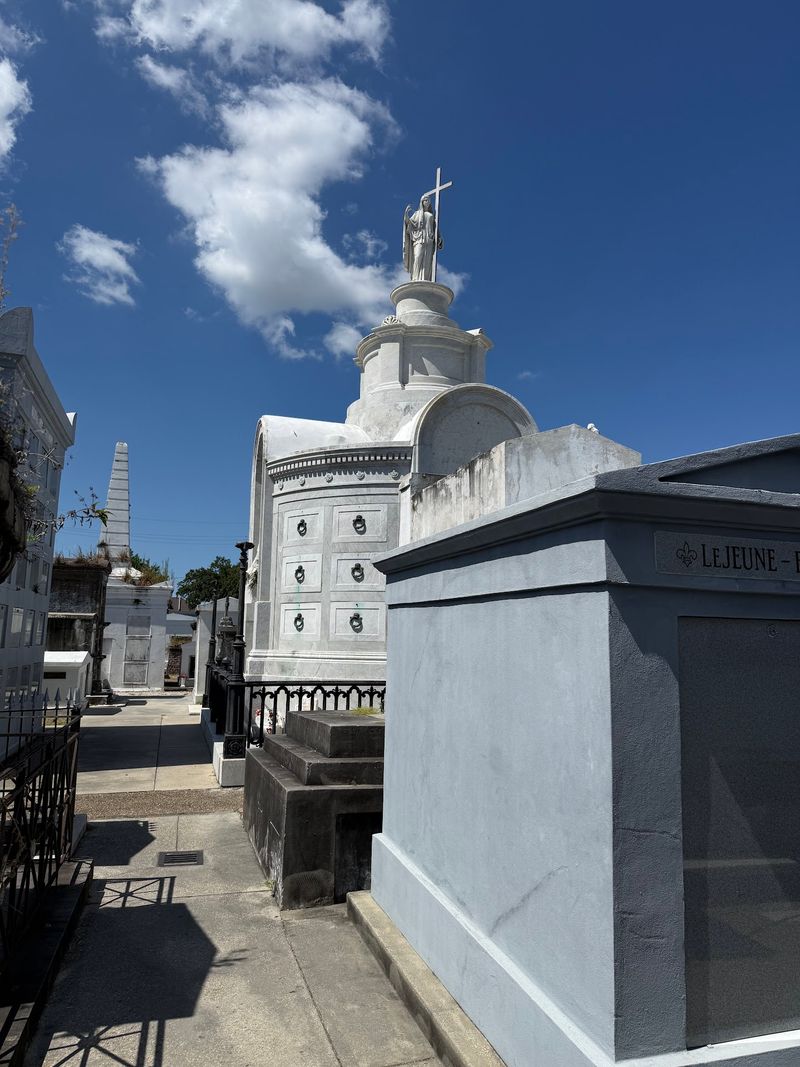
Opened in 1789, this is the oldest surviving cemetery in the city. Its tombs sit above ground because of the high water table and frequent flooding.
The most famous resident is said to be Marie Laveau, the Voodoo Queen of New Orleans. She reportedly rests in the Glapion family tomb, and she passed away in 1881.
Visitors have long left offerings there and scratched “XXX” marks for wishes. That practice is discouraged, so keep your hands to yourself and your wishes in your head.
Now for the ghosts. Legend says a young man named Alphonse asks visitors for help finding his way home, then vanishes.
Another figure, a sailor named Henry Vignes, is said to wander in search of his lost tomb. Honestly, losing your tomb sounds like the worst possible paperwork mix-up.
Then there’s the pyramid. Actor Nicolas Cage bought a plot here in 2010 and built a nine-foot-tall white pyramid as his future tomb.
It carries the Latin phrase “Omnia Ab Uno,” meaning “Everything From One.” Few movie props could top that for drama.
History buffs will want to know that civil rights figure Homer Plessy and chess master Paul Morphy are buried here too. That’s quite a guest list.
One practical note matters most. Since March 1, 2015, you need a licensed tour guide to enter, a rule meant to cut down on vandalism.
Address: 400 Basin Street, New Orleans, LA 70112
8. Metairie Cemetery
Revenge has rarely looked so elegant. Legend says Charles T. Howard got turned away from the Metairie Jockey Club and vowed the racetrack would become a cemetery.
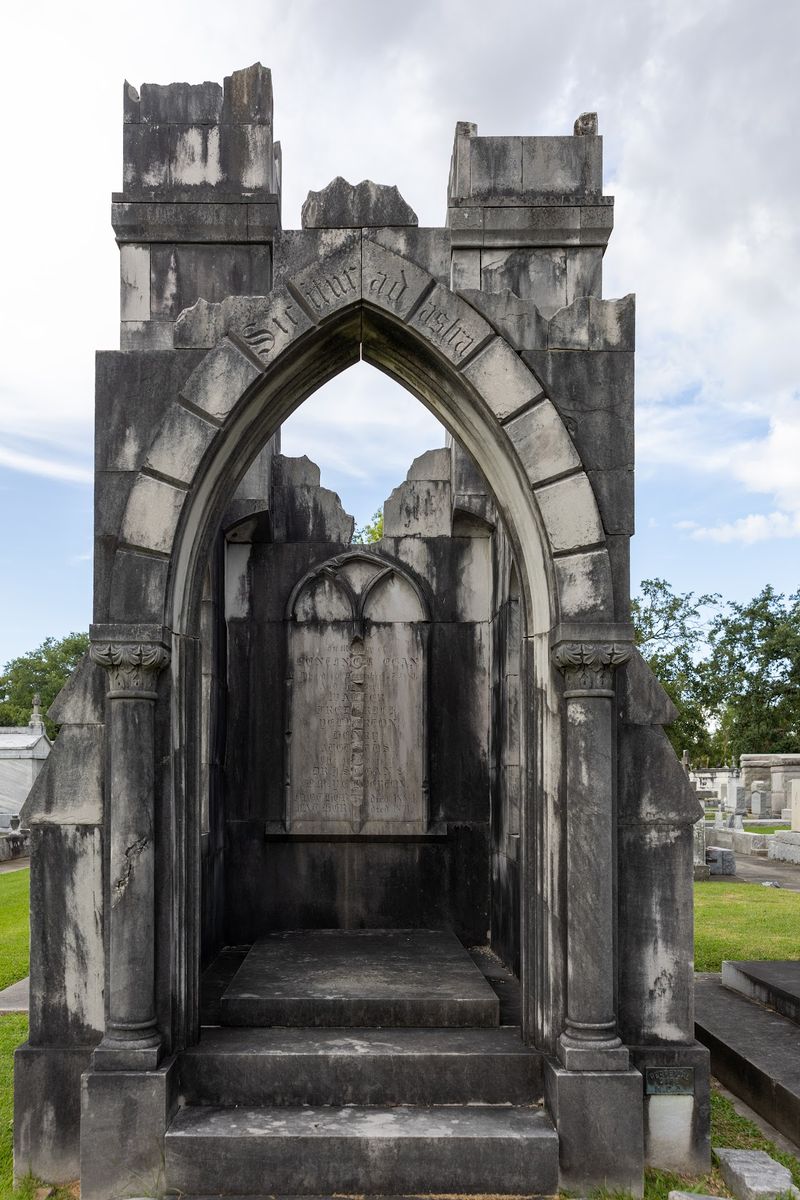
He later bought the property, and in 1872 it became exactly that. The old racetrack oval still shapes the main paths today.
So it’s fitting that people tell stories of phantom horse races at night. Listeners claim to hear hoofbeats and crowd noise drifting across the grounds.
Howard passed away in 1885, and some visitors report strange noises coming from his tomb. Maybe he’s still gloating.
The monuments here are seriously fancy. Wealthy industrialists, Civil War generals, and even notorious mobsters rest among the mausoleums.
Look for the Moriarty Monument, honoring Mary Moriarty. It’s the tallest monument in a historic New Orleans cemetery.
Animal lovers, bring tissues. A weeping dog statue marks the tomb of Francis Masich, and legend says his loyal dog followed his coffin and refused to leave.
Then there’s the “Flaming Tomb” of Josie Arlington, a Storyville madam. A red street light reflected off her red granite tomb and its urns, making it look like it was on fire.
Crowds gathered to gawk, and her remains were eventually moved. Talk about too much attention.
Some say the ghost of Police Chief David Hennessy still patrols in uniform. Author Anne Rice is buried here too, which feels perfectly on brand.
Address: 5100 Pontchartrain Boulevard, New Orleans, LA 70124
7. St. Roch Cemetery No. 1
A promise made during a fever epidemic built this place. In 1867, Reverend Peter Leonard Thevis vowed to Saint Roch that he’d build a chapel if his congregation was spared.
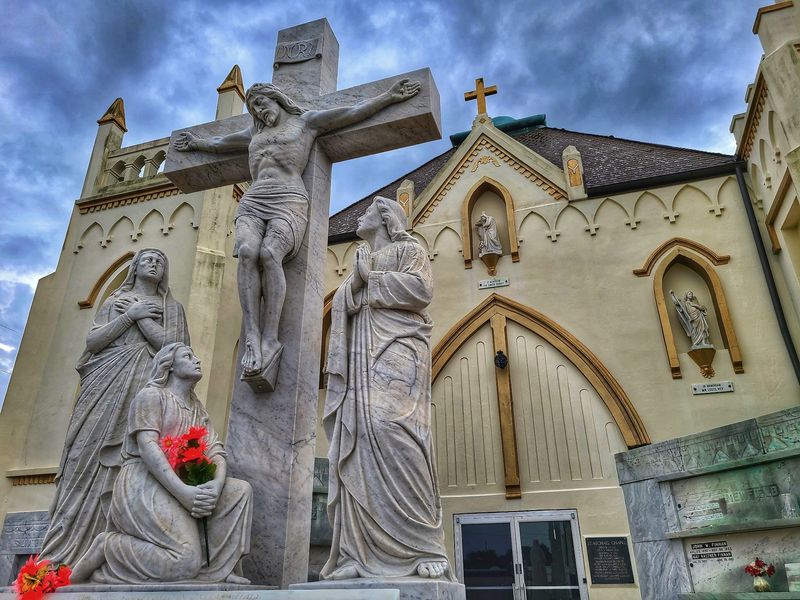
No one from his flock was lost. So between 1874 and 1875, he kept his word and founded the cemetery and its Gothic chapel.
The chapel is famous for its ex-votos. These are offerings left by people who believed their prayers for healing were answered.
We’re talking plaster casts of body parts, crutches, and even prosthetic limbs. It’s strange, touching, and unforgettable all at once.
Here’s the catch. The chapel closed in February 2020 because of termite damage and structural problems, and restoration work is ongoing.
Reverend Thevis rests beneath the marble floor at the foot of the altar. Some say his robed figure still walks the paths, kindly watching over the tombs.
Keep an eye out for a large dark dog, too. Legend says it roams among the graves and disappears when anyone gets close.
That fits, since Saint Roch is the patron saint of dogs. Even the spirits seem to have a sense of theme.
There’s romance here as well. Single women traditionally visit on Good Friday to pray to Saint Roch for a husband.
Don’t miss the 14 Stations of the Cross. The statues were carved in Italy and line the grounds beautifully.
Address: 1725 St Roch Avenue, New Orleans, LA 70117
6. Holt Cemetery
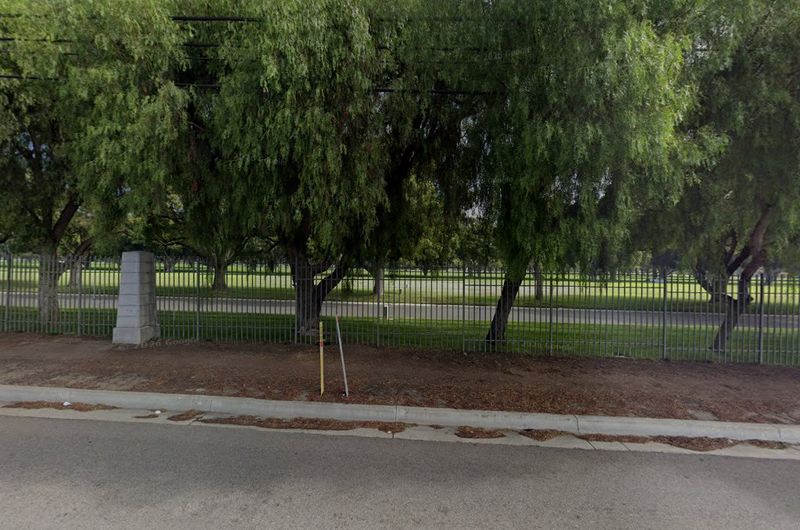
Forget the marble angels. Holt Cemetery feels handmade, and that’s exactly what makes it so moving.
It opened in 1879, right after the 1878 yellow fever epidemic. The city used it as a potter’s field for its poor residents.
Unlike most New Orleans cemeteries, burials here are mostly in the ground. Families often built the grave markers themselves, so each one looks personal.
That choice comes with a soggy problem. The grounds flood often, and graves can get waterlogged after heavy rain.
Music fans, take note. Early jazz and blues figures like Buddy Bolden and Jessie Hill are buried here.
Bolden is often linked to the birth of jazz. Standing near his resting place would give any music lover chills.
Holt also has a darker side. Ghost hunters love it, and there have been reports of grave robbing over the years.
People have also reported Voodoo and Santería rituals on the grounds. Whatever you believe, it adds to the mystery.
One story from 1900 still lingers. Robert Charles, a central figure in that year’s New Orleans race riot, was briefly buried here before his body was dug up and burned.
Visit with respect, since these graves were made with love by real families. A quiet walk here tells you more about the city than any postcard.
Address: 4901 Rosedale Drive, New Orleans, LA 70119
5. Cypress Grove Cemetery
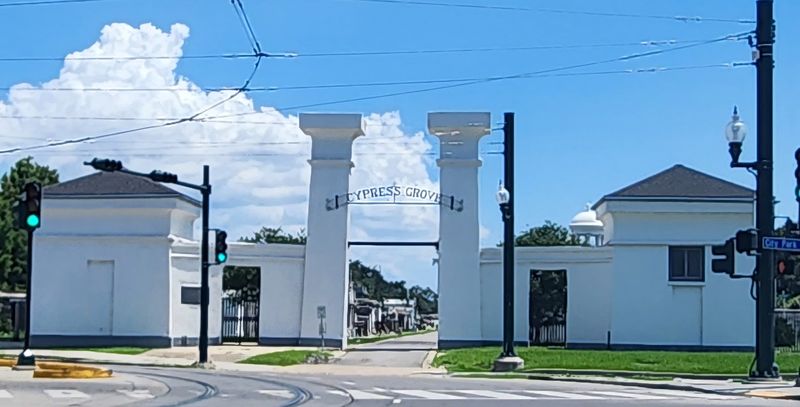
Firefighters got their own cemetery here, and they got it in style. Cypress Grove opened in 1840 thanks to the Firemen’s Charitable and Benevolent Association.
It was the first cemetery built just to honor the city’s volunteer firemen and their families. That’s a pretty heroic origin story.
The entrance alone is worth the trip. Architect Frederick Wilkinson designed the grand pylons and lodges, inspired by Egyptian ceremonial buildings.
Yes, Egyptian. Walking through those gates feels a bit like entering a pharaoh’s neighborhood in Louisiana.
Inside, the tombs are a design lover’s dream. The cemetery is known for some of the country’s leading memorial architecture.
Over time, it also became a popular choice for Protestant families. That happened especially after the old Girod Street Cemetery fell apart.
Many well-known New Orleans citizens rest here. Reading the names feels like flipping through a city history book.
Now, a little honesty. Cypress Grove doesn’t have famous ghost stories like some of its neighbors.
But you don’t always need a phantom to feel goosebumps. The quiet rows and grand old tombs bring their own kind of eerie charm.
It’s part of the New Orleans Catholic Cemeteries system today. Pair it with nearby cemeteries on City Park Avenue for a full afternoon of history.
Bring your camera and look up often. The carvings and shapes reward anyone who slows down.
Address: 124 City Park Avenue, New Orleans, LA 70119
4. Charity Hospital Cemetery
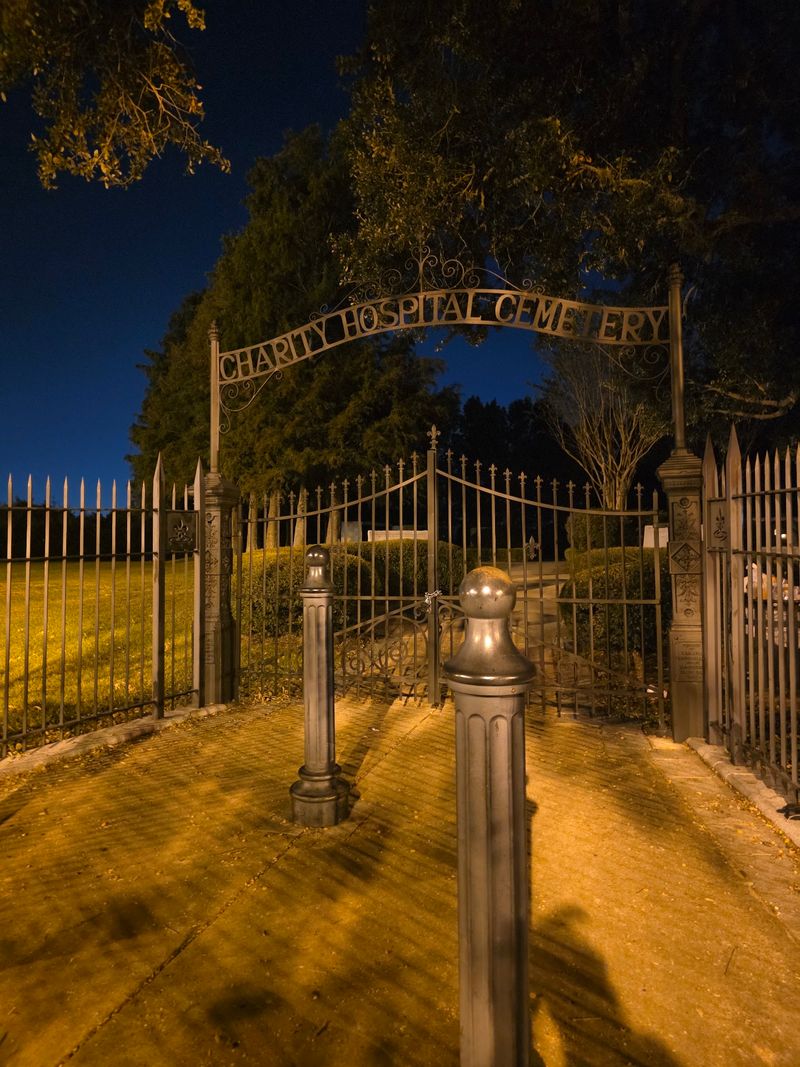
Drivers on Canal Street have reportedly hit the brakes for figures in hospital gowns. They’re said to wander out of this cemetery and then vanish.
That legend makes more sense once you know the history. Charity Hospital bought this land in 1848, and it was first known as Potter’s Field.
It became the burial ground for unclaimed and penniless patients. Victims of yellow fever, cholera, and influenza were laid to rest here too.
Thousands were buried in unmarked graves in the ground. Estimates say somewhere between 100,000 and 150,000 people rest here.
Let that number sink in for a second. The grassy field looks calm, but it holds a staggering amount of history.
People have reported shouts and moans at night. Ghost hunters also say they’ve caught “shadow people” in photos.
Here’s a wild one. In 2002, a city planner proposed turning the cemetery into a bus stop.
Public outcry ended the plan, and some stories claim restless spirits played a part. Either way, the bus stop never happened.
Today the site also holds the Hurricane Katrina Memorial. Its mausoleums give a resting place to unidentified and unclaimed victims of the August 2005 storm.
Visit with care and a quiet heart. This spot honors people the world nearly forgot.
Address: 501 City Park Avenue, New Orleans, LA 70119
3. St. Vincent de Paul Cemetery
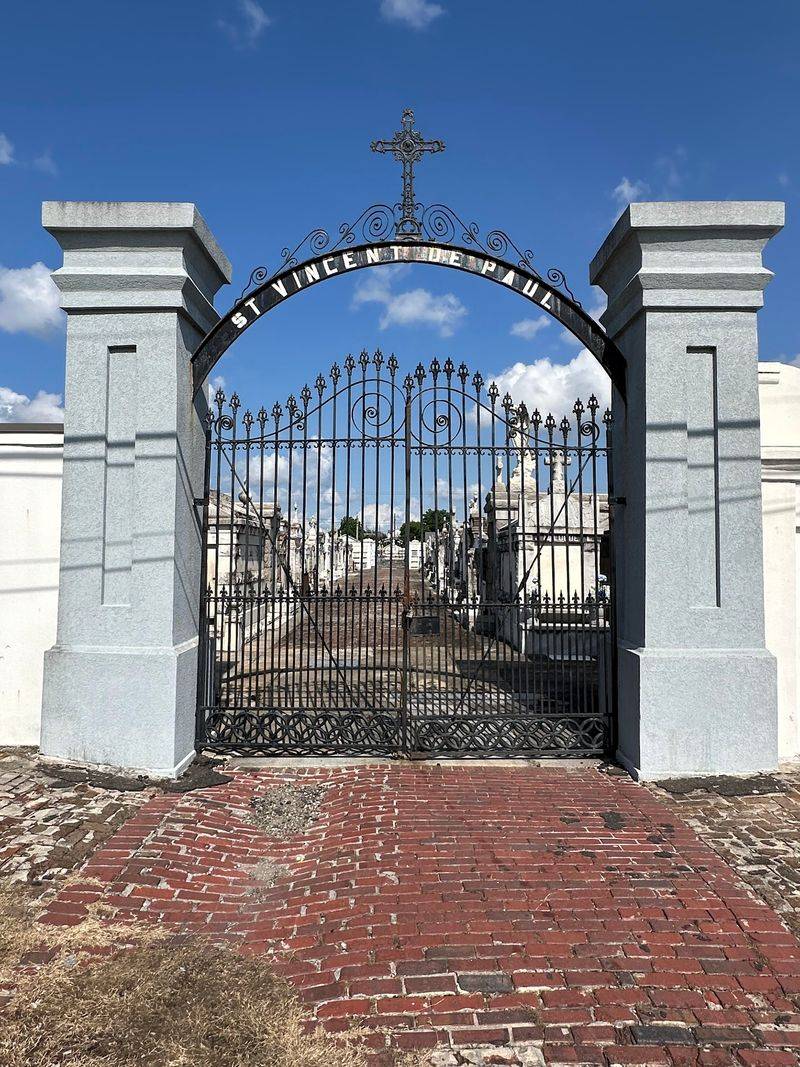
A famous duelist once owned this cemetery. That’s not a plot twist from a novel, it’s real New Orleans history.
Don José “Pepe” Llulla was a renowned Spanish duelist. His dramatic life became part of local legend, and he passed away in 1888.
The cemetery itself dates to 1859. The Congregation of the Mission founded it to serve St. Stephen’s Parish.
Today you’ll often hear it called St. Vincent de Paul Cemeteries 1 and 2. Locals tend to lump them together.
Art lovers, slow down at the wall vaults. Skilled carvers like Florville Foy, Anthony Barret, Americo Marozzi, and Audré Samonzet left their mark here.
Then read the tablets closely. You’ll spot French, English, German, Italian, Portuguese, Spanish, and Chinese inscriptions.
That mix shows how many cultures shaped the city. Each language is a tiny clue about who called New Orleans home.
Don’t miss the Calvary Group. Larger-than-life bronze statues of Mary, John, and Mary Magdalene stand together in a powerful scene.
The cemetery is also known for a lovely tradition. People place candles on the marble tombs for All Saints’ Day.
Picture rows of tiny flames glowing against white stone. It’s eerie and beautiful in equal measure.
If you enjoy stories about bold characters, this stop is for you. Just maybe don’t challenge anyone to a duel.
Address: 1401 Louisa Street, New Orleans, LA 70117
2. American Cemetery
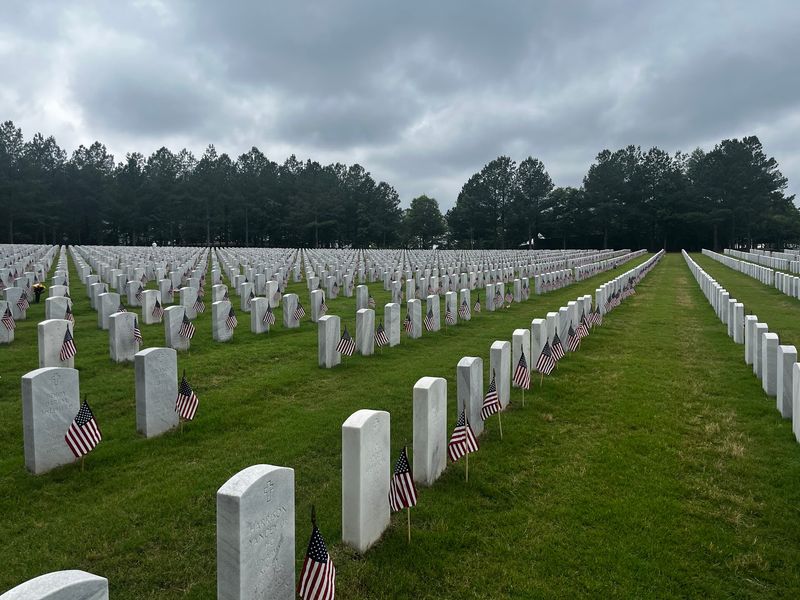
Older than the United States itself, this graveyard started in 1737. It’s considered the oldest cemetery in the Louisiana Purchase.
That’s a big claim for a quiet spot in Natchitoches. Still, the history here runs deep.
It served Catholic-baptized colonial citizens from many backgrounds. That made it a truly multicultural burial ground for its time.
You’ll find Revolutionary War soldiers, planters, and politicians among the graves. Each stone hints at life in early Louisiana.
Look for Jean Pierre Emmanuel Prud’homme. He grew the first cotton crop in north Louisiana.
Another notable name is John Gideon Lewis Sr., founder of the Natchitoches Prince Hall Freemasons. His tomb is the only mausoleum in the cemetery.
Now the spooky part. Visitors have reported screams and ghostly figures drifting among the old markers.
Many of these legends grow from the cemetery’s colonial past. Tragic tales include a mayor who met a violent end and a plantation owner who freed his enslaved partner and their children.
No wonder it’s seen as a cornerstone of haunted spots in Natchitoches Parish. Few places carry this many centuries of stories.
The cemetery was restored in 1904. The City of Natchitoches and local preservation groups help care for it today.
Address: 201 Second Street, Natchitoches, LA 71457
1. Frenier Cemetery
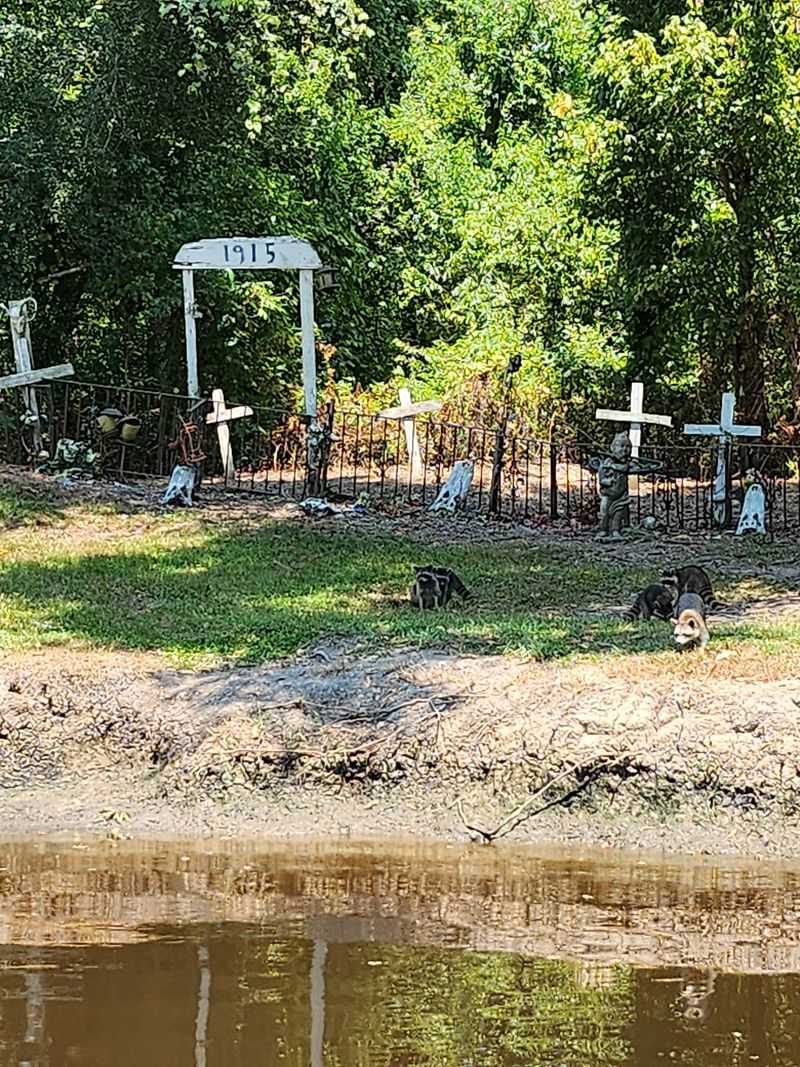
“I’ll take the village with me when I go.” That’s what Julia Brown reportedly told her neighbors in Frenier.
She was known as a Voodoo priestess or oracle in the tiny swamp village. Folks may have laughed, but the story didn’t end with a joke.
On September 30, 1915, a Category 4 hurricane slammed into the area. It destroyed Frenier completely.
The eerie part? Legend says Julia Brown passed away that very same day.
Today this little cemetery is all that’s left of the village. Everything else was swept away.
The townspeople were buried in a mass grave. Julia Brown’s grave, however, is said to sit about 100 yards from the others.
Why the distance? The legend doesn’t give a clear answer, which only makes it creepier.
Location adds a huge dose of chills. The cemetery sits deep in the Manchac Swamp, surrounded by cypress and still water.
It’s one of the most isolated spots on this list. Bring bug spray and a sense of adventure.
Of all the Louisiana legends here, this one feels the most like a campfire story. The difference is that the hurricane was very real.
Stand there quietly, and you’ll understand why people still whisper Julia’s name. Some promises really stick.
Address: Frenier Cemetery Road, Ruddock, LA 70461