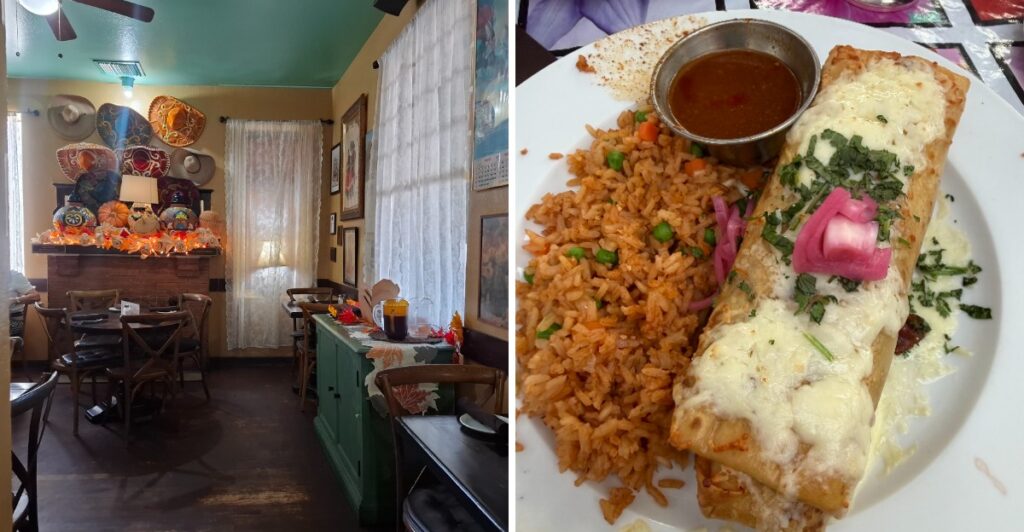
There’s a restaurant in Arizona that dries beef on its roof. In a cage. Under the blazing desert sun.
And yes, people actually line up to eat it.
The beef gets marinated in garlic and lemon before spending time soaking up that Arizona heat. A special grandfather clause even allows the restaurant to keep doing it the old-fashioned way.
Most restaurants try to keep the desert heat out of the kitchen. This one found a way to put it on the menu.
But the roof isn’t even the wildest part of the story.
The woman who opened the restaurant in 1922 may have accidentally invented the chimichanga when she dropped a burrito into hot oil. Instead of letting a curse word fly, she blurted out a made-up word.
So this place might have given us both sun-dried beef and the chimichanga. All I know is, someone deserves serious credit for that kitchen accident.
The Beef Gets A Rooftop Tan Before It Reaches Your Plate
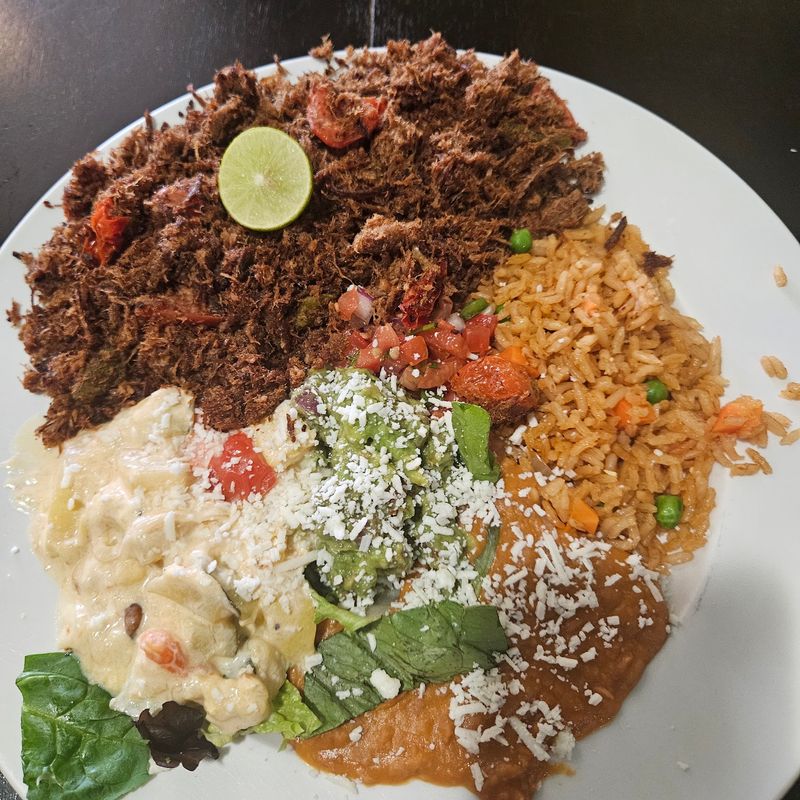
Up on the roof of El Charro Café (Original Downtown Location), thin strips of Angus beef dry in a mesh cage.
The Arizona sun does the slow work while the kitchen waits below.
First, the beef gets marinated in fresh garlic and lemon juice.
Then it dries under the desert sun, the old-school way.
Here’s the fun part. Most restaurants couldn’t pull this off today, but a special grandfather clause keeps the tradition alive. That rule basically says, this has always been done here, so carry on.
After drying, the beef heads into an oven for roasting. Then cooks shred it by hand, which sounds like a serious arm workout.
The final step brings it all together on the grill. Green chile, tomato, and onion join the shredded beef for a smoky, savory finish.
The result is carne seca, the dish that put this kitchen on the map. You can order it as the classic platter or tucked inside tacos, enchiladas, and chimichangas.
Curious but cautious? Start with a smaller carne seca dish first. That way you can taste the sunshine without committing your whole appetite to it.
Blame A Clumsy Moment For The Chimichanga
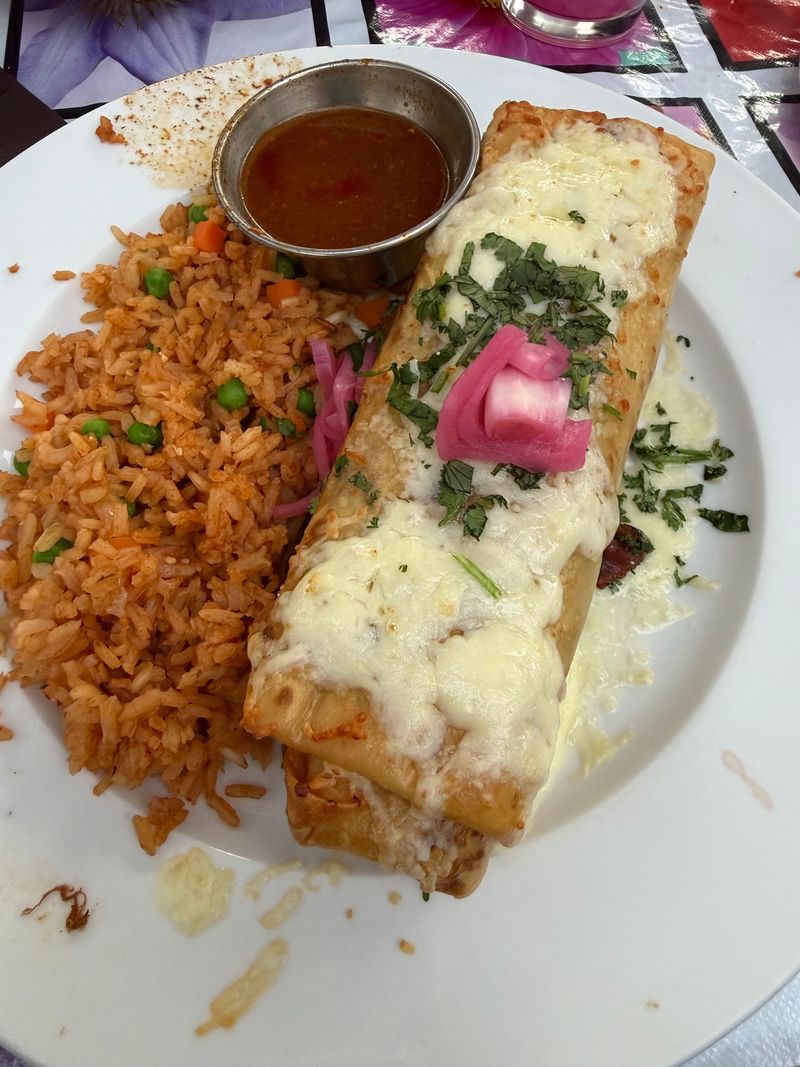
One slip of the hand may have changed Mexican-American food forever. Founder Monica Flin is credited as the possible inventor of the chimichanga.
The story goes like this. Sometime in the late 1940s or early 1950s, she accidentally dropped a burrito into a deep fryer.
A Spanish curse word nearly flew out of her mouth. Kids were nearby, though, so she switched it to chimichanga at the last second.
That word roughly means thingamajig. Honestly, it’s the most polite kitchen save of all time.
Today, the crispy creation still holds a starring role on the menu. You can get it stuffed with the famous carne seca for a double dose of house history.
Smaller appetites have an option too. Mini chimichangas make a great starter for the table, and they’re easy to share.
Fried food fans should know something helpful. The kitchen cooks with non-trans-fat oils, which feels like a nice bonus with every crunchy bite.
Want the full origin-story experience? Order one and think about that fryer moment decades ago. Few lunches come with such a good backstory, and even fewer started with a near curse word.
A Stonemason Built The Dining Room As His Family Home
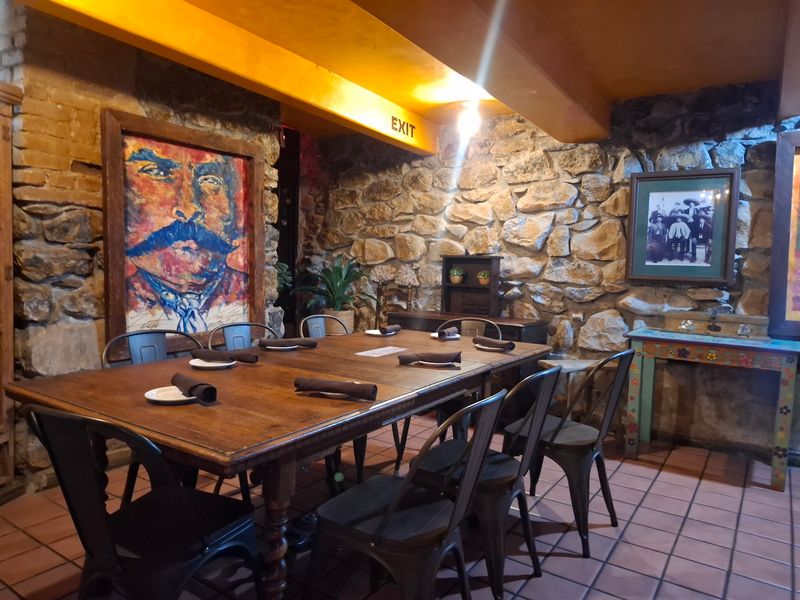
Long before anyone ordered enchiladas here, Jules Flin built this house for his family in 1896. He was a stonemason who emigrated from France with his wife in the 1880s.
His skills show up all over Tucson. Flin helped build the Cathedral of Saint Augustine, so he clearly knew his way around rock.
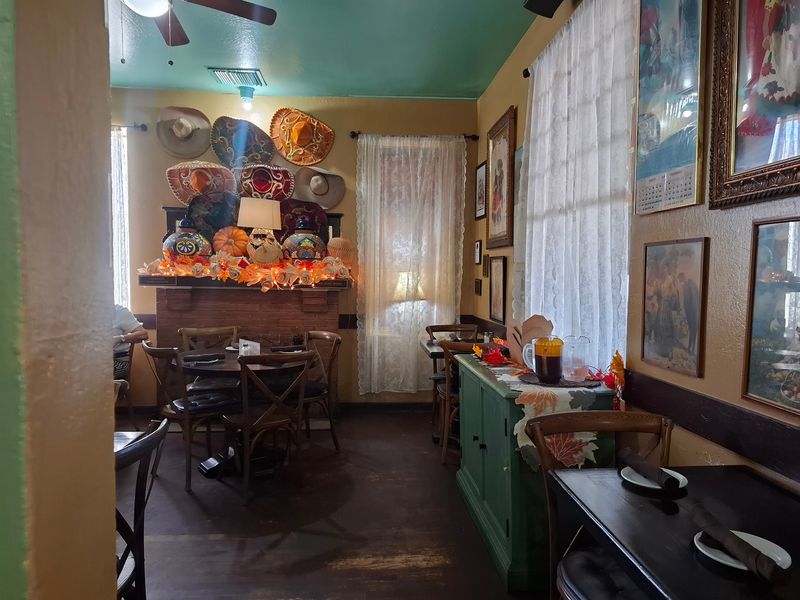
Inside the restaurant, his handiwork is still easy to spot. High ceilings made of black basalt rock rise above the tables.
Look around for stone fixtures he designed himself. Original decorations add even more old-house character to the rooms.
Color fills the walls, too. Folk art murals and hand-painted murals bring bright energy to the historic space.
The building sits inside the El Presidio Historic District. That gives your meal a pretty impressive neighborhood pedigree in downtown Tucson.
Here’s a tip worth following. Glance up at the ceiling before your food arrives, because the stonework deserves a moment.
It’s rare to eat in a home with this much family history baked right into it. Every wall here has a story, and the founder’s dad literally laid the groundwork.
Three Moves Later, The Restaurant Finally Came Home
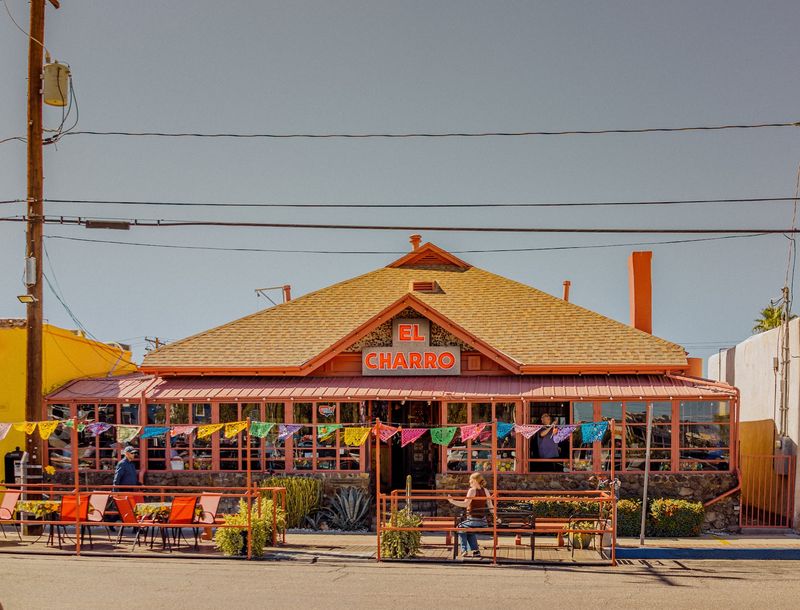
September 1922 marks the start of it all. Monica Flin opened El Charro Café as one of Tucson’s first businesswomen.
Her early years were busy ones. The café started on Fourth Avenue before moving to the Temple of Art and Music.
Then came another move, this time to Broadway. Restaurants don’t usually bounce around like that and survive, but this one kept going.
In 1968, the café landed at its forever spot. Monica moved it into the family home she inherited on Court Avenue.
Talk about a full-circle moment. The house her father built became the home of her famous recipes.
Family leadership continued from there. Her great-niece, Carlotta Flores, returned to Tucson and took over in the early 1970s.
Carlotta has carried the tradition ever since. Her work earned her a spot on the Forbes 50 Women Over 50 list in 2021.
Today, El Charro Café claims the title of the nation’s oldest Mexican restaurant continuously run by the same family. That’s more than a century of one Arizona family feeding hungry crowds, which is quite the family business streak.
Your Table Might Need Extra Room For Starters
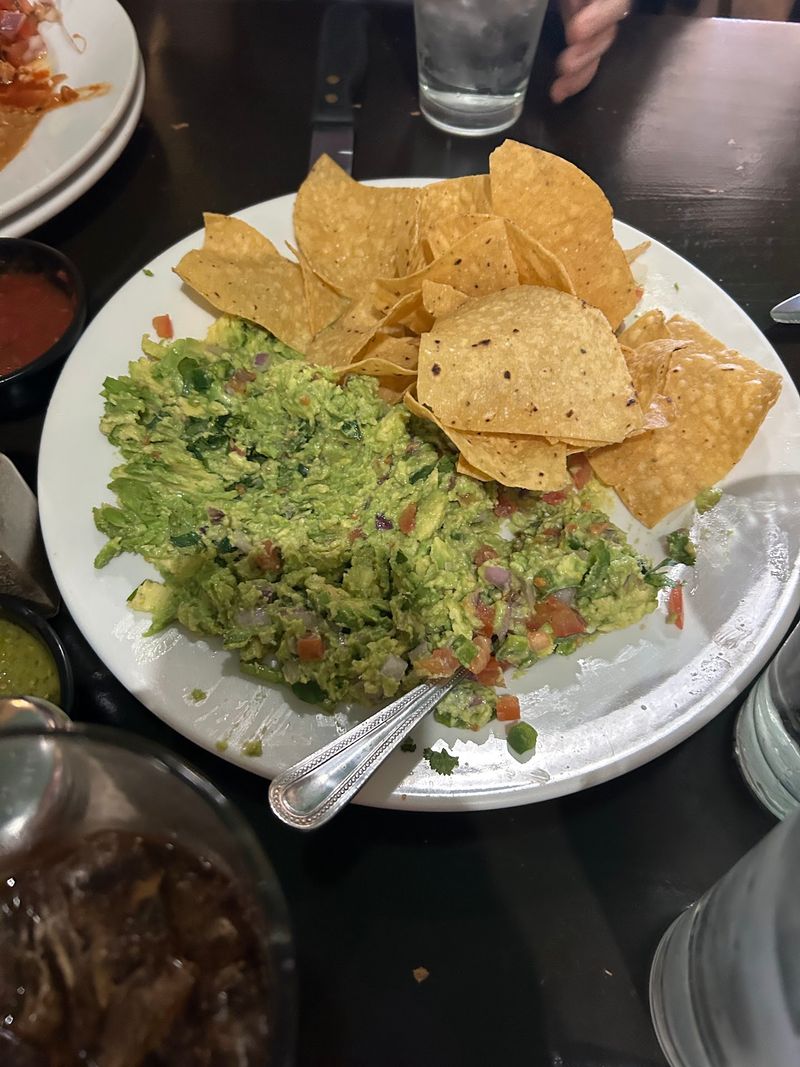
Appetizers here could easily turn into a full meal if you’re not careful. The starter list reads like a tour of Sonoran snacking.
Arizona cheese crisps lead the pack. They’re a regional favorite, and they’re perfect for passing around the table.
Melty cheese lovers can go for queso flameado. Quesadillas and nachos also hold down the cheesy end of the menu.
Craving something lighter? Shrimp ceviche offers a fresher, brighter start.
Tableside guacamole adds a little show to the meal. Watching your dip get made right in front of you never gets old.
Stuffed mushrooms and quesabirria round out the choices. That’s a lot of temptation before the main course even shows up.
Here’s some friendly strategy. Pick one or two starters to share, then save room for the entrees you came for.
Groups have a real advantage here. More people means more appetizers you can sample without feeling greedy, and that math works out beautifully.
The cuisine mixes traditional Northern Mexico-Sonoran style with creative Tucson-style cooking. Starting with a cheese crisp is a tasty way to see both sides of that menu.
Save Space For Soup, Then Even More For Dessert
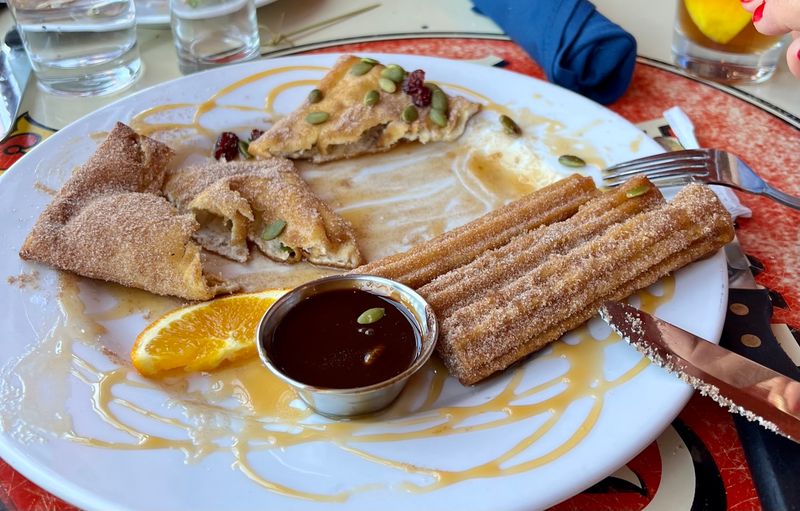
Soup might not be the first thing you think of in the desert. Still, the bowls on this menu make a strong case for themselves.
Meatball soup brings cozy, home-style comfort. Pozole offers a hearty and traditional option.
Caldo de queso is a cheesy Sonoran classic. Tortilla soup rounds out the lineup nicely.
Dessert, meanwhile, is where things get dangerous. Flan and tres leches cake cover the creamy, sweet side.
Fried ice cream delivers that fun hot-and-cold surprise. Sopaipilla brings a puffy, golden treat to the table.
Churros with chocolate might be the toughest to resist. Dunking is basically required, and nobody will judge you.
For a warm finish, try Café de olla. It’s a traditional Mexican coffee that pairs well with something sweet.
Here’s a practical idea for groups. Order a few desserts and share them, so everyone gets a taste of each.
Meals here can be big, so pacing matters. Leave a little room near the end, because skipping the churros would be a choice you’d regret on the drive home.
Fame Followed This Kitchen All The Way Underwater
Plenty of restaurants hang a framed article or two. El Charro Café has collected attention from some seriously big names.
It’s been featured in Bon Appétit and Gourmet Magazine. USA Today, Parade Magazine, and The NBC Today Show have spotlighted it, too.
Coastal papers joined the party as well. The New York Times, the Los Angeles Times, and the New York Post have all covered it.
TV fans might recognize it from a 2022 episode. The restaurant appeared on Top Chef: Houston that year.
The coolest honor goes much deeper, though. The galley on the U.S.S. Tucson submarine is officially named El Charro Down Under.
Yes, a Navy submarine kitchen carries the name. That’s a level of fame most restaurants can only dream about.
The café has also been called one of America’s dining icons. Over a century of cooking will do that.
All this buzz makes the place a popular stop in Arizona. Plan ahead, especially at busy dinner times, because a famous name can draw a crowd faster than a sizzling plate of fajitas.
Park Smart And Make A Downtown Day Of It
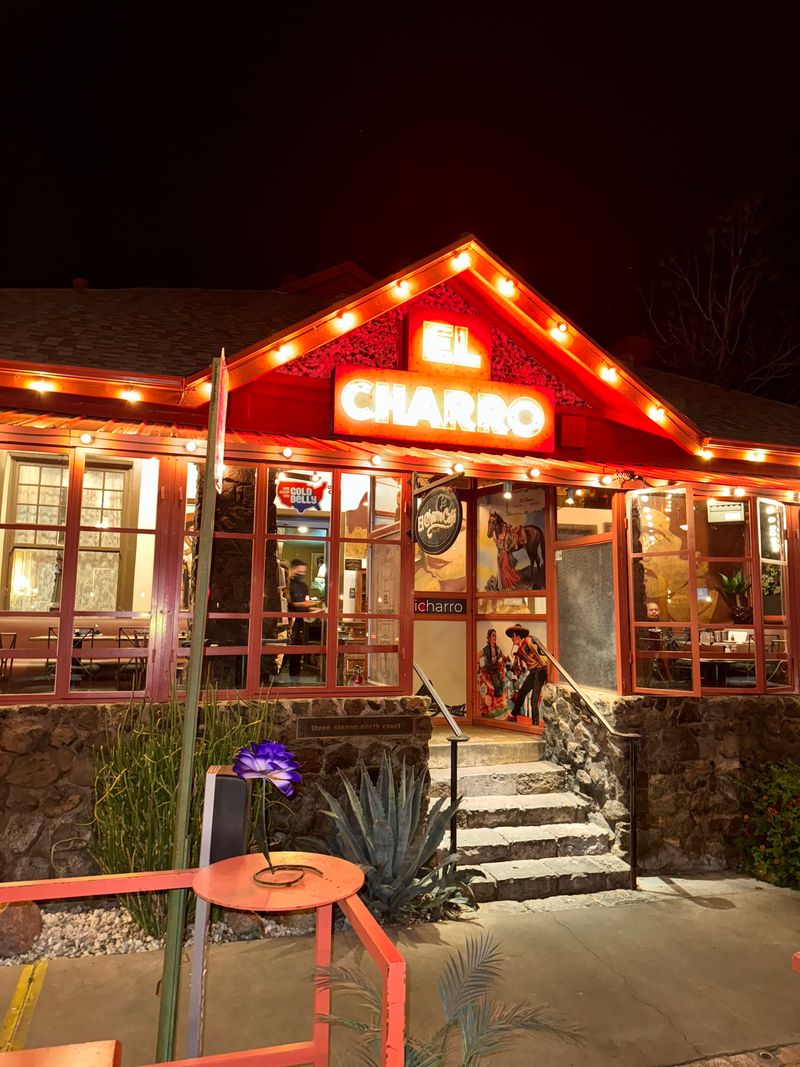
Finding the restaurant is the easy part. You’ll head to 311 N. Court Avenue, Tucson, AZ 85701, in the heart of downtown.
Doors open daily from 11 a.m. to 9 p.m. That makes lunch, an early dinner, or a late meal all possible.
Parking takes a little planning. Street meters become free after 5 p.m. and on weekends, which is great news for evening diners.
A public lot sits right across the street. It charges around the clock, though, and it isn’t connected to the restaurant.
Nice weather? Patio dining gives you a chance to enjoy Arizona sunshine without the beef cage on the roof.
The location sits within the El Presidio Historic District. That makes it easy to pair your meal with a stroll through historic downtown Tucson.
Here’s a helpful plan. Arrive a bit before peak dinner hours if you’d like a smoother start to your meal.
Grab some quarters or a payment app before you go. Then relax, order the carne seca, and enjoy one of the restaurant’s most enduring culinary traditions.