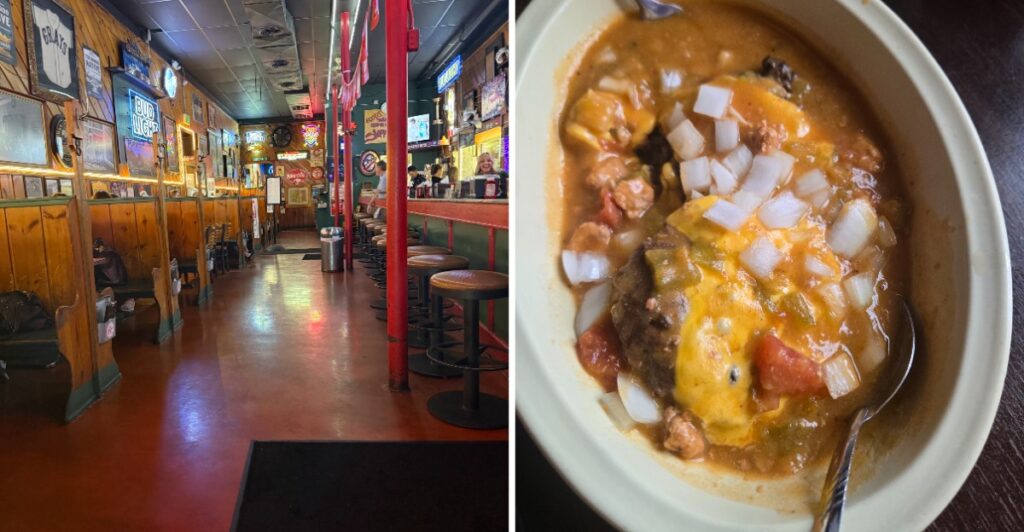
Some burgers fit neatly between two buns.
Pueblo looked at that arrangement and chose chaos.
Here, the local favorite arrives open-faced, covered in green chile, and very clearly meant for a fork. Trying to pick it up would be an act of optimism.
This longtime spot has been serving the city since 1934, and the burger has become part of the local food language.
Colorado-grown chile does most of the talking. Then the menu starts playing with the patty count.
You can keep things relatively sensible, or keep adding until the plate becomes a small engineering project.
Fries can get pulled into the situation too.
Personally, I would forget about eating this gracefully.
Some burgers are lunch.
This one looks more like a dare with green chile on top.
The Tavern Has Been A Pueblo Tradition Since 1934
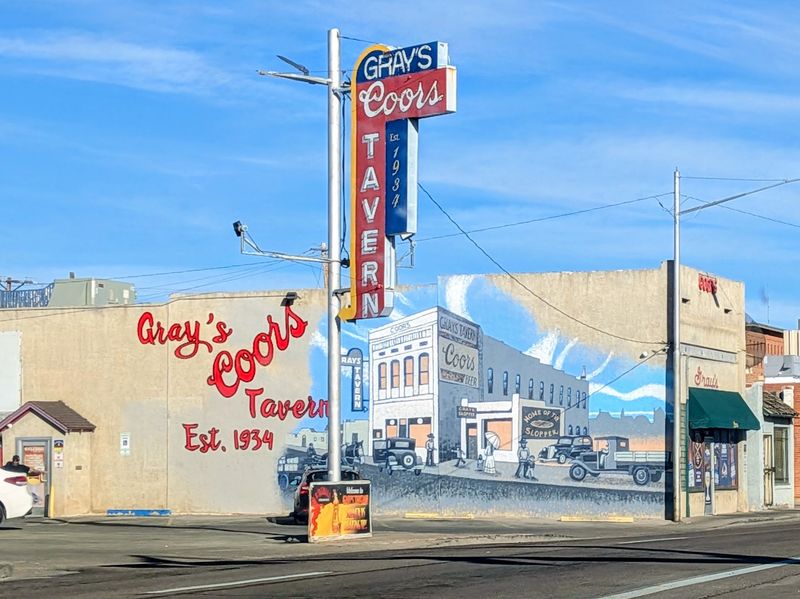
Ninety years is a long run for any neighborhood restaurant. Gray’s Coors Tavern dates to 1934, when the business opened in Pueblo under an earlier name.
Today, the tavern combines casual food, local sports memorabilia, and the slopper that has become closely associated with Pueblo.
Start by looking at the walls if you have a few minutes before ordering. The memorabilia gives you something to take in while you decide how hungry you really are.
That question matters here because the slopper menu moves quickly from manageable to enormous. One patty, two, four, or six can make the difference between a straightforward lunch and a meal that takes some planning.
The restaurant also serves burgers, sandwiches, appetizers, Mexican dishes, and other casual options, so nobody at the table has to order the same thing.
If the slopper is why you came, make that decision first. Everything else can follow from there.
The Half gives you the easiest introduction, while the Regular doubles the beef without jumping into the oversized end of the menu. Once you know which version fits your appetite, sides and extras become much easier to choose.
The Slopper Started With A Burger Covered In Chili
The slopper is closely tied to Pueblo food history, but its exact birthplace is disputed. Gray’s has long been connected to the dish’s origin story, while other Pueblo restaurants have competing claims of their own.
The broad idea is much easier to pin down than the argument over who served it first. A burger is placed open-faced in a bowl or on a plate and covered with chili until eating it by hand stops being practical.
That basic format has remained recognizable for decades.
At Gray’s, the slopper became part of the tavern’s identity during the twentieth century, and the restaurant still places it at the center of the menu.
You do not need to settle Pueblo’s origin debate before lunch. Order the dish, grab a fork, and pay attention to how the bun, beef, onions, and chili work together.
The name starts making sense as soon as the chili reaches the bread.
If you want a lighter introduction, the Half Slopper keeps the same basic setup with one patty. A bigger appetite can move directly to the Regular with two.
Either way, expect a plate designed for deliberate forkfuls rather than a burger you can pick up between bites.
Pueblo Green Chile Gives The Slopper Its Signature Flavor
The chili is what separates a slopper from an ordinary open-faced burger. Gray’s serves its signature version smothered in Pueblo green chili, connecting the plate directly to one of the crops most closely associated with the region.
Pueblo chile peppers are grown around the city and have become a major part of local food culture. They appear across restaurant menus, farm stands, and the annual chile festival season.
On a slopper, the green chili spreads across the patties and bun rather than sitting in a thin layer like a standard burger topping. That changes both the texture and the way you eat it.
Use a fork from the beginning. Trying to lift the whole thing is unnecessary work.
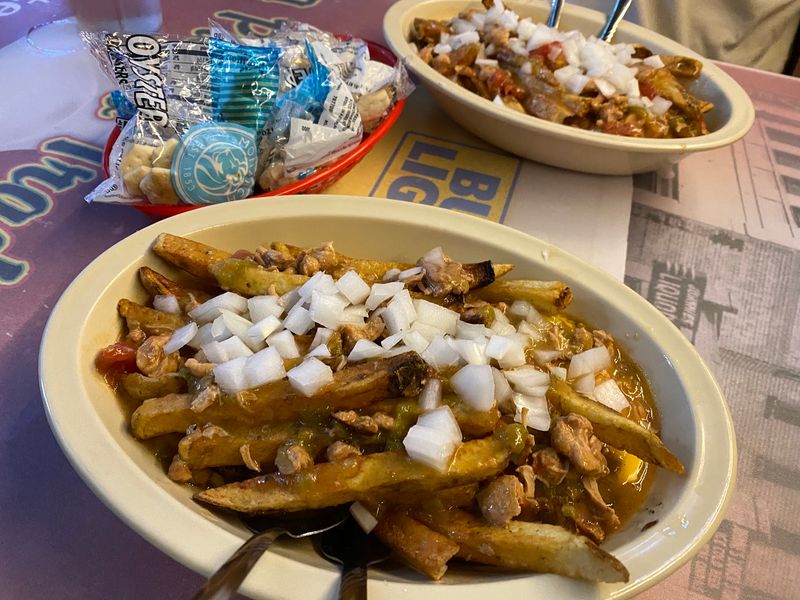
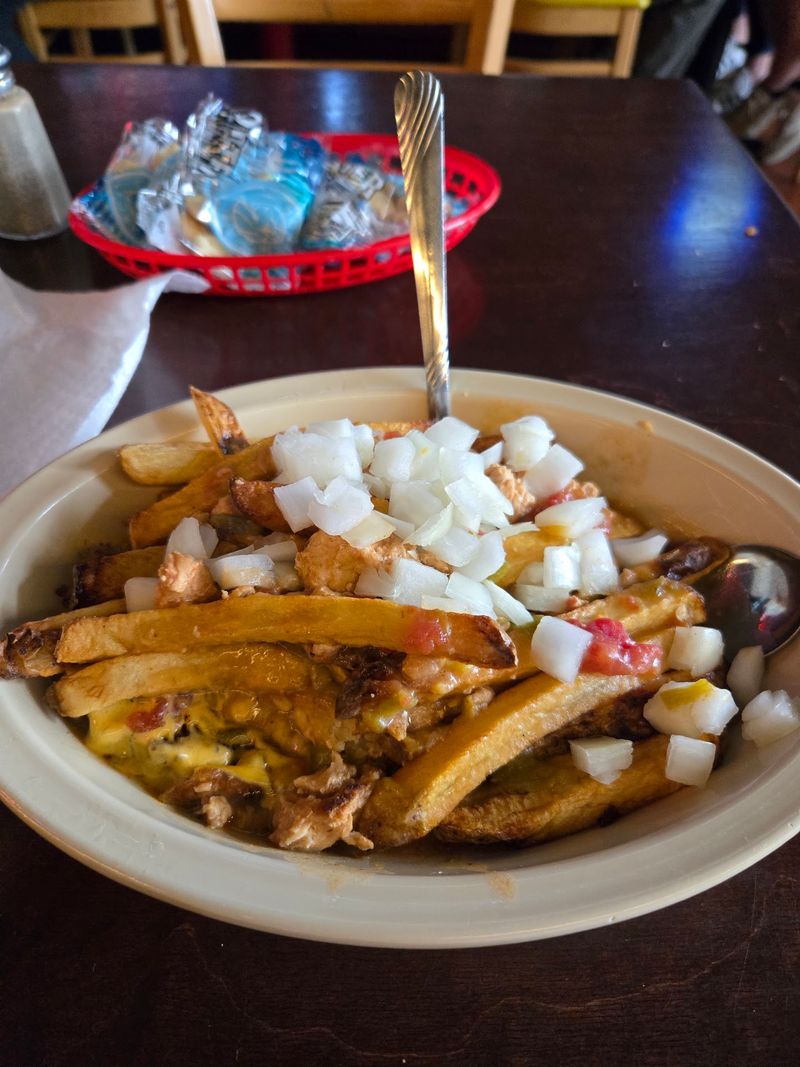
The menu also includes bowls of red or green chili, so another person at the table can try the chili without committing to a full slopper. Chili fries provide another route if fries sound better than a burger.
Let appetite decide how much chili belongs in the meal. The slopper already puts it front and center, while a separate bowl or fries can push the order further in the same direction.
For a first visit, the Regular Slopper gives you the classic two-patty format without jumping immediately to the largest versions.
Two Patties Make Up The Regular Slopper
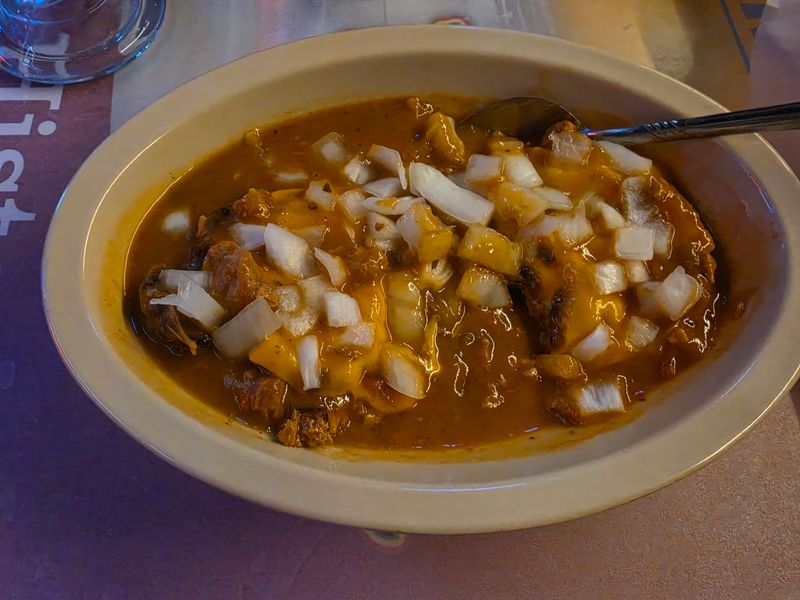
Forget everything you know about holding a burger. The Regular Slopper comes with two patties and is meant for a fork once the chili covers the plate.
That two-patty version sits at the center of the slopper menu. If it sounds like too much, the Half Slopper drops the order to one patty without changing the basic idea.
Fries can be added on top for an extra charge and smothered along with the rest. That turns the dish into a fuller bowl and gives the fries time to absorb some of the chili.
Take a few bites before adding anything else. The bun changes texture as it sits under the chili, so the plate will not eat exactly the same from first forkful to last.
If you are sharing several dishes, a Half or Regular makes more sense than automatically ordering the largest option. Add onion rings, fried pickles, or another appetizer only after deciding how much room the slopper is likely to take.
The useful question is not whether you can finish a larger version. Decide how much food actually fits the rest of your day.
A long afternoon in Pueblo calls for a different lunch than a meal followed by nothing but the drive home.
Bigger Versions Come With Four Or Six Burger Patties
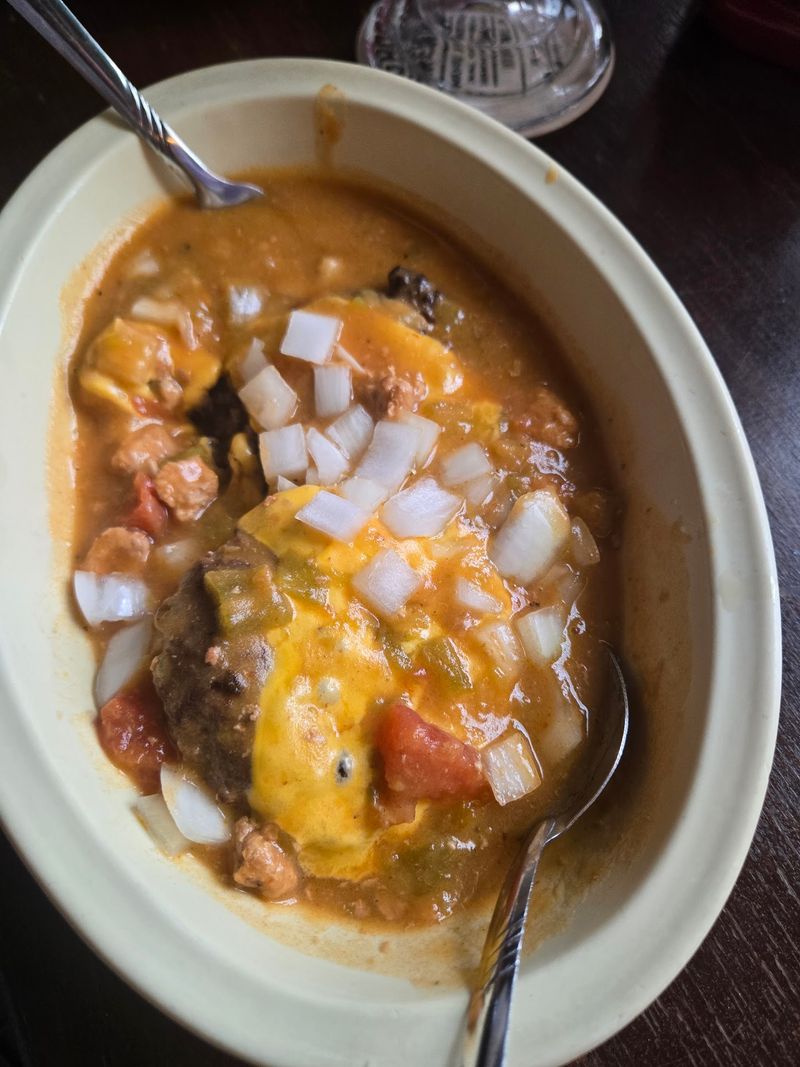
Six patties. Yes, that option is on the menu.
The Double Slopper comes with four patties, while the Triple reaches six. Both keep the same basic slopper format, simply increasing the amount of beef beneath the chili.
Those sizes make the menu easy to understand at a glance. Half means one patty, Regular means two, Double means four, and Triple means six.
Bigger does not have to be the goal. The larger versions make the most sense when appetite genuinely calls for them or when a group plans to share.
Adding smothered fries increases the size of the meal again, so make that choice after settling on the patty count rather than treating it like an automatic extra.
If several people want to compare dishes, one larger slopper and a separate appetizer can be easier to manage than ordering oversized portions for everyone.
The menu also includes regular hamburgers and cheeseburgers, so a mixed group can stay at the same table even when only one person wants a chile-covered plate.
Pick the size that matches the meal you actually want, then let the toppings and sides fill in the rest.
A four- or six-patty slopper can easily become the center of the table, while the smaller versions leave more room for appetizers or another dish.
The Slopper Has Become Part Of Pueblo’s Food Identity
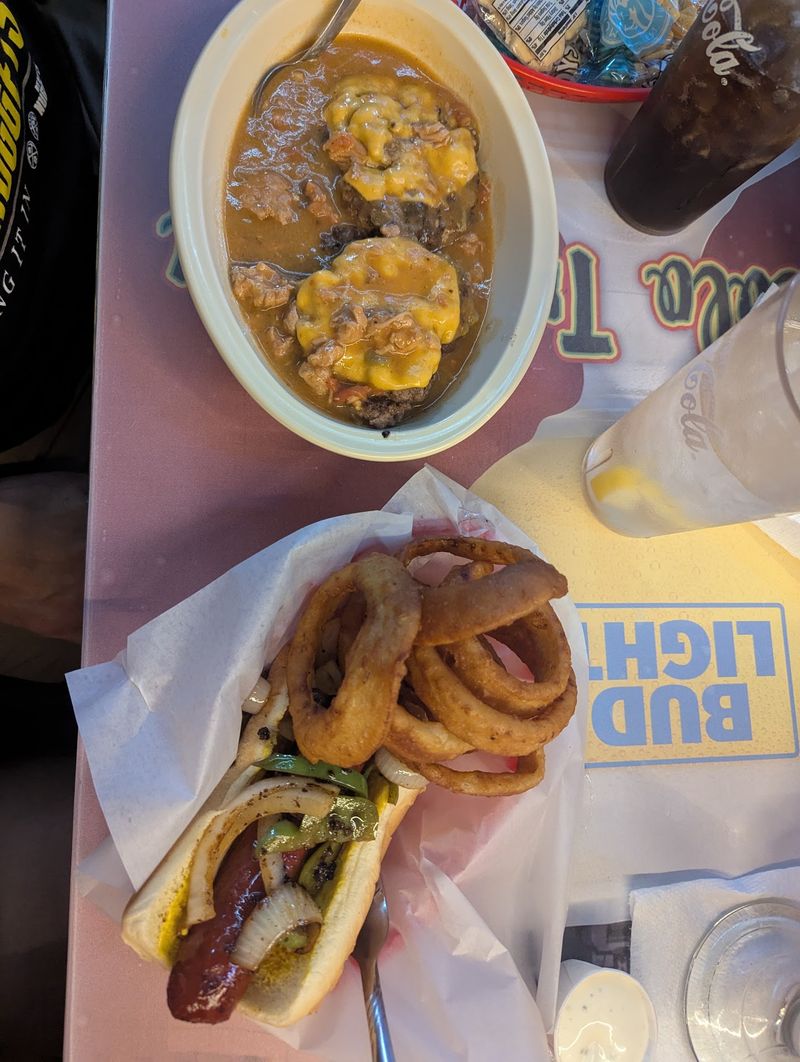
The slopper has become part of Pueblo’s local food identity, appearing on menus across the city and in community food events.
Pueblo celebrates that connection through the Slopper Tour and Slopper Week, which bring together restaurants serving their own versions of the dish.
That citywide format gives you more than one way to explore the slopper. Gray’s can be one stop, while another restaurant may use a different chili, topping combination, or presentation.
You do not need to turn lunch into a competition. A tour simply gives you a chance to see how many directions Pueblo cooks can take the same basic combination of burger and chili.
Gray’s long association with the dish makes it a natural place to begin if you want to compare different versions later.
Pair the meal with another Pueblo stop and the day becomes easier to pace. Eat first, then explore downtown or another part of the city before deciding whether another slopper belongs in the plan.
One plate gives you the basic idea. A broader tour shows how a single local dish can take on different forms from one kitchen to the next.
If you are staying in Pueblo for more than a day, spacing those stops out may be more comfortable than trying to compare several sloppers back to back.
What To Know Before Visiting Gray’s Coors Tavern In Pueblo
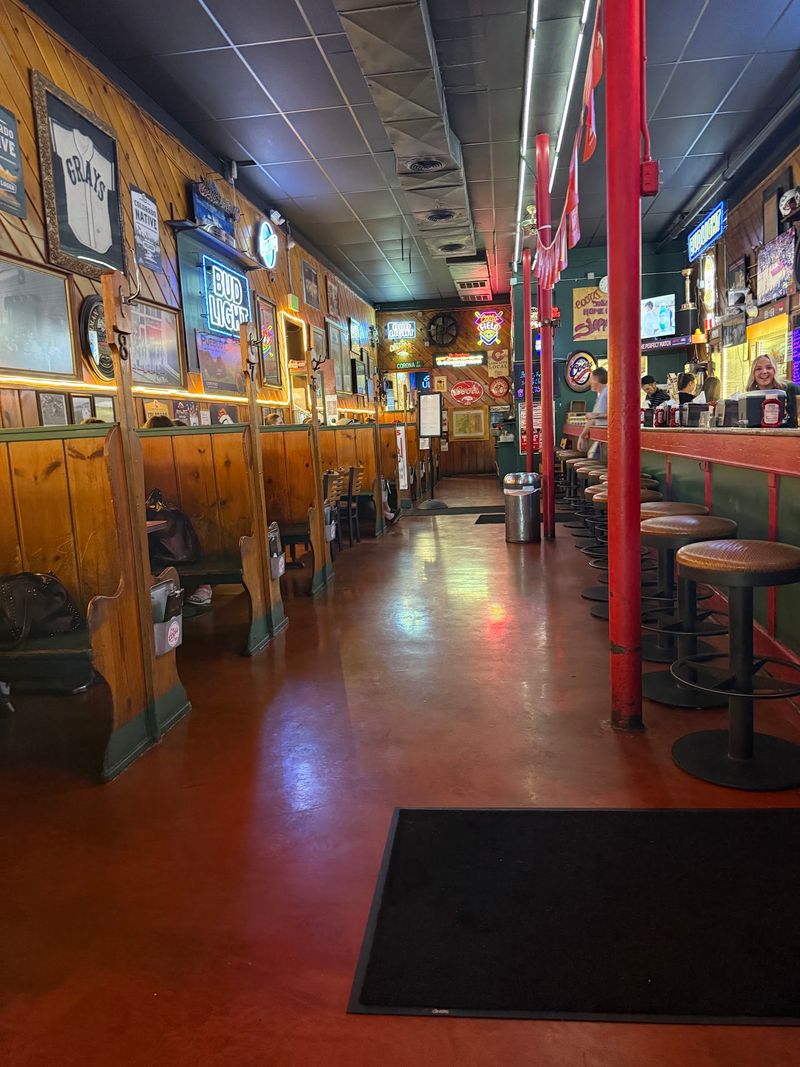
A little planning helps when the main menu item can range from one burger patty to six.
Gray’s opens daily, with lunch service beginning at 11 a.m. Closing time varies by day, so check the current schedule if you are planning a later meal or visiting around a holiday.
The menu extends well beyond sloppers. Fried pickles, onion rings, nachos, fries, burgers, sandwiches, tacos, burritos, enchiladas, salads, and other casual dishes give a group plenty of alternatives.
That variety works well when one person wants the signature plate, and someone else would rather keep lunch simpler.
For the first slopper, choose the patty count before adding extras. A Half gives you one patty, a Regular gives you two, and the larger versions move to four or six. Smothered fries can always make the bowl bigger if appetite allows.
The tavern is at 515 W 4th St, Pueblo, CO 81003.
Once you sit down, there is no need to overthink the order. Start with the slopper size that fits your appetite, decide whether fries belong on top, and keep a fork ready. The combination of burger, bread, onions, and Pueblo green chili does the rest.
If the meal is part of a longer Pueblo day, leave enough room in the schedule to enjoy it without rushing. A chile-covered burger with several layers is not the kind of lunch that benefits from watching the clock.
And if six patties sounded tempting when you walked in, take one last look at the table before committing. Sometimes two patties and a side leave just the right amount of room for the rest of Pueblo.