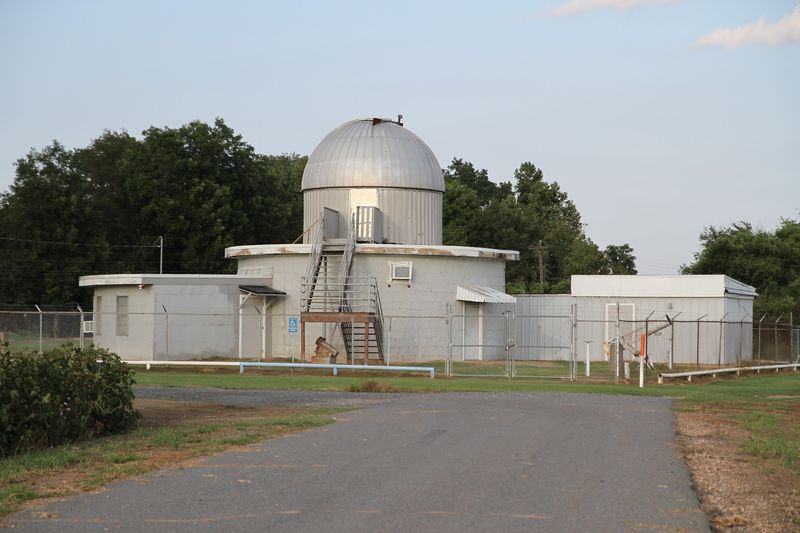
About twenty minutes outside Shreveport, a small nonprofit observatory turns off nearly every light it can and lets the sky do the talking. Worley Observatory hosts star parties a few times a year, usually two in the spring and two in the fall, and the whole point is simple: you walk up, wait your turn, and look through a real telescope.
Red lights keep your night vision sharp, volunteers answer questions, and families spread out on open ground while the planets come into focus. If you have never seen Saturn with your own eye, this is a very easy place to start.
A Dark-Sky Observatory On Shreveport’s Southern Edge
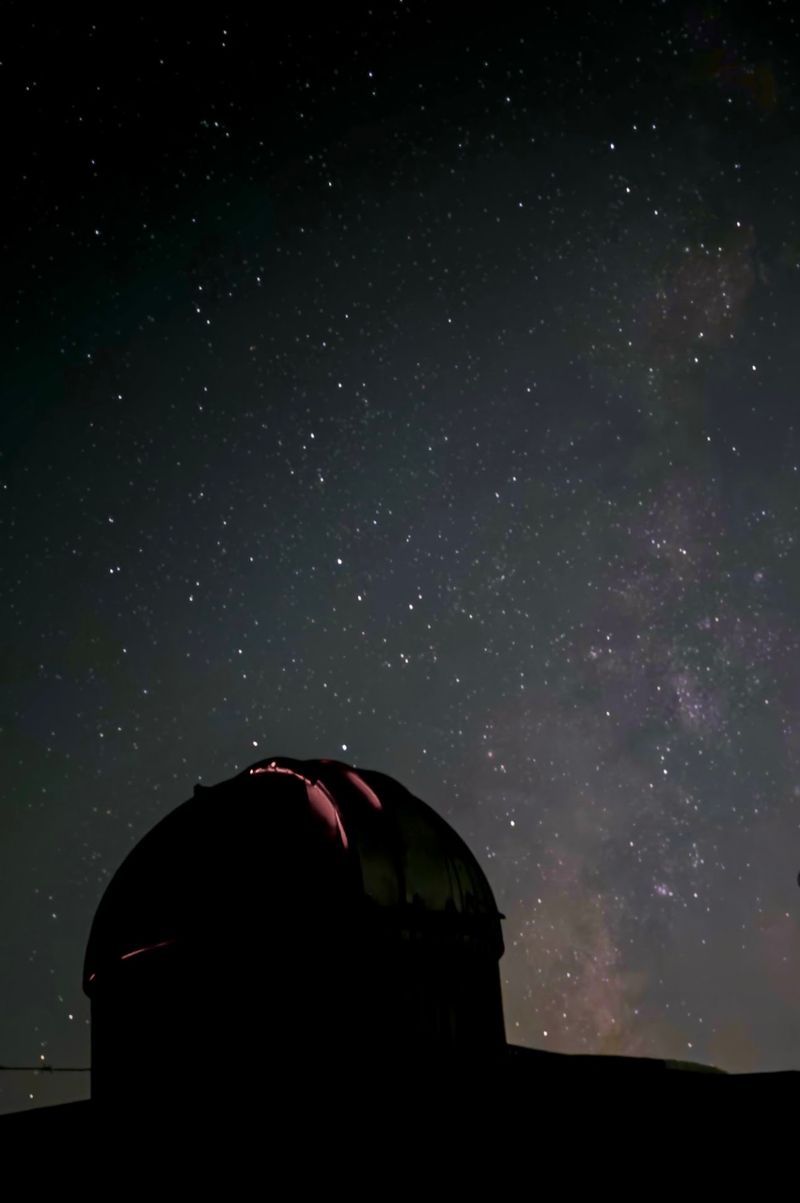
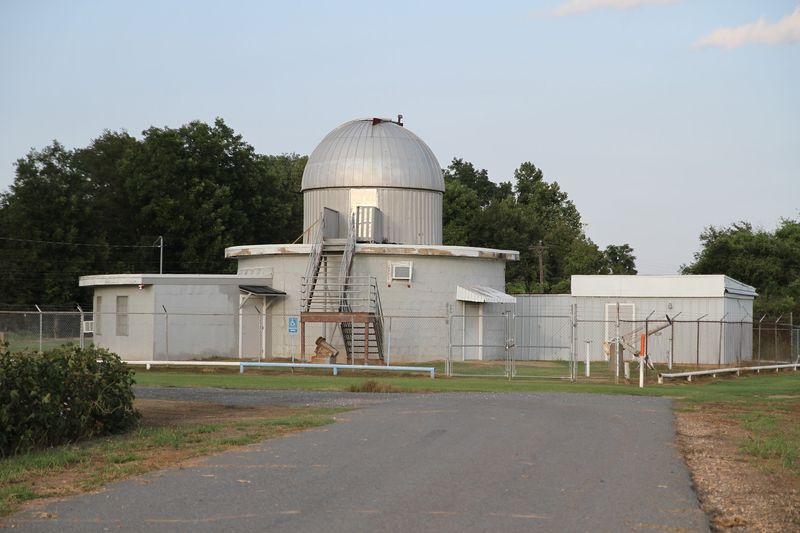
Drive south out of Shreveport, let the streetlights thin out, and you reach Worley Observatory, listed at 1 Astronomical Observatory in the 71115 ZIP code. Visitors put the trip at about 20 minutes from the city, which is close enough for a weeknight decision and far enough to lose most of the urban glare.
Calling it a tourist attraction would miss the point. Worley runs as a nonprofit, and its public face is the star party, a scheduled evening when the gates open and telescopes point upward for anyone who shows up.
The site is built around a single priority: darkness. Visitors describe it as a low light pollution location, which matters more than any building or exhibit.
In a state where refinery flares, highway corridors, and suburban sprawl brighten so much of the night, finding a reachable patch of real darkness near a major city takes some luck and some planning.
Worley offers both. The rest of the experience, from the red lighting to the lunar maps handed out at the door, follows from that one goal of keeping the sky as black as possible so people can actually see what is up there.
Why Fall Is The Season To Circle On The Calendar
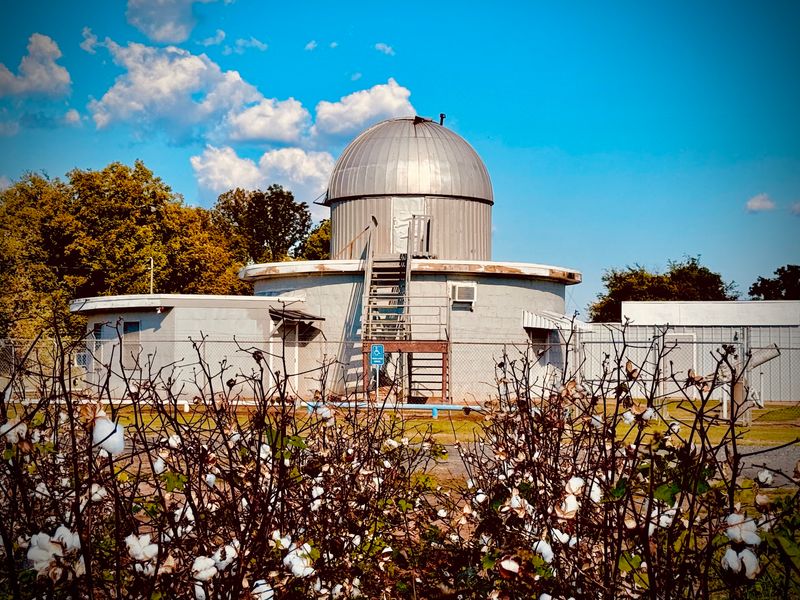
Four nights a year, give or take. According to one regular who tries to attend every one, Worley usually holds two star parties in the spring and two in the fall, which makes each date feel like an occasion rather than a routine.
Autumn has practical advantages in north Louisiana. Summer haze and humidity tend to soften the sky, and the heavy thunderstorm season makes evening plans a gamble.
By October and November the air often turns drier and steadier, nights arrive earlier, and you can stand in a field after dinner without being chased inside by mosquitoes or heat.
Earlier sunsets also help families. A star party that gets properly dark before eight is a lot friendlier to a nine-year-old’s bedtime than a midsummer event that waits until nearly ten.
Because the fall schedule is short, missing a date can mean waiting until spring. That scarcity is part of the appeal and part of the challenge.
It pays to watch for announcements well ahead of time and to keep a backup evening in mind, since a cloudy forecast can quietly cancel the view even when the gates are open.
Halley’s Comet And A Neighbor’s Long Memory
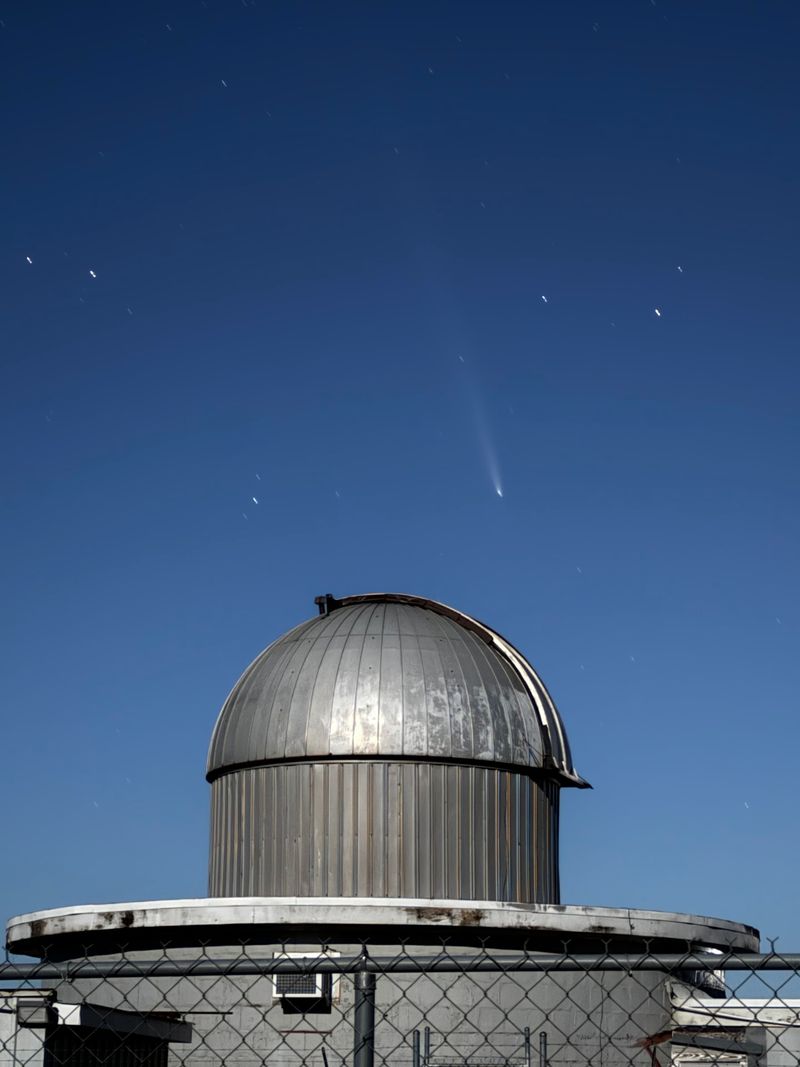
One visitor grew up right next door. Their memory of Worley includes star parties, the Milky Way spilling across the sky, and Halley’s Comet, which last swung through the inner solar system in 1986.
That detail says something useful about the place. An observatory hosting public viewing around the time of Halley’s means Worley has been opening its gates to curious neighbors for decades, not just since astronomy became a social media hobby.
The comet itself won’t return until 2061, so nobody standing in line this fall will see it. What the story points to instead is continuity.
The same field, the same dark horizon, and the same habit of inviting the public out after sunset have carried across generations of observers.
Plenty of Louisiana institutions trace their identity to a building or a founding family. Worley’s identity seems tied to a sky, and to the people who keep showing up to look at it.
For someone who first saw a comet there as a kid, returning as an adult with their own family closes a pretty satisfying circle.
Not every attraction can claim a neighbor who still remembers that night.
Red Lights And The Patience Of Night Vision
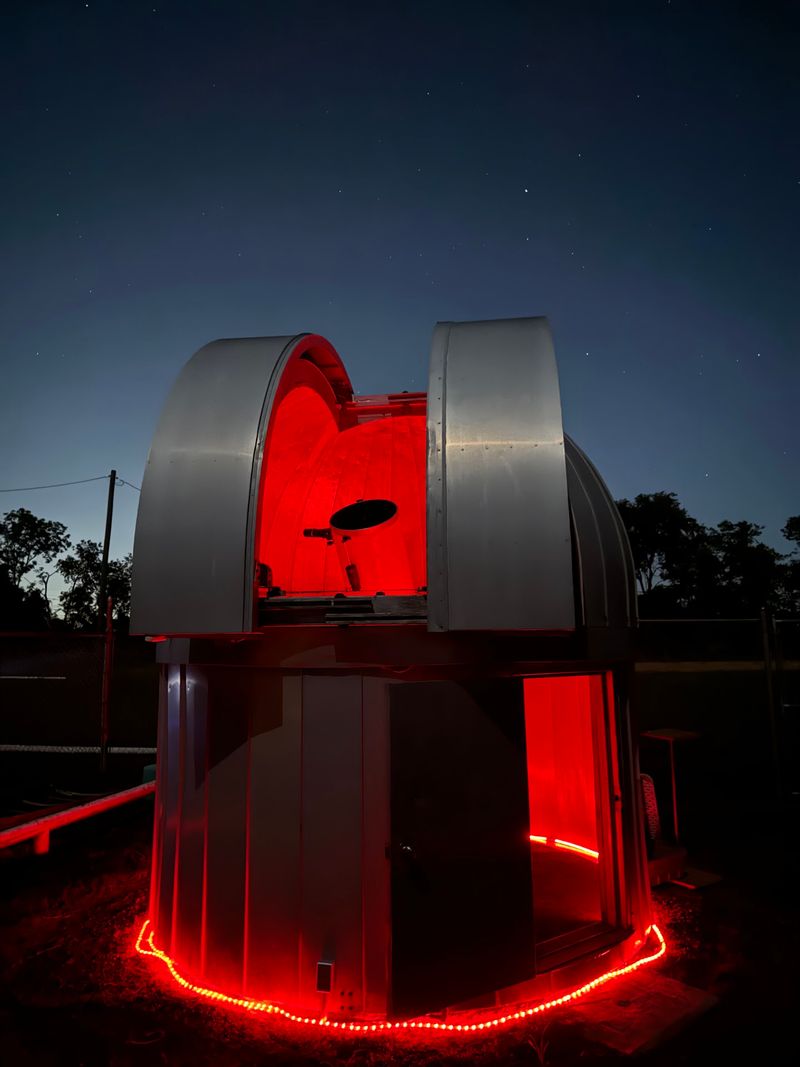
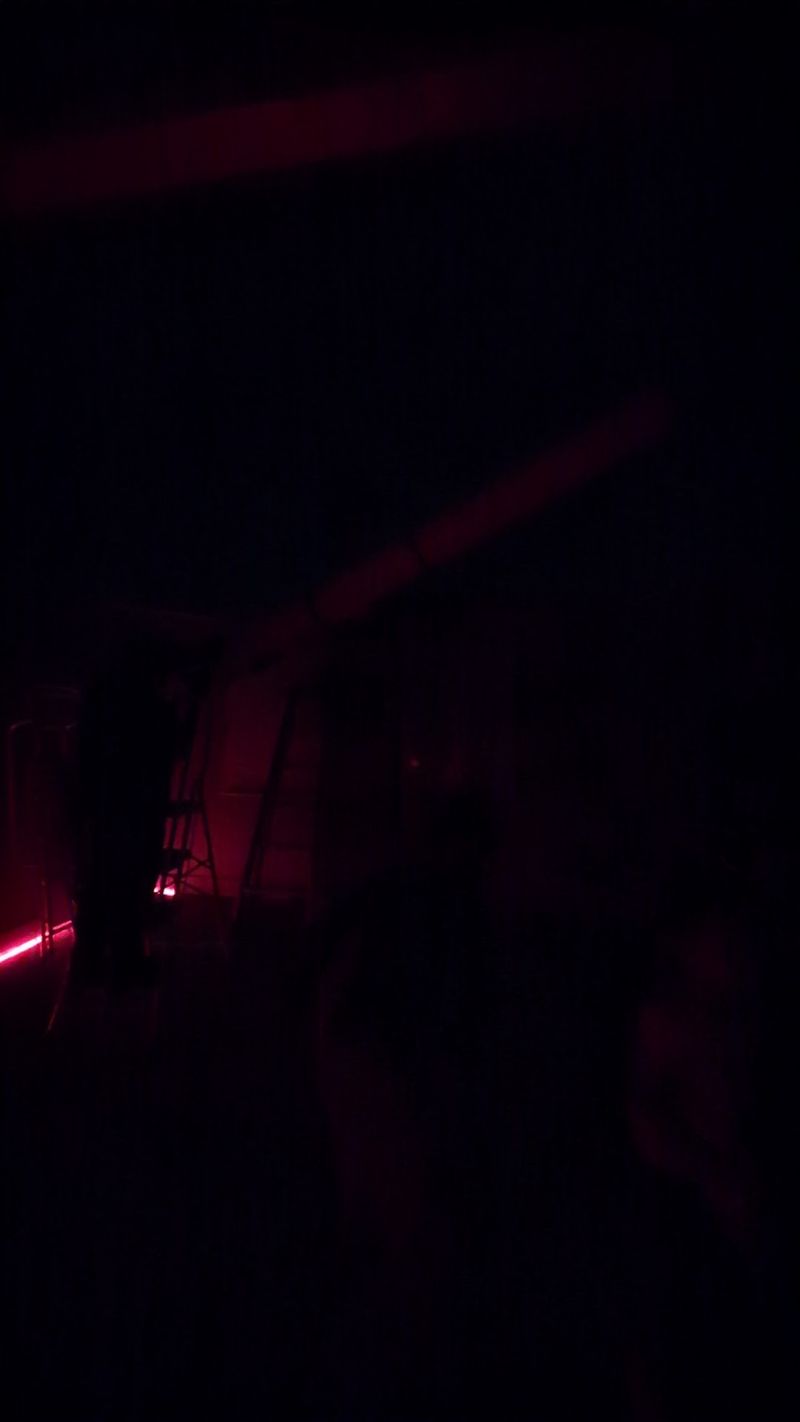
Walk onto the grounds after dark and the first thing you notice is what you don’t notice: no harsh white floodlights. Worley uses low red lighting, which visitors say is easy on the eyes.
There is real science behind that choice. The human eye takes around twenty to thirty minutes to fully adapt to darkness, and a single burst of white light from a phone screen or headlamp can undo much of that progress in seconds.
Red light disturbs that adaptation far less, so people can find their footing without wrecking their view.
That has a few practical consequences for your visit. Dim your phone or switch it to a red night mode if it has one.
Park, kill your headlights quickly, and avoid sweeping the field with beams while others are observing.
Bring a small red flashlight if you own one, or tape red cellophane over an ordinary one.
None of this is fussy etiquette for its own sake. The faint smudge of a distant galaxy or a star cluster depends on eyes that have had time to open up, and everyone in the field shares the same darkness.
The Telescopes Waiting In Line For You
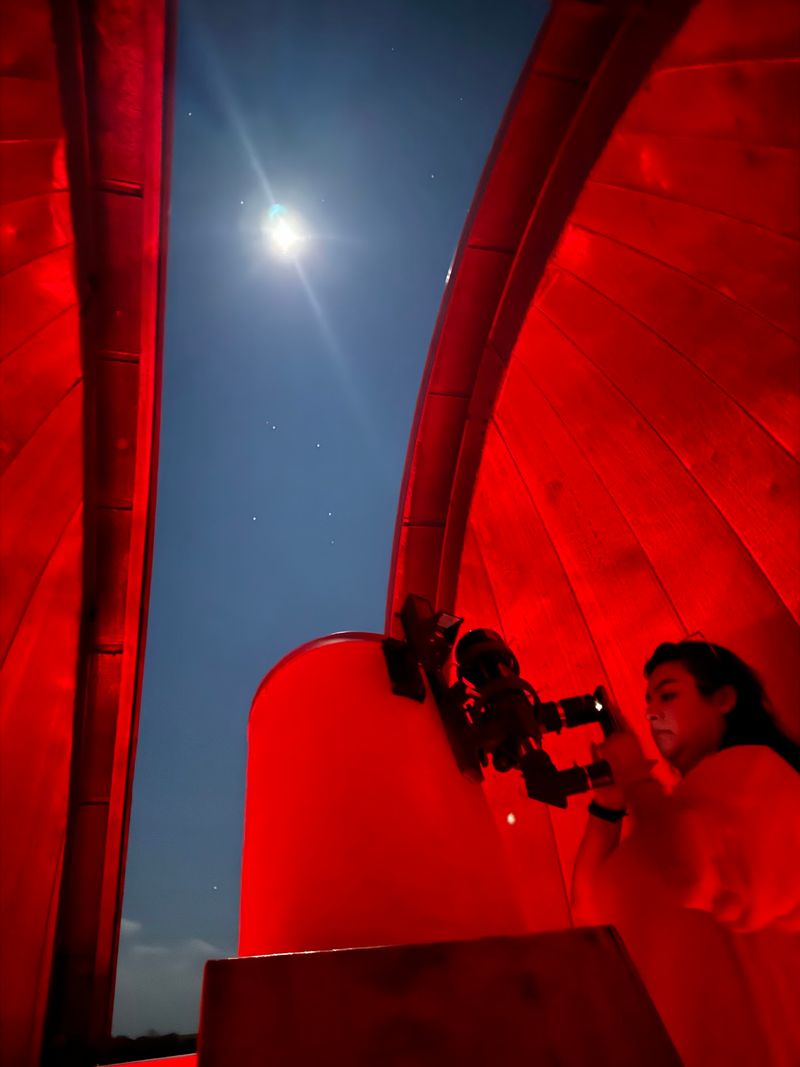
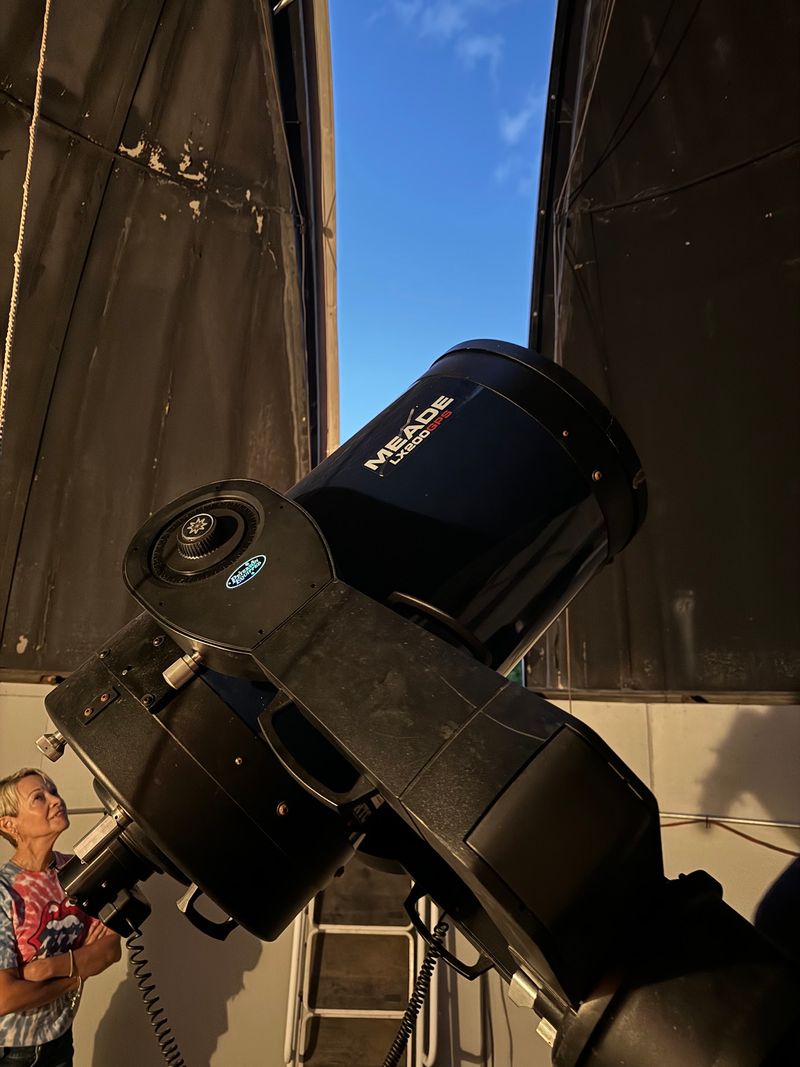
Here is the headline promise in action: you get to put your eye to an eyepiece. Worley has its own main telescopes, and visitors note there are additional scopes on hand as well, so the night rarely hinges on a single instrument.
That backup matters. At one spring star party a regular reported that the observatory’s main telescopes were not operational, yet other functional telescopes kept the evening going.
Each one had a line of people waiting to see whatever it was pointed at.
Expect that format. A telescope operator aims at a target, perhaps the Moon, a bright planet, or a star cluster, and the crowd takes turns stepping up for a look.
A good operator will tell you what you’re seeing and what to look for before you lean in.
Short looks are normal when the queue is long. If something catches your interest, rejoin the line and look again, since a second glance often reveals detail the first one missed.
Moving between several scopes is the smart play. Different instruments may be aimed at different objects, so one evening can cover a planet, a cluster, and the cratered edge of the Moon.
Bringing Your Own Scope To The Field
Got a telescope collecting dust in the closet? Worley welcomes it.
Visitors describe the site as a place where you can bring your own equipment to view the sky alongside the observatory’s instruments.
For hobbyists, the darkness is the draw. Backyard viewing inside Shreveport or Bossier City fights against streetlights, parking lots, and porch lamps, and even a modest scope performs noticeably better under a darker sky.
One visitor showed up with a recently acquired, secondhand telescope hoping to test it under dark skies and maybe meet others in the hobby. Nobody else happened to be around that night, but they still reported having a very good time.
That story carries two lessons. First, the setting can reward even a solo visit.
Second, if you want company and advice, a scheduled star party is your best bet, since that’s when volunteers and fellow observers gather.
Arrive before full dark so you can set up while you can still see your tripod legs. Let the optics cool to the outdoor air, pack a red light, and be ready for newcomers wandering over to ask what you’re looking at.
At a star party, that curiosity is part of the fun.
Volunteers Who Answer The Questions
Ask anything. That seems to be the unofficial rule at Worley, where visitors describe the staff as friendly and welcoming and say questions get helpful, informative answers.
For first-timers, that’s the difference between seeing a fuzzy dot and understanding that the fuzzy dot is a cluster of stars thousands of light-years away. Context turns a glance into a memory, and the people behind the eyepieces seem happy to provide it.
Because Worley operates as a nonprofit, the help you get comes from people who care about the subject more than the sale. The mood leans more toward teaching than toward guided-tour polish.
Some useful questions to bring along:
What am I looking at, and how far away is it? Why does the planet look so small?
What could I see with a beginner telescope at home? Which objects are best this time of year?
Kids especially benefit from a patient explainer. A child who learns that the bright dot near the Moon is actually Jupiter, with moons of its own, may spend the drive home asking for more.
Few science lessons in a classroom land quite as well as that one.
Lunar Maps And Planet Sheets At The Door
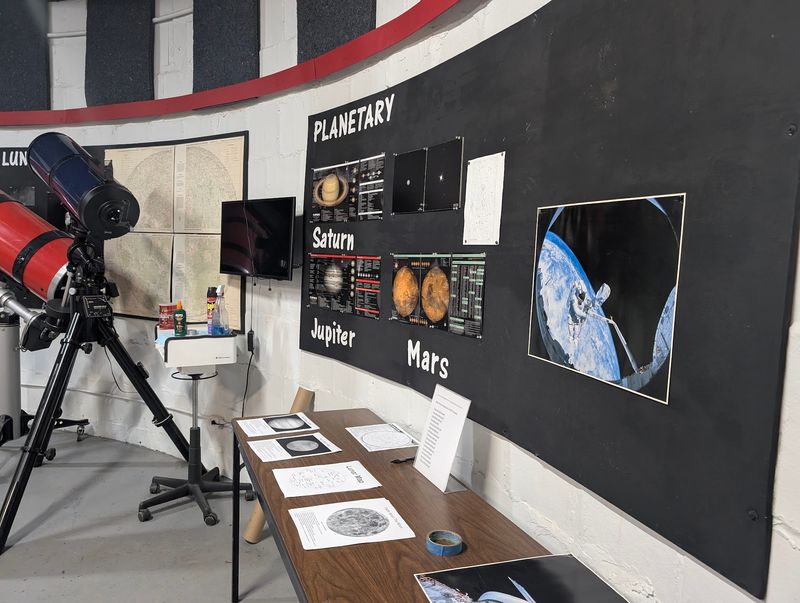
Paper still has its place under the stars. According to visitors, worksheets with lunar maps and information about different planets are readily available as you walk in.
A lunar map is one of the most useful things you can carry at a star party. The Moon is often the first target in the eyepiece, and its surface is crowded with craters, mountain ranges, and dark plains that early astronomers once mistook for seas.
With a map in hand, you can match the shadows you see to named features.
The planet sheets work the same way. Knowing beforehand that Saturn has rings or that Jupiter carries cloud bands helps you spot those details during a short turn at the scope.
Teachers and homeschooling parents will appreciate these handouts. They make a natural follow-up activity the next day, when kids can label the craters they remember or compare planet sizes.
Fun fact for the ride home: the dark areas on the Moon are called maria, Latin for seas. They are actually ancient lava plains.
Grab a sheet on the way in and keep it handy, because a red flashlight and a printed map make a surprisingly good team.
Room To Run For The Younger Crowd
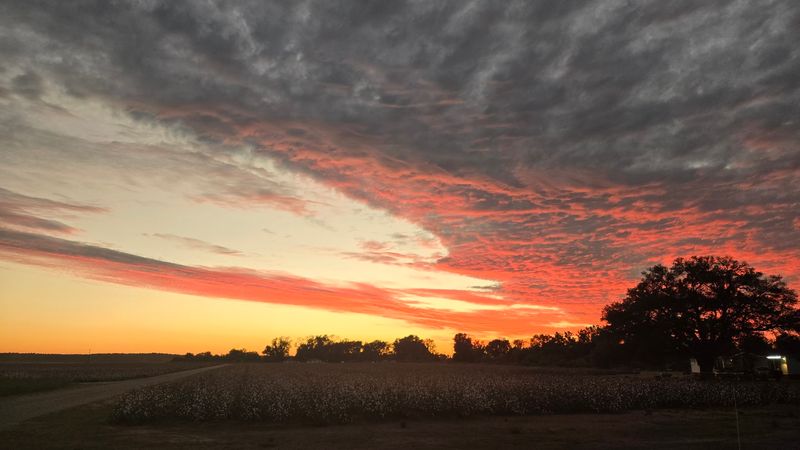
Picture a field where kids can actually burn off energy between turns at the telescope. One visitor pointed out that children have room to play tag at Worley, which any parent will recognize as a genuine selling point.
Waiting in line is hard for small children, and asking them to stand perfectly still in the dark for an hour is a losing battle. Open ground changes the math.
Kids can run, come back for a look at the Moon, and run again.
Visitors describe Worley as a great place to learn and observe with the whole family, and the setup supports that. The mix of open space, handouts, approachable volunteers, and short eyepiece sessions fits the attention span of younger stargazers.
A few family tips help. Dress kids in layers, since fall evenings in north Louisiana can turn cool after sunset.
Bring a blanket or folding chairs for breaks. Remind little ones not to shine flashlights at the telescopes or at other people.
And let them lead sometimes. A child asking to see a particular planet often gives the evening its best moment, and the volunteers seem used to fielding exactly that kind of request.
Astrophotos And The Small Gift Shop
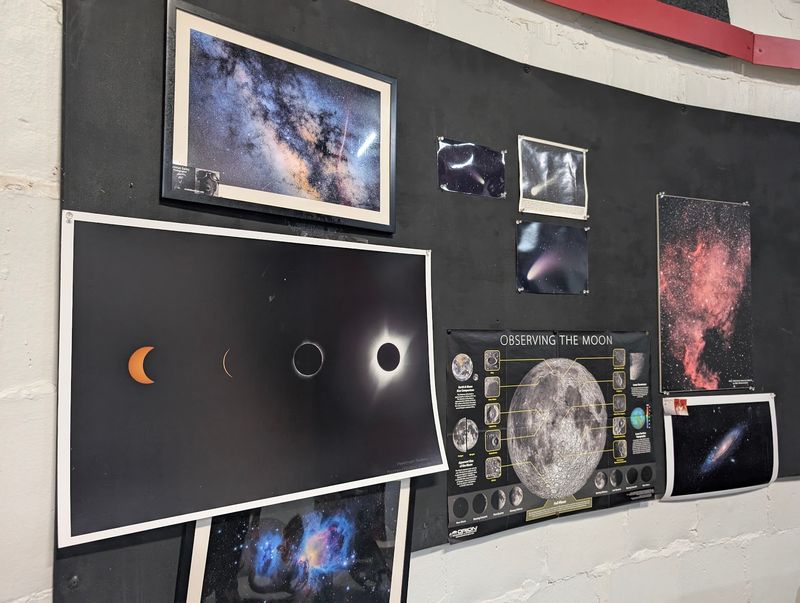
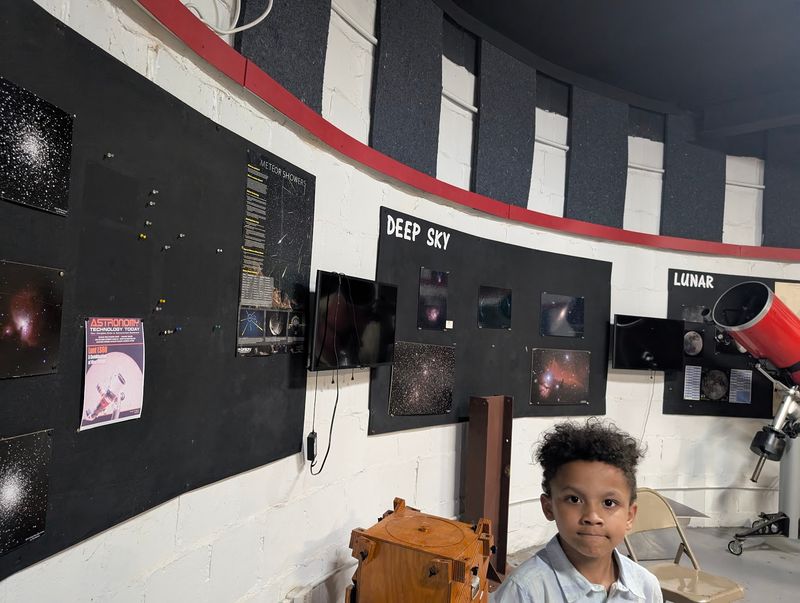
Not everything at Worley happens outside. There’s a small gift shop inside, and visitors mention that the observatory sells pictures taken on site of star clusters and other objects.
That is a nice touch. What you glimpse through an eyepiece is often faint and gray, because human eyes simply can’t gather color from dim objects the way a camera sensor can during a long exposure.
A photograph captured from the same field shows what was there all along.
Comparing the two can be a lesson in itself. Seeing a star cluster live, then looking at a detailed image of it, helps visitors understand how astronomers actually work and why long exposures matter.
The shop also gives restless visitors somewhere to go. One regular, frustrated by long telescope lines on a crowded night, spent a few minutes browsing inside before heading home.
Buying a print supports a nonprofit that keeps the gates open and the telescopes running. It also gives you something for the wall that came from a place you actually stood, which beats a generic space poster.
Bring some cash or a card in case something catches your eye on the way out.
Crowds, Lines And Managing Expectations
Popularity has a price. At one recent spring star party, a longtime regular reported more people than they had ever seen at the observatory, and every working telescope had a long line.
That same visitor admitted they don’t enjoy queuing to look through someone else’s scope and left early. It’s an honest reminder that star parties are shared events, and a busy night means patience.
Some strategies help. Arrive early, before full darkness, so you’re near the front when the first targets come into view.
Spread out among the different telescopes rather than crowding the biggest one. Later in the evening, as families with young children head home, lines often shorten.
Bringing your own binoculars or a small scope can fill the gaps. Even a basic pair of binoculars reveals lunar craters and dense star fields while you wait for a turn at the eyepiece.
Also keep in mind that equipment can be down. The main telescopes weren’t running at that busy event, though backups were.
Treat the night as a gathering under dark skies with telescopes as the centerpiece, not as a guaranteed private viewing, and the lines will feel much shorter.
Clean Grounds And Water On Hand
Small comforts add up on a long evening outdoors. Visitors say Worley provides water bottles and that the area is always very clean.
Those details sound minor until you’ve spent three hours in a field. Staying hydrated matters even on mild fall nights, especially with kids running around, and a tidy site makes the darkness easier to navigate when you can barely see the ground.
Cleanliness also reflects how the place is run. A nonprofit observatory depends on volunteers and community goodwill, and keeping the grounds in good shape signals respect for the guests who make the drive out from Shreveport.
You can return the favor. Pack out whatever you bring in, keep snack wrappers in a pocket or bag, and watch your step around tripod legs and cables.
In red light, a stray bag on the ground can trip someone carrying expensive equipment.
A short checklist for comfort: refillable water, a light jacket, bug spray just in case, folding chairs, and a blanket for lying back and watching for meteors between telescope turns. Simple preparation keeps the focus where it belongs, which is up.
Planning Your Trip Out From Shreveport
Start with the calendar, not the car. Worley’s public draw is its star parties, typically two in spring and two in fall, so confirm a scheduled date before you head out.
The available information doesn’t list regular hours or admission prices, so check directly with the observatory for current details.
The listed address is 1 Astronomical Observatory, Shreveport, LA 71115, and visitors estimate the drive at around 20 minutes from the city. Plug it into your map app ahead of time, since rural roads can be harder to read after dark.
Timing helps. Aim to arrive near sunset so you can park, walk the grounds, and pick up handouts while there’s still some light.
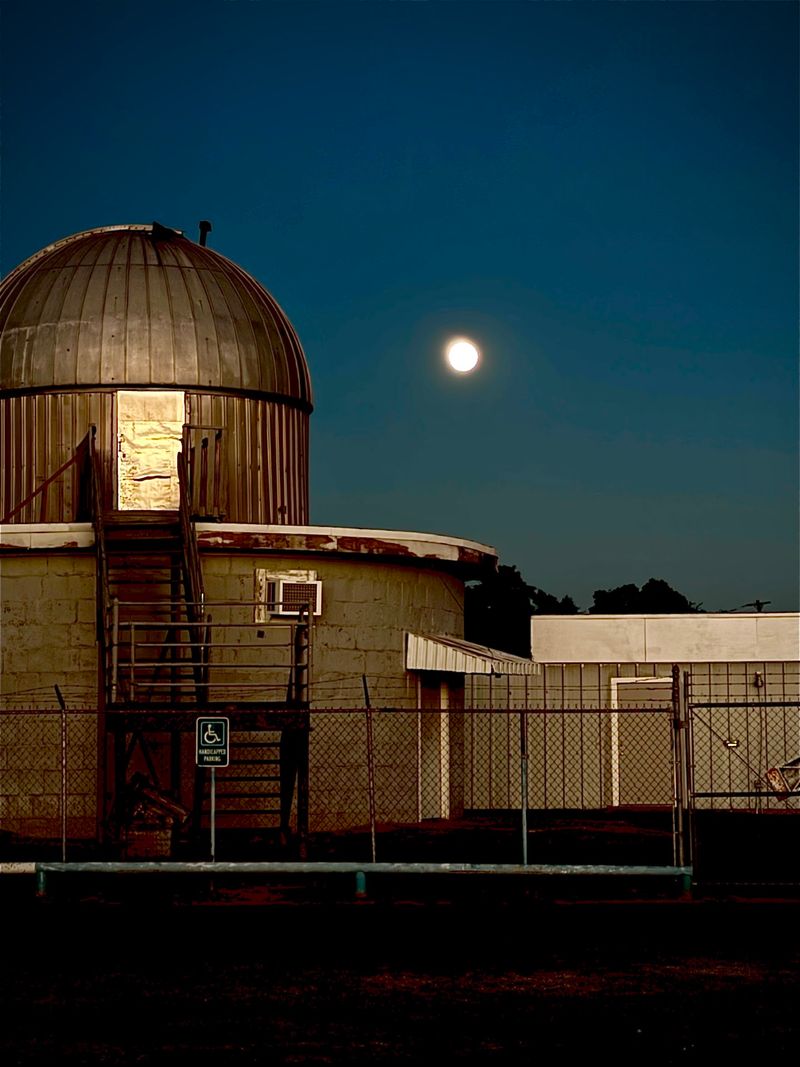
Watch the weather closely. Clouds can erase an entire evening, and the Moon’s phase matters too.
A bright full Moon makes a great target on its own but washes out faint galaxies and clusters.
Finally, think about headlights. When you arrive and leave, switch to parking lights where safe and avoid sweeping beams across observers.
It’s a small courtesy that keeps dark-adapted eyes intact for everyone still at the eyepiece.
A Short Drive To A Much Bigger Sky
Some places earn their reputation through size or spectacle. Worley does it with darkness, patience, and a handful of telescopes pointed at whatever the season offers.
Its strengths are clear from the people who keep coming back. There’s the low light pollution, the welcoming volunteers, the lunar maps at the door, and the open field where kids can play.
Add the chance to bring your own scope and the photographs of star clusters for sale inside, and you have a well-rounded night out.
The drawbacks are honest ones. Star parties are infrequent, busy nights mean long lines, and equipment doesn’t always cooperate.
Anyone expecting a polished planetarium show should adjust their expectations.
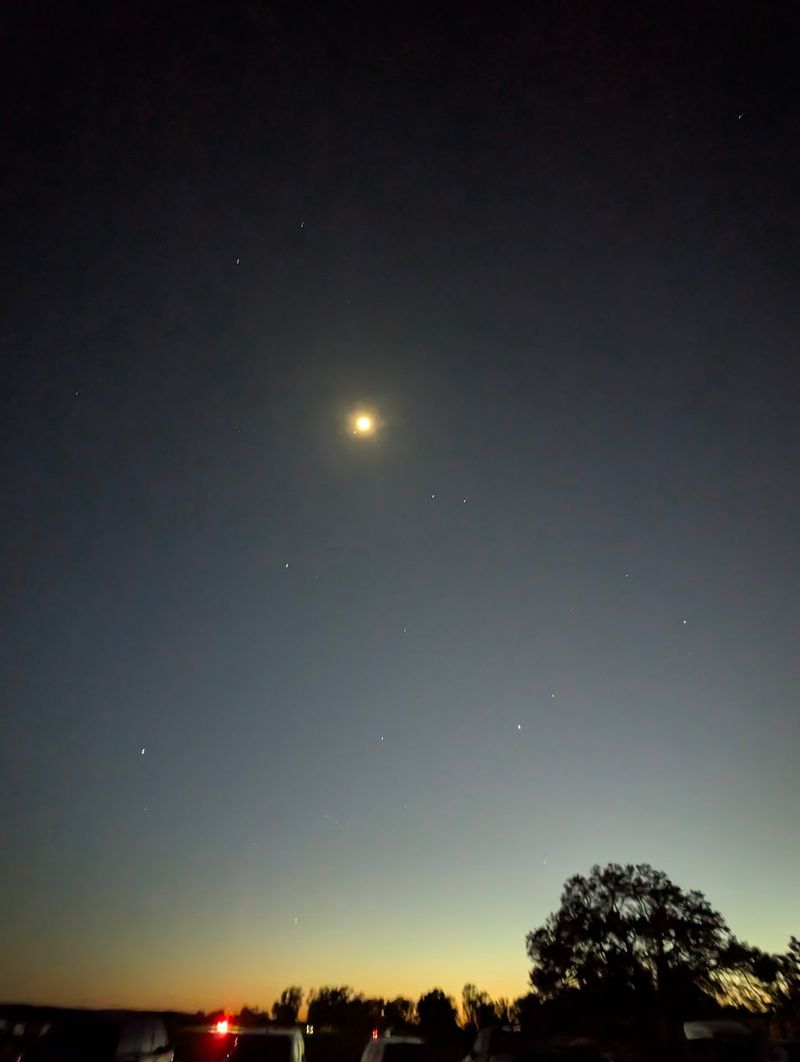
For curious families, new telescope owners, and anyone who has only seen the Milky Way in photographs, a fall star party here is an easy, low-pressure introduction to the real thing.
And remember that neighbor who grew up beside the field and saw Halley’s Comet. The comet is long gone, but the sky it crossed is still there, still dark, and still waiting for the next person to step up, lean in, and look.