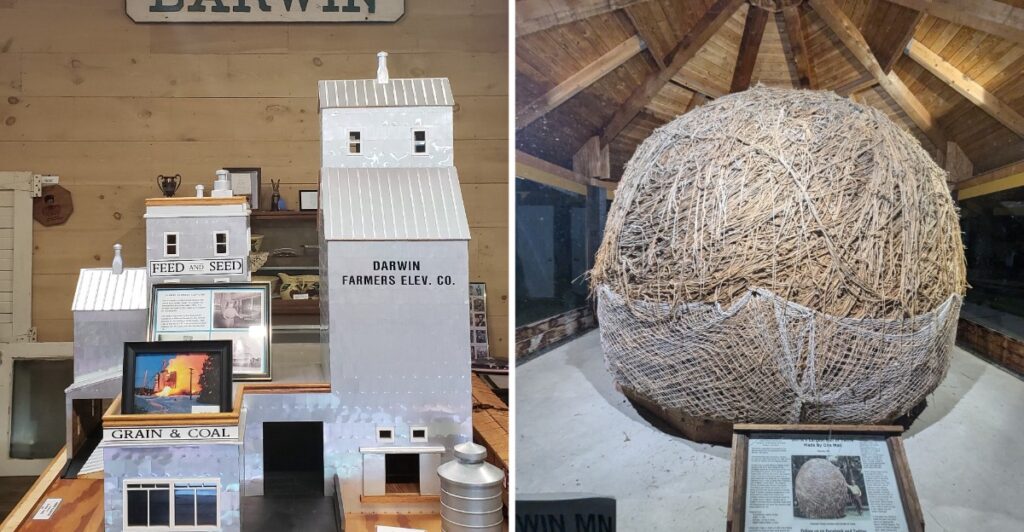
Most roadside attractions begin with a pretty simple question.
Who looked at this and decided to keep going?
In one Minnesota town, an ordinary piece of farm life became a project that lasted for years. Then it became something people were willing to drive out of their way to see.
That is about all you need to know at first.
The rest gets stranger.
There is a tiny-town setting, a lot of patience behind the story, and more cultural attention than you would ever expect from something that started with leftover twine.
Some roadside stops earn attention with scenery.
This one did it with sheer persistence and a lot of twine.
Francis Johnson Spent Twenty-Nine Years Building The Ball
Francis A. Johnson began winding baler twine in March 1950. What started with scraps from his family’s farm kept growing until 1979, when his long-running project finally stopped.
Johnson worked with brown sisal twine, the rough material commonly used around farms.
Neighboring farmers also supplied discarded pieces, and he joined strands together before adding them to the sphere.
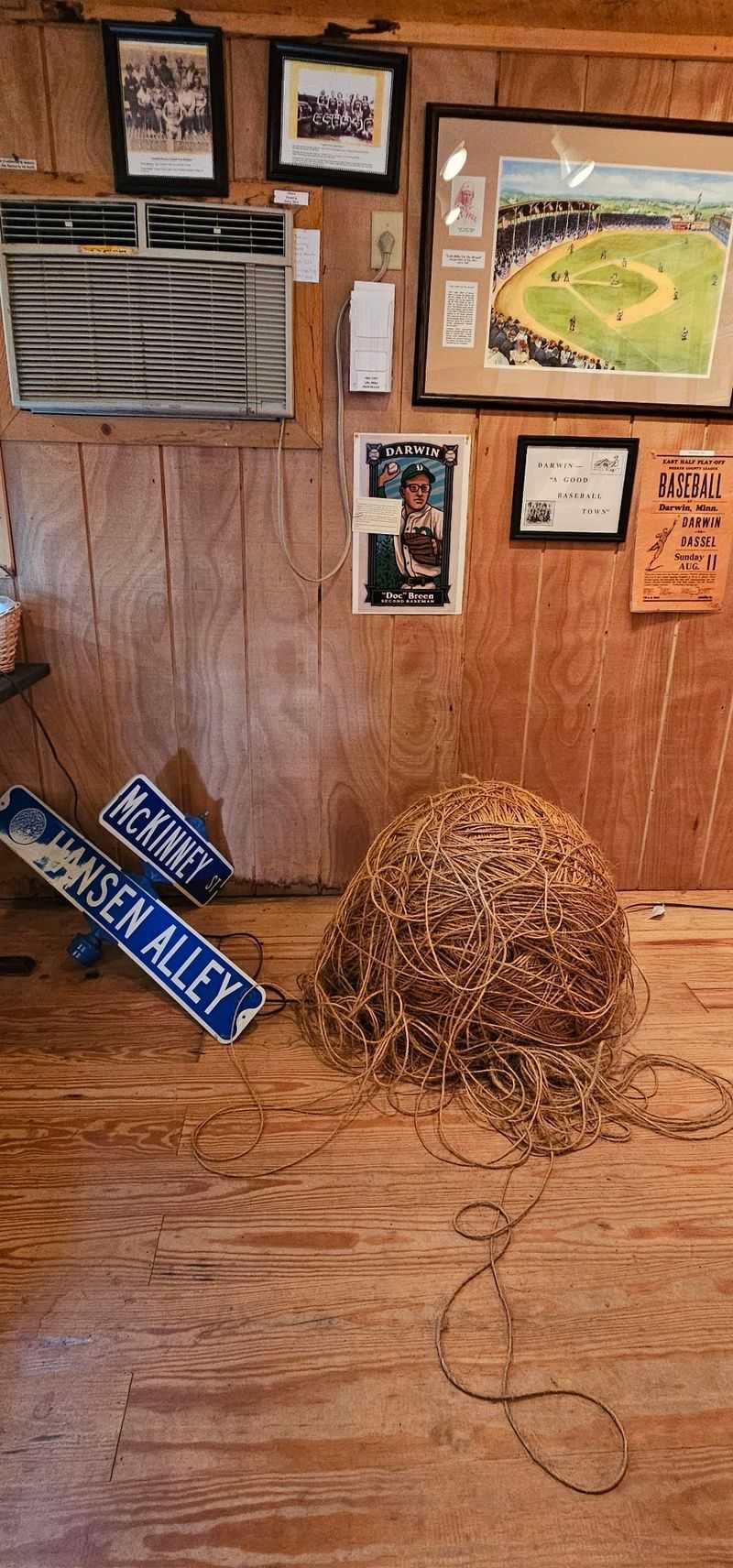
As the ball became too large to move by hand, he used a railroad jack to rotate it and keep its shape.
Twenty-nine years is difficult to picture when the finished result is sitting quietly behind glass. Try starting with the center instead. Somewhere inside the ball is the first small bundle Johnson could once hold in his hands.
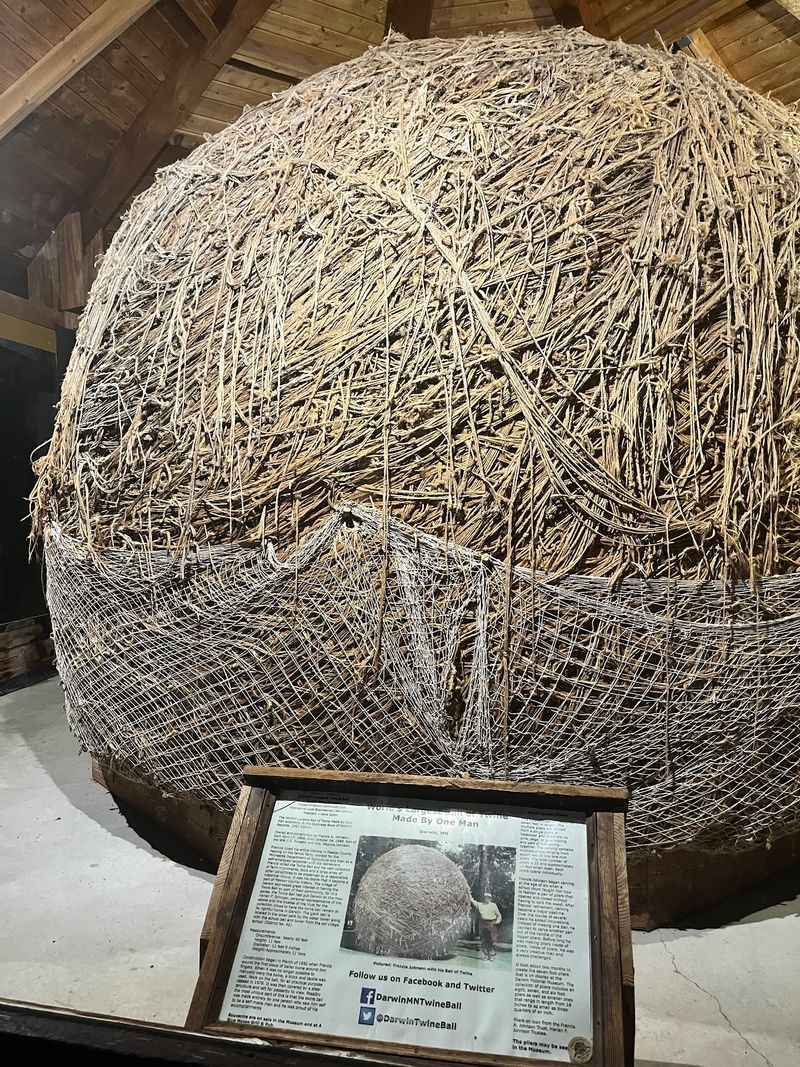
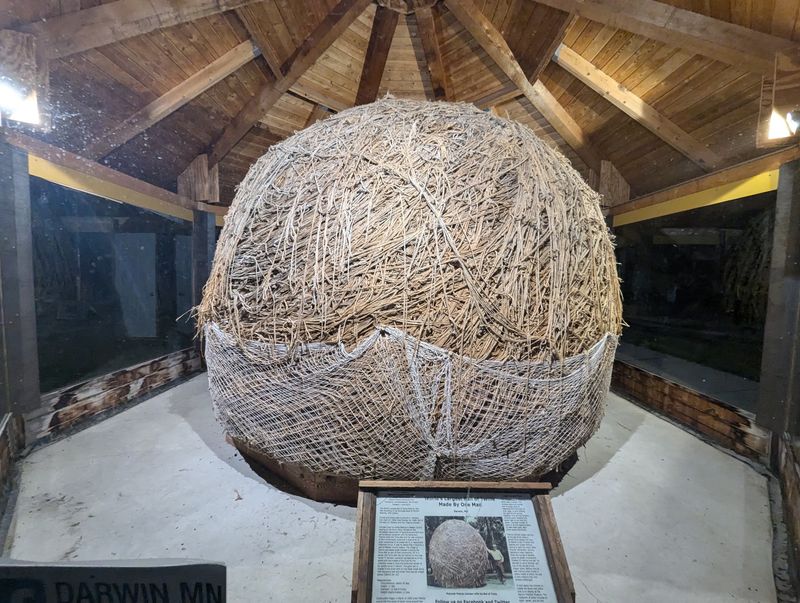
Layer after layer turned it into an object taller than many people and far too heavy for an ordinary trailer.
The project also grew from thrift rather than a commercial attraction. Johnson was known as a collector, and the twine became the largest expression of that habit.
Stand near the enclosure and look closely at the outer strands. The surface still makes the scale of the work visible, one rough piece at a time.
Seventeen Thousand Four Hundred Pounds Gives The Story Some Scale
The finished ball weighs 17,400 pounds, or nearly nine tons. Its circumference is about 40 feet, and it measures roughly 12 feet across.
Those numbers help, but the enclosure gives you a better comparison. The twine nearly fills the shelter built around it, turning something as ordinary as farm string into a wall of loops, knots, and tightly packed fibers.
Darwin’s landmark is the world’s largest ball of twine made by one person. Other giant twine balls exist, including one in Kansas that a community continues to enlarge. Johnson’s ball is different because his 29-year effort was a one-man project.
The weight was formally established when the ball was moved into Darwin in 1991. It was placed on the town’s grain scale during the move, producing the 17,400-pound figure still associated with it.
If you are traveling with children, ask them to guess the weight before giving away the number. Adults can play too. Nine tons is not an obvious answer when the material is something you could normally carry in one hand.
Then step back far enough to get both the ball and its shelter into one photo.
The Ball Moved From Johnson’s Farm Into Downtown Darwin
Johnson died in 1989, and the ball remained part of his legacy. Two years later, it was moved from his property east of Darwin into town.
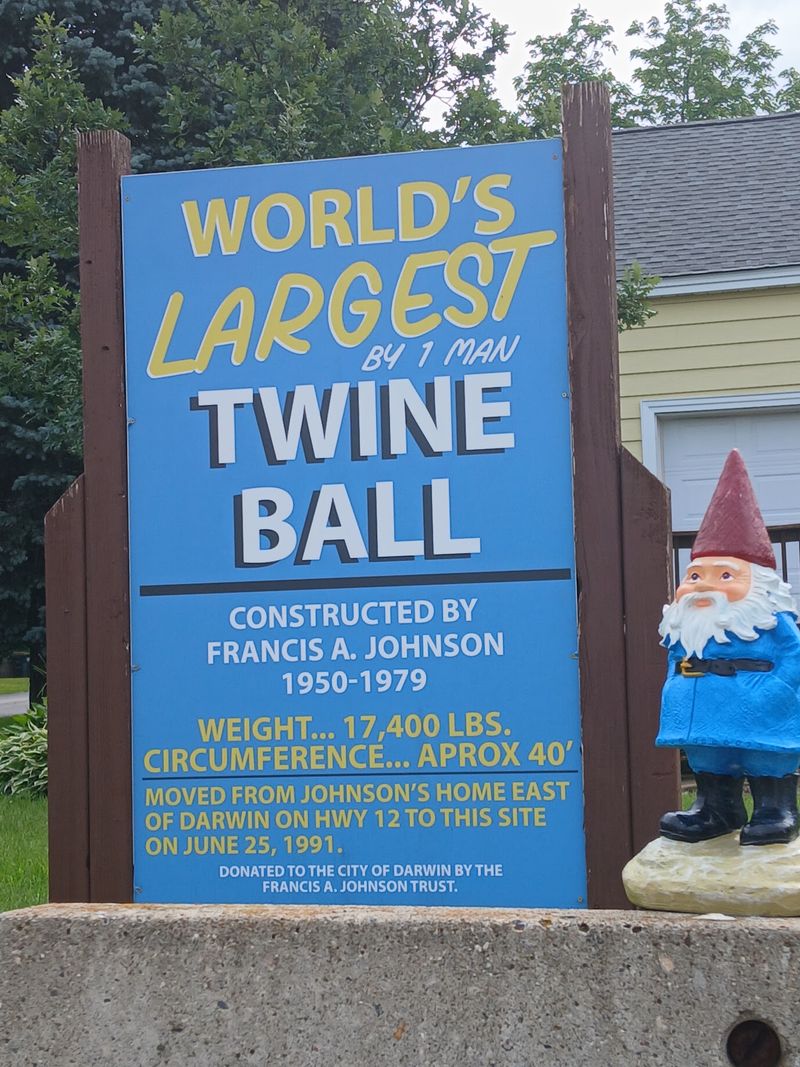
A sign at the site records the move on June 25, 1991, along with the weight, approximate 40-foot circumference, and the 1950-to-1979 construction period. The Francis A. Johnson Trust donated the ball to the City of Darwin.
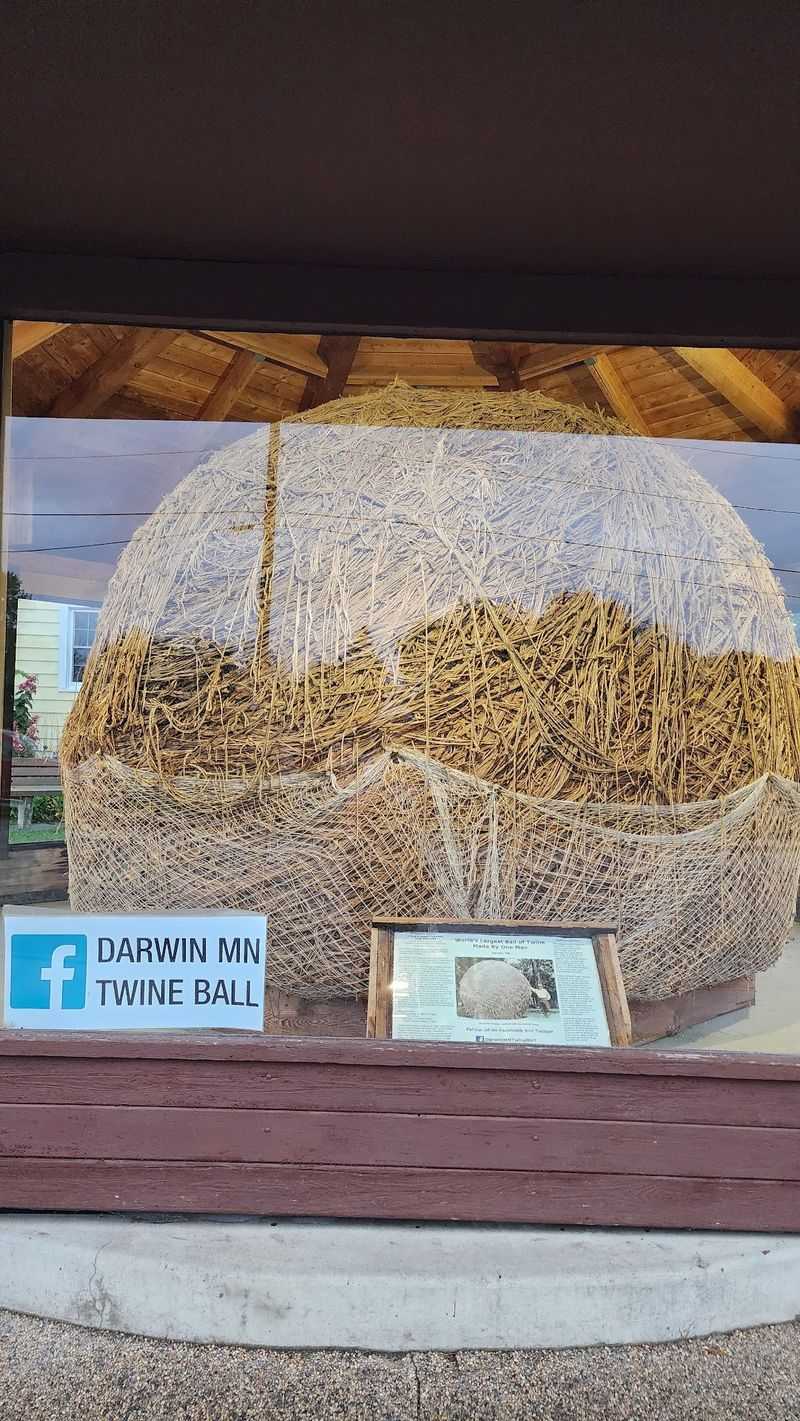
Today it is protected by a glass-walled pavilion, allowing visitors to see the twine throughout the year without exposing it directly to Minnesota weather or constant handling.
That setup also makes the roadside stop unusually flexible. The ball itself is on display every day of the year, so you do not need to match a volunteer schedule just to see the main attraction.
The adjacent Twine Ball Museum is different. It is volunteer-run, free to visit, and opens according to volunteer availability or by appointment. Inside are materials connected with Johnson, the landmark, and Darwin history.
One of Johnson’s other creations adds another surprise: his woodworking included elaborate pliers carved from single pieces of wood.
If the museum is open, give yourself extra time. If it is closed, the glass pavilion still keeps the main reason for the stop fully visible.
A Weird Al Song Gave The Landmark A Second Life
The twine ball was already unusual enough to earn attention, but 1989 gave Darwin a cultural connection that still follows the landmark.
That year, “Weird Al” Yankovic released “The Biggest Ball of Twine in Minnesota” on his UHF soundtrack album. The original song follows a family taking a vacation centered on a trip to see a giant Minnesota twine ball.
The real landmark and the fictionalized road trip became permanently linked. Yankovic later visited Darwin in 1996 while he was in Minnesota for a performance, bringing the songwriter face to face with the attraction he had turned into a destination in music.
Darwin added another chapter in 2019 by naming Weird Alley in his honor. The small street sign is an easy extra detail to look for while you are near the pavilion.
You do not need to know the song before visiting, but hearing it once gives the stop a different rhythm. The joke works because the destination is real, and the real object is already strange enough without much embellishment.
Keep the soundtrack choice for when the car is parked or the passenger has control of the music. A twine ball is not worth missing your turn.
Real Road Trips Still Form Around The Twine Ball
The title of Yankovic’s song turned a family trip into comedy, but recent visitors have made the premise surprisingly literal.
In June 2026, Lin-Manuel Miranda traveled to Darwin with his son Sebastian after the twine ball became the younger Miranda’s sixth-grade graduation trip request. Their Minnesota outing was built specifically around seeing the landmark.
A few weeks later, Minnesota Randonneurs put Darwin on a much longer route.
The group’s July 11, 2026 “Twine Ball or Bust” brevet covered 300 kilometers, with riders traveling from the Twin Cities area through several Minnesota communities and reaching the twine ball along the way.
One was a father-son graduation trip. The other was a full day of long-distance cycling, and both placed Darwin at the center of the route.
Your own version can be much easier. The stop itself does not require hours, so it fits comfortably into a wider central Minnesota drive.
Bring a camera, leave enough time for the museum if volunteers are there, and resist the temptation to pretend nine tons of twine looks normal.
The Museum And Pavilion Sit Together In The Center Of Town
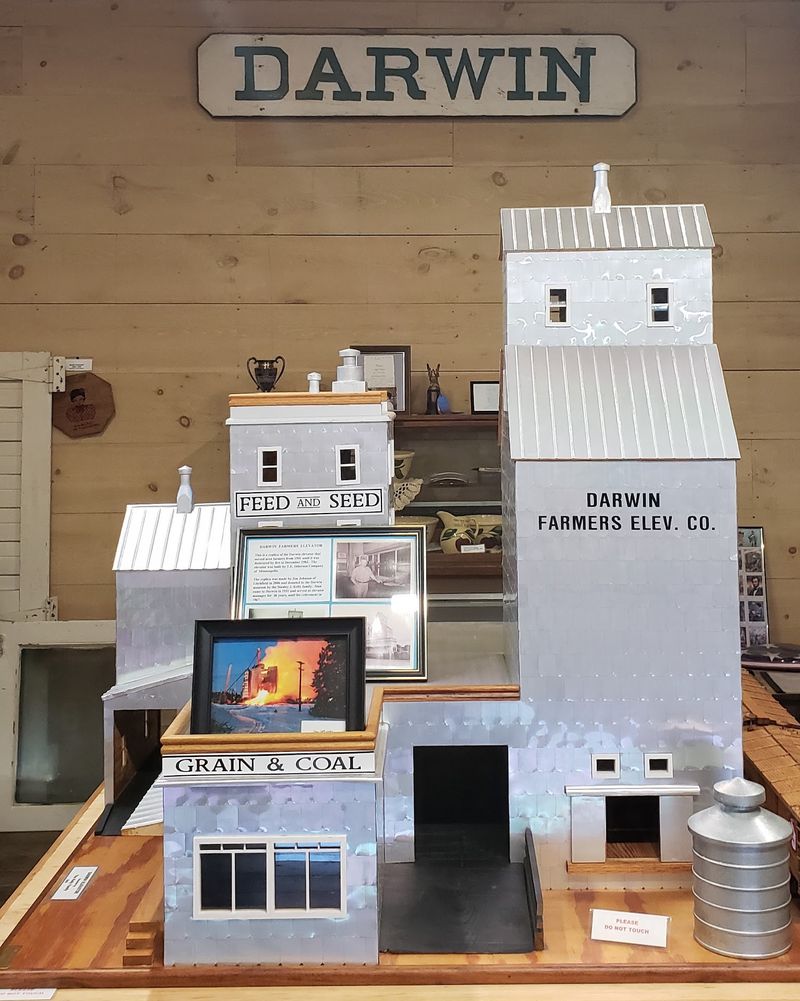
The landmark and museum are at 200-298 N 1st St, Darwin, MN 55324. The ball remains visible every day of the year inside its glass-walled pavilion, while museum access depends on volunteer availability or an appointment.
Admission to the museum is free. Because volunteer staffing can change, build the trip around seeing the ball rather than assuming the museum doors will be open at a particular hour.
The compact setup keeps the practical side easy. You can see the landmark, check whether the museum is open, look for Weird Alley, and spend a little time around town without turning the stop into an all-day attraction.
This is also where knowing the full name helps. Darwin’s landmark is the World’s Largest Ball of Twine Made by One Man, a distinction that separates it from competing giant twine balls elsewhere in the country.
If you are photographing through the pavilion glass, change your angle when reflections get in the way rather than pressing against the panels. The ball has waited decades for visitors. It can wait another thirty seconds while you find the shot.
Then decide whether this is the main event or the oddest chapter in a longer Minnesota drive.
Twine Ball Day Turns The Landmark Into A Town Celebration
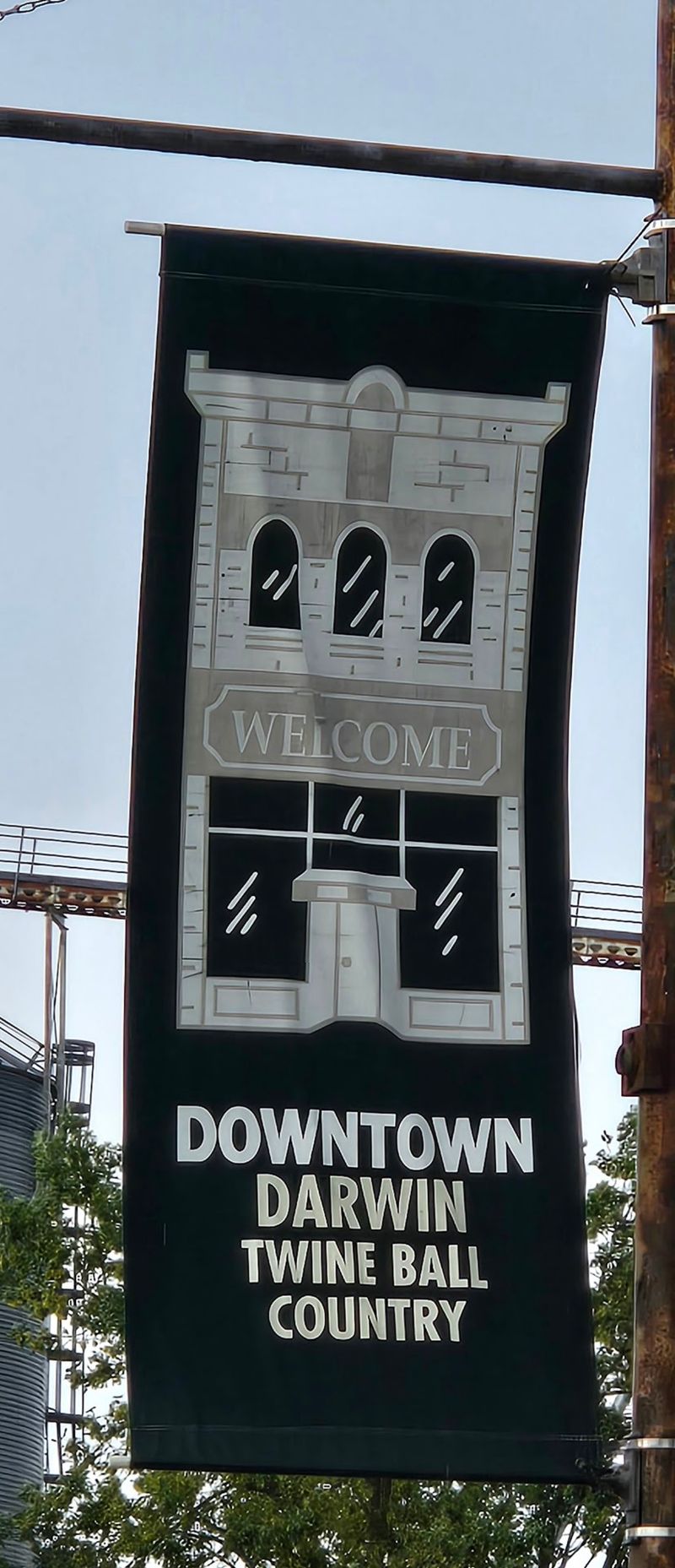
Darwin does not leave its best-known object sitting quietly behind glass all year. Twine Ball Day brings an annual celebration to town on the second Saturday in August.
The 2026 edition took place on August 8 and marked the 35th annual event. Activities included the Twine-K run, a parade, a craft fair, a pedal pull, volleyball, and Minnesota Mini-Rods.
Even the run carries the landmark into the details. Its length is 17,400 feet, matching the ball’s weight in pounds.
That connection between an eccentric object and a community tradition is easy to notice once you are there.
Johnson’s private project eventually moved from a farmyard into public space, gained a museum, inspired a song, acquired its own annual celebration, and kept drawing new trip ideas decades after the final strand was added.
You do not need to arrive during the festival to see the ball. In fact, an ordinary day gives you more room to study the pavilion without an event schedule competing for attention.
But if August timing works, Twine Ball Day turns a quick roadside stop into something broader.
Either way, the ending is wonderfully simple. You drove to Darwin to see a ball of twine, and there it is: 17,400 pounds of proof that an everyday material can become a very long story.