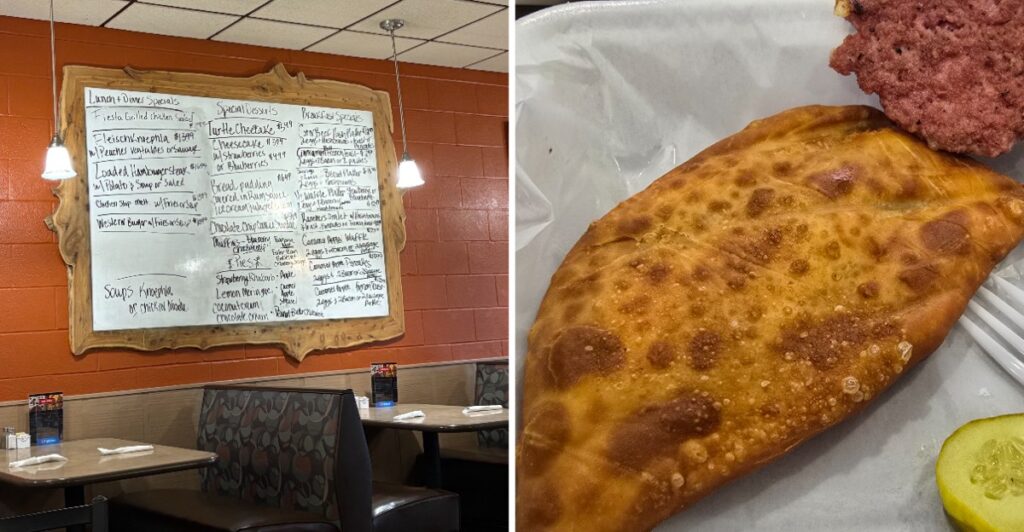
Fleischkuechle looks like a spelling test.
Thankfully, eating it is much easier.
The fried, meat-filled pastry comes from the food traditions of Germans from Russia, and it still has a place on the table in Mandan.
North Dakota has been holding onto dishes like this for generations, and I can see why.
At this family restaurant, the pastry sits beside other regional favorites. Knoephla soup can join the meal, while pies and caramel rolls make leaving room for dessert a very sensible decision.
You do not need to order half the menu to understand what makes the place special.
One savory pastry already tells quite a story.
And if you can pronounce fleischkuechle perfectly before dessert, I would call that a bonus.
Fried’s Keeps North Dakota’s Fleischkuechle Tradition Alive
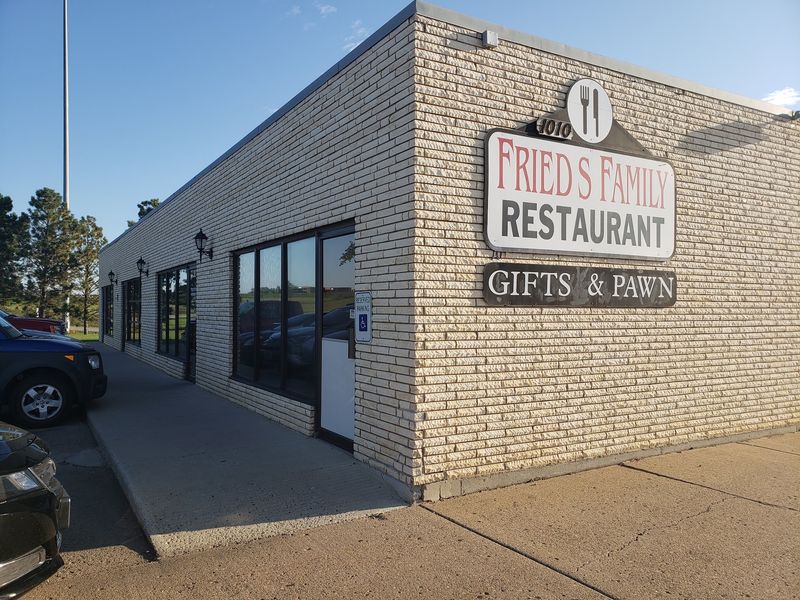
Recipes do not survive for generations without someone continuing to make them. Fleischkuechle remains part of North Dakota’s German-American food culture, and Fried’s Family Restaurant keeps it on the table in Mandan.
The dish is closely connected to Germans from Russia, whose communities shaped food traditions across North Dakota. Their kitchens relied on filling dishes built from practical ingredients, including dough, meat, potatoes, dumplings, and dairy.
At Fried’s, fleischkuechle sits alongside other foods from that regional tradition rather than appearing as a one-off novelty.
If fleischkuechle is the reason for your visit, start there before branching into soup, breakfast fare, or the restaurant’s more familiar diner choices.
A table with several people gives you more room to compare. One person can handle the fried meat-filled pastry while another orders something from the German-American side of the menu, then everyone can trade a few bites.
There is no need to turn lunch into a history lesson. The dish itself does the practical work: dough, beef, frying, and a recipe tradition that remained part of North Dakota cooking long after the first immigrant families settled here.
One Crispy Bite Explains The Basic Idea
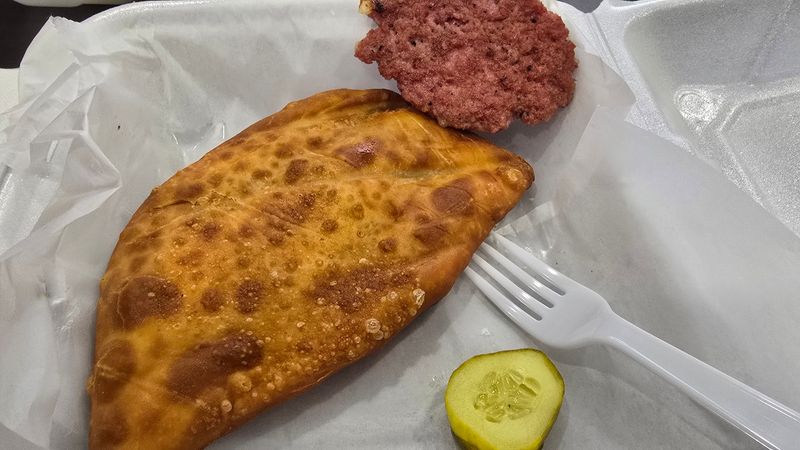
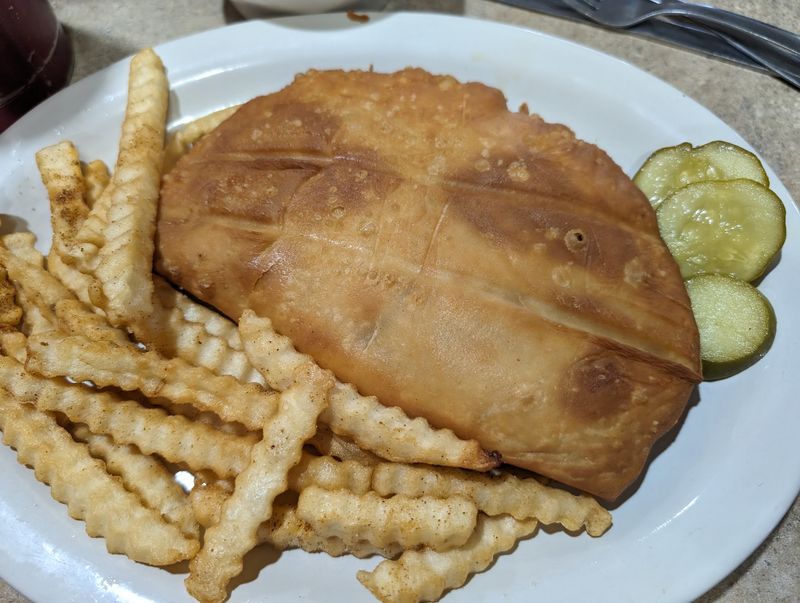
Fleischkuechle is a fried meat-filled pastry associated with German-Russian cooking in North Dakota.
Think of dough wrapped around a beef filling and fried until the outside develops a crisp surface. The result is compact enough to pick up, though a fork works just as well if you would rather keep things tidy.
The basic appeal comes from contrast. Fried dough gives the outside structure while the beef filling keeps the center substantial.
It is a straightforward dish, which leaves room to focus on the texture rather than a long list of toppings or sauces.
If this is your first fleischkuechle, try a bite before adding anything else. That gives you a clearer sense of the dough and filling before deciding whether you want to pair it with soup or another side.
The pronunciation may take longer to master than the eating. Do not let the name make the order feel complicated.
Once it reaches the table, the concept is easy to understand: beef inside dough, fried into a hand-sized meal with deep roots in the region’s immigrant kitchens.
Diner Classics And German Favorites Share The Same Menu
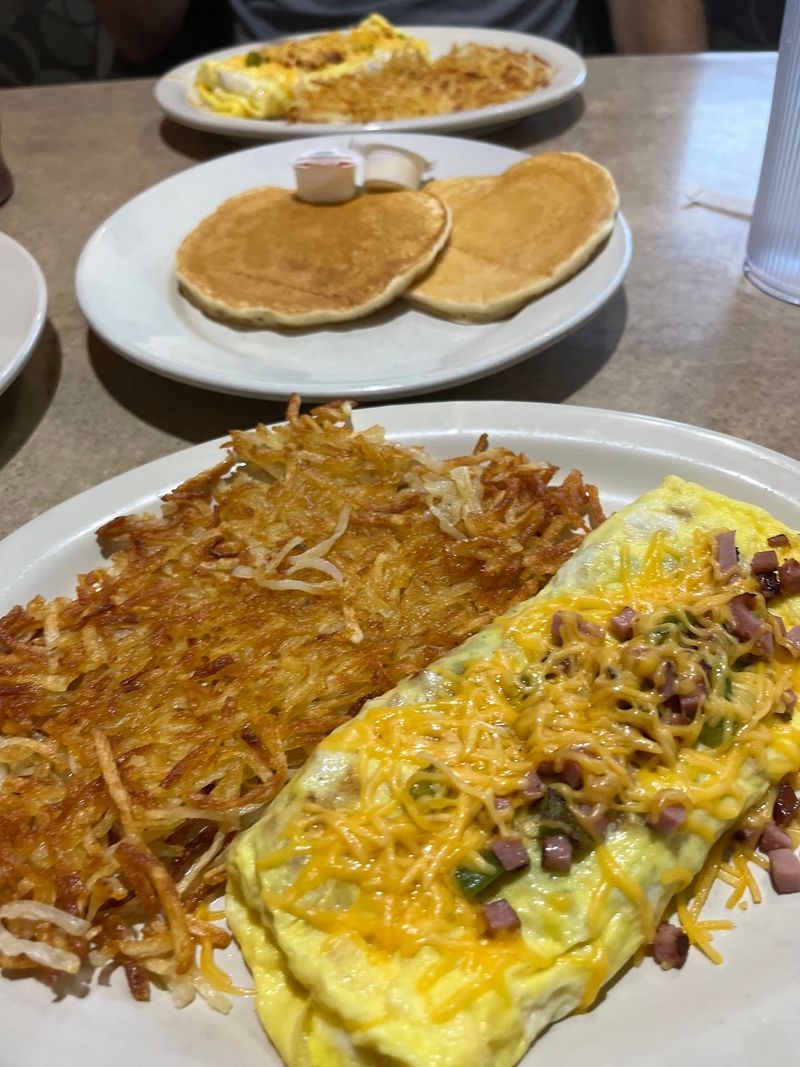
Can’t decide between pancakes and a plate of German-American comfort food? Fried’s gives you room for both kinds of appetite.
The restaurant serves familiar American diner fare alongside German-inspired dishes.
Breakfast choices include standards such as eggs, omelets, French toast, pancakes, and hash browns, while lunch and dinner move into burgers, sandwiches, soups, and other casual plates.
That mix works well when everyone at the table does not want the same kind of meal.
One person can start with a familiar breakfast plate while someone else goes straight for knoephla soup or fleischkuechle. Another can keep things simple with a sandwich.
If you want to explore the restaurant’s regional side without committing the entire meal to unfamiliar dishes, split the difference. Choose one German-American item for the table and let everyone order the rest individually.
Breakfast also gives the meal a different direction. A caramel roll can turn an early stop into something sweet before the savory dishes take over later in the day.
Decide what brought you through the door first. If it was North Dakota food traditions, build outward from fleischkuechle or knoephla. If you simply need breakfast, start with the diner side and add something regional if appetite allows.
Knoephla Soup Adds More Regional Flavor
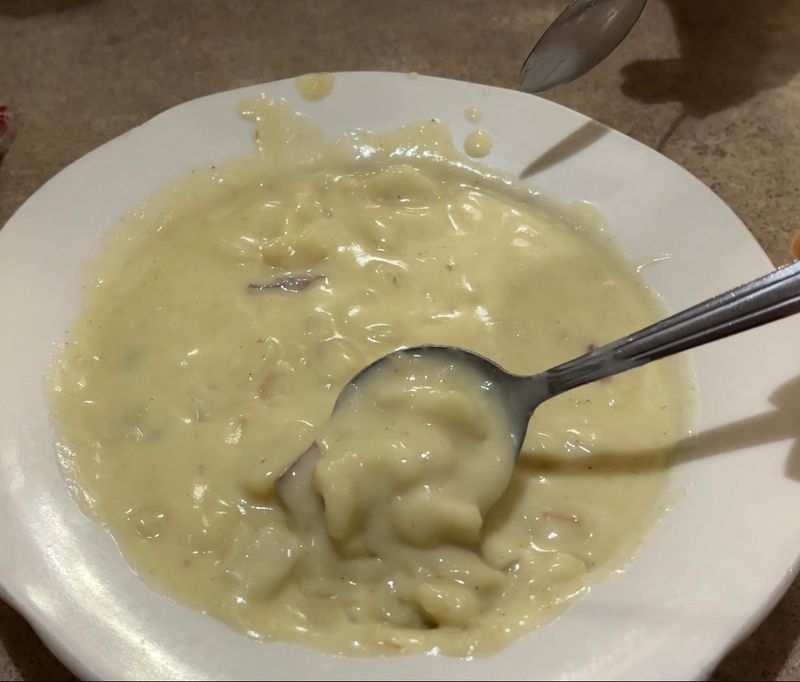
Picture a cold North Dakota day and a bowl of fresh knoephla soup in front of you. The combination fits the landscape without needing much explanation.
Knoephla are small dumplings commonly served in a creamy soup, often with potatoes. Fried’s prepares fresh knoephla soup, giving you another direct route into the German-American food traditions associated with the region.
A cup rather than a full bowl can make sense if fleischkuechle is still the main event. That lets you try both without turning lunch into a contest.
Knoephla changes the texture of the meal completely. Instead of crisp fried dough, you get soft dumplings in a creamy broth, which makes the two dishes easy to compare without feeling repetitive.
If you are sharing, put the soup in the middle of the table and let everyone try a few spoonfuls before deciding whether another bowl is needed.
The restaurant’s German-American side does not need to be sampled all at once. Start with one main dish and one soup, then leave room for dessert if the table still has an appetite.
That simple combination gives you two very different expressions of regional comfort food without overloading the meal.
Save Room For Scratch-Made Pies And Caramel Rolls
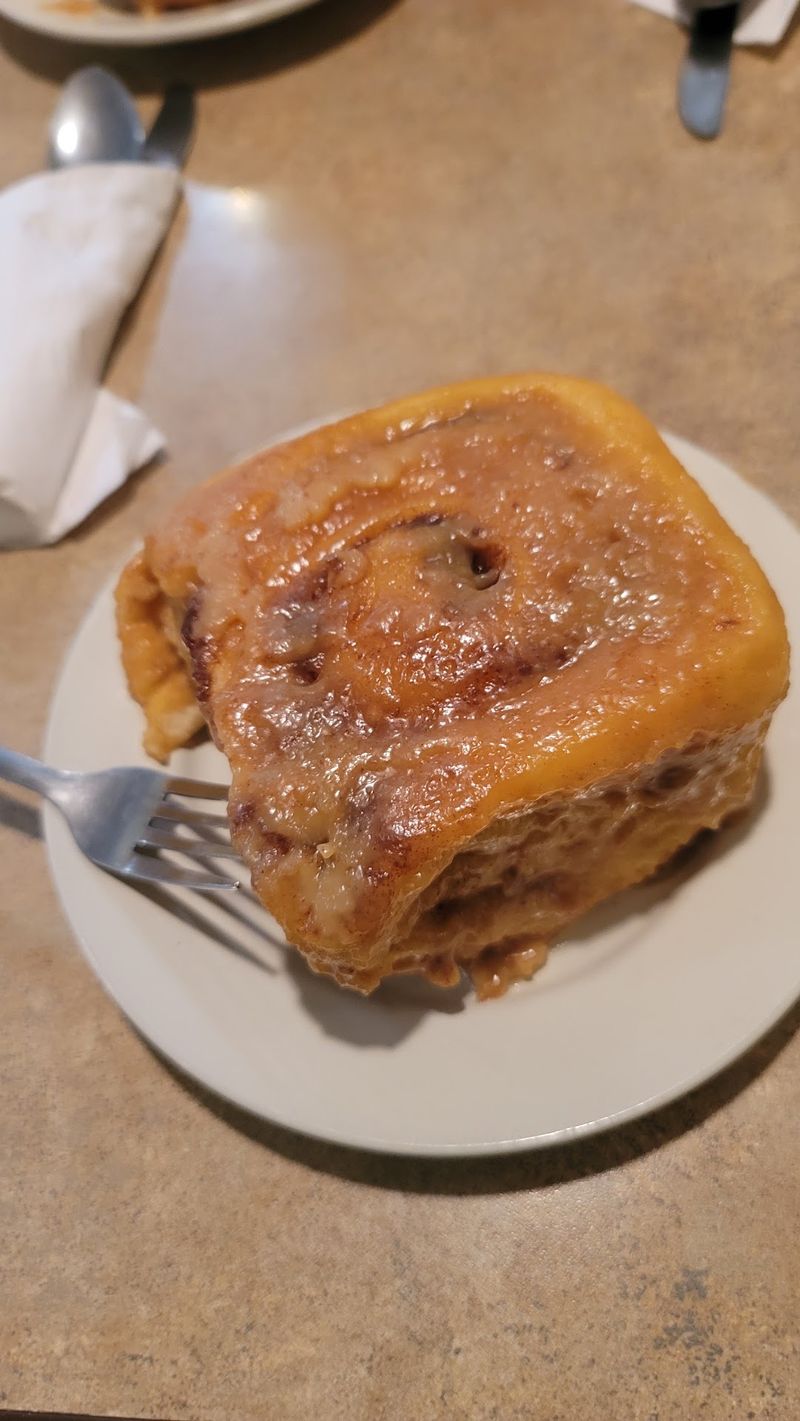
Dessert at a family restaurant can turn into its own decision, especially when scratch-made pies and caramel rolls are part of the lineup.
Fried’s prepares both, and the caramel roll has become one of the restaurant’s long-running baked goods. It works naturally with breakfast, but there is nothing stopping you from saving it for later.
The appeal of a caramel roll is simple: soft spiraled dough under a sweet caramel topping. It is substantial enough to share if the rest of the meal has already done its job.
Pies give you another route. Selection can change, so look at what is available before deciding whether dessert belongs at the table or in a box for later.
That second option is useful after a meal built around dumplings and fried dough. You do not have to find room immediately just because dessert caught your eye.
If you arrive early in the day, consider reversing the normal order. A caramel roll with breakfast can handle the sweet craving up front, leaving lunch for the savory regional dishes.
Either way, make the dessert decision before leaving. Discovering you wanted pie once you are already back on the road is harder to fix.
Familiar Recipes Still Shape The Restaurant Today
Tracey and Julie Gegelman bought Fried’s in 2011 after decades of restaurant experience. They kept the German-themed food that was already part of the business rather than replacing it with an entirely different concept.
Fleischkuechle, knoephla soup, pies, and caramel rolls remain among the foods connected with Fried’s regional identity.
The restaurant also keeps the broader family-diner format, with familiar breakfast and lunch food sharing space with those regional dishes.
A first visit can lean heavily into North Dakota food culture with fleischkuechle and knoephla. A return visit can go in another direction with breakfast, a sandwich, or dessert.
You do not need every person at the table to be curious about the same dish. One person can explore the regional side while someone else stays with a familiar breakfast or lunch choice.
If several people are willing to share, use that to your advantage. Order one or two regional specialties for the middle of the table, then let everyone choose a familiar main dish if they want one.
That keeps the old recipes present without forcing the whole meal into a single theme.
Smart Tips Before You Pull Into Fried’s In Mandan
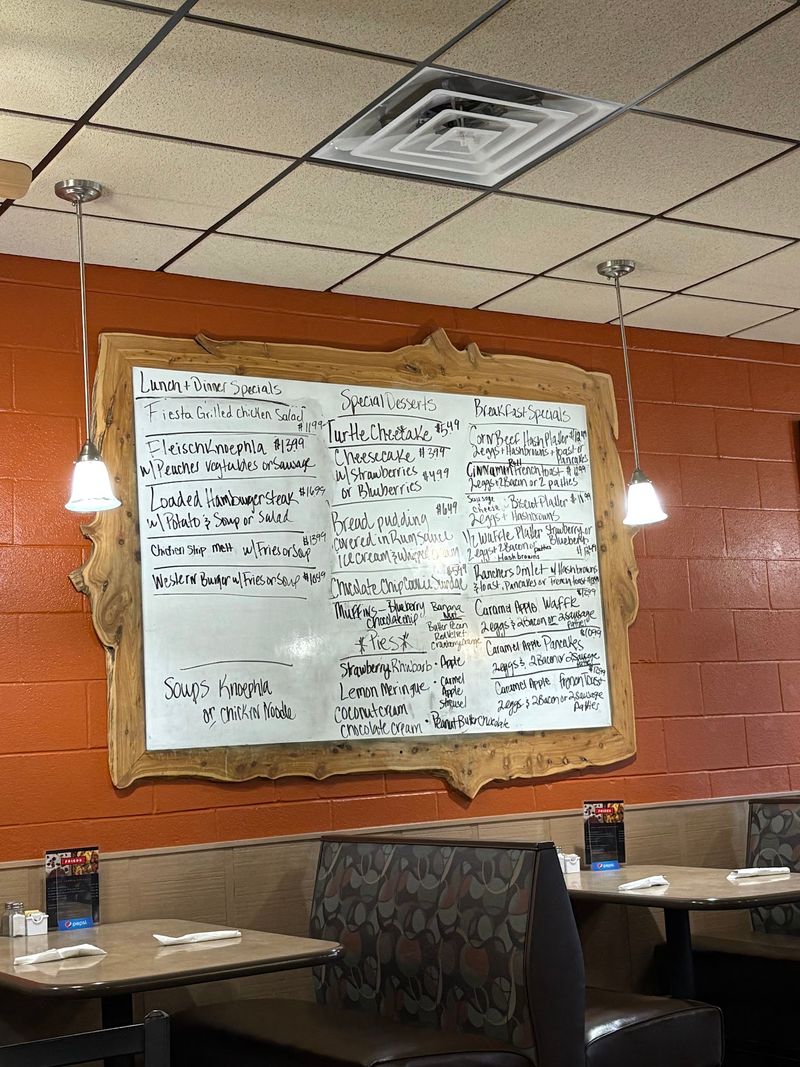
A little planning helps if Fried’s is part of a day in Mandan or nearby Bismarck.
The restaurant currently operates Monday through Saturday and is closed on Sunday. Weekday hours extend from morning into the evening, while Saturday has a shorter daytime schedule.
Check the current schedule before making a special trip, particularly around holidays.
If fleischkuechle is the priority, begin with that order rather than trying to sample every German-American dish at once.
A cup of knoephla soup can add another regional flavor without turning the meal into several full entrees. If more than one person is eating, sharing can keep the order manageable.
Then comes dessert. Check the available pies and caramel rolls before finishing the meal so you can decide whether to eat something sweet there or bring it along for later.
The restaurant is at 1010 Boundary St NW, Mandan, ND 58554.
For a first visit, keep the plan manageable: one dish you specifically came to try, one additional regional item if appetite allows, and something sweet only if there is still room.
Fleischkuechle may be the starting point, but the wider menu gives you several ways to explore North Dakota’s German-American food traditions without trying to taste everything in one sitting.