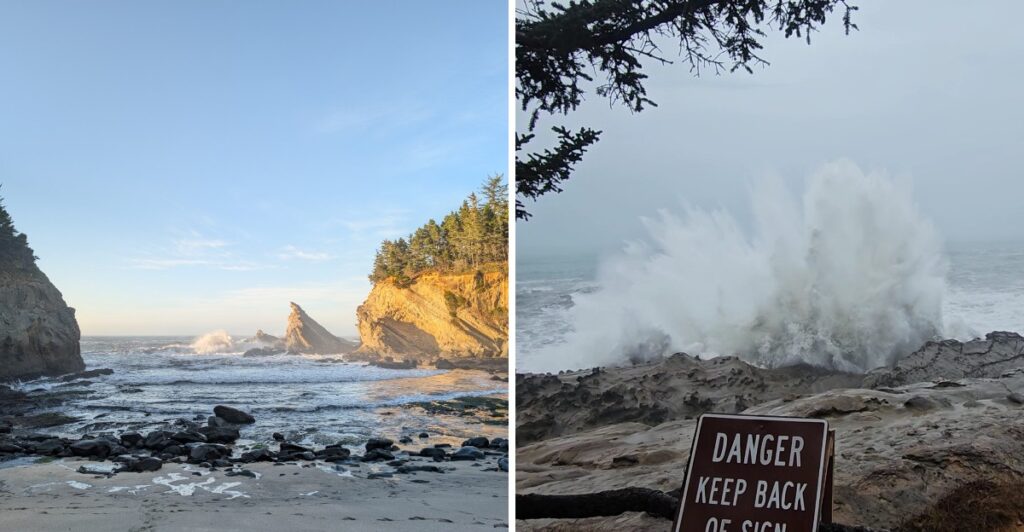
Oregon has a rose garden where the ocean occasionally steals the show. And by steals the show, I mean sends spray more than 300 feet into the air. That’s taller than the Statue of Liberty without its pedestal.
At Shore Acres State Park, Pacific waves crash against the cliffs with a roar you can hear long before you see the splash. Winter storms bring the biggest spectacles, especially from December through February.
Then comes the unexpected twist. Every holiday season, the gardens light up with more than 325,000 LEDs.
One minute, the Pacific is putting on a thunderous performance. The next, you’re surrounded by Christmas lights.
The prime wave-watching season runs from November through March. Bring a raincoat, check the conditions, and stay safely back from the cliffs.
The roses are lovely, but the Pacific clearly has no intention of being background scenery.
Grab A Spot At The Overlook And Brace For Flying Spray
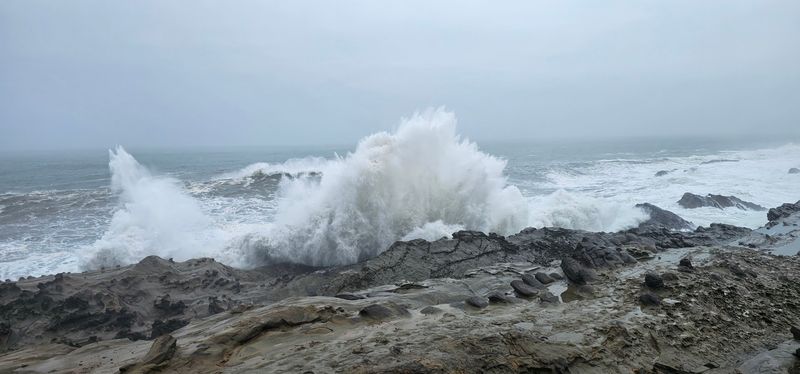
Spray hundreds of feet high is the main attraction at Shore Acres State Park. Waves slam into sandstone cliffs about 80 feet tall, and the ocean throws the water skyward.
Large offshore swells can send water surging more than 100 feet into the air when waves crash against the cliffs.
Some of these towering surges have reportedly reached more than 300 feet, which sounds made up until you see the photos.
The shape of the coast helps the drama along. Tilted rock ledges stick out into the water and act like ramps, launching incoming waves straight up.
Getting to the best seat is easy. A paved trail leads from the parking lot, past old tennis courts, to an overlook point facing the swells.
That overlook ranks among the top spots in Oregon for watching big surf. Expect to get a little wet, because the ocean does not respect personal space.
The sound is half the fun. People often compare the booming crashes to artillery fire, so the show reaches your ears as well as your eyes.
Bring a camera with a strap and keep it close. Wind and spray can turn a casual photo into a quick test of your grip strength.
Your Calendar Matters More Than Your Alarm Clock
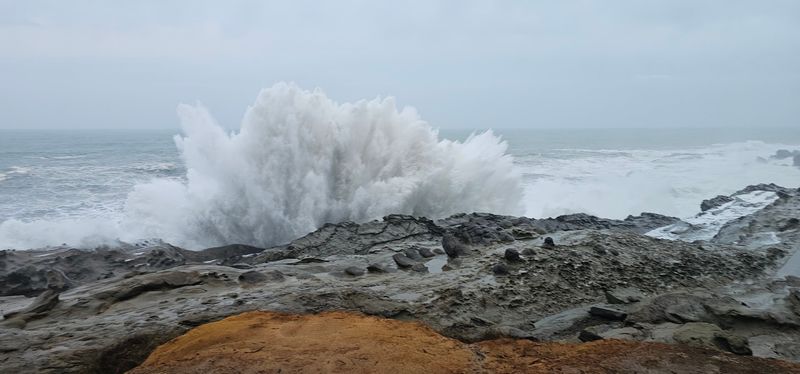
Timing a visit here is a bit like timing a fireworks show. Show up in summer, and you might get a calm blue ocean instead of a storm spectacle.
Winter storm season usually runs from November through March. The most dramatic waves often hit between December and February, when Pacific systems roll in one after another.
King tides add an extra boost. These extra-high tides show up a few times each winter and push water farther up the rocks than usual.
Pair a king tide with a strong offshore storm, and things get serious fast. That combo can produce some of the biggest surges of the entire year.
Checking a marine forecast before you leave home is a smart move. Look for big swell heights and stormy conditions out at sea, not just rain in town.
Even a sunny winter day can deliver impressive waves when swells arrive from distant storms. The weather above your head and the waves below the cliff don’t always match.
Plan a little flexibility into your trip if you can. An extra day gives the ocean one more chance to show off.
Wait Out The Rain In A Front-Row Shelter
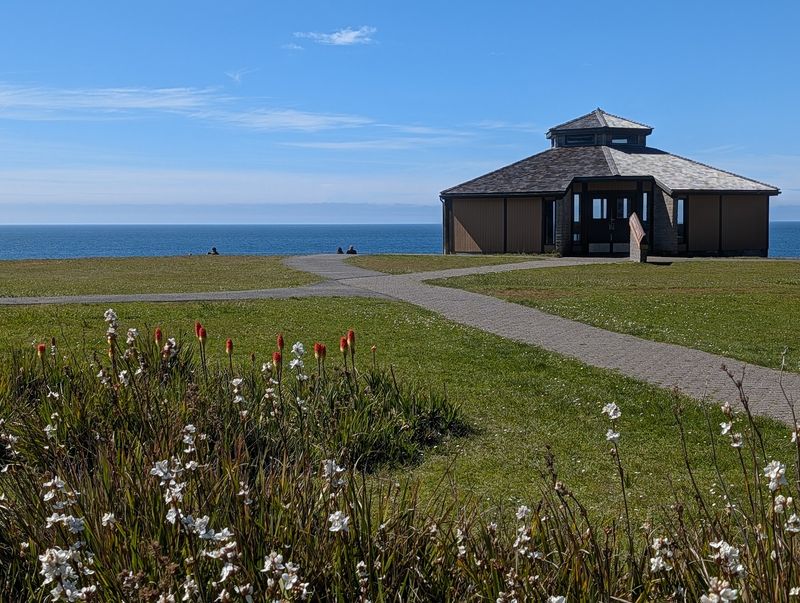
Rain blowing sideways can shorten anyone’s patience. Luckily, a fully enclosed observation building gives you a protected place to keep watching.
The building stands on the site where the old Simpson family mansions once rose above the sea. Talk about a room with a view and a backstory.
Inside, you can warm up while the waves keep pounding the rocks. It’s a handy spot for kids, grandparents, or anyone whose umbrella just flipped inside out.
The shelter also doubles as a whale-watching perch. Migrating gray whales pass by from December through June, so storm season overlaps with whale season.
Spotting a spout takes some practice. Scan the water slowly and look for a puff of mist rising and drifting away in the wind.
Binoculars make a big difference here. A small pair tucked in your jacket pocket can turn a distant splash into a clear look at a whale.
Think of this building as your home base. Head out to the overlook when the sky eases up, then come back when the next squall rolls through.
Never Turn Your Back On This Ocean
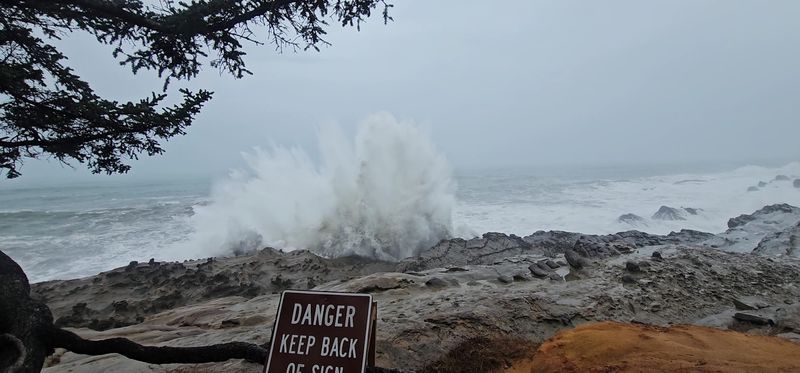
Sneaker waves earned their name honestly. These surprise surges can rush much farther up the shore than the waves before them, with zero warning.
The golden rule at the coast is simple. Never turn your back to the ocean, even for a quick selfie.
Stay on the paved trails and respect any marked-off areas. Those barriers sit where they do because the ground or the water can turn dangerous fast.
Climbing on the cliffs is a firm no. The sandstone can be slippery when wet, and storm waves reach places that look dry from a distance.
Now for the fun part: your outfit. Quality rain gear, extra layers, and waterproof footwear will keep you outside longer and grumbling less.
A hat that stays on in the wind helps too. Gloves are a nice bonus when you’re holding a phone or binoculars for a long stretch.
Pack a dry change of clothes in the car. The drive home feels much better when your socks are not squishing with every step.
Respect the ocean, and it will give you one incredible show.
A Lumber Baron Picked This Cliff For His Dream Home
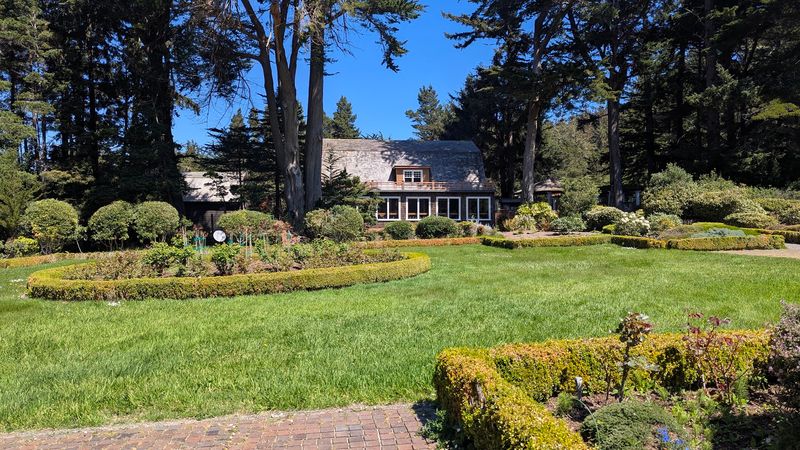
Long before the crowds in rain jackets, this clifftop belonged to one man. Louis J. Simpson, a pioneer lumberman and shipbuilder, turned it into his private estate.
Simpson began building his mansion on the bluff around 1906–1907, eventually developing it into a three-story residence.
It included an indoor swimming pool and a ballroom, which is a bold choice next to an ocean this wild.
He also created formal gardens filled with plants from around the world. His own sailing ships helped bring many of them back to Oregon.
A fire destroyed the first mansion in 1921. Simpson then started building an even larger replacement, because apparently one huge house was not enough.
The Great Depression changed everything. Money troubles led to the estate’s decline, and Simpson sold the property to the State of Oregon in 1942.
The second mansion was later torn down because of structural problems and high upkeep costs. The state began restoring the gardens in 1970.
Shore Acres State Park underwent a major garden restoration and redesign during the 1970s.
One survivor from the Simpson days is the largest Monterey pine in Oregon, believed to date to around 1910.
Stick Around After Dark When The Gardens Light Up
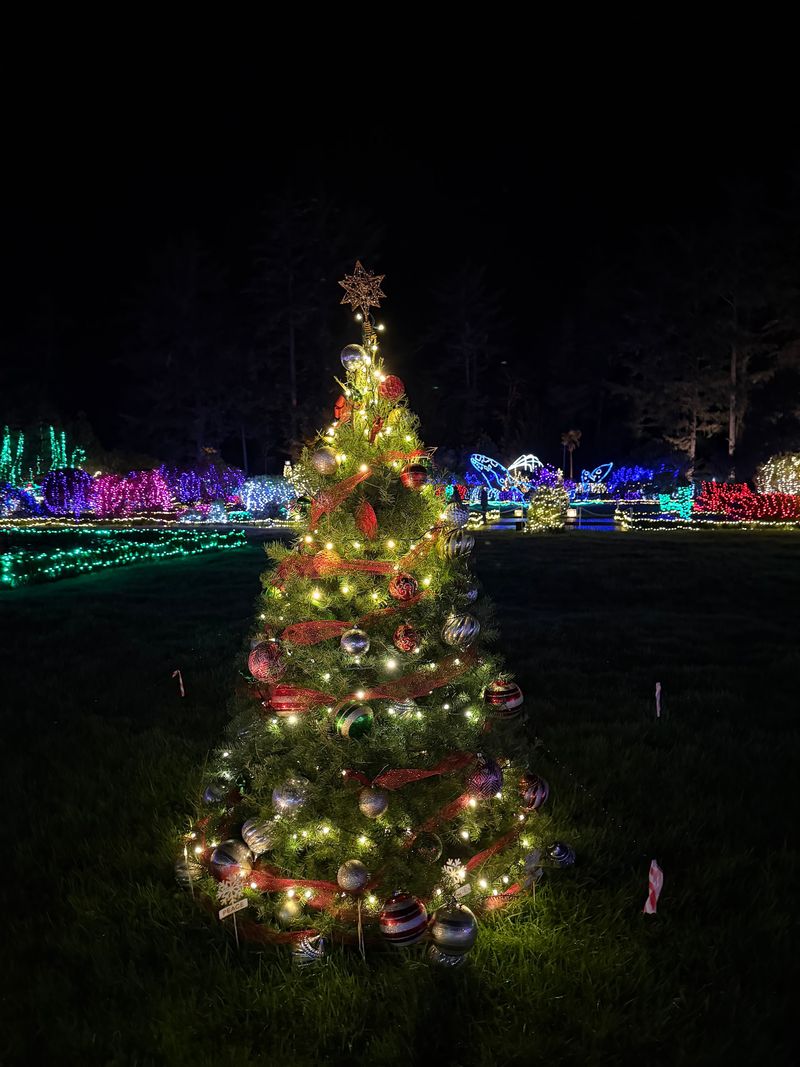
More than 325,000 LED lights. That’s the count when Holiday Lights at Shore Acres takes over the gardens each year.
The event runs from Thanksgiving through New Year’s Eve. It lands right in the heart of storm season, so you can catch giant waves by day and glowing gardens by night.
Festive decorations fill the grounds alongside all those twinkling bulbs. Light displays shaped like koi, butterflies, whales, and other creatures pop up around the pond and paths.
This is one of the most beloved traditions on the southern Oregon coast. Many families make it part of their holiday routine year after year.
Planning ahead is a must. The event requires timed parking reservations, so lock in your slot before you hit the road.
Dress the same way you would for storm watching. December nights by the ocean get chilly and damp, and you’ll want to linger without shivering.
A thermos of hot cocoa in the car never hurts either. Nothing tops off a night of glowing whales quite like a warm drink and a heated seat.
Sea Lions And Elephant Seals Join The Audience
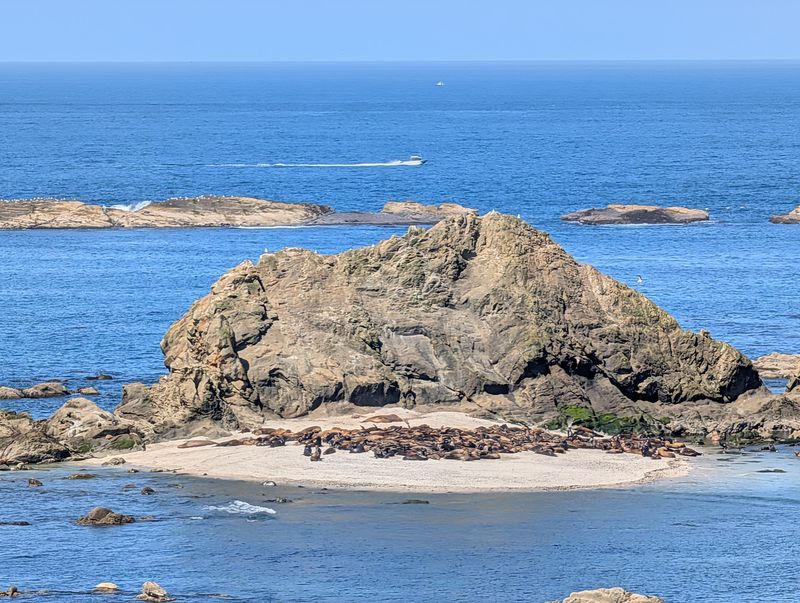
Storm watchers are not the only ones hanging out on this coast. Seals, sea lions, and elephant seals live along the nearby rocks and reefs.
The Simpson Reef interpretive stop is the place to look for them. It sits just up the road and offers a great view of the offshore rocks where marine mammals gather.
Listen before you look. Sea lions are famously noisy, and their barking often carries over the sound of the surf.
Elephant seals are worth a careful scan too. They are large, mellow-looking animals that often lounge in groups as if nothing in the world could bother them.
Coastal birds add even more action to the scene. Gulls, cormorants, and other seabirds ride the wind above the waves like it’s a free amusement park.
Gray whales round out the lineup from December through June. A single trip in winter could deliver storms, whales, and barking sea lions in the same afternoon.
Keep a respectful distance from all wildlife. Binoculars or a zoom lens give you an up-close look while the animals stay relaxed and undisturbed.
Trails, Hours, And The Rules Worth Knowing
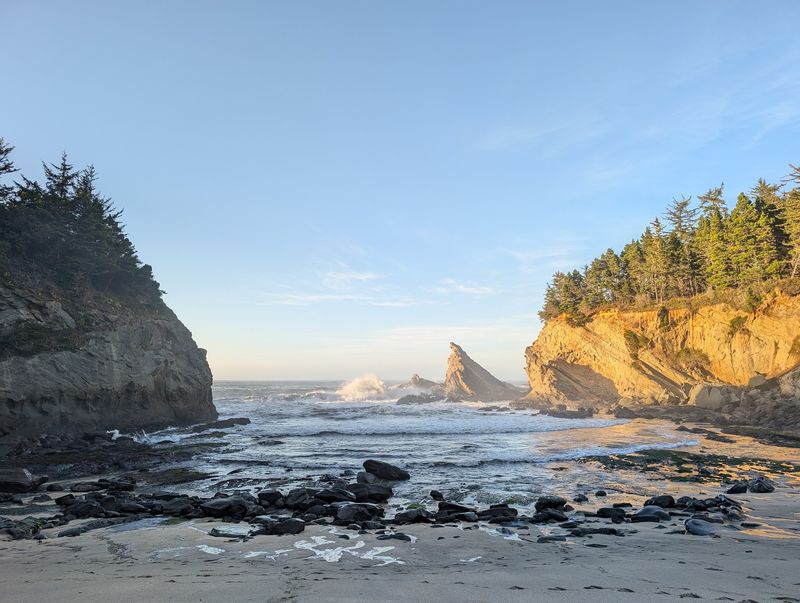
Once the waves have had their moment, your legs can take over. Trails wind along the coastal bluffs and lead down to Simpson Beach, a secluded cove tucked below the cliffs.
The route to the beach takes a little effort. It’s worth it for a different angle on the rocky shoreline you’ve been staring at from above.
Feeling ambitious? A segment of the Oregon Coast Trail connects the park to Sunset Bay State Park and Cape Arago State Park.
Shore Acres State Park is located at 89039 Cape Arago Hwy, Coos Bay, OR 97420, according to the Friends of Shore Acres.
That’s roughly 13 miles southwest of the Coos Bay and North Bend area.
The park opens daily at 8 a.m. and closes at dusk, all year long. Closing times are posted at the entrance, and there’s a daily parking fee for each vehicle.
A few rules keep things running smoothly. Drones are prohibited, and pets must stay inside vehicles, except for service animals.
Clean restrooms and plenty of parking make a long visit easy. Bring snacks, layers, and patience, then let the Pacific handle the entertainment.