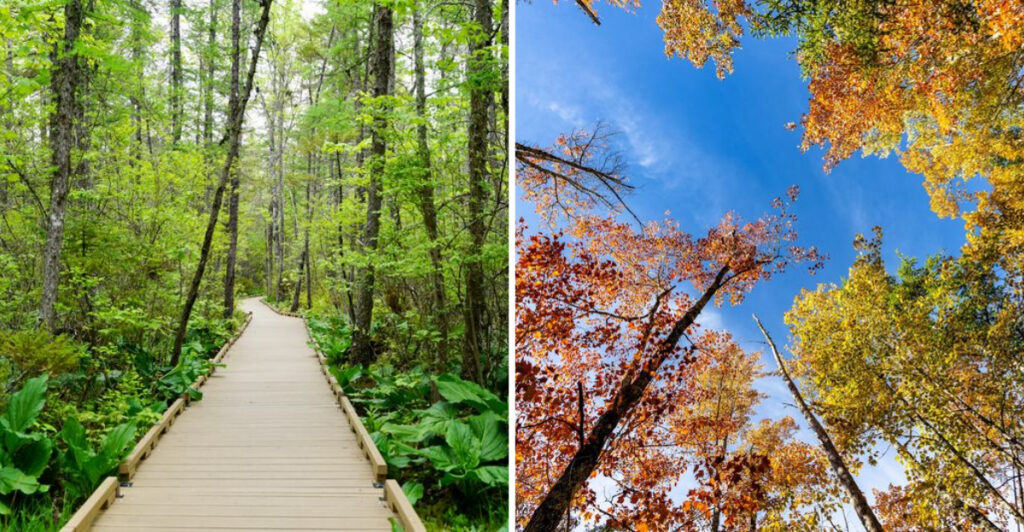
Maine can get wonderfully strange when the landscape decides to show off a little. This walk does exactly that, trading ordinary trail scenery for a setting that feels ancient, quiet, and just unusual enough to make every step more interesting.
The trees close in, the light shifts, and then the whole scene opens into something that barely looks real at first glance. It is not flashy or overbuilt.
That is part of the charm. The setting does all the heavy lifting with moss, water, wild plant life, and the kind of atmosphere that makes a short outing feel much bigger than it is.
Maine has plenty of scenic places, but this one plays by its own rules. Some spots are nice for an hour and gone from your mind by dinner.
This is not one of them.
A Bog That Feels Like Another Planet
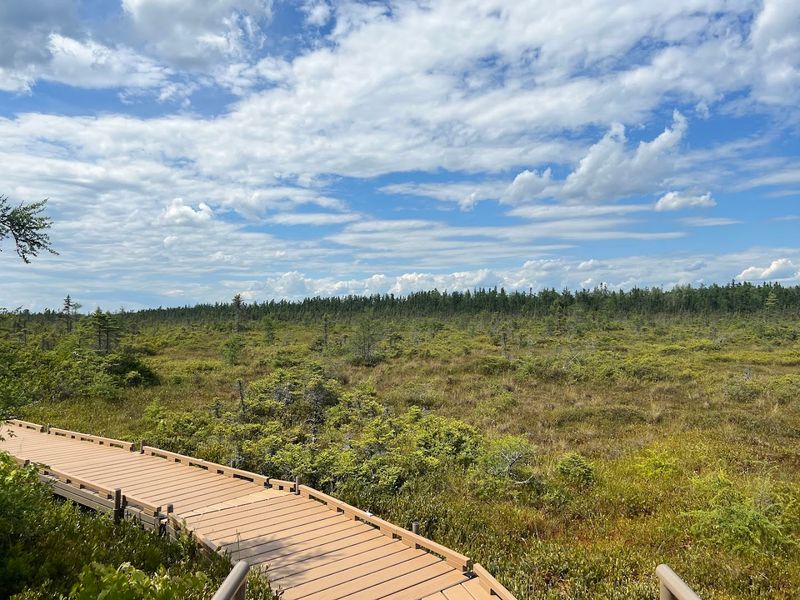
This landscape wastes no time getting weird in the best way.
Most people picture a swamp when they hear the word “bog,” but the Orono Bog Boardwalk has a way of completely rearranging that mental image the moment visitors step onto the open peatland.
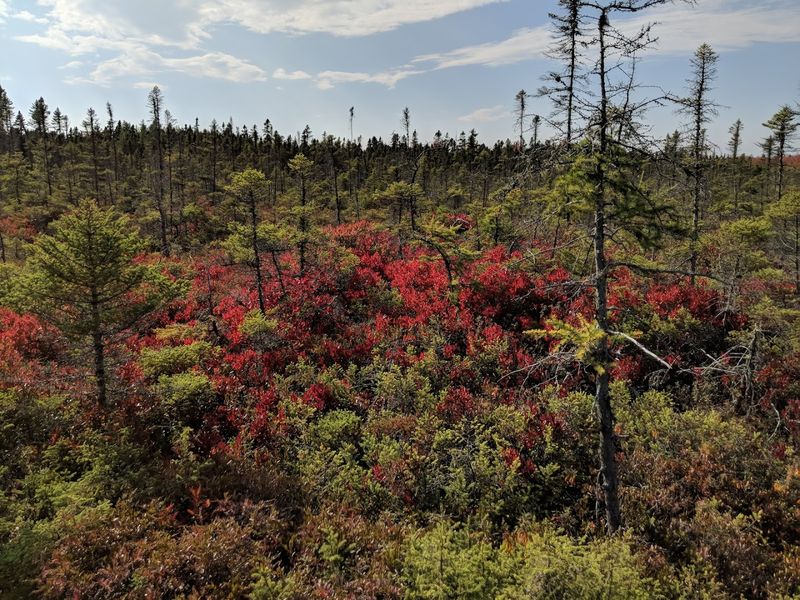
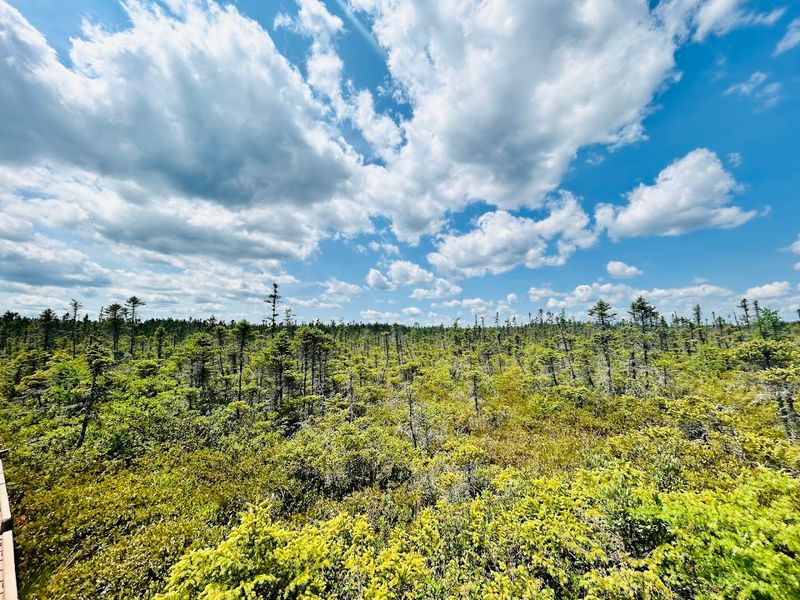
The landscape shifts dramatically once the forest thins out. Suddenly, the trees shrink, the sky opens wide, and a vast carpet of sphagnum moss spreads out in every direction, glowing in shades of rust, green, and gold depending on the season.
Scientists call this type of ecosystem a raised peatland, meaning the bog has actually grown upward over thousands of years as layers of dead plant matter compressed beneath it.
Over 14 species of sphagnum moss create the acidic, low-nutrient conditions that make this habitat so unusual.
The result is a surreal, open expanse that feels nothing like the surrounding Maine forests. Visitors often describe it as otherworldly, and honestly, that description is hard to argue with once seen in person.
The Boardwalk Itself, A Marvel Of Simple Engineering
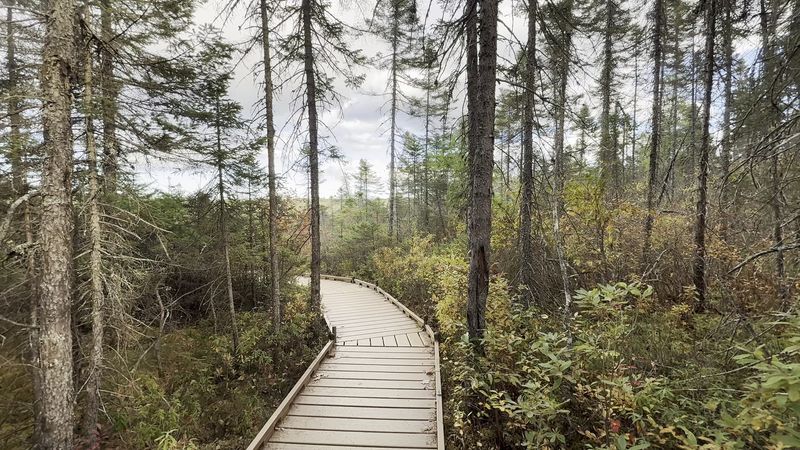
A path through a bog sounds simple until the bog gets involved. Then you get the feeling like you are in the Jurassic era.
Building a walkable path over a living, breathing bog is not exactly a straightforward construction project, and the boardwalk at this
Maine destination shows just how creative the solution had to be.
The path is made up of many individual sections of composite decking, engineered to float and flex slightly over the soft peat below.
In some spots, the boardwalk shifts gently underfoot with each step, giving walkers a subtle reminder that the ground beneath them is not exactly solid.
The trail runs as a one-mile loop, with a quarter-mile access path leading from the parking area at Bangor City Forest.
Visitors are asked to keep to the boardwalk at all times, since stepping off into the bog could cause real damage to an ecosystem that took thousands of years to form.
Narrow in width, the path generally follows one-way traffic flow, which keeps things moving smoothly even on busier days when the trail sees a healthy crowd of curious explorers.
Pitcher Plants And The Art Of Eating Insects
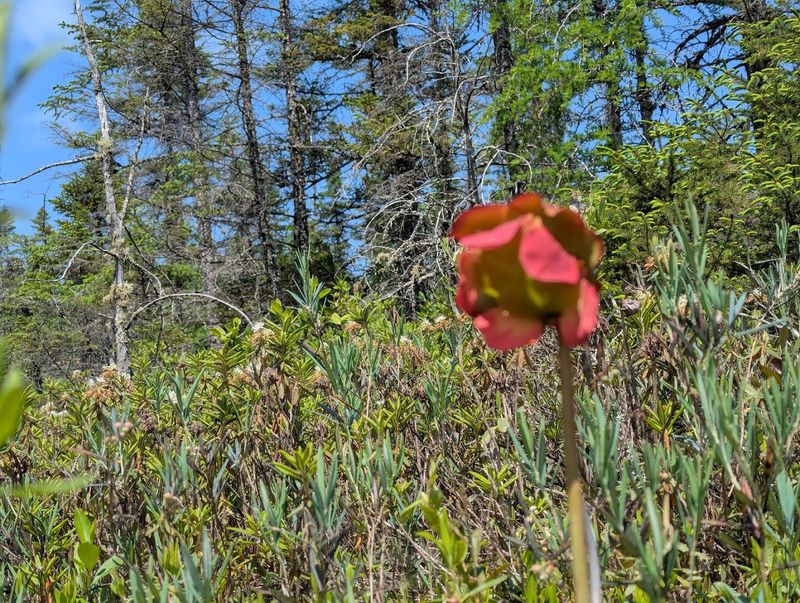
Now the plants start acting like tiny predators.
Pitcher plants are among the most eye-catching residents of the open bog section, their deep crimson and green tube-shaped leaves rising from the moss like tiny goblets. Insects are lured in by the plant’s color and scent, then slip down into a pool of digestive fluid trapped inside the leaf.
The bog’s low-nutrient environment is what drives these plants to supplement their diet with protein from insects.
For younger visitors especially, spotting a pitcher plant up close tends to spark genuine excitement.
The informational signs placed along the boardwalk explain the biology in accessible, engaging language that makes the whole experience feel educational without feeling like a classroom.
These carnivorous plants are most visible and striking during the warmer months in Maine, though their distinctive shapes remain visible well into the cooler seasons as well.
Wildlife Watching Along The Trail
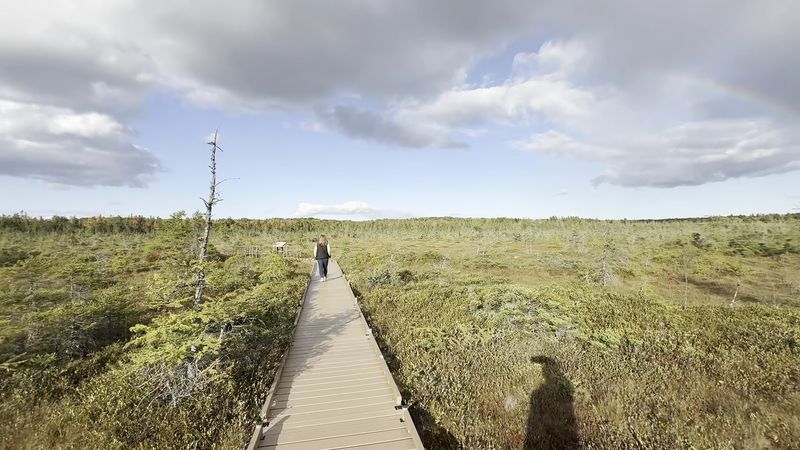
Slow down here, because the small details do a lot of the work.
The bog and the surrounding Bangor City Forest create a rich patchwork of habitats, which means the wildlife watching here can be genuinely rewarding for anyone who takes the time to slow down and look.
Birds are among the most reliable companions along the trail. Warblers, sparrows, and various waterfowl have all been spotted in and around the bog, with early morning visits offering the best chances for quiet observation before the trail gets busy.
The open peatland provides unobstructed sightlines that make birding here especially satisfying.
Bear sightings have also been noted near the trailhead, particularly during blueberry season when the surrounding forest offers plenty of natural snacks. Posted signs at the entrance keep visitors informed, though encounters are rare and the trail remains safe for families and casual hikers.
Dragonflies hover above the moss in summer, and the pitcher plants themselves often attract insects that are worth watching closely. Maine’s wild side is very much present at every turn here.
This looks like a place where the dinosaurs would roam freely. Luckily, the dinosaurs became extinct, but it still gives you the feeling that you are in that Jurassic period.
The Forest Tunnel Before The Big Reveal
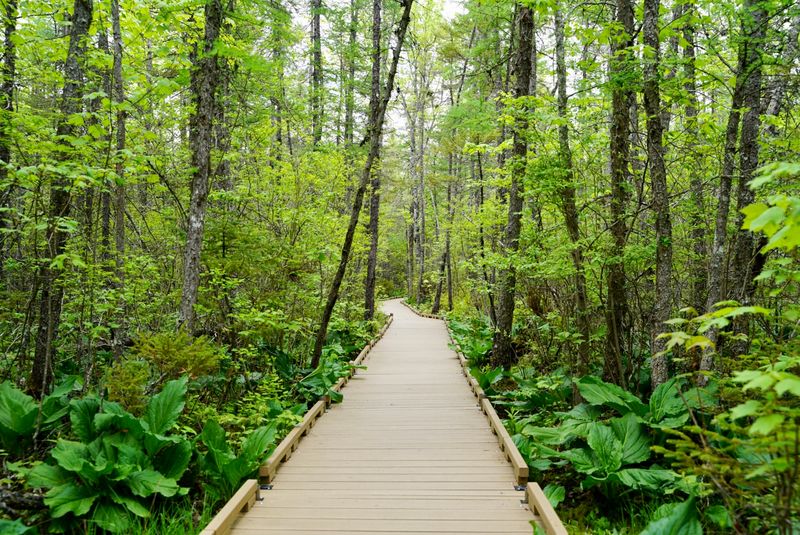
Before the bog opens up into its wide, dramatic panorama, the boardwalk first leads visitors through a completely different kind of environment, one that feels more like walking through the set of an adventure film.
The forested section of the trail is dense and atmospheric, with towering trees pressing in on both sides and roots weaving beneath the path.
Light filters through the canopy in broken beams, casting shifting patterns on the boardwalk below. The air smells of damp earth and pine, and birdsong fills the gaps between footsteps.
This contrast is one of the most talked-about features of the experience.
Going from a shaded, enclosed forest corridor to a wide-open bog landscape within just a few paces is genuinely striking. It creates a sense of discovery that most trails simply cannot replicate.
Many visitors compare this transition to walking through a portal, though the experience is entirely natural and rooted in the real ecology of Maine’s northern landscape.
Visiting With Kids, A Natural Classroom
Few outdoor destinations manage to be both genuinely accessible and genuinely fascinating for children, but this one pulls it off with ease.
The boardwalk is flat, stable, and easy to walk for any age or fitness level, making it a natural choice for families with younger kids.
There are no steep inclines, no rough terrain, and no need for special gear beyond comfortable shoes. The whole loop takes about an hour at a relaxed pace, which lands perfectly within the attention span of most young explorers.
Informational signs placed at regular intervals along the path explain the bog’s geology, plant life, and animal residents in language that is clear and engaging for kids.
Spotting pitcher plants, identifying different types of moss, and watching for birds gives children specific things to look for, turning the walk into a low-key scavenger hunt.
Located just off Tripp Drive in Bangor, Maine, the site also offers parking and a volunteer-staffed information booth near the entrance.
What To Expect From The Terrain Underfoot
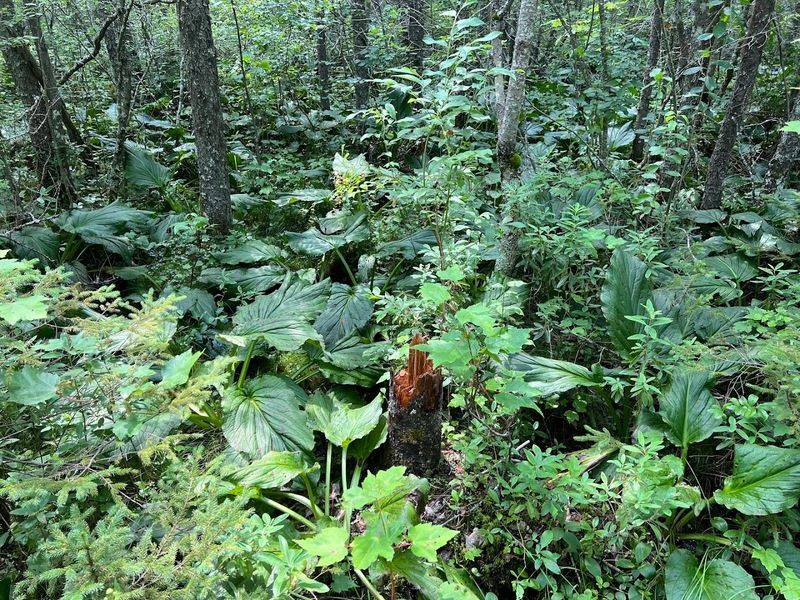
First-time visitors sometimes wonder what it actually feels like to walk on a path that is essentially floating over a bog, and the honest answer is that it is both subtle and memorable.
Most of the boardwalk is firm and stable, built to handle steady foot traffic without drama. But in certain sections, particularly where the peat below is softer or where the panels are hinged, the path dips and bounces slightly with each step.
It is not alarming, but it is a clear physical reminder that the ground below is very much alive.
In winter, the surface can become slippery, so The Boardwalk is closed. Handrails are available in key sections, and the path is well-maintained year-round by dedicated volunteers who clearly take pride in keeping the experience safe and enjoyable.
The overall difficulty level is low enough that it draws visitors of all ages and fitness levels, from young children to older adults looking for a peaceful and rewarding stroll through one of Maine’s most unusual landscapes.
The Best Seasons To Visit And What Changes
One of the quiet strengths of this destination is that it offers something worth seeing no matter when a visit happens to fall on the calendar.
Summer is the showiest season, when pitcher plants are in full growth, wildflowers dot the bog’s edges, and the sphagnum moss glows in rich, saturated greens. Dragonflies are active, birds are vocal, and the whole bog feels alive with color and movement.
Sunscreen is genuinely recommended on clear days, since the open peatland offers very little shade.
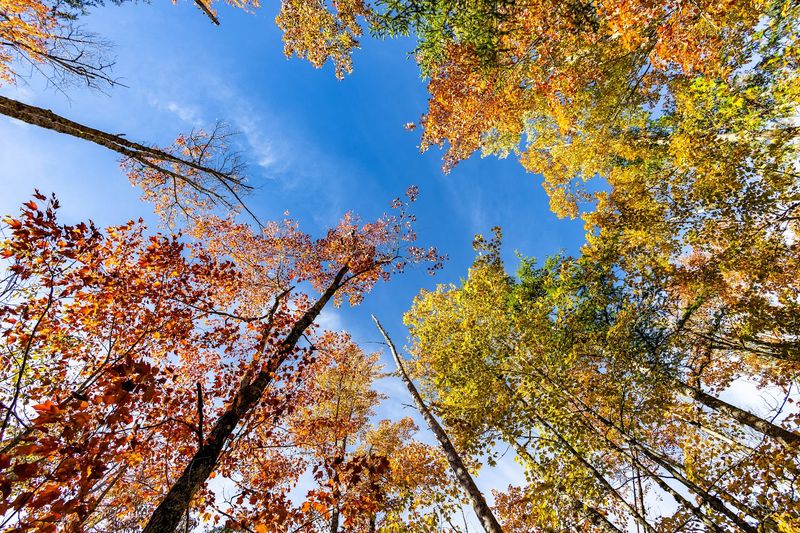
Autumn transforms the palette entirely, with the moss shifting into deep reds and burnt oranges that make the landscape feel almost abstract. Spring brings its own rewards in the form of early wildflowers and migrating birds passing through Maine on their way north.
Winter visits are quieter and more contemplative, with snow-dusted moss and a stillness that feels miles away from everyday life. The loop is accessible in most weather conditions, though icy surfaces call for extra caution and appropriate footwear during the coldest months.
Why This Place Keeps Drawing People Back
A place rated with high stars across hundreds of reviews is clearly doing something right, and the Orono Bog Boardwalk earns that reputation through a combination of accessibility, authenticity, and sheer natural beauty.
It is free to visit, which removes one of the most common barriers to outdoor exploration. Donations are welcomed and help support the volunteer-run maintenance that keeps the trail in such consistently good condition.
The information booth near the entrance, staffed by knowledgeable volunteers, adds a personal touch that larger parks often lack.
Many visitors return season after season, bringing family members or out-of-town guests who have never experienced a raised peatland before.
The reactions are almost always the same: quiet amazement followed by the kind of lingering satisfaction that comes from spending time somewhere genuinely special.
Maine has plenty of beautiful places to spend an afternoon, but few offer the combination of ecological wonder, ease of access, and lasting impression that this boardwalk consistently delivers. It is the kind of place that earns a permanent spot on any return itinerary.