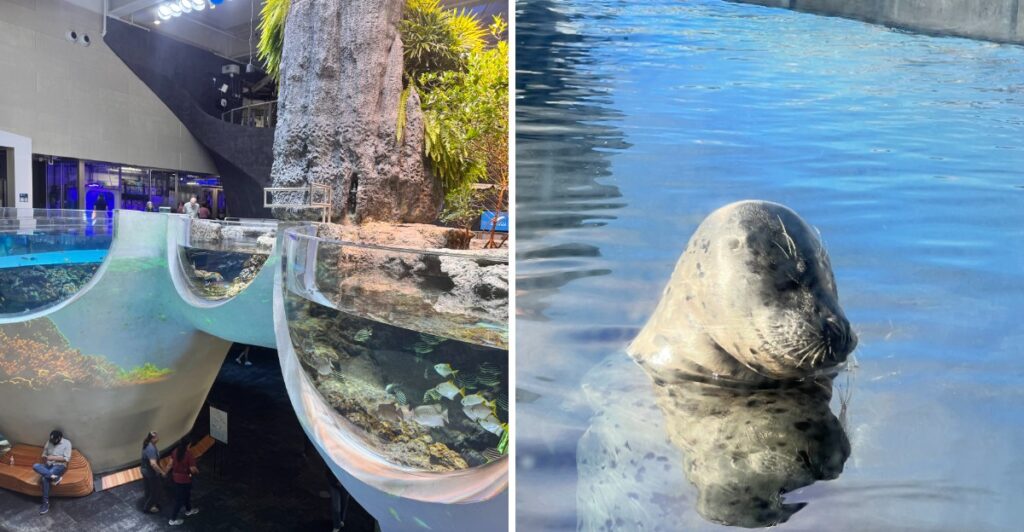
Three hearts, blue blood, and arms that can stretch over 12 feet. Sounds like someone invented a superhero, but nope.
That’s an octopus living at a Seattle aquarium.
It even changes color, which seems like a useful skill when you’re having one of those days.
And wait until you meet the sea otters. They hold hands while floating, which is already enough to win me over. One named Sekiu was born here in 2012 and became the last sea otter pup born at a U.S. zoological facility.
Then there’s a massive 400,000-gallon dome tank where sharks and sturgeon swim right over your head. Yes, overhead. Try not to spend the whole visit looking up.
All this happens on old piers overlooking Elliott Bay. Between the three-hearted octopus and the hand-holding otters, I’m starting to think the humans are the least interesting creatures in Seattle.
Three Hearts, Blue Blood, And A Very Clever Octopus
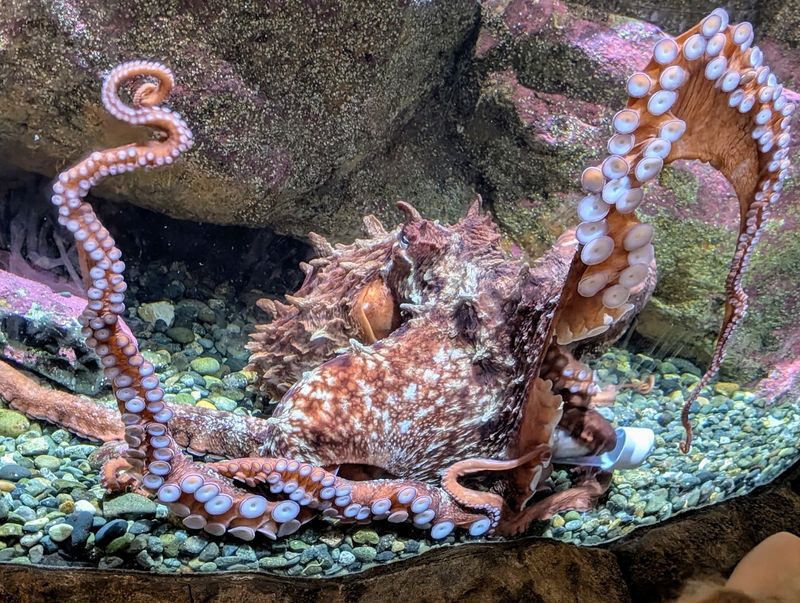
Few animals pull off a resume like the giant Pacific octopus. It has three hearts, blue blood, and a reputation for serious curiosity.
The Seattle Aquarium gives this Puget Sound celebrity its own dedicated exhibit on the original campus. Sometimes the octopus moves through a clear tube that links two sections, which feels like watching a living magic trick.
Size is part of the wow factor. Adults typically weigh 40 to 100 pounds, with a relaxed arm span of about 12 to 14 feet.
Each arm carries roughly 200 suckers for finding and holding prey. These octopuses are mostly nighttime hunters, so a quiet daytime pose doesn’t mean nobody’s home.
Color changes are worth watching closely. An octopus can shift its color and skin texture to show its mood or blend into its surroundings.
The aquarium also handles its octopuses with a thoughtful plan. It collects a permitted number from Puget Sound and returns each one to its original spot once it shows signs of maturity, usually after about a year.
That means the octopus you meet could later be back out in Washington waters. Pretty great career arc for a creature with three hearts.
Sea Otters That Hold Hands Will Steal Your Whole Afternoon
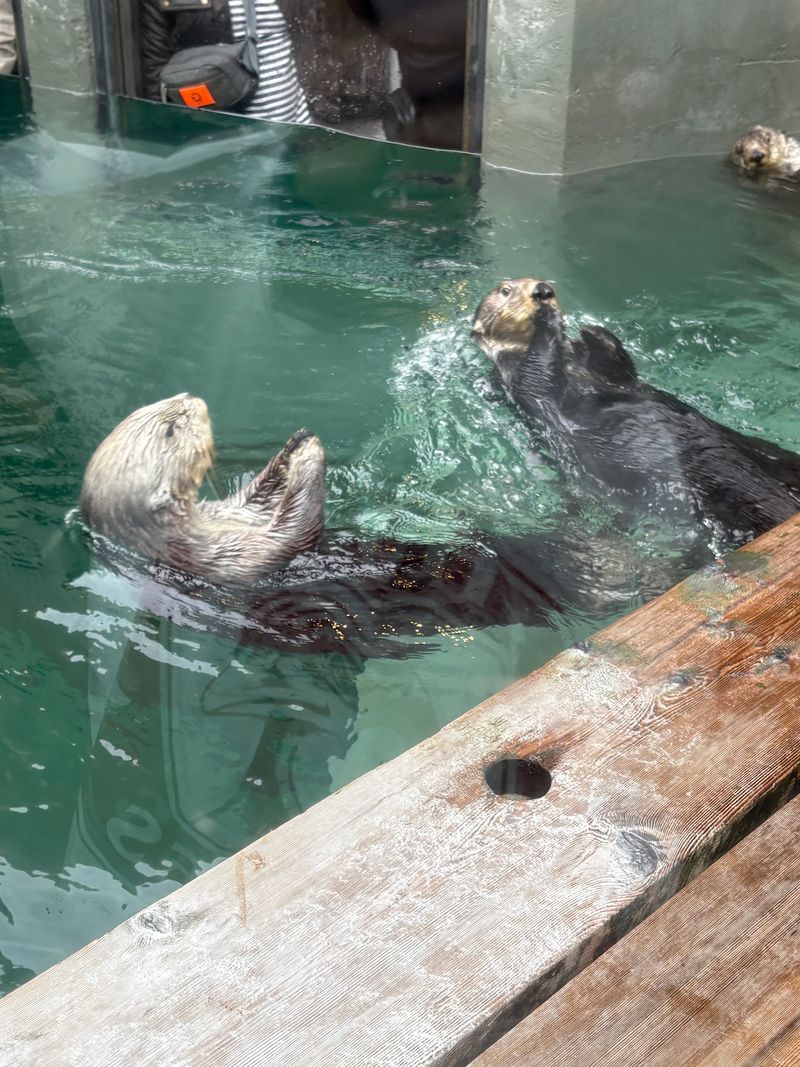
Mishka, Sekiu, and Ruby run the cutest corner of the Seattle Aquarium. Each one arrived with a story worth knowing before you reach the glass.
Mishka is a northern sea otter rescued as a young pup in Alaska. Ruby, a southern sea otter, was rescued as a newborn pup in 2015 and couldn’t be released back to the wild.
Sekiu has the most surprising claim of the three. She was born at the aquarium in 2012, making her the last sea otter pup born in a U.S. zoological facility.
Why the last one? Accredited facilities stopped breeding sea otters to save space for rescued animals that need homes.
Wild otters have a sweet habit too. Sea otters sometimes hold paws or wrap themselves in kelp to avoid drifting apart while resting.
That behavior explains why a group of otters is called a raft. It’s adorable and practical at the same time, which is rare.
The aquarium cares about wild otters, not only these three. Its researchers have tracked sea otters along the Washington coast since 2001, studying their growing numbers and diets.
Catch a sea otter feeding if you can. Daily feedings put all that floating charm into motion.
Meet The Harbor Seal Crew, Including A Brand-New Face
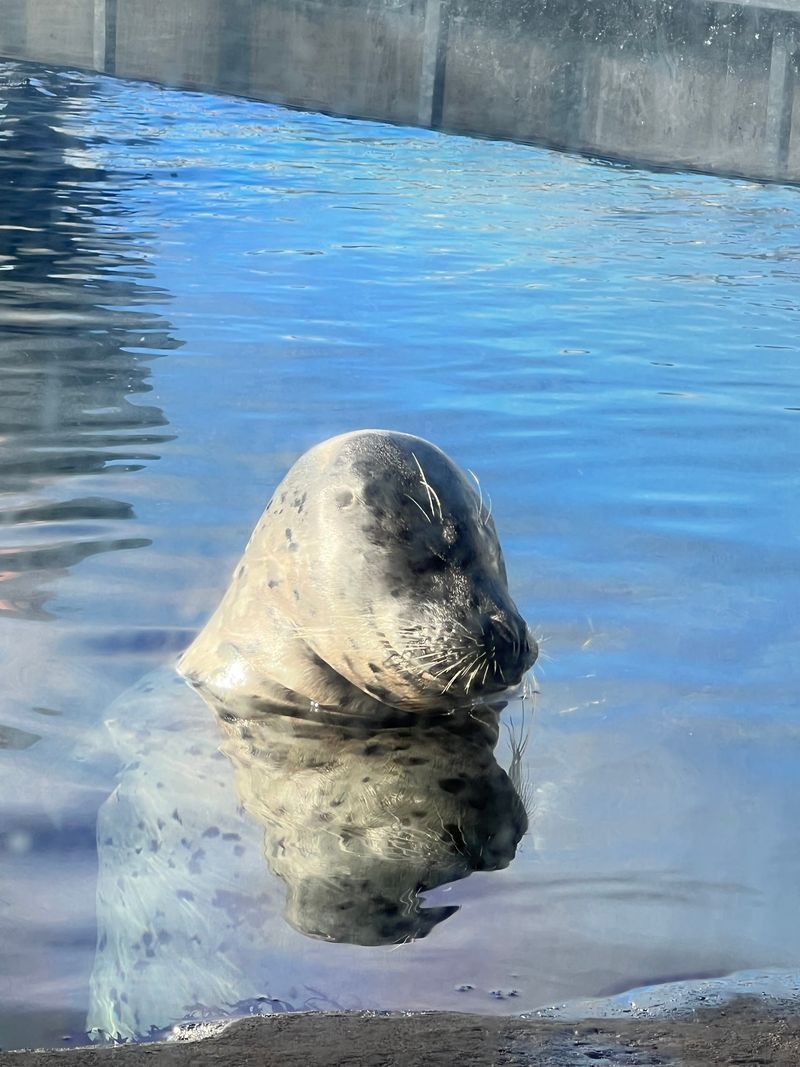
Hogan and Casey had company join them in early 2026. Flounder moved to Seattle after the Miami Seaquarium closed, and now the trio shares one roomy habitat.
Their space includes a large pool plus a dry resting area. So you might catch them gliding laps or flopped out like they just finished a long week.
Harbor seals are local stars in the Puget Sound region. Plenty of people spot them in the wild around Washington, so seeing them up close adds helpful context.
These seals are known for being playful. Their thick layer of blubber keeps them warm and helps them float in chilly water.
That blubber is a big deal in Northwest waters. It works like a built-in wetsuit and life jacket rolled into one.
Timing helps here. The aquarium holds daily feedings for the harbor seals, and those moments show how quick and curious they really are.
Northern fur seals live in the marine mammal area too. Keep an eye out for them, since they’re easy to confuse with seals of the harbor variety.
A tip for families: check the feeding schedule when you arrive. It makes planning the rest of your route much easier.
Stand Under 400,000 Gallons Without Getting Wet
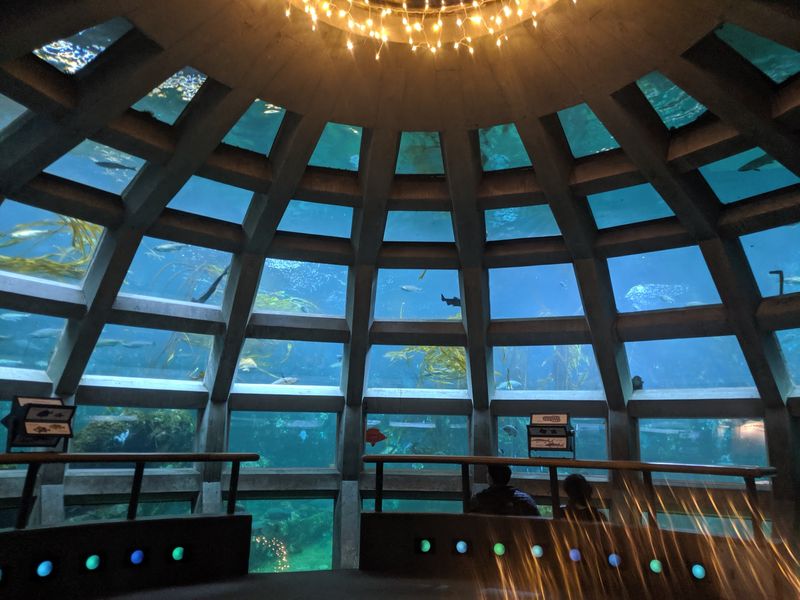
The Underwater Dome has been here since day one. It opened with the aquarium in 1977 and still delivers that look-up-and-gasp moment.
This tank holds 400,000 gallons of water. You stand inside a dome with a 360-degree view, so the fish swim around and above you.
The cast comes straight from Puget Sound. Salmon, lingcod, sharks, sturgeon, skates, and rockfish all share the space.
Sturgeon are the sleeper hit. They look ancient, armored, and slightly grumpy, which honestly makes them more fun to watch.
Here’s a useful move. Pick one animal and follow it for a full lap around the dome.
That trick slows you down and helps kids notice details. Fin shapes, swimming styles, and hiding spots suddenly become a game.
The dome also shows what lives just beyond the pier. All those animals share the same Washington waters lapping under the building.
Bring your camera, but give your eyes a break too. Some moments land better without a screen in the way.
Nearly five decades in, the dome still feels like the heart of the original campus. Not bad for a tank that predates most smartphones by thirty years.
Washington’s Coastline Gets Its Own Giant Window
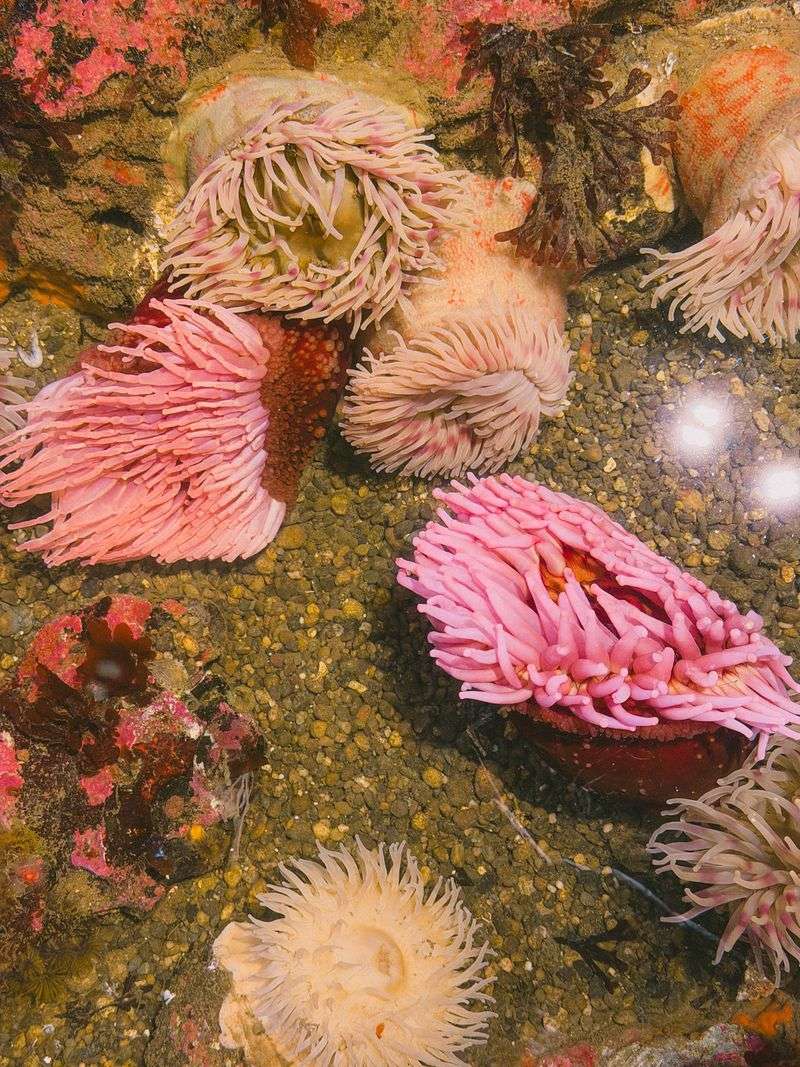
Your first big tank at the Seattle Aquarium tells a local story. Window on Washington Waters holds 120,000 gallons and recreates the state’s coastal waters.
Inside, you’ll find native marine life like salmon, rockfish, and sea anemones. It’s basically a cross-section of what lives off the Northwest shore.
Scheduled diver presentations bring this tank to life. Divers inside the exhibit actually communicate with visitors, which feels a bit like a video call from the seafloor.
Kids usually have questions, and this is the place to ask. The setup turns a pretty tank into a real conversation.
Sea anemones deserve a close look. They seem like flowers, but they’re animals with stinging tentacles for catching food.
Salmon carry big meaning in the Pacific Northwest. Seeing them here helps connect the exhibit to rivers, fishing, and local culture.
Rockfish add variety with their spiny fins and patient hovering. They can hold still for so long you’ll wonder if they’re napping.
Check the dive show times once you arrive. Planning around one gives you a fun anchor for the early part of your visit.
Go Ahead And Touch The Sea Stars, Gently
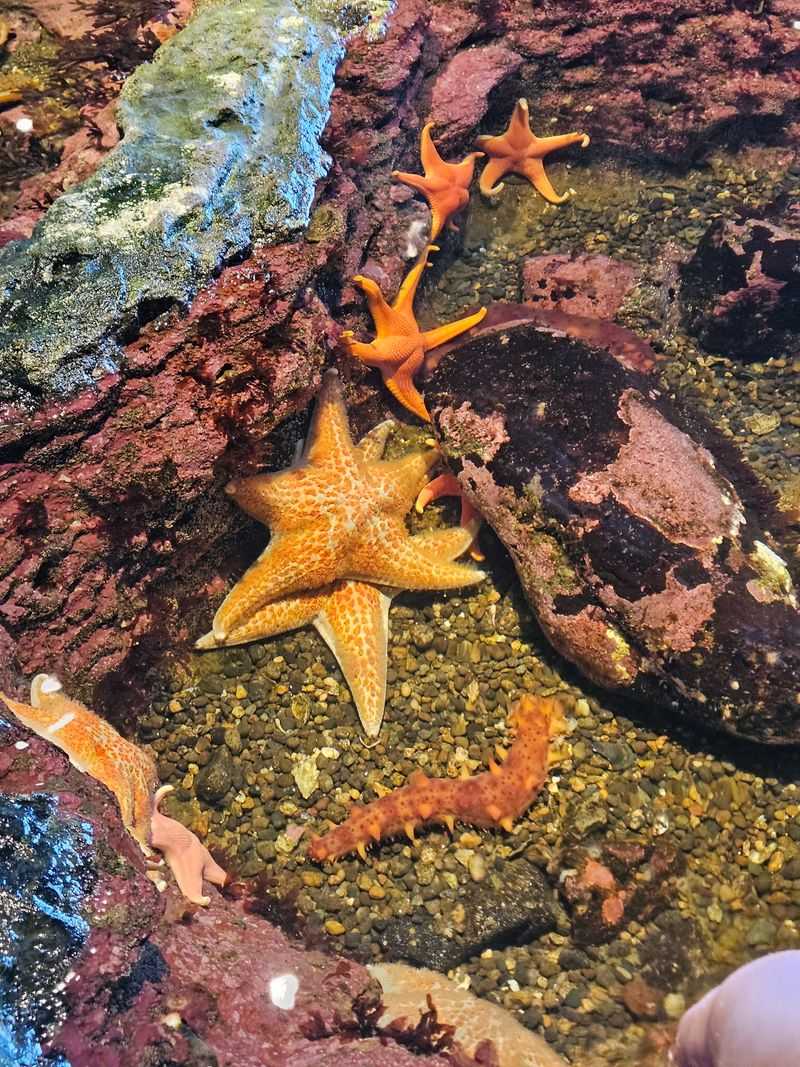
Looking is great, but touching is better. Life on the Edge lets you reach into touch tanks filled with real tide pool creatures.
Sea stars, urchins, and sea cucumbers live here. Each one feels different, which makes this stop a hit for small hands and grown-up ones too.
Use one wet finger and a light touch.
These animals are tough enough for tide pools, but they still appreciate good manners.
Sea cucumbers are a surprise for many people. They look like squishy pickles and move so slowly that patience pays off.
Urchins wear spines like a pincushion. Gently brushing the tips shows how they protect themselves from hungry neighbors.
This exhibit also teaches a handy outdoor skill. Washington has rocky beaches, and knowing tide pool etiquette helps when you explore them later.
Wash your hands afterward, especially before snack time. Saltwater hands and pretzels are not a winning combo.
For families, this is a smart early stop before little ones get tired. Hands-on moments often become the memory kids talk about on the ride home.
Plus, it beats saying don’t touch for the hundredth time that day.
Puffins Get A Patio With A Bay View
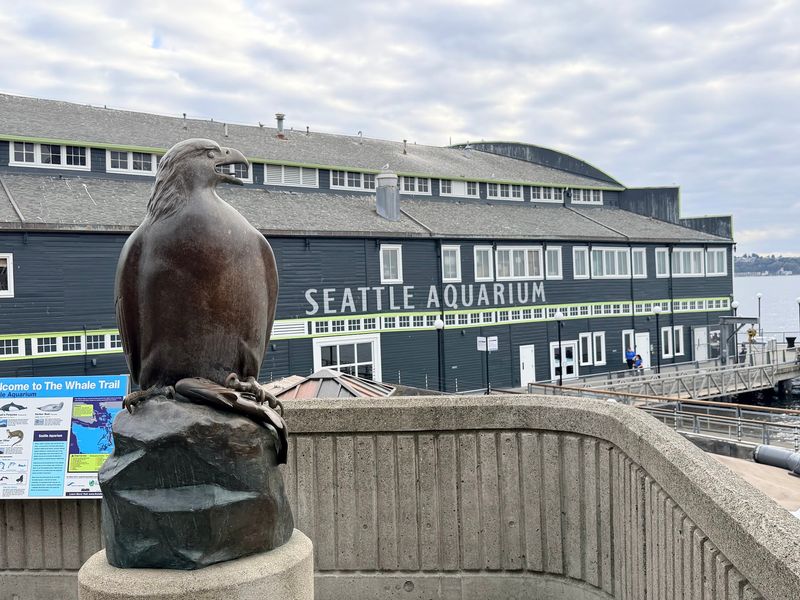
Tufted puffins look like they’re dressed for a costume party. Bright orange beaks and golden head feathers make them impossible to miss.
Birds and Shores is an open-air habitat for native Puget Sound seabirds. Puffins share it with rhinoceros auklets, common murres, and black oystercatchers.
Rhinoceros auklets get their name from a small horn on the beak. It’s a fun detail to point out once you spot one.
Common murres are strong swimmers that use their wings underwater. Watching them zip around feels like seeing a bird borrow a fish’s job.
Black oystercatchers stick closer to the rocks. Their long orange-red bills stand out against dark feathers.
The open-air setup adds fresh salty air to your visit. On a breezy Seattle day, it feels a lot like a real shoreline.
Bring a layer, since weather on the waterfront changes fast. A light jacket keeps you comfortable while you linger.
Many visitors rush past birds to reach mammals. Slow down here, though, because seabirds are full of personality and surprising skills.
Bonus: puffins make excellent photo subjects. They seem to know it, too.
Plan Your Waterfront Day Like A Pro
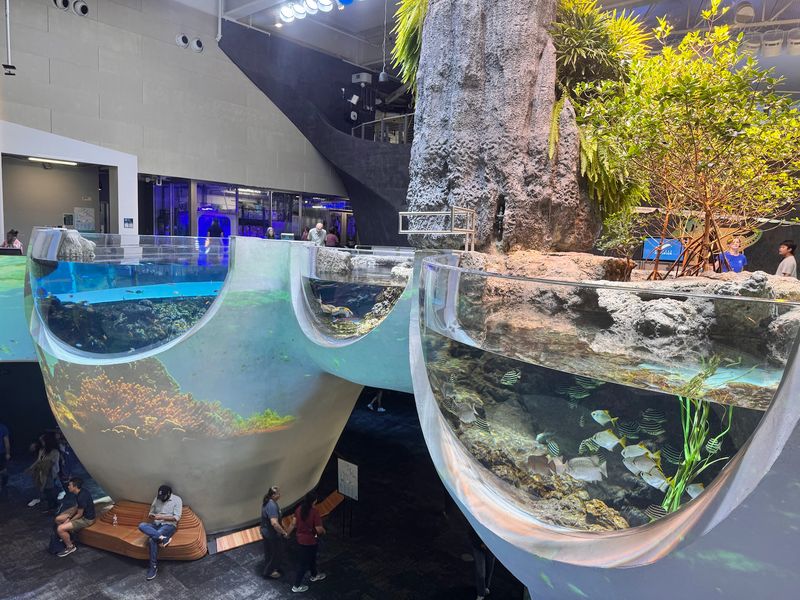
Getting there is the easy part. The Seattle Aquarium sits at 1483 Alaskan Way, Pier 59, Seattle, WA 98101, right on Elliott Bay.
Hours run from 9:30 a.m. most days, and the aquarium operates every day of the year. Hours can shift, so check before you go, especially on Thursdays.
Hungry? A café sits on the second level of Pier 59, so nobody has to tour on an empty stomach.
Gift shops are on Pier 59 and in the Ocean Pavilion. Plush otters are hard to resist, so set a souvenir plan early.
The aquarium is fully wheelchair accessible. It also offers gender-neutral bathrooms and baby changing stations.
Parking is available in nearby garages. Many families also check local library programs for admission passes, which can make the day easier on the wallet.
Since 2010, the nonprofit Seattle Aquarium Society has run the place with the city. Its mission is inspiring conservation of our marine environment, and that shows up everywhere.
Pair your visit with a stroll along the waterfront. Washington doesn’t get much more classic than salt air, seals, and an octopus with three hearts.