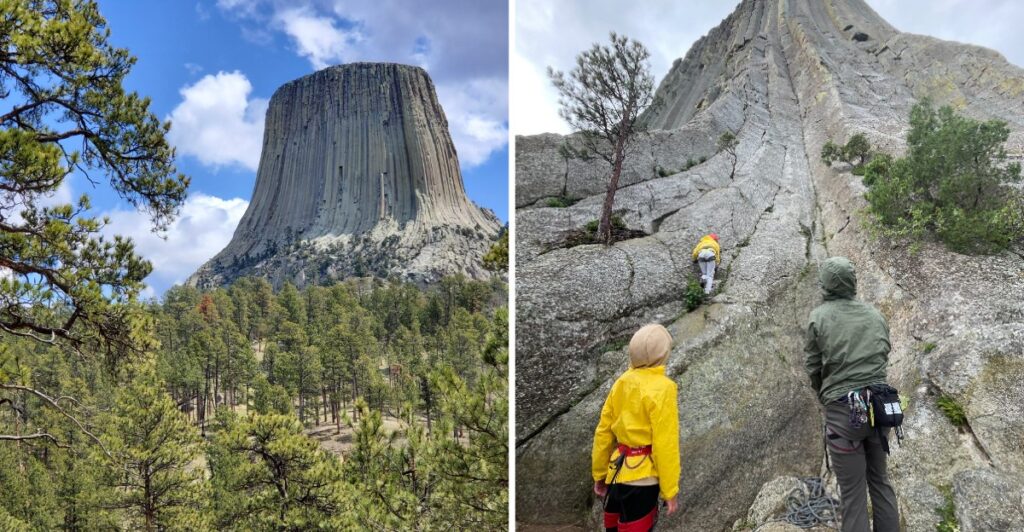
You look up.
Then you keep looking.
This rock formation does not ease into the landscape. It rises almost straight out of the grasslands, with long stone columns climbing toward the sky like somebody forgot to stop building.
Wyoming made history here in 1906, when the site became America’s first national monument. Its story stretches much farther back, though, with deep cultural importance for Native peoples.
Climbers have been testing themselves against the Tower for generations. The methods changed dramatically from the stake-ladder days of the 1890s, but the vertical challenge certainly did not.
You do not need ropes to appreciate it.
Walk the base. Take in the boulder field. Learn why the place carries meaning beyond its geology.
Then look up again.
It somehow gets taller the second time.
America’s First National Monument Began Here
President Theodore Roosevelt proclaimed Devils Tower the first national monument in the United States on September 24, 1906.
The designation came only a few months after the Antiquities Act became law. That new law gave presidents the authority to protect important historic and scientific objects on federal land, and Devils Tower became its first national-monument test.
The formation had already drawn scientific interest, and its isolated position made it a recognizable landmark across the surrounding landscape. Protection kept the Tower and the land around it in public hands while giving the unusual geology a new federal status.
More than a century later, that first designation is still one of the easiest pieces of history to carry with you on the trail.
The monument itself stays open around the clock, while visitor-center hours vary seasonally. That gives you flexibility if sunrise, evening light, or a quieter walk matters more than being inside the building.
If the visitor center is open, it is a useful first stop for current conditions and trail information. If not, the Tower is hardly subtle. The formation is visible from much of the monument, and the paths around its base do a fine job of keeping it in sight.
The Tower Rises Far Above The River
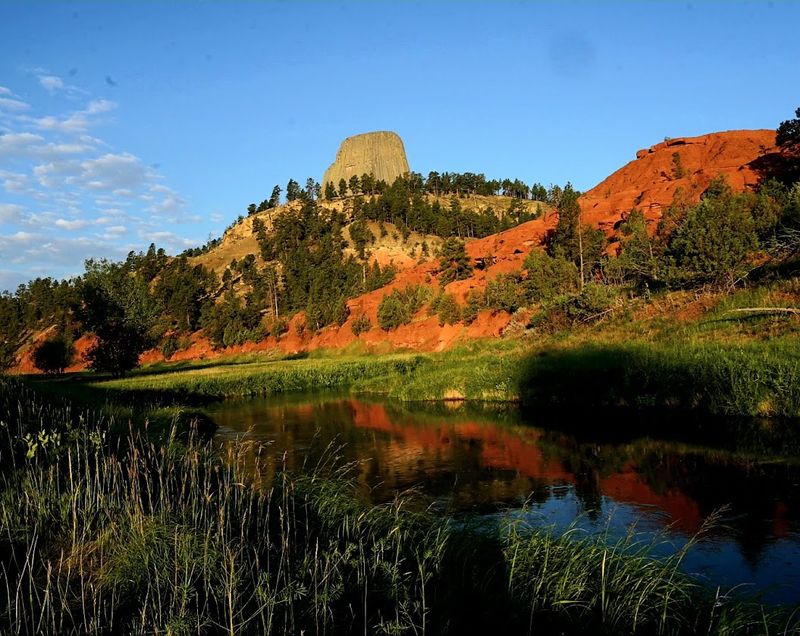
Devils Tower stands 867 feet from its base to the summit and 1,267 feet above the Belle Fourche River.
Its summit reaches 5,112 feet above sea level and covers about an acre and a half. The top measures roughly 180 feet by 300 feet, so there is more space up there than the narrow profile from below might suggest.
The Tower Trail gives non-climbers the closest easy look. The paved loop around the base is 1.3 miles, with moderate elevation changes and constantly shifting views of the columns, boulder field, and surrounding landscape.
The approach from the upper parking area adds more distance, so comfortable shoes are still useful even though the main loop is paved.
Take the loop slowly rather than treating it like a lap to finish. The shape changes as you move, and faces that looked almost smooth from one angle suddenly reveal deep cracks and ledges from another.
The boulder field at the base adds another scale cue. Large blocks that weathered from the formation sit below the walls, making the vertical columns look even taller.
You do not need climbing gear to understand the size. A full circuit at walking speed makes the point nicely.
Erosion Revealed A Much Older Formation
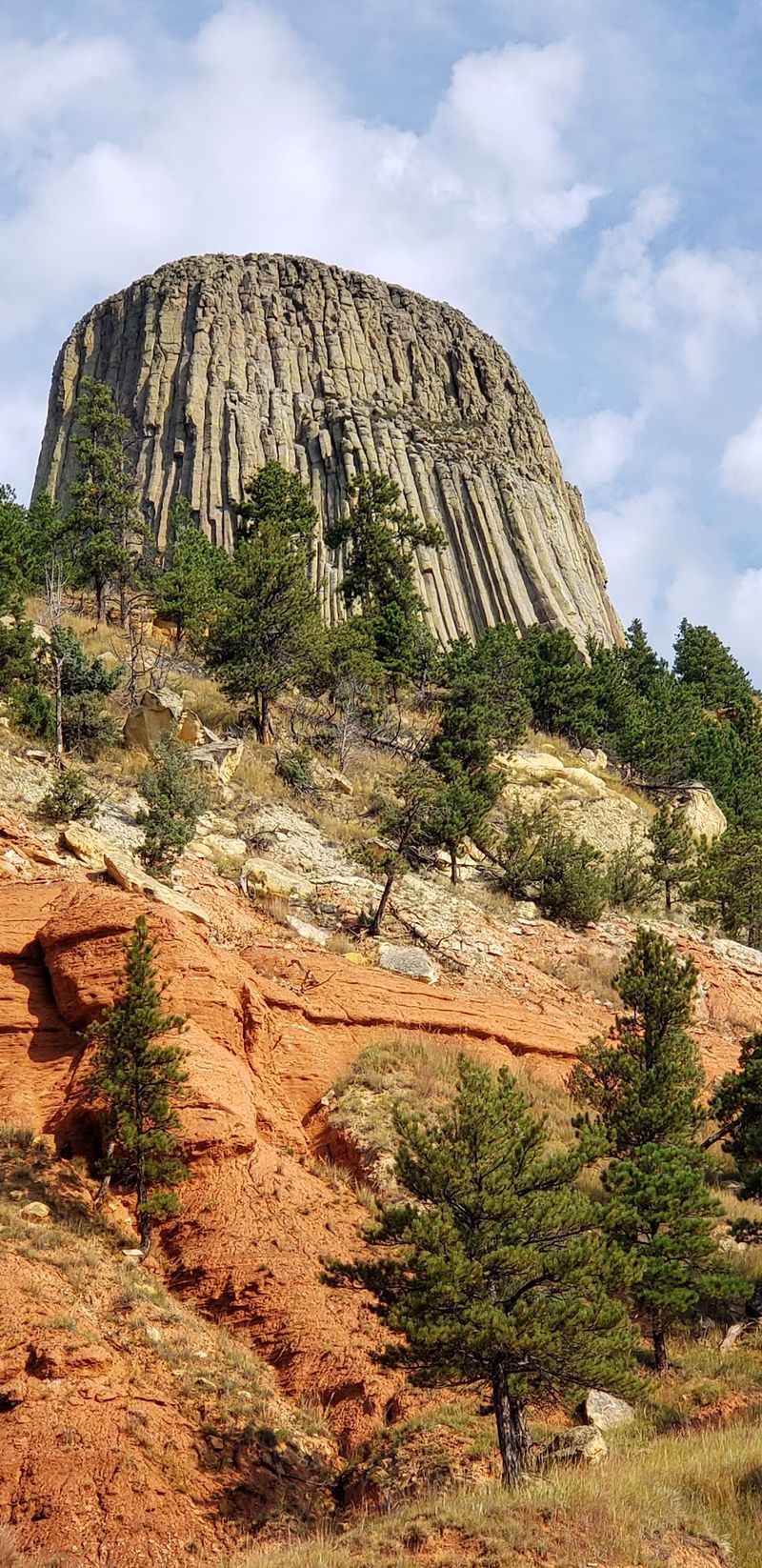
Devils Tower did not simply push upward into the landscape as it appears today.
The rock is phonolite porphyry, an uncommon igneous rock formed from molten material. Geologists agree that the Tower formed below the surface, but the exact process that created the original igneous body is still debated.
What is much clearer is how the present shape became visible.
Over millions of years, weathering and erosion removed the softer sedimentary rock that surrounded the harder igneous core. Wind, water, freezing, thawing, and other processes gradually exposed more of the formation.
That erosion continues on a smaller scale. The boulder field around the base is made from pieces of the Tower that weathered free over long periods.
Look closely along the lower slopes and you can see the contrast between the resistant formation and the surrounding sedimentary landscape.
Several formation theories remain because erosion removed evidence that might have revealed exactly how the igneous body developed.
The exposed formation is visible throughout the monument, while its exact underground origin remains an open geological question.
Giant Columns Give The Rock Its Shape
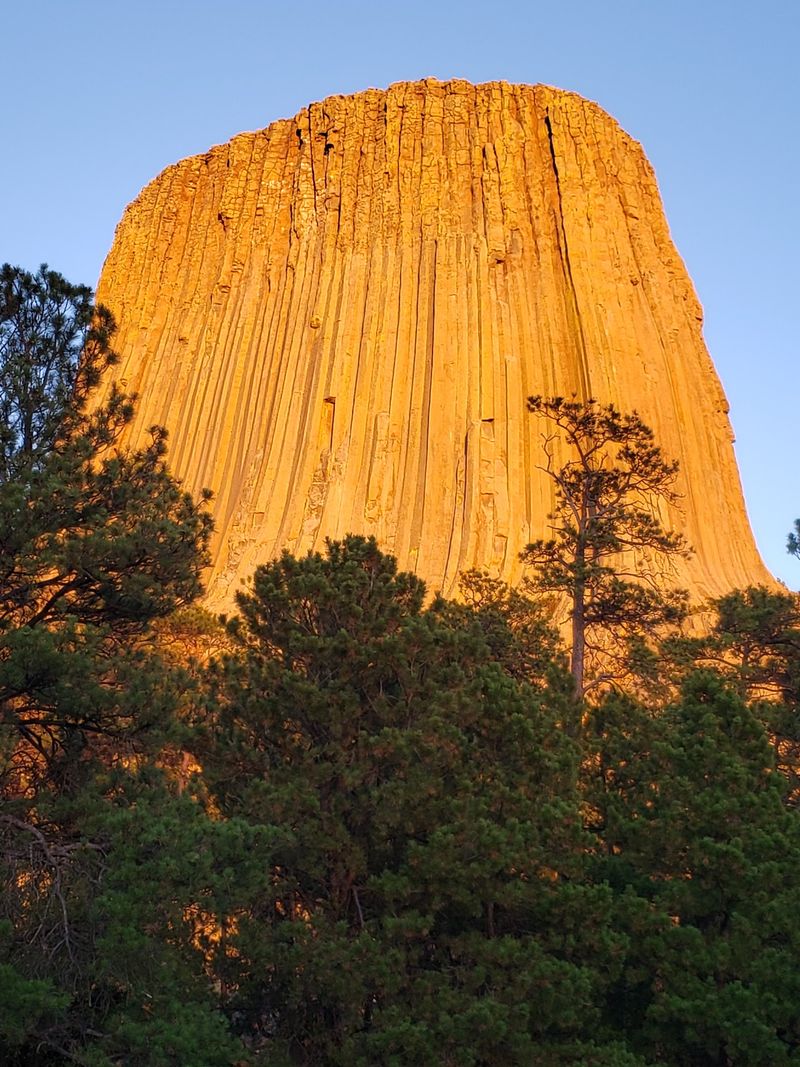
The long grooves running down Devils Tower are natural columns formed as molten rock cooled and contracted.
That cracking process is called columnar jointing. It appears in other igneous formations around the world, but the columns here are exceptionally large, rising hundreds of feet and reaching widths of about ten feet.
Many are five- or six-sided, although the shapes vary. Some joints run remarkably straight, while others change direction or merge higher on the Tower.
The result is the fluted appearance visible from miles away.
This is one section of the visit where looking from several distances pays off. From farther back, the Tower reads as one massive object. Near the base, individual columns, cracks, ledges, and broken sections become much easier to pick out.
The columns also explain why the formation became such an important climbing destination. The cracks between them create natural lines that climbers can follow upward using traditional climbing techniques.
If you are staying on the ground, the same cracks make good visual markers. Pick one near the base and try following it with your eyes as far upward as you can.
It is a simple way to appreciate just how much vertical rock is stacked above the trail.
Climbers Have Been Reaching The Top Since The Nineteenth Century
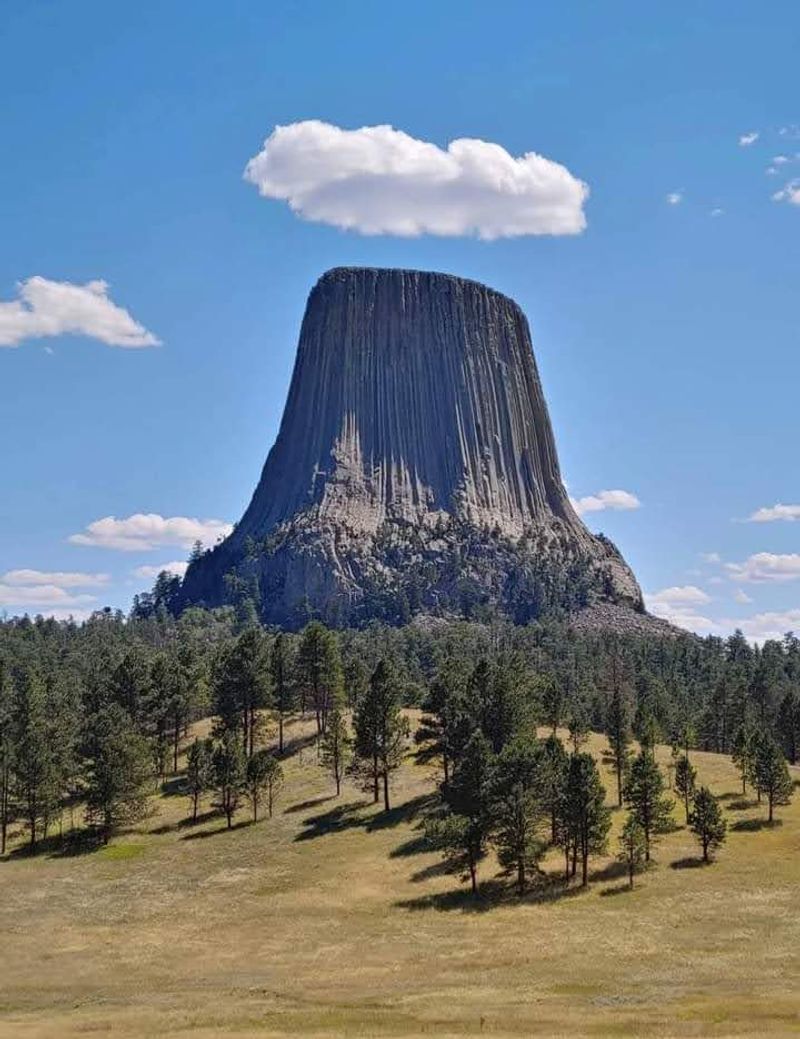
The first recorded climb to the summit happened on July 4, 1893.
Local ranchers William Rogers and Willard Ripley created a stake ladder by pounding wooden pegs into a crack and connecting them with wooden rungs. Rogers used that ladder to reach the top during a public Fourth of July event, and others followed.
A restored section of the old ladder, about 200 feet long, can still be seen on the southeast side of the Tower. Binoculars or a camera zoom make it easier to spot from below.
Technical climbing arrived later. In 1937, Fritz Wiessner, Lawrence Coveney, and William House completed the first technical ascent using climbing skills, rope, and limited protection rather than the old stake ladder.
Modern climbing looks very different again. Climbers now use ropes, harnesses, and removable protection placed in cracks, with pitons largely retired from regular use.
Around 5,000 climbers visit the Tower in a typical year. Not all of them reach the summit, and many climbs intentionally end below the top.
If you see small figures moving against the columns, remember that each route may take hours. Watching from the trail turns the scale into something immediately understandable.
Registration And Timing Matter For Climbers
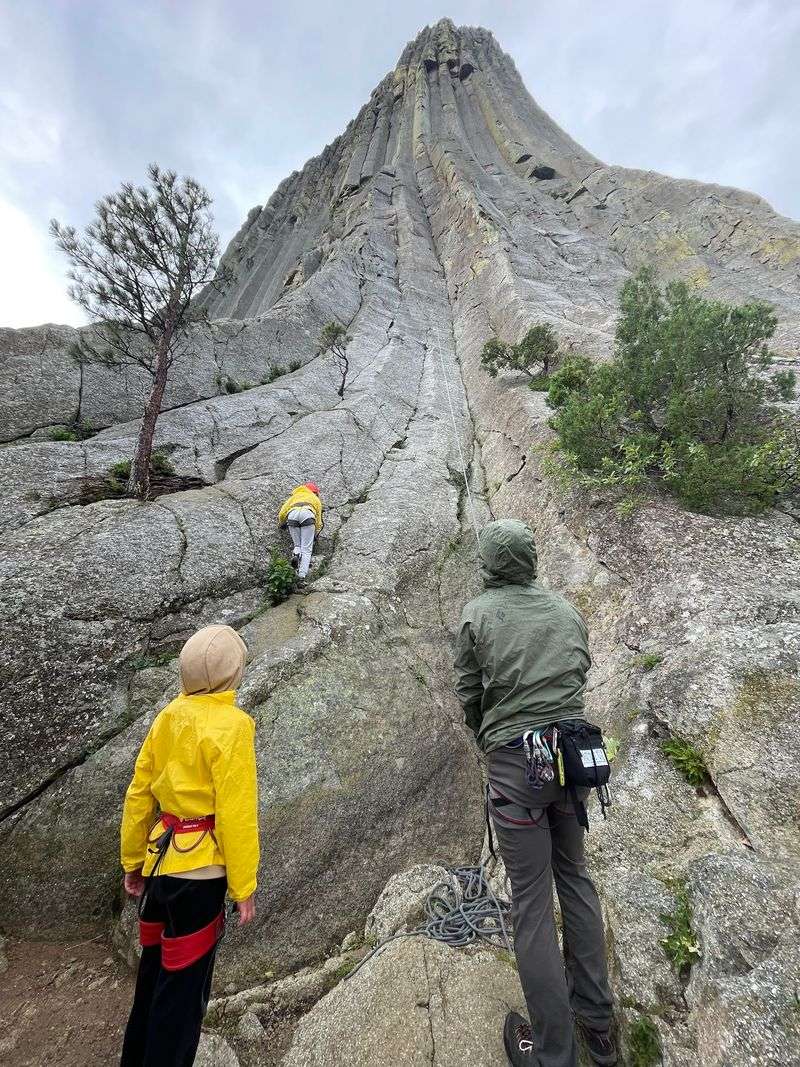
Anyone climbing or scrambling above the boulder field must register before going higher.
The climbing kiosk provides the place to do that, and current route closures are posted there. Seasonal closures can protect nesting falcons, so climbers need to check conditions before starting.
June brings another important consideration.
The entire area above the Tower Trail falls within a voluntary June climbing closure created to respect the cultural and ceremonial significance of the Tower to affiliated Native American tribes.
Climbers and other visitors are strongly encouraged to remain on the Tower Trail and choose other climbing areas during that month.
For everyone else, the monument still offers plenty to explore from below.
The physical address is 149 State Highway 110, Devils Tower, WY 82714. Park roads and trails are open 24 hours a day, while visitor-center hours and seasonal services can vary.
If climbing is not part of the plan, the Tower Trail keeps things simple. Walk the loop, stop where the columns catch the light, and watch climbers when conditions allow.
The Tower does not require a summit to feel imposing.
Bear Lodge Holds Deep Cultural Meaning
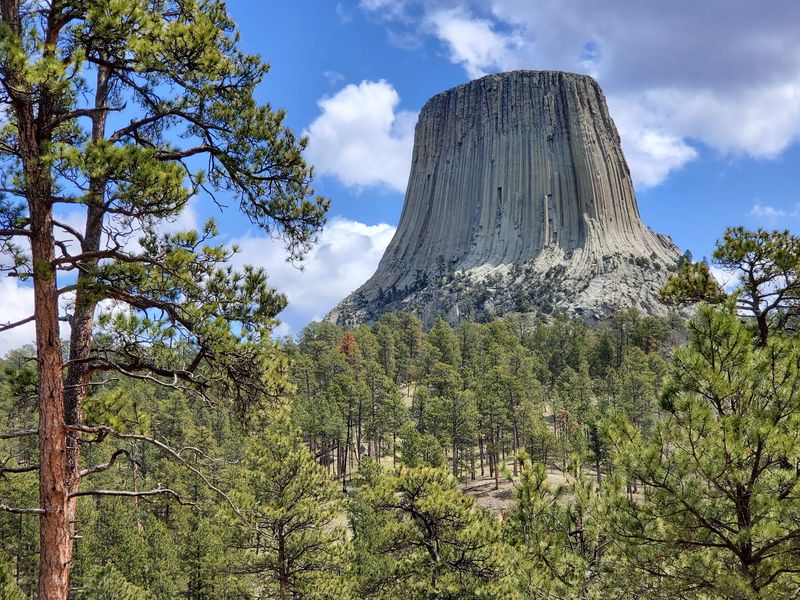
Long before Devils Tower became a national monument or a climbing destination, Native peoples maintained cultural and spiritual connections to this place.
More than two dozen tribes are affiliated with the Tower today. Names associated with it include Bear Lodge, Bear’s Tipi, Tree Rock, and other translations rooted in different tribal languages and traditions.
Several oral histories connect bears with the formation, although the stories differ among nations and should not be collapsed into one version.
Ceremonies continue at the monument. Along trails, you may see colorful prayer cloths or bundles tied to trees. These are religious offerings and should not be touched, disturbed, removed, or photographed.
That guidance matters throughout the year, not only during the June voluntary climbing closure.
A respectful visit does not require knowing every story before you arrive. It does require recognizing that the Tower is more than a geological formation or recreation site.
Stay on established paths where requested, give ceremonial activity privacy, and let offerings remain exactly where they were placed.
The monument can hold several stories at once: a scientific puzzle, a climbing landmark, America’s first national monument, and a sacred place with living cultural traditions.