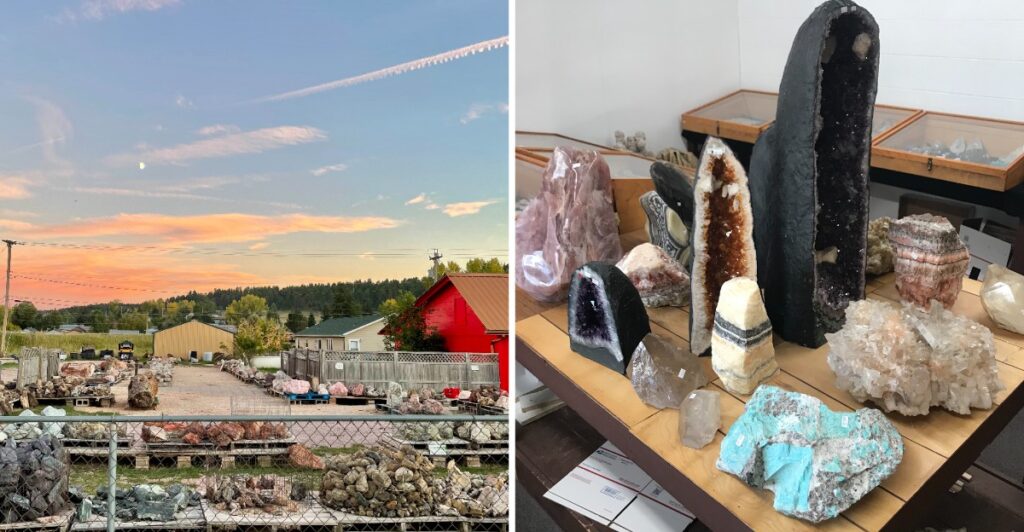
You know a rock shop is working on you when you start comparing quartz like produce.
One piece is too cloudy. Another has the right color. Five minutes later, you suddenly have standards.
This long-running stop has been around since 1929, and the local geology gives the shelves more meaning than a random souvenir rack ever could.
Rose quartz is a good example. It was discovered near Custer in the 1880s and later became South Dakota’s state mineral.
That makes the browsing feel a little more personal.
You are not just staring at pretty stones. You are looking at pieces tied to the landscape outside.
Give yourself a little time to wander indoors and out, ask a few questions, and let one odd-looking specimen earn a second look.
Somewhere along the way, you may realize you have become surprisingly picky about rocks.
Nearly A Century Of Rock-Shop History Sits Behind The Door
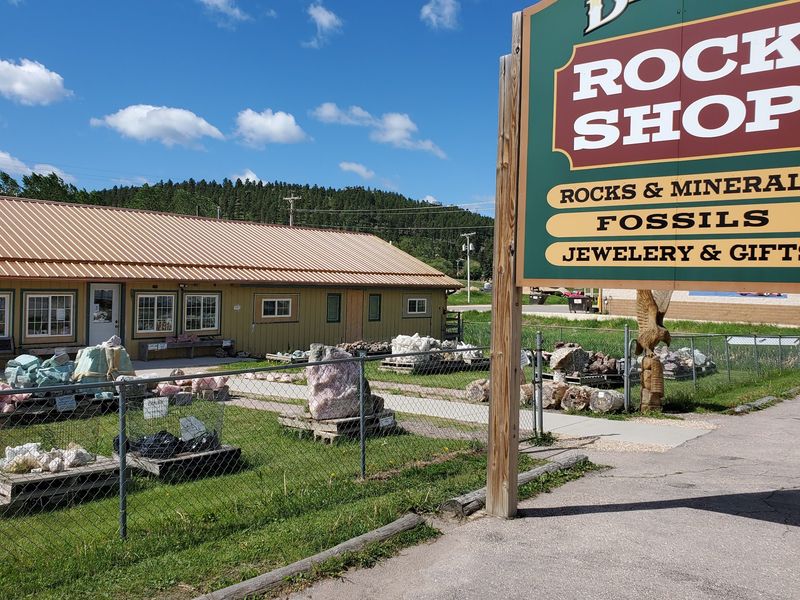
The shop was established in 1929, which gives it nearly a century of history in Custer.
Long before modern Black Hills road trips came with digital maps and packed attraction lists, travelers and collectors were already stopping here for stones, minerals, and other geological finds.
That age is interesting on its own, but it also helps explain why the store feels tied to the region rather than dropped into it. Custer has long been surrounded by mining, mineral collecting, and Black Hills geology, so a rock shop makes sense in the local landscape.
The current selection ranges well beyond one category. Fossils sit alongside crystals, amethyst, rose quartz, metaphysical stones, and other collectibles, with hundreds of items spread between the store and the yard.
You do not need to know mineral names before walking in. Start with whatever catches your eye. Maybe it is a rough piece with a strange texture, a crystal with sharp edges, or a fossil that makes you stop and look twice.
That is the nice thing about this kind of shop. Curiosity is enough of a plan.
Black Hills Specimens Keep The Local Geology Close
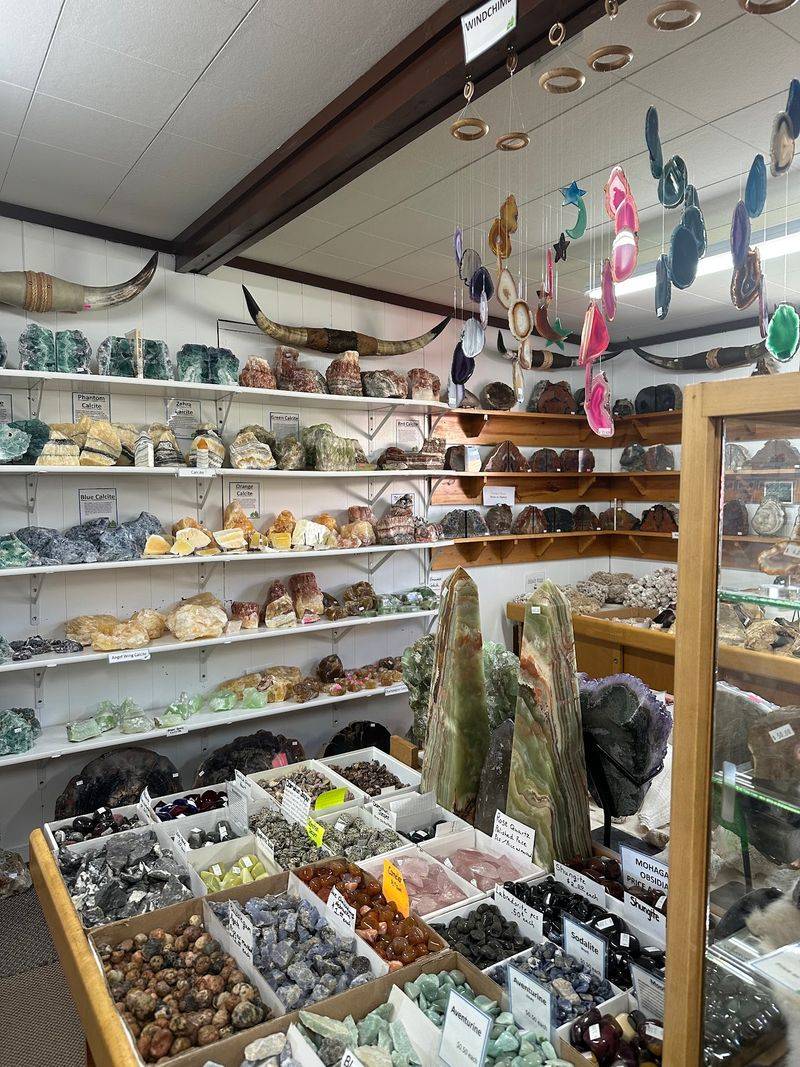
Black Hills specimens give the shelves a direct connection to the landscape outside Custer. The surrounding region is known for varied geology, and locally tied material gives travelers a way to look at that story on a much smaller scale.
Some pieces are easy to appreciate simply for color or shape. Others become more interesting once you know where they came from or what kind of mineral you are holding. If you are unsure, asking questions is part of the fun.
The local angle is especially useful if the rest of your trip includes scenic drives, caves, granite formations, or other Black Hills stops. After looking at huge landscapes all day, it can be surprisingly satisfying to hold one small specimen and focus on the details.
Do not feel pressured to choose the largest piece. A compact specimen is easier to pack and can still carry the regional connection you came for.
If your goal is a South Dakota keepsake rather than a general crystal or fossil, start with the Black Hills material and work outward from there. It narrows the choices quickly, which is helpful when the shelves start competing for your attention.
Fossils, Crystals And Minerals Fill The Indoor Selection
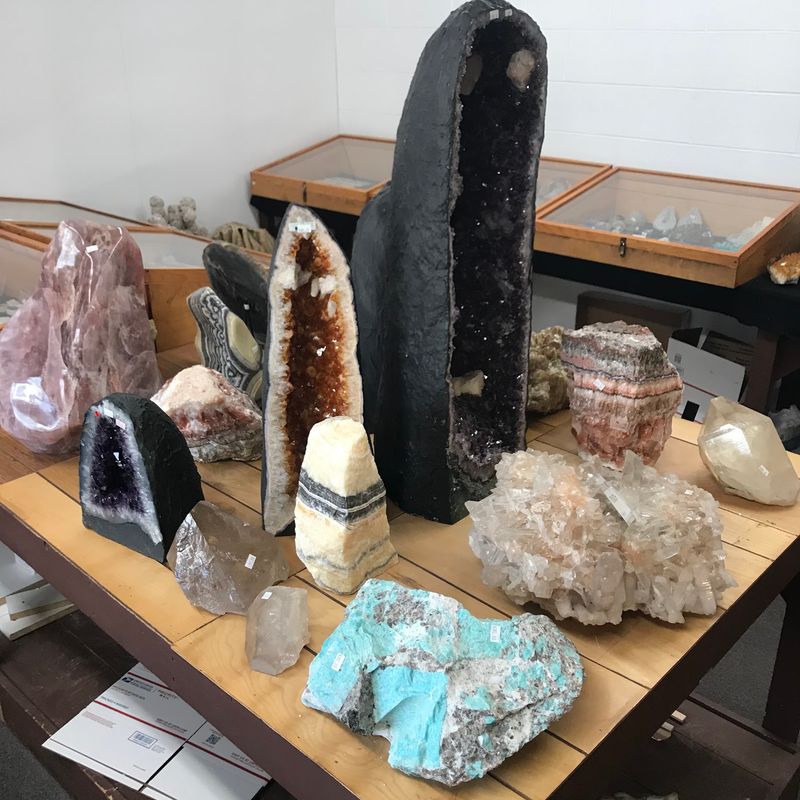
The indoor inventory includes fossils, crystals, minerals, rose quartz, amethyst, and other collectibles, so the shop works for more than one kind of rock enthusiast.
Someone interested in ancient life can head toward fossils while another person gets distracted by crystal forms two steps away.
Fossils add a different kind of scale to the visit. Instead of thinking about where a stone formed, you are suddenly looking at evidence of organisms and environments from a much older world. Even a small fossil can slow down the browsing.
Crystals bring another set of shapes and textures. Some pieces show obvious geometric structure, while others are easier to appreciate for color, contrast, or the way light moves across the surface.
Amethyst adds its familiar purple tones to the mix, and metaphysical stones are part of the current selection as well. You can browse them for appearance, collecting interest, or the meanings people associate with different stones, depending on what interests you.
The smartest move is not to rush down one aisle looking for a predetermined item. Take one pass first. Rock shops are very good at changing your mind.
Rose Quartz Has A Strong South Dakota Connection
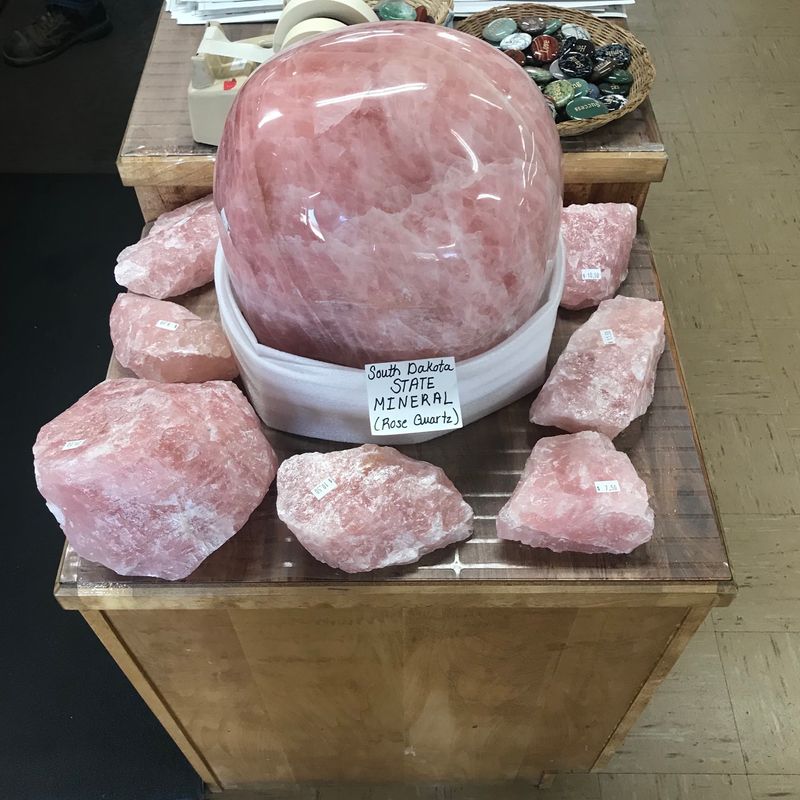
Rose quartz deserves more attention here because its connection to South Dakota is unusually direct. The pink mineral was discovered near Custer in the 1880s, is mined in the southern Black Hills, and was designated South Dakota’s official state mineral in 1966.
Its color can range from pale pink to deeper rose shades, sometimes with a faint lavender cast. That variation means two pieces can look noticeably different even when both fall under the same mineral name.
The shop currently carries rose quartz among its current selection, so it is an easy place to compare different pieces without treating the first pink stone you see as the only option.
If you are buying something specifically because you are traveling through South Dakota, rose quartz makes a logical starting point. It connects Custer, the southern Black Hills, and the state’s official mineral symbol in one small object.
You can still leave with a fossil or an amethyst cluster instead. There are no rules requiring geological loyalty once something else grabs your attention.
That freedom keeps the stop light. Learn a little, compare a lot, and choose the piece you will actually enjoy seeing again at home.
Mount Rushmore Road Puts The Shop Right In Custer
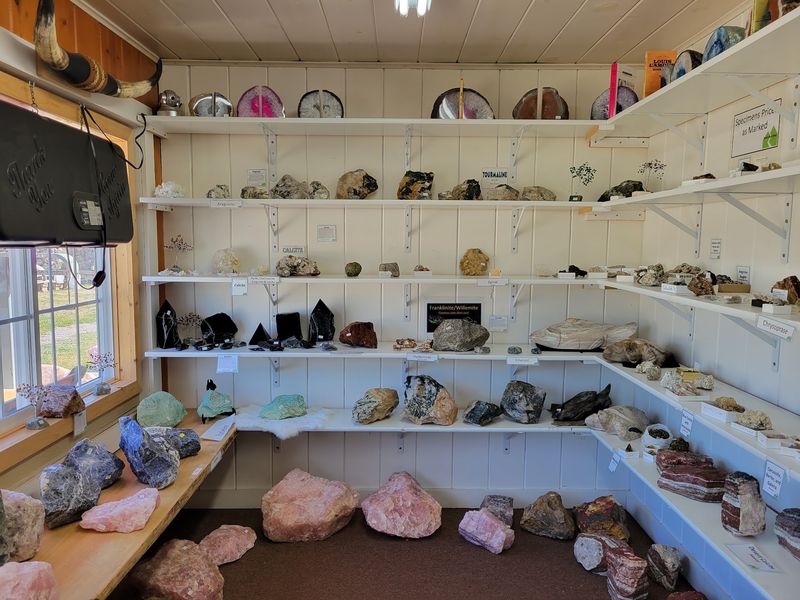
The location makes it simple to add to a Custer day without turning the shop into a separate expedition. If you are already moving between town, Custer State Park, nearby caves, or other Black Hills attractions, the stop can fit naturally between bigger plans.
Give yourself more than a few minutes if anyone in the group genuinely likes rocks. The indoor selection is only part of what is here, and the outdoor yard adds another area to browse.
Because inventory can change, a rigid shopping list is not especially useful. You may find the exact kind of specimen you expected, or you may end up comparing something you had never heard of before walking through the door.
That unpredictability is part of the fun, but it also argues for a little patience. Look first, buy second.
And if one person in the car insists this will be a five-minute stop, perhaps do not make any promises on their behalf.
Dave’s Rock Shop is at 1020 Mt Rushmore Rd, Custer, SD 57730, placing it along one of the main routes through town and within easy reach of other Black Hills stops.
The Rock Hunt Continues Outside In The Yard
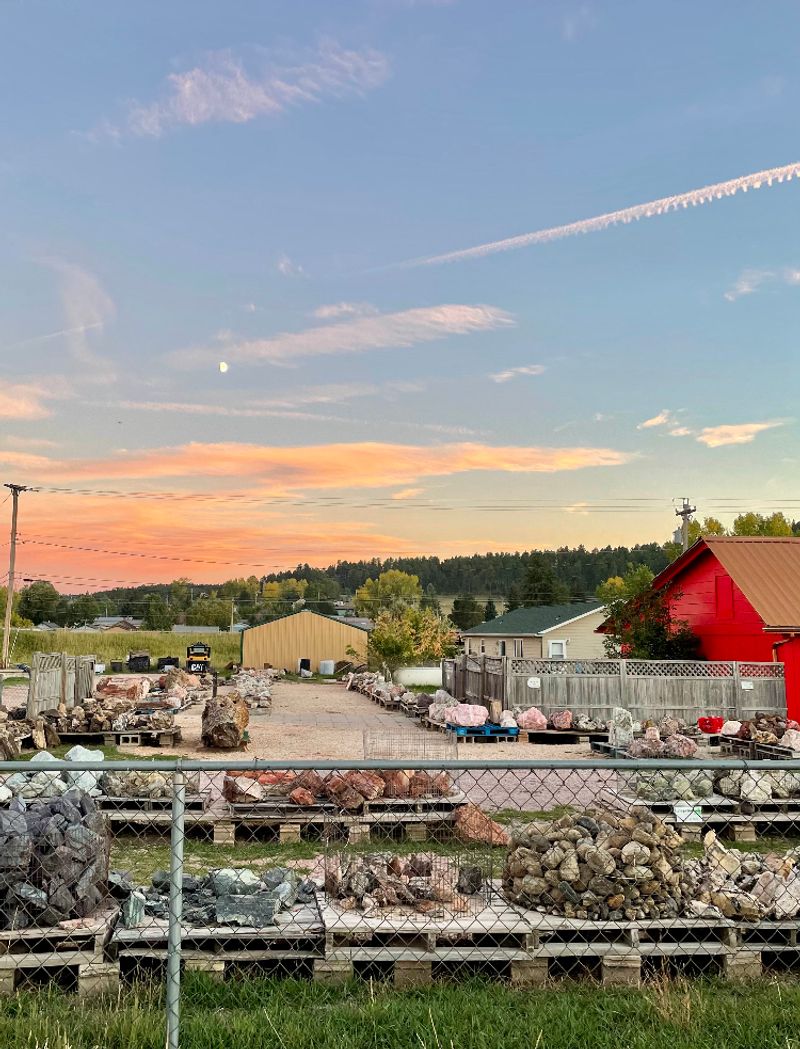
The shop’s outdoor yard holds hundreds of additional items, extending the browsing beyond the indoor shelves. This is where the experience starts to feel less like a standard retail stop and more like digging through a broad collection of geological odds and ends.
Larger and rougher pieces make more sense outdoors, where there is room to compare shapes without squeezing between displays.
The yard also gives you another look at how different natural specimens can appear before they are turned into jewelry or smaller display pieces.
Take your time here. Rocks do not exactly announce themselves from across the yard, and the interesting piece may be the one partly hidden behind something larger.
The outdoor area is especially useful if you like substantial display pieces or specimens that feel more rugged than decorative. Even if you do not intend to bring home anything heavy, it is still entertaining to see how much variety can sit in one place.
Check size before enthusiasm takes over. A rock that looks perfectly manageable beside other rocks may feel much more ambitious when you remember the trunk is already full of luggage.
Small souvenirs suddenly become very sensible after that calculation.
A Slow Browse Makes More Sense Than A Shopping List
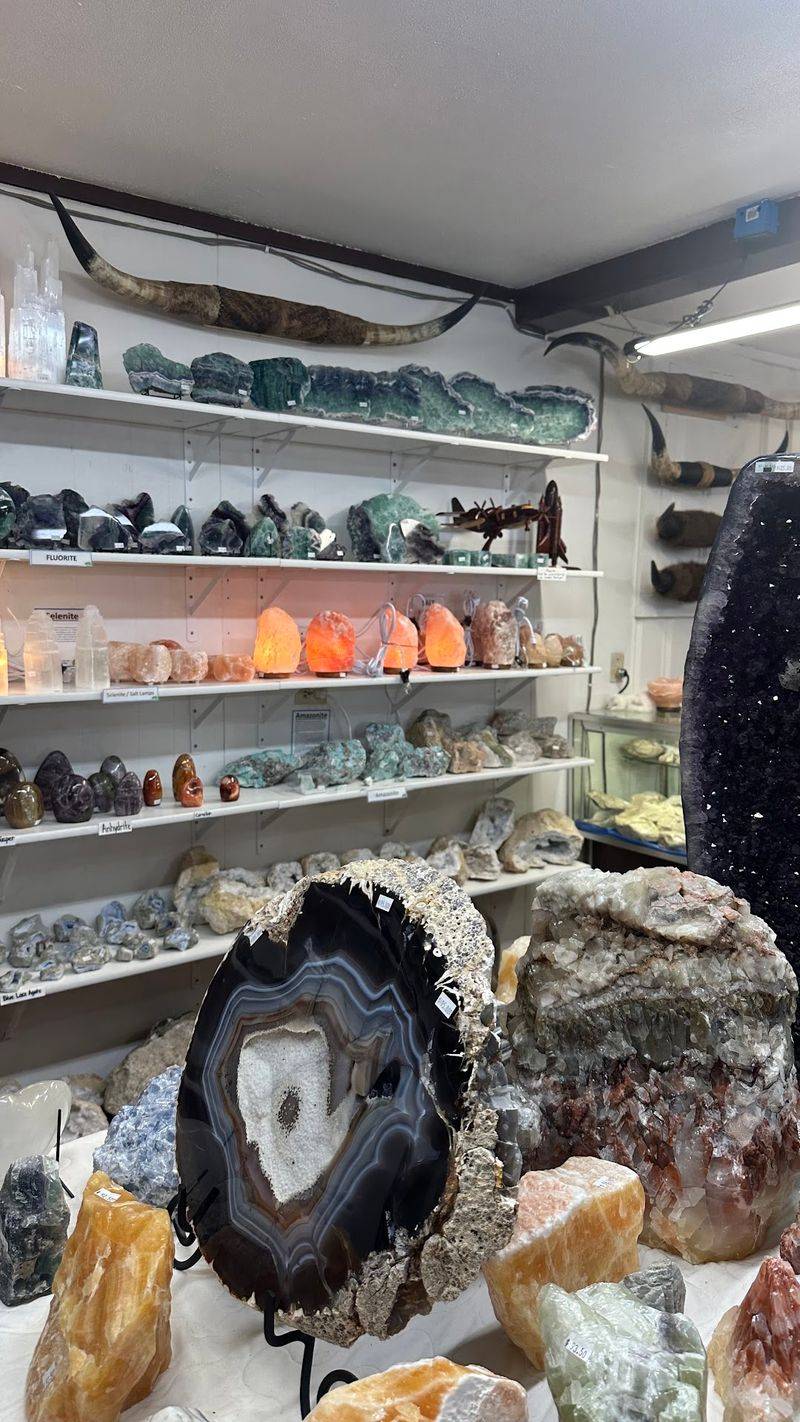
Dave’s Rock Shop is still operating in Custer, and its current selection centers on the same broad categories that make a rock shop easy to lose time in: local specimens, fossils, crystals, rose quartz, amethyst, metaphysical stones, and other collectibles.
The best approach is to browse by curiosity rather than category. Start with the Black Hills pieces if local geology matters most. Move toward fossils if ancient life wins your attention.
Compare rose quartz if you want a South Dakota connection that is easy to explain once you get home.
The state connection can continue beyond rose quartz. South Dakota’s official gemstone is the Fairburn agate, another reminder that rocks and minerals are woven into the state’s identity.
Even when you are not shopping for one specific stone, knowing that background makes the shelves more interesting.
A family can treat the visit as a short science break. A collector can spend more time comparing specimens. Someone who simply likes unusual objects can ignore the terminology and choose by color or shape.
No elaborate strategy is required.
Walk through the store, step outside into the yard, circle back if something keeps nagging at you, and leave enough space in the car for whatever wins.
In a town surrounded by Black Hills geology, taking home one small piece of the story feels like a fitting way to end the stop.