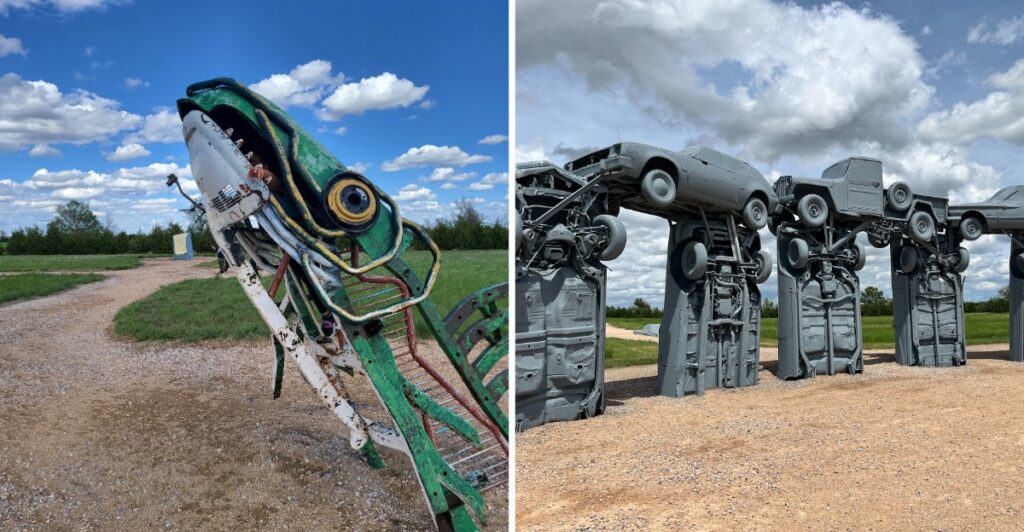
At some point, somebody looked at a field full of old cars and thought, “Stonehenge.”
The remarkable part is that everyone else went along with it.
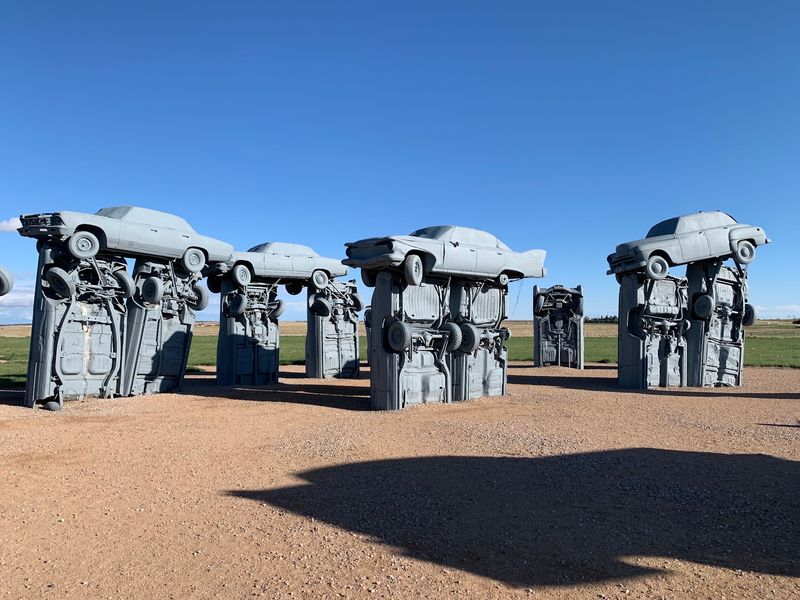
Built in 1987 as a memorial to creator Jim Reinders’ father, this Nebraska landmark uses 39 automobiles to recreate the proportions of the famous English stone circle.
Some cars stand nose-down in the ground. Others stretch across the top, turning Detroit steel into something unexpectedly prehistoric-looking.
And the weirdness does not stop at the circle.
More automotive sculptures are scattered across the grounds, giving you plenty to inspect once you have finished wondering how anyone welded this idea into reality.
Admission is free, so take your time walking around.
Then step back and appreciate the bigger achievement here.
Someone made a field of old cars look completely intentional.
The Field Has Been Standing In Nebraska Since 1987
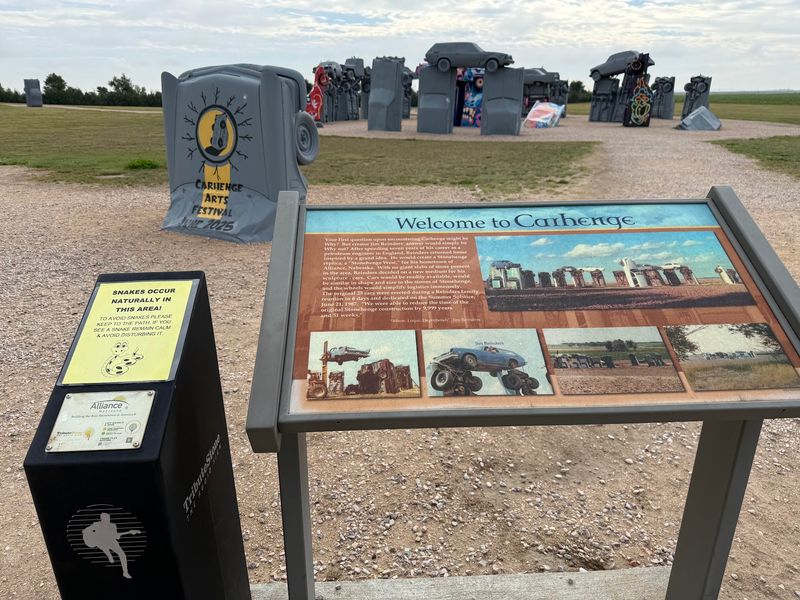
Back in 1987, Jim Reinders and members of his family turned a western Nebraska field into something much more unexpected than open grass.
The project grew out of a family memorial. Reinders’ father had died in 1982, and the family later decided to create something in his honor. Five years afterward, relatives gathered near Alliance and built Carhenge together.
Around 35 family members took part in the construction during a reunion in June 1987. The monument was dedicated on the summer solstice, giving the finished circle another small connection to the ancient site that inspired it.
Reinders already knew Stonehenge well. He had spent time in England and studied the monument there, which helped shape the proportions and layout used in Nebraska.
Nearly four decades later, the cars still stand where the family placed them.
That history adds a family story to the unusual roadside construction.
Walk the outer edge first if you want to see the full shape before getting closer. From there, the details start changing quickly as old car bodies take over the role of prehistoric stone.
Thirty-Nine Cars Recreate The Shape Of Stonehenge
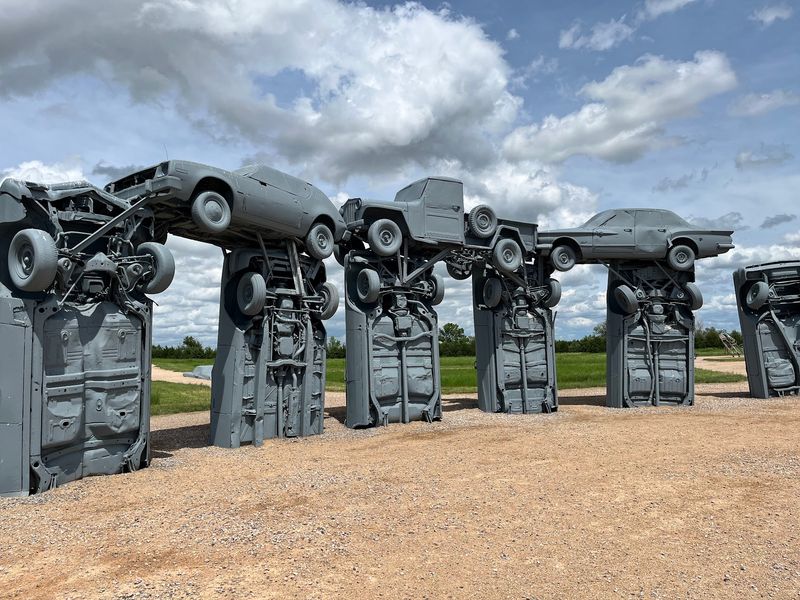
How many cars does it take to copy one of the world’s most recognizable prehistoric monuments? At Carhenge, the answer is 39.
The automobiles were arranged to match Stonehenge’s proportions, creating a circle roughly 96 feet across.
Some cars stand upright, while others stretch horizontally across the tops of those vertical supports. Together, they recreate the familiar outer circle and inner forms associated with the English monument.
The comparison becomes easier to see once you step back from the individual vehicles. Up close, door handles, headlights, wheel wells, and old body lines pull your attention toward the cars themselves.
From farther away, the arrangement reads much more clearly as a Stonehenge tribute.
One of the vehicles also fills the role of Stonehenge’s heel stone, giving the Nebraska version another specific point of reference.
The car count makes a simple walking game possible without inventing anything extra. Start at one side of the circle and see whether you can follow the arrangement without losing track.
A wider view also helps if you are taking photos. The individual cars are unusual enough on their own, but the full design makes the joke and the engineering much easier to understand at the same time.
Gray Paint Helps Turn Automobiles Into Mock Stone
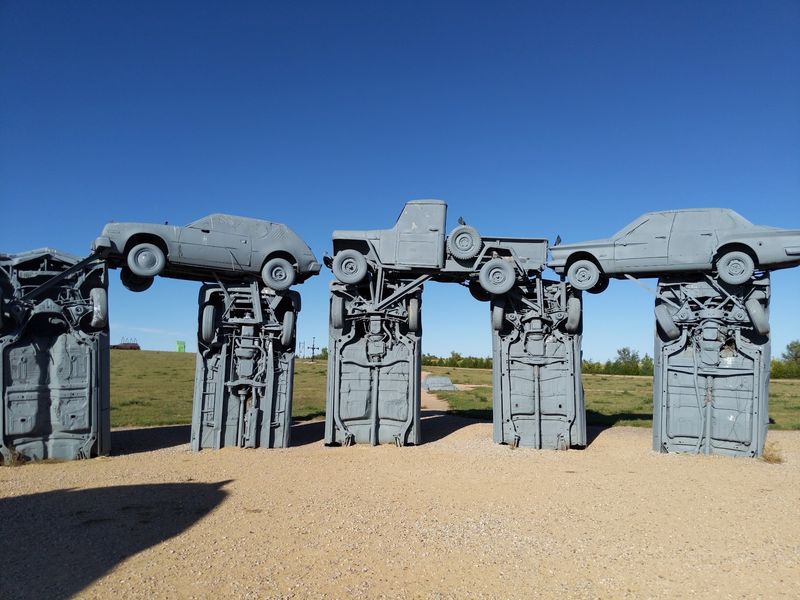
The color scheme does a lot of the visual work here.
The cars are coated in gray paint, helping their different makes, body shapes, and original finishes read as one connected installation from a distance.
That uniform color is what lets bumpers, roofs, doors, and trunks take on the role of stone blocks without hiding what they actually are.
Look closely and the automotive details remain easy to spot. Headlights, handles, chrome, windows, and curved body panels still break through the illusion.
That contrast is part of the design. Carhenge is not trying to disguise the automobiles completely. It uses them as obvious substitutes for stone while keeping enough of their original forms visible to make the sculpture work as automotive art.
Some of the surrounding cars and sculptures have also carried painted artwork over the years, giving the wider Car Art Reserve more color than the main gray circle.
The result changes depending on where you stand. Step back and the monument reads as one large arrangement. Move closer and every vehicle becomes its own collection of familiar parts.
That makes a slow lap around the circle more useful than one quick glance from the parking area.
The Monument Began As A Family Memorial
Behind the unusual materials is a straightforward family story.
Jim Reinders created Carhenge as a memorial to his father, who passed away in 1982. The idea came together over the following years, and the family reunited near Alliance in 1987 to build it.
Around 35 relatives helped with the project, turning the memorial into something made collectively rather than commissioned from an outside artist.
The family built the memorial together, using automobiles as the materials for a project connected directly to Reinders’ father.
Jim Reinders answered the obvious question of why someone would recreate Stonehenge with automobiles with a simple response: “Why not?”
There is no need to force a solemn mood onto the stop. The memorial and the humor can sit side by side.
Take a moment to circle the installation before moving on to the other sculptures. Knowing why the project started makes the odd choice of materials feel less random and much more tied to one family’s history.
Some Cars Stand Upright While Others Balance Above Them
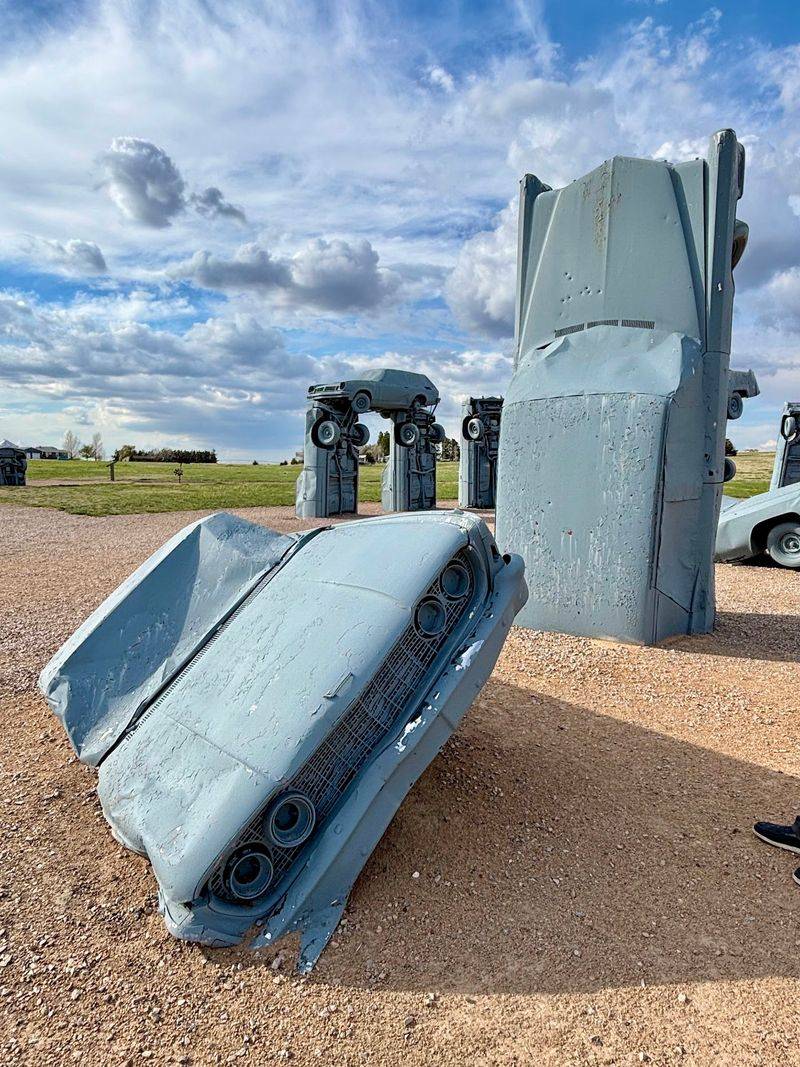
Ever seen a car planted nose-down in the ground?
At Carhenge, several vehicles stand upright in pits, taking the place of vertical stones. Other cars are positioned horizontally across the tops and welded into place, creating the arch-like shapes that make the Stonehenge comparison immediately recognizable.
Those combinations echo the trilithon forms of the original monument.
The construction also makes the size of the automobiles easier to appreciate. A car that feels ordinary on the road looks very different when it is standing vertically in a field.
Walk around the outer circle and the angles keep shifting. From one side, you see the full arch. Move a few steps and a roofline, bumper, or hood suddenly becomes the main shape.
From one position, the arches dominate the view; a few steps later, individual roofs, hoods, and bumpers take over.
The cars are old enough that their different designs also create small variations across the circle. Body lengths, roof heights, and curves do not match perfectly, but the overall arrangement still holds together.
If you want the Stonehenge resemblance first, start with the wide view. If automotive details are more your thing, move closer afterward and let the individual vehicles take over.
More Automotive Art Surrounds The Main Installation
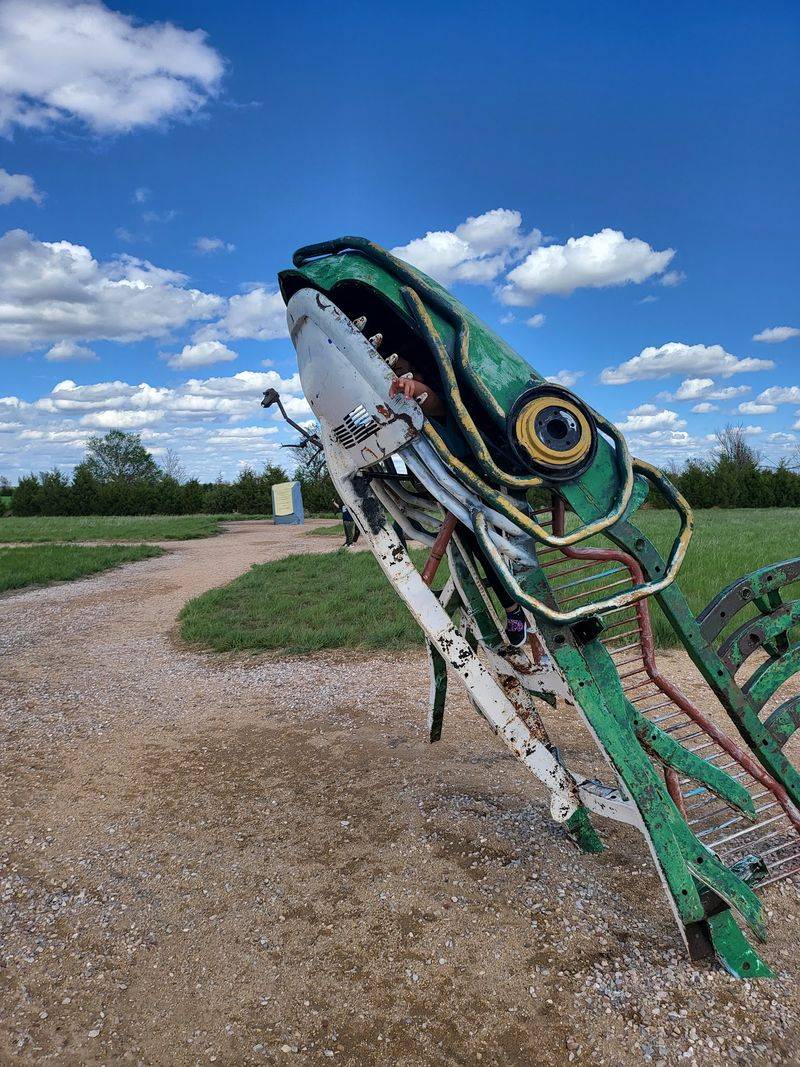
The famous ring is only part of what sits on the grounds.
Carhenge belongs to a larger outdoor collection often called the Car Art Reserve, where additional sculptures use automobiles and vehicle parts in different ways.
Named works include pieces such as Spawning Salmon and Fourd Seasons, along with other constructions that push old car bodies well beyond their original purpose.
There are also three bells on the grounds and time capsules connected to the site’s history.
That gives you more to explore after finishing a lap around the main circle. The extra works are not trying to copy Stonehenge, so the shapes and ideas shift once you leave the centerpiece behind.
Some pieces use recognizable car forms, while others lean more heavily into parts and altered structures.
The easiest approach is simply to keep walking after the main monument instead of treating the circle as the entire stop.
Carhenge is at 2151 County Road 59, Alliance, NE 69301.
The open setting means weather can shape the visit, especially on windy or very hot days. Sturdy shoes and a layer you can add or remove are practical choices when you are spending time outside on the High Plains.
The Roadside Attraction Stays Open Throughout The Year
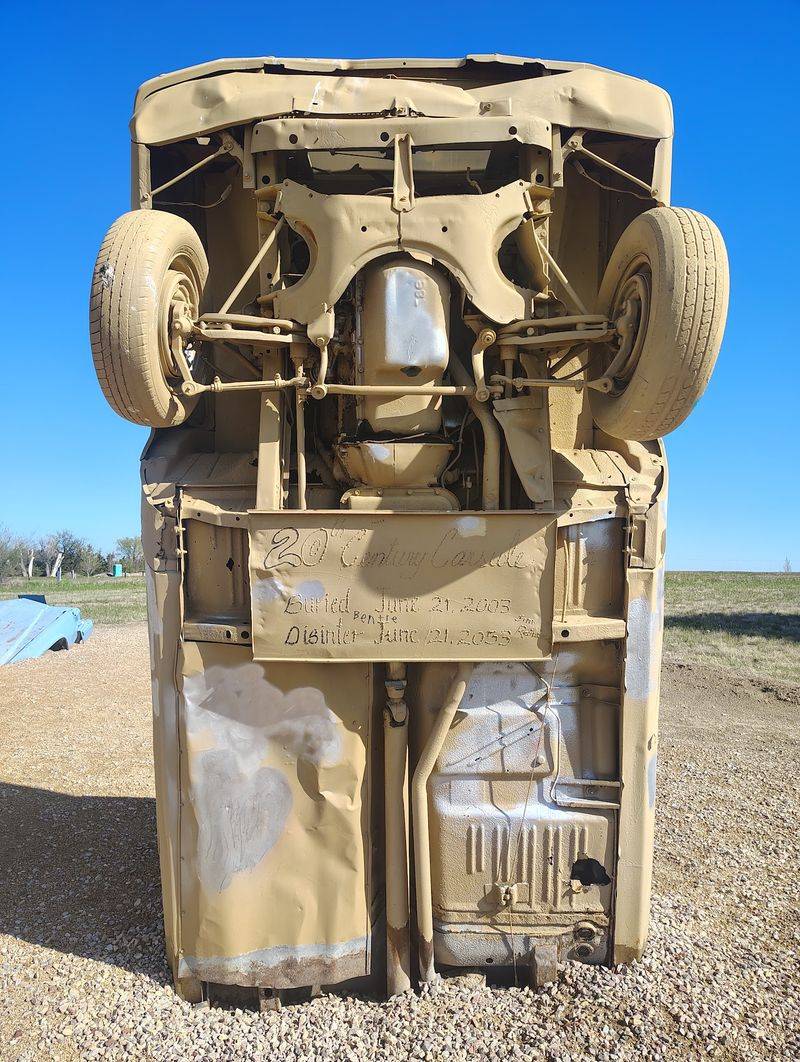
Carhenge stays open all year, with public access from dawn to dusk.
Admission is free, and donations help support the site.
That makes the stop easy to work into a road trip without dealing with timed entry or a fixed admission schedule. The main thing to watch is daylight, especially during shorter winter days.
A seasonal gift shop operates on the property, generally during the warmer part of the year, so its availability depends on when you visit.
The shop is separate from the attraction itself. Even when it is closed, the outdoor monument remains accessible during daylight hours.
Weather deserves more attention than the ticket situation. Western Nebraska can bring strong wind, summer heat, cold mornings, and fast-changing conditions, so dress for the day rather than assuming the open field will feel mild.
Once you arrive, the plan can stay simple.
Start with the gray car circle, walk through the surrounding automotive art, and leave enough time to step back for one last wide look before getting back on the road.
By the end of the loop, the connection between the old automobiles and the Stonehenge layout is easy to see.