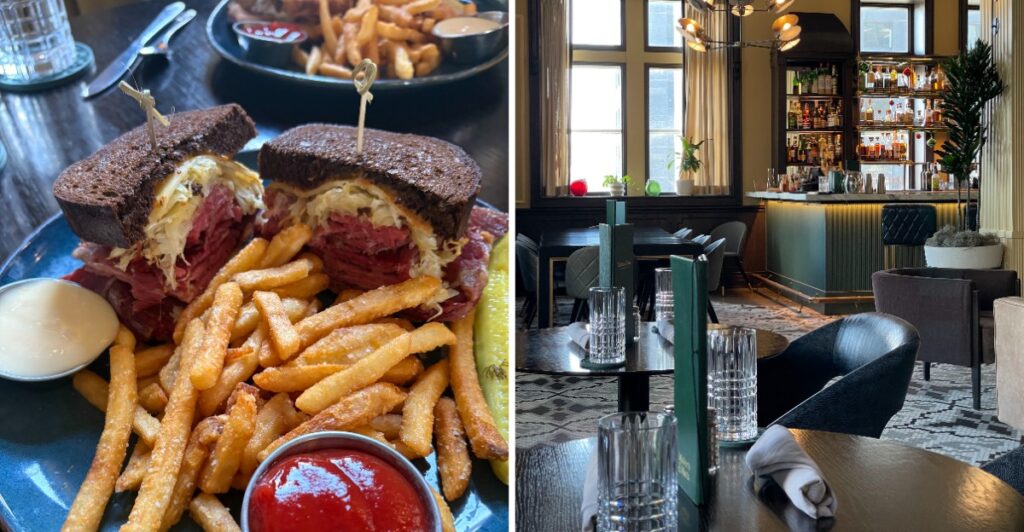
Most sandwiches are content with being lunch.
The Reuben apparently wanted a place in history.
Here, you can order one inside the restored former Blackstone Hotel, the building at the center of Omaha’s best-known Reuben origin story.
That makes the first bite feel a little different.
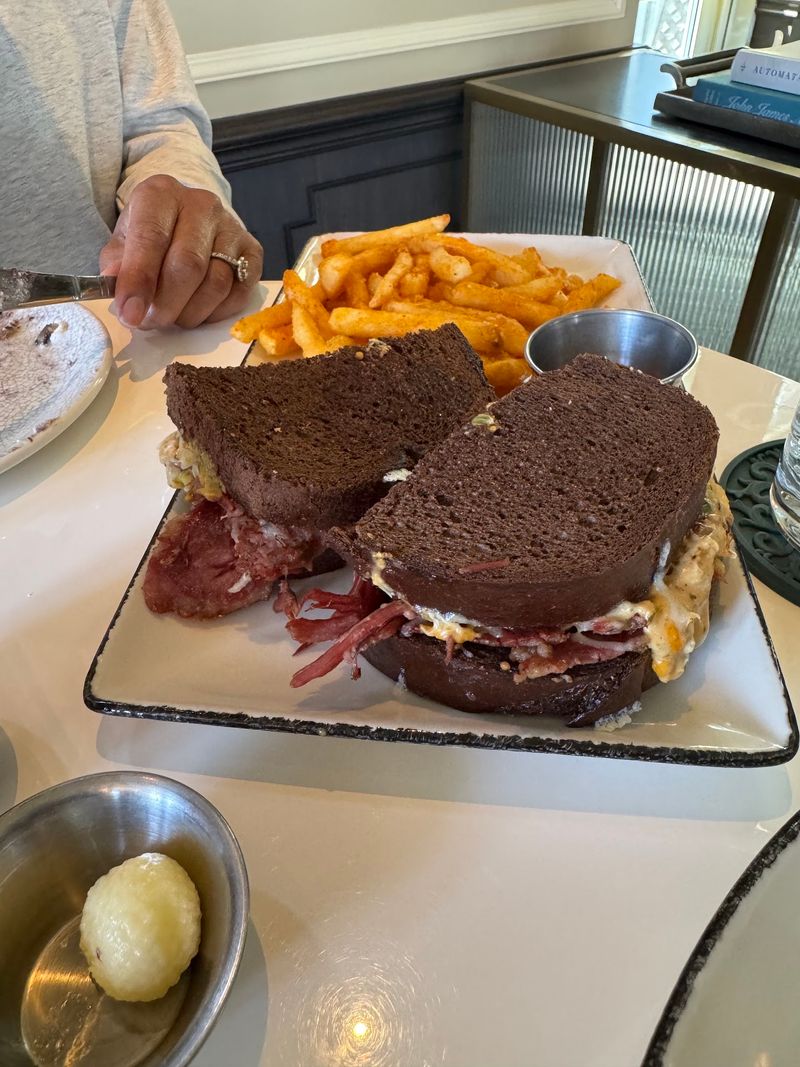
The Original Blackstone Reuben brings corned beef and Gruyère together on rye. Sauerkraut and Thousand Island finish the job without turning the plate into a history lecture.
Nebraska has carried this story for generations, even though New York has its own claim to the sandwich.
I would let them argue.
You have the easier assignment.
Order the Reuben, look around the room, and enjoy the fact that lunch is happening about as close to the legend as you can get.
Some food history belongs in a museum.
This one comes with fries.
The Blackstone Story Starts Inside The Building
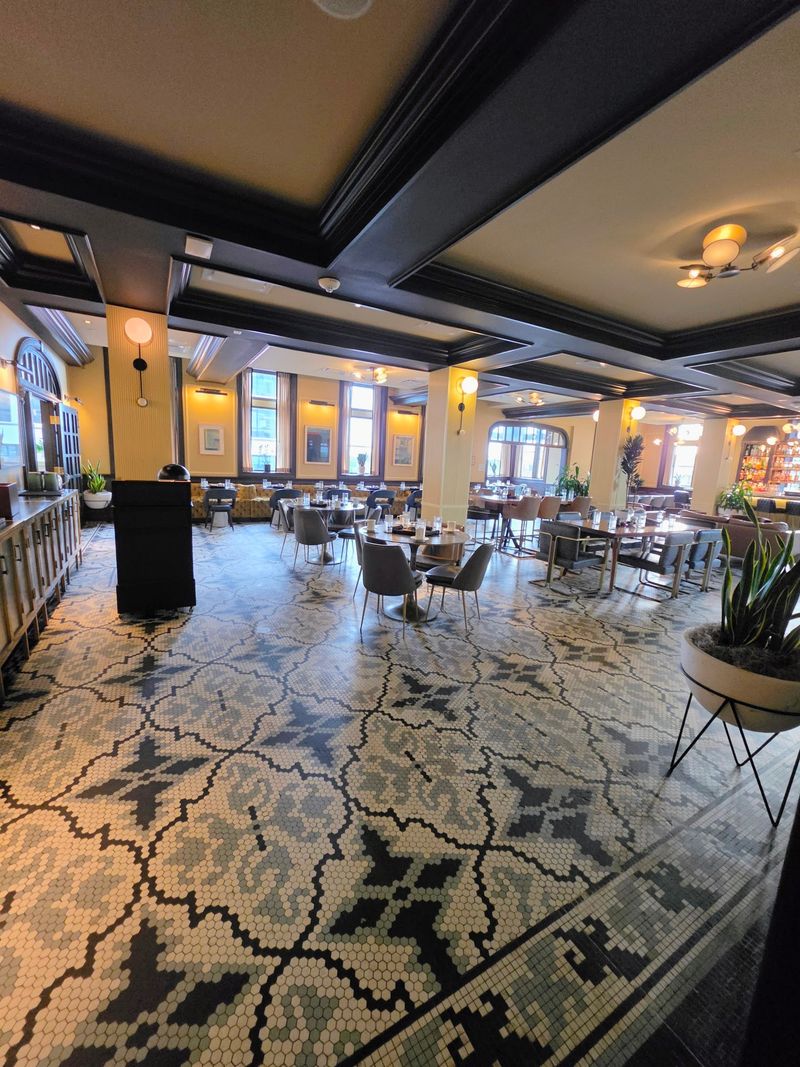
The building opened as the Blackstone Hotel in 1916, long before the surrounding neighborhood borrowed its name.
Charles Schimmel added the hotel to his family’s hospitality business in 1920, and the Blackstone became closely associated with the Schimmel family for decades.
Omaha’s Reuben story grows out of that era.
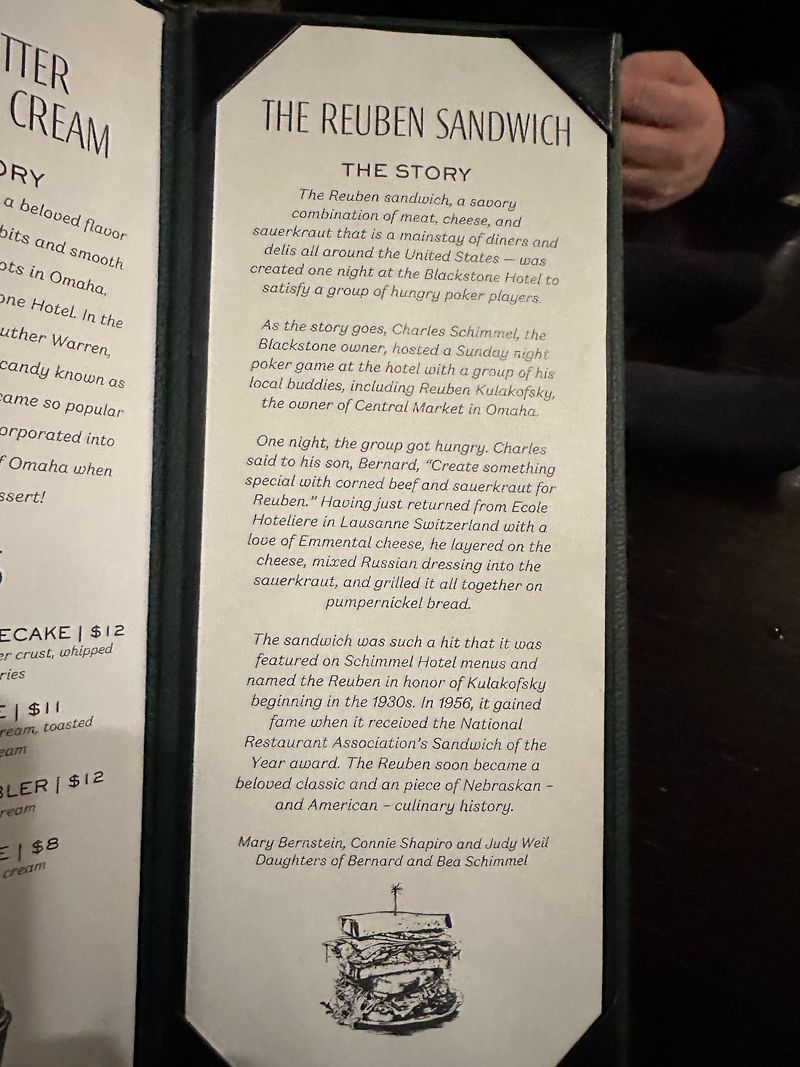
Local grocer Reuben Kulakofsky regularly gathered with Charles Schimmel and several others at the Blackstone Hotel.
The group became known as The Committee, and during one of those gatherings, Omaha tradition credits Kulakofsky with suggesting a sandwich built from corned beef, sauerkraut, cheese, dressing, and rye.
The precise date shifts depending on the retelling, which is why the story is better treated as an Omaha tradition than a perfectly settled invention tale. The hotel connects those gatherings to the years between roughly 1920 and 1935.
What matters when you are sitting inside the building is how closely the food story is tied to the place. The Reuben did not become associated with a generic Omaha address decades later. The Blackstone is the setting at the center of the local account.
Today, the restored hotel gives you a chance to eat the sandwich without leaving that setting behind.
The Original Blackstone Reuben Is Still On The Menu
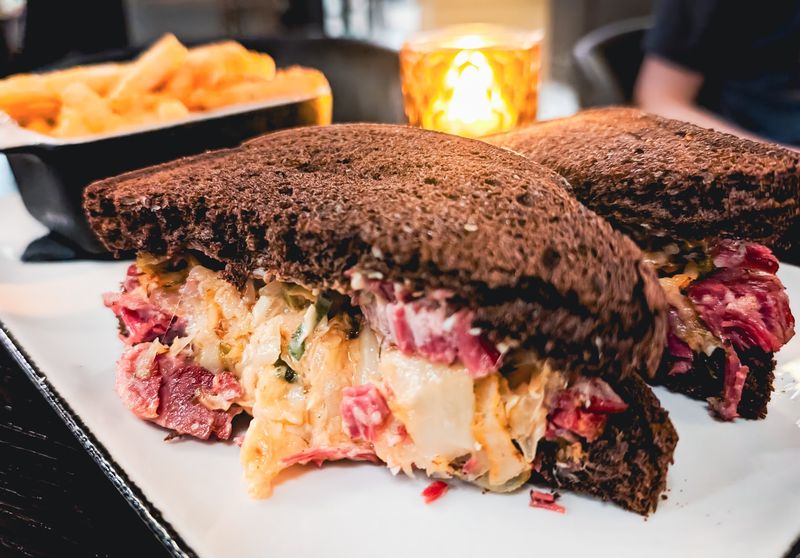
Orléans Room keeps the Reuben connection visible rather than treating it as a footnote.
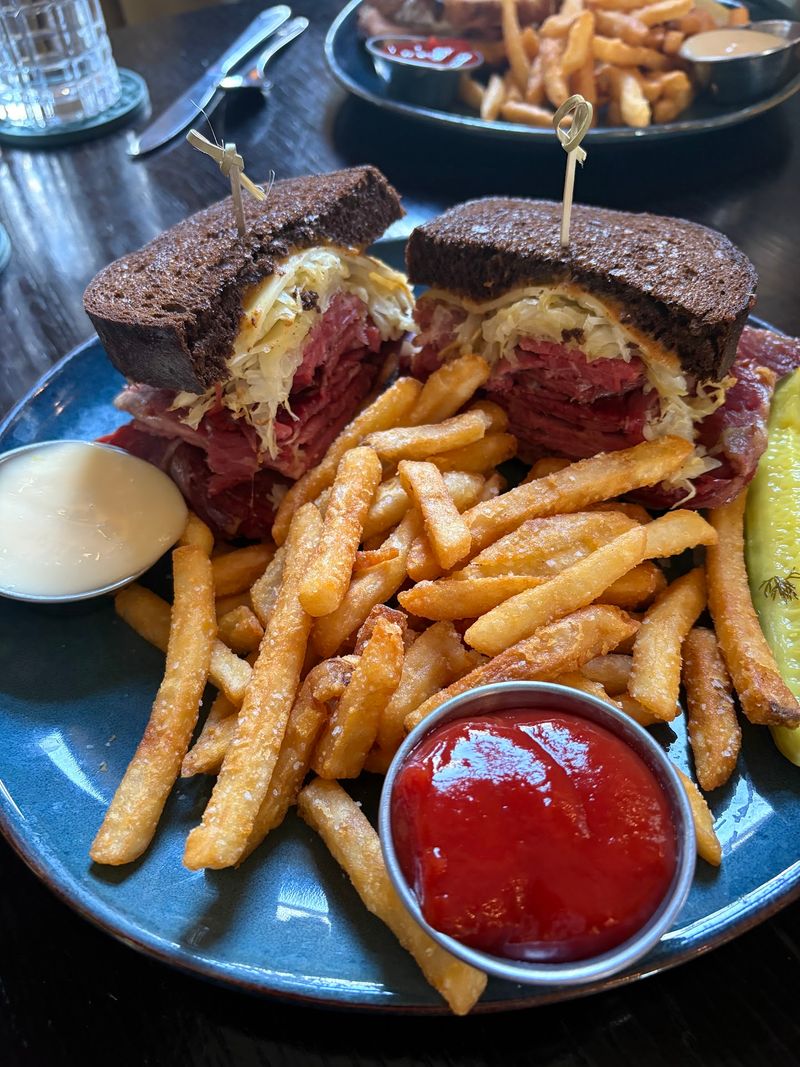
The current lunch menu includes the Original Blackstone Reuben, built with corned beef, sauerkraut, Thousand Island dressing, Gruyère, and rye, with frites alongside.
The combination stays close to the familiar structure that made the sandwich recognizable far beyond Nebraska. Corned beef provides the savory center. Sauerkraut brings acidity and texture.
Thousand Island adds creaminess, while Gruyère melts into the meat and cabbage. Rye gives the sandwich the bread that has long been associated with the classic form.
If this is your first meal here, start with the Original Blackstone Reuben before branching into anything else. That keeps the order simple and gives the hotel’s most famous food story first place at the table.
The current lunch menu gives you enough room to make the meal larger if you want, but there is no need to turn the stop into a tasting marathon.
There is already plenty happening between the history, the building, and the sandwich.
Sometimes the most interesting choice is also the easiest one: order the dish tied most closely to the place, then let everything else stay optional.
The Blackstone Gathering Shaped Omaha’s Favorite Version Of The Story
The best-known Omaha account starts with a regular gathering at the Blackstone rather than a restaurant test kitchen.
Reuben Kulakofsky, a local grocer, regularly joined Charles Schimmel and others at the hotel. The group’s nickname, The Committee, has survived in the hotel’s modern identity, including the name of another restaurant in the building.
The sandwich story says Kulakofsky wanted something to eat during one of those gatherings and proposed the combination that later took his name. Charles Schimmel liked the result, and the Reuben eventually entered the Schimmel hotel food operation.
From there, the sandwich traveled much farther than the room where the group met.
Family accounts connect Bernard Schimmel, Charles’s son, with putting the Reuben onto hotel menus and helping establish the version that spread through the family’s hospitality business.
A surviving Schimmel hotel menu from the 1930s shows the sandwich already in circulation by that decade.
That history gives the Omaha claim more substance than a vague hometown legend, but it does not erase the competing New York story. New York accounts credit restaurateur Arnold Reuben with a different sandwich lineage.
You do not need to settle that argument over lunch. The useful part here is knowing exactly which tradition Orléans Room represents: the Blackstone, Kulakofsky, Schimmel, and the gathering that Omaha has been talking about for generations.
The Hotel Changed Names But Kept The Story
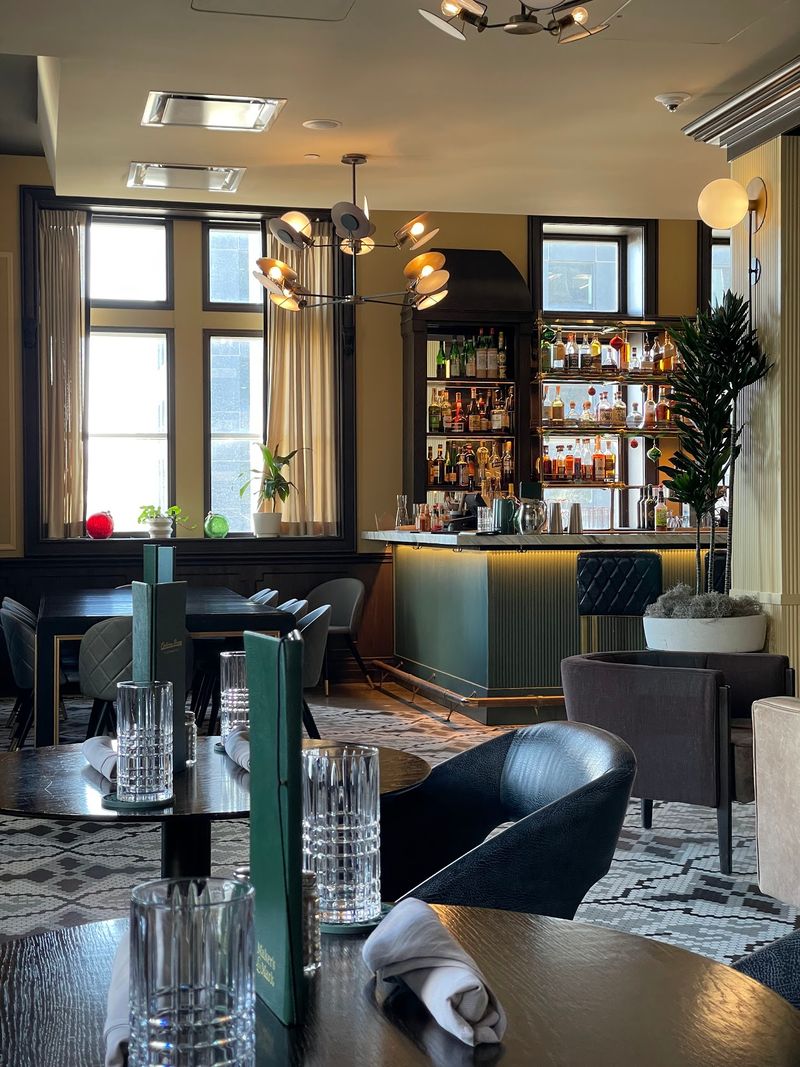
The Blackstone’s life did not stop when its original hotel era ended.
The hotel closed in 1976. It later became an Omaha Landmark in 1983 and was converted to office use in 1984.
A major rehabilitation beginning in 2018 brought the building back to hotel use. The restored property reopened as The Cottonwood Hotel in November 2020, reviving the Blackstone’s hospitality role while preserving pieces of its earlier architecture and identity.
That matters for a Reuben-focused visit because Orléans Room is not a modern restaurant merely named after an old hotel somewhere else in the neighborhood. It operates inside the restored Blackstone building itself.
Original lobby details and other preserved elements help connect the current hotel to its earlier life, while the Blackstone District outside carries the old name across the surrounding area.
You can make the meal as history-heavy or as casual as you want. Look around before sitting down if architecture interests you, or let the sandwich come first and explore afterward.
Either way, the building does most of the storytelling without demanding a formal tour.
That makes the stop feel unusually self-contained. The hotel, the restaurant, the neighborhood name, and the Reuben story all meet under the same roof.
Lunch Puts You Closest To The Classic Sandwich Stop
Orléans Room serves breakfast, lunch, dinner, and weekend brunch, but the Reuben makes lunch an especially natural time to visit.
Weekday breakfast runs from 7 a.m. to 10:30 a.m., followed by lunch from 11 a.m. to 3 p.m. Weekend brunch runs from 7 a.m. to 3 p.m. Dinner begins at 4 p.m., closing at 9 p.m.
Sunday through Thursday and 10 p.m. on Friday and Saturday.
Those hours give you several ways to work the hotel into an Omaha day without turning the meal into the whole schedule.
A weekday lunch keeps the Reuben at the center and leaves the afternoon open for the Blackstone District or nearby Midtown stops. Weekend brunch gives you a slower start, while dinner suits anyone who wants to explore first and return to the hotel later.
The menu can change with the seasons, so the Reuben is the historical anchor rather than a promise that every surrounding dish will stay the same.
If the sandwich is your reason for coming, build the timing around the meal period when it is available and keep the rest of the day flexible.
History is easier to enjoy when nobody is racing the clock between bites.
The Address Is The Historic Blackstone Address
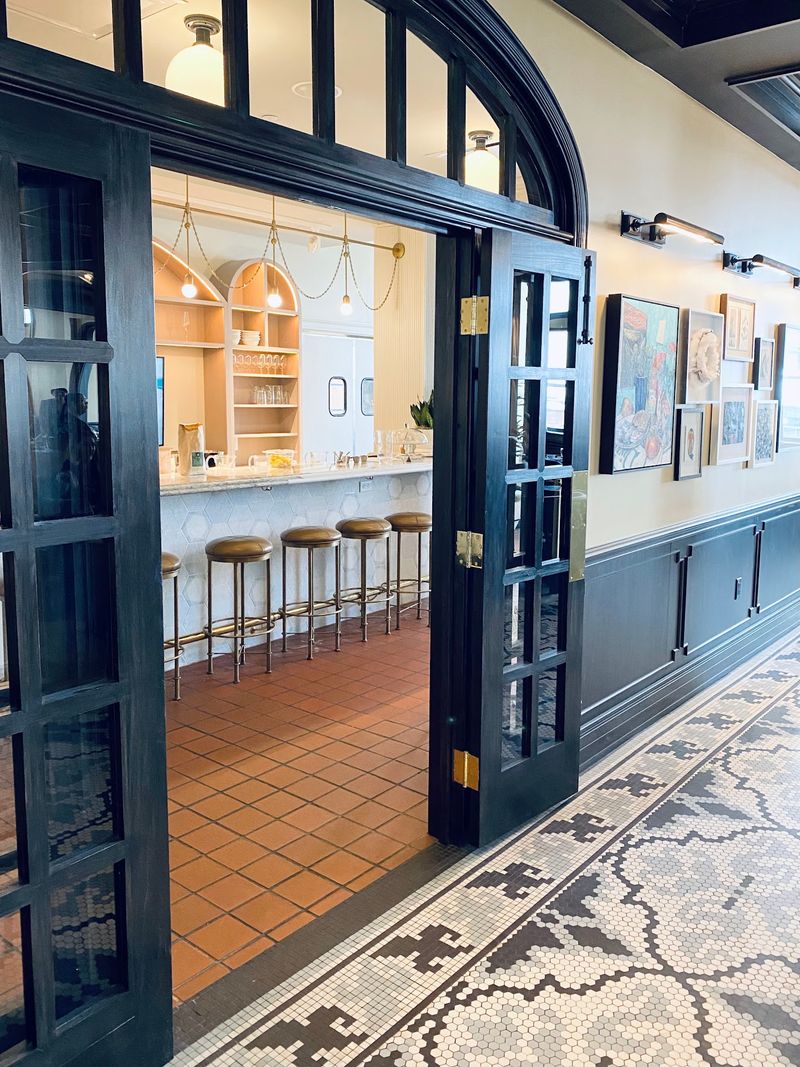
Orléans Room is inside The Cottonwood Hotel at 302 S. 36th St., Omaha, NE 68131.
That address is important because it is the historic Blackstone Hotel property, not simply another restaurant somewhere in the district that later adopted the story.
The Blackstone opened there in 1916. Charles Schimmel became associated with the property in 1920, and the gatherings tied to the Omaha Reuben tradition took place in the hotel during the years that followed.
Today, you arrive at the same building under a different hotel name.
That makes planning pleasantly straightforward. There is no need to eat the sandwich at one location and then cross town to find the place connected with its origin story. The modern restaurant and the historic setting occupy the same property.
After the meal, step outside, and the wider Blackstone District continues the connection. The neighborhood has changed dramatically since that era, but its name keeps the hotel’s identity visible beyond the building.
If you enjoy food history, give yourself a few extra minutes rather than treating the stop like a quick sandwich pickup. The interesting part is not hidden behind a separate attraction ticket. It is already around you.
One Sandwich Can Carry A Lot Of Omaha History
The Original Blackstone Reuben is an easy order, but the story around it is anything but small.
It begins with an early twentieth-century hotel, a regular gathering, a local grocer named Reuben Kulakofsky, and the Schimmel family.
It continues through decades of retellings, competing origin claims, the hotel’s closure, a major restoration, and the return of dining inside the old Blackstone building.
That is a lot to ask from corned beef and rye.
Luckily, you do not have to absorb all of it before the first bite. Start with the sandwich. Notice how sauerkraut cuts through the corned beef, how the dressing softens the sharper edges, and how melted Gruyère pulls the filling together.
Then look around.
The New York claim can keep its place in the national argument, and Omaha can keep telling the Blackstone version. Orléans Room does not require you to declare a winner before dessert.
What it does give you is something unusually concrete: a current Reuben served inside the historic hotel building at the center of Omaha’s origin story.
For a sandwich with this much lore, that is a wonderfully simple way to spend lunch.