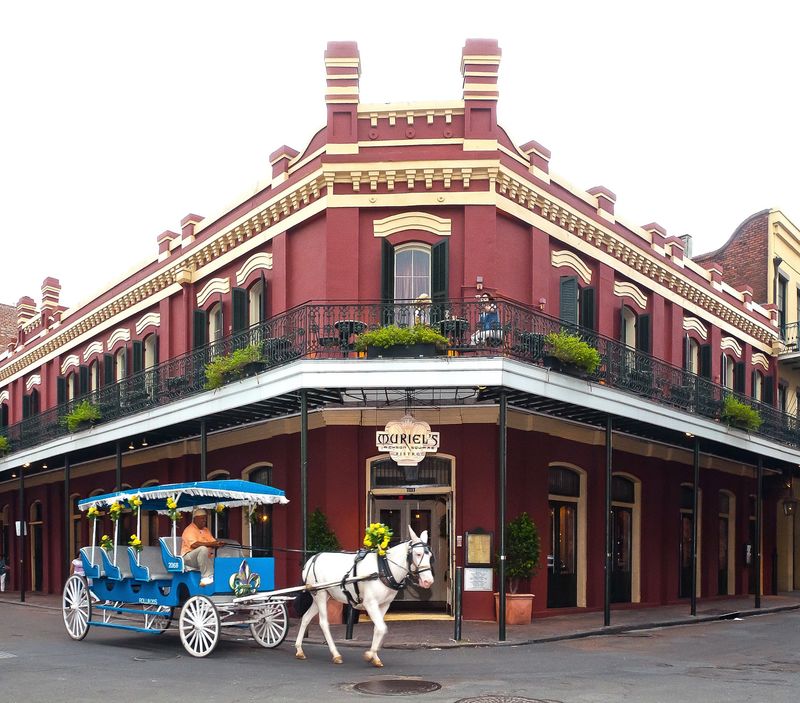
On weekend mornings at the corner of Chartres and St. Ann, a jazz trio warms up while St. Louis Cathedral fills the windows across the street. Muriel’s Jackson Square serves its Creole brunch inside a restored building whose story reaches back to colonial New Orleans.
The food is a big reason people book a table, but the setting gives the meal a sense of place you cannot fake. Here is what to know about the rooms, the menu, the legend upstairs, and the practical details before you go.
A Corner Address Across From Jackson Square
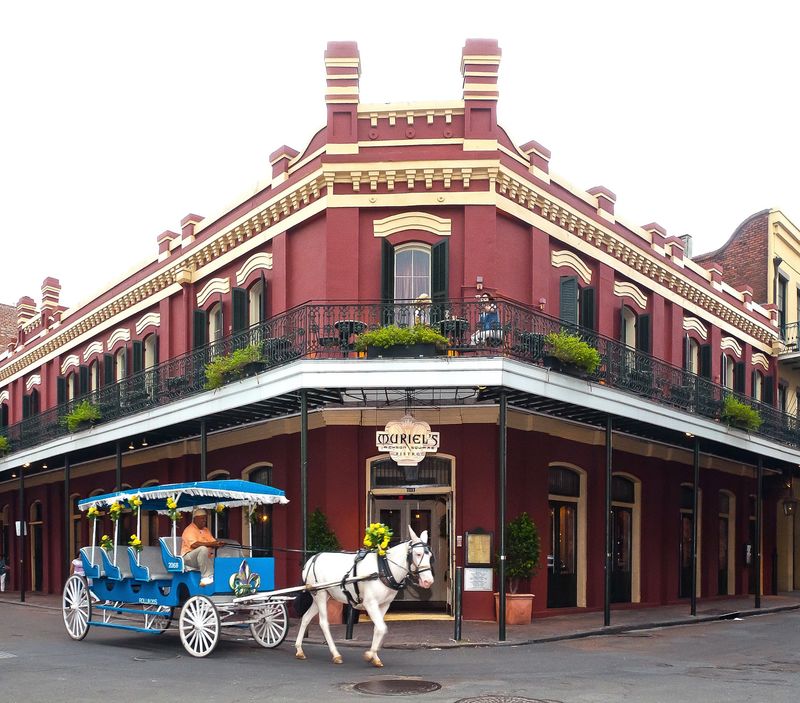
Few restaurant addresses in New Orleans carry as much built-in scenery as 801 Chartres Street. Muriel’s Jackson Square sits on the corner of Chartres and St. Ann, directly across from Jackson Square and only steps from St. Louis Cathedral.
Walk out the front door and you are standing in the middle of the French Quarter’s busiest postcard.
The restaurant describes itself through contemporary Creole cooking, and its listing sums up the appeal plainly: classic Creole fare in a 19th-century building with old-world elegance, plus a Sunday jazz brunch. That brunch actually runs on both Saturday and Sunday, from 10:30 AM to 2 PM, with dinner service filling the rest of the week.
What makes the location matter is the view from upstairs. A second-floor wrought-iron balcony wraps around the building, and the restaurant notes it is the last public access balcony overlooking the square.
Plenty of Quarter restaurants have balconies, but very few put you level with the cathedral spires and the artists, musicians, and street performers circling the square below.
The building itself is large for the neighborhood, with around 15,000 square feet spread over two floors. That space gets divided into a string of rooms, each with its own personality, which shapes the experience as much as the menu does.
Colonial Roots And The Destrehan Mansion
Long before brunch reservations, the lot belonged to Jean Baptiste Destrehan, Royal Treasurer of the French Louisiana colonies. He acquired the property sometime between 1743 and 1762 and built an elaborate family home there.
By accounts the restaurant shares, the residence ranked second in grandeur only to the French colonial governor’s mansion of the day.
Then came 1788. The Great New Orleans Fire swept through the Quarter and damaged a portion of the Destrehan house, part of the same disaster that reshaped much of the old city.
The rebuilding that followed helps explain why so much of the Quarter today reads as Spanish colonial in its bones, with heavy walls, courtyards, and ironwork.
That layered history shows up in how people describe the building now. Some visitors call it a roughly 300-year-old site given a modern refresh, while the restoration itself aimed at a specific moment: an elegant private residence from the mid-1800s.
Both things are true in their way. The ground carries colonial history, and the rooms you eat in were brought back to their 19th-century character.
Keeping those layers straight makes the meal more interesting, since you are sitting on a corner that has watched the square change for well over two centuries.
Pierre Jourdan And The Table Set Every Night
Every New Orleans building seems to have a story, but this one comes with a place setting. In the early 1800s the property belonged to Pierre Antoine Lepardi Jourdan, who cherished the home.
In 1814 he lost it in a high-stakes card game, and the tale says he never truly left the second floor afterward.
Muriel’s leans into that legend with respect rather than gimmickry. A table is reportedly set nightly for Jourdan, complete with bread, and diners often stop to look at it on their way through.
Guests mention the reserved ghost table as a charming touch, and one family noted that staff happily told the story to an 11-year-old.
Some visitors leave a little disappointed that the resident spirit kept to himself, which is probably the most common outcome. The restaurant has a reputation as one of the most haunted in the Quarter, though the fun lies in the tradition rather than any promise of an appearance.
After Jourdan’s time, the building cycled through lives as a tavern, a bordello, and private homes. In the 1970s it held a Chart House Restaurant and spent several years as home to the Heritage Hall Jazz Band, a fitting chapter for a place now known for weekend jazz.
The 2001 Restoration Behind Today’s Rooms
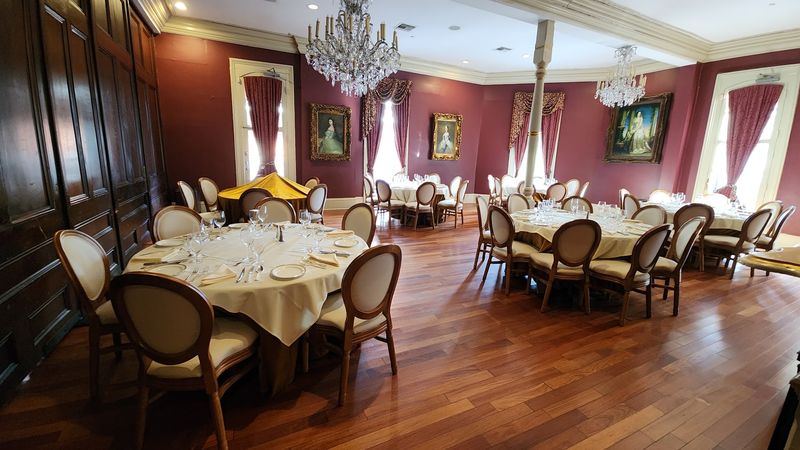
March 10, 2001 marks the date Muriel’s opened its doors, and getting there took serious work. The owners carried out an extensive restoration under a National Historic Tax Credit, a program that ties financial support to careful preservation standards.
The goal was clear: return the building to the look of an elegant mid-1800s private residence. Exterior elements typical of French and Spanish colonial design stayed, including wrought-iron balconies and large windows.
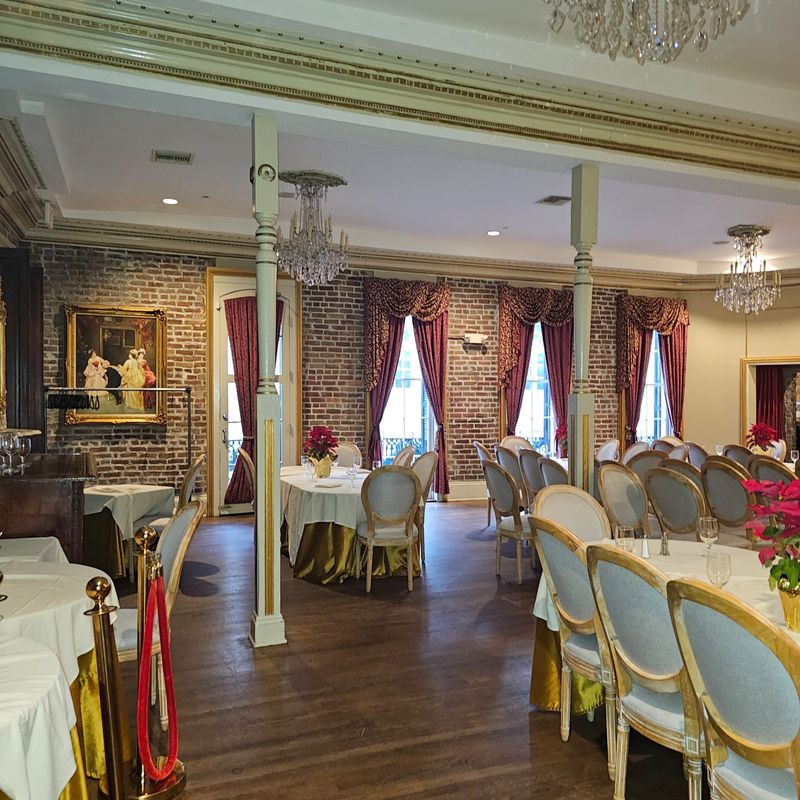
Inside, high ceilings and intricate detailing set the tone across the 15,000 square feet.
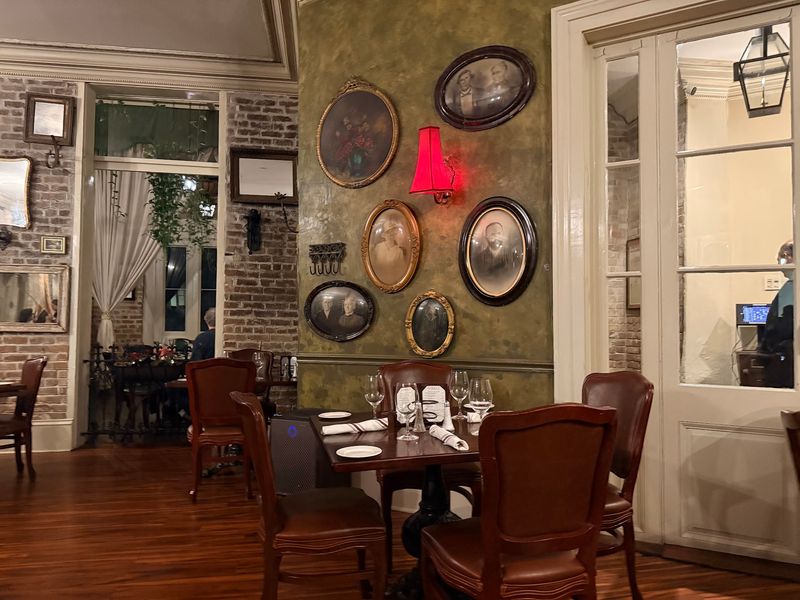
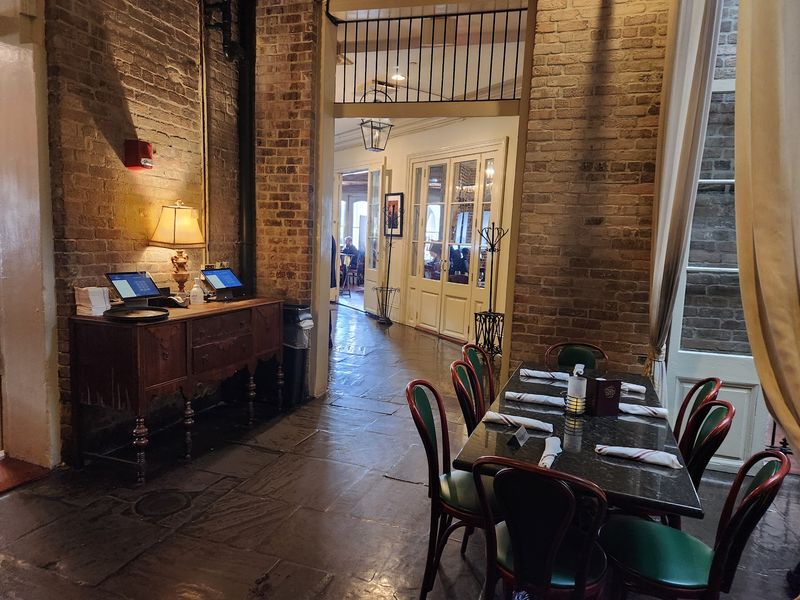
Diners tend to notice that the layout feels like a house rather than a single dining hall. One visitor described moving through what resembles a living room, a sitting room, and a dining room, with a vintage bar toward the back.
Walls carry art and decorative vintage plates, giving rooms a lived-in quality instead of a museum stiffness.
That residential feel matters for brunch. Sitting in a parlor-sized room with jazz drifting in from nearby is a different experience from eating in a big open space.
Another guest summed it up as a creative modern take on an old building that respects its heritage, which is about as good a goal as any restoration can claim.
Weekend Jazz Brunch With A Live Trio
Live music sets the pace at brunch, and it comes from a trio rather than a speaker system. Joe Simon’s Jazz Trio is named among the featured ensembles, and guests who come for the weekend service often single out the band as a highlight.
Timing is simple. Brunch runs Saturday and Sunday from 10:30 AM to 2 PM, so the music overlaps with late-morning crowds filling Jackson Square across the street.
That pairing gives the meal its rhythm: the trio inside, the square’s own street musicians outside, and the cathedral bells marking the hour.
A trio suits the rooms well. The spaces are sized like a large home, so a small group can be heard clearly without overwhelming conversation at the table.
You can talk, eat, and still catch a solo when it lands.
For first-timers to New Orleans, a jazz brunch is one of the easier ways to experience the city’s music without staying out late. For people who already know the city, the draw here is the combination of setting and sound in one of the Quarter’s most historic corners.
Book ahead, since weekend tables go quickly, and ask about seating closer to the music if that is the priority.
What Lands On The Brunch Table
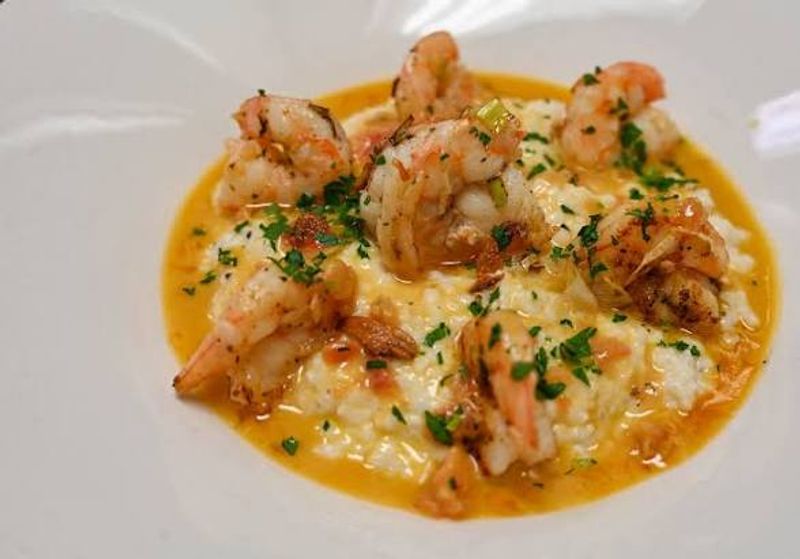
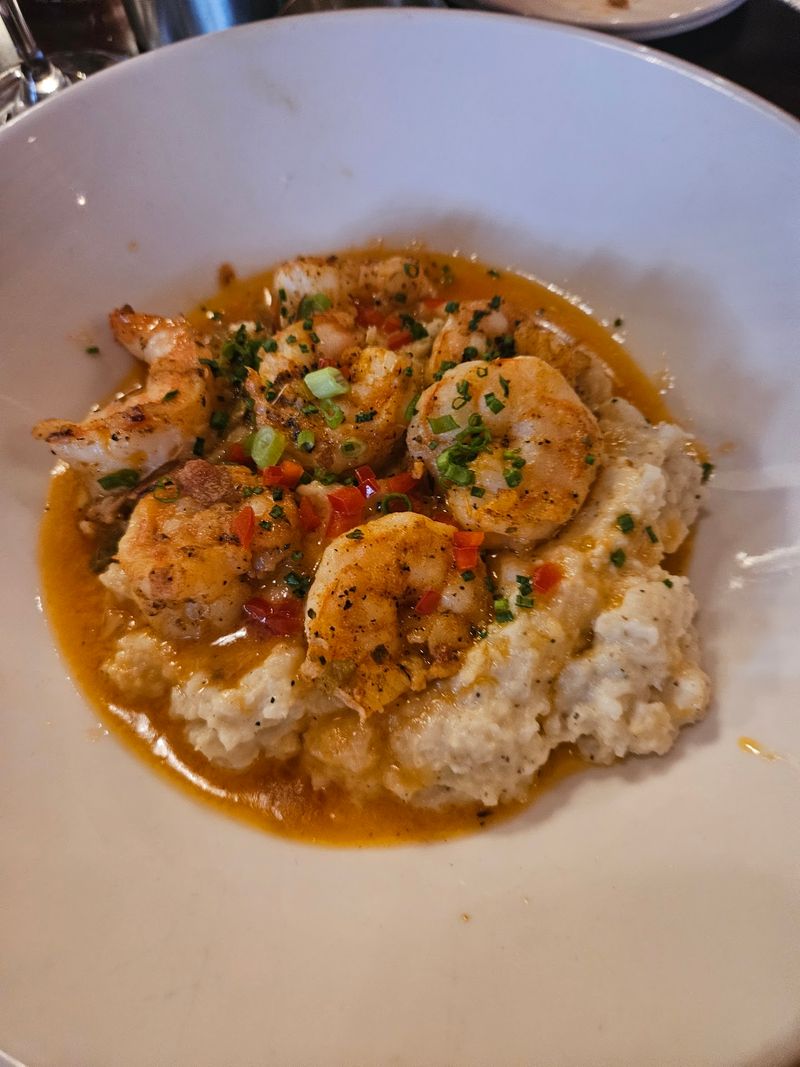
Shrimp and grits anchor the brunch menu, and the version here earns plenty of attention. Slow-cooked stone-ground grits come topped with Louisiana Gulf shrimp, leeks, a smoked tomato butter sauce, and crispy garlic.
One diner raised in Massachusetts, never a grits fan, admitted she wished she could finish every bite.
Beyond that bowl, the brunch lineup leans hearty and Creole. Duck and Chaurice Hash brings the smoky, spiced pork sausage into a brunch skillet format.
A Wild Mushroom Omelette offers a lighter path, while Creole crab and artichoke dip works well for a table that wants to share before the mains arrive.
Sweet tooths get Bananas Foster pain perdu, which folds the city’s famous flaming dessert flavors into thick French toast. It is a rich plate, best split if you also plan on an entree.
The menu falls under the direction of Executive Chef Erik Veney, and the kitchen calls its style contemporary Creole. That means familiar Louisiana staples with some modern touches rather than a strict throwback menu.
A good brunch strategy: order one savory classic, one sweet dish, and share both. The portions and flavors are built for lingering through a couple of jazz sets rather than rushing out.
Turtle Soup, Crepes, And The Dinner Signatures
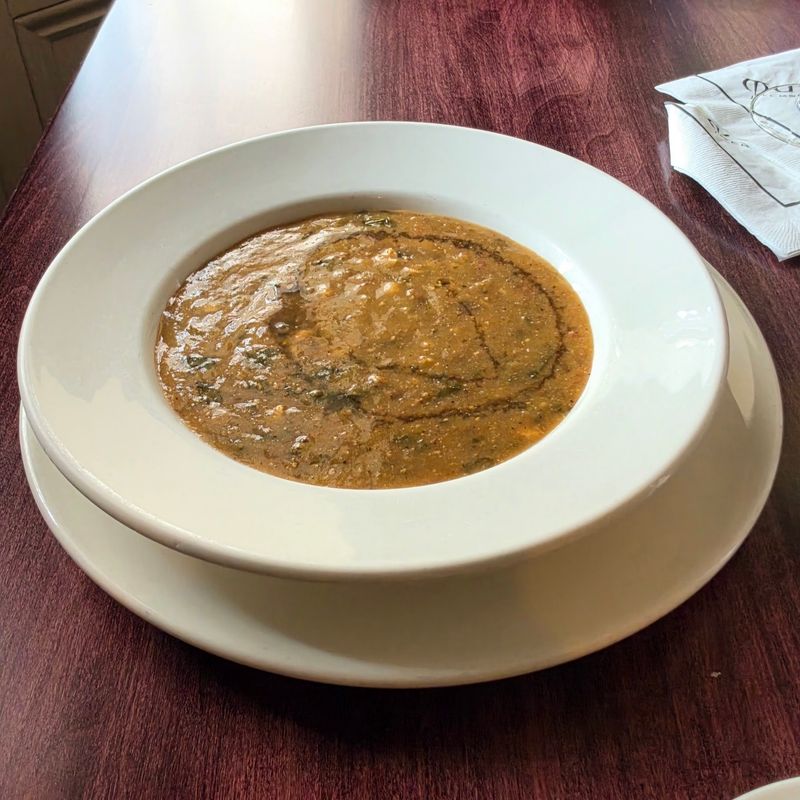
Come back after dark and the menu shifts toward the dishes that built the restaurant’s following. Turtle soup sits near the top, made with locally farmed snapper turtle and traditionally finished with sherry at the table.
It shows up constantly in diner conversations as the classic New Orleans order.
Shrimp and goat cheese crepes are another frequent favorite, praised even by guests who had complaints elsewhere in the meal. The wood-grilled double cut pork chop, served with braised greens, wins over people who usually skip greens altogether.
Alligator Hash uses locally farmed alligator and sausage for something distinctly regional.
Seafood fills out the rest. Expect blackened redfish, Shrimp Creole, Herb Crusted Lemonfish, and Bayoubaisse, a Louisiana spin on a seafood stew.
Seafood gumbo also gets plenty of attention from regulars.
Not every plate lands the same for everyone. A few diners have found certain fish entrees uneven, so the pork chop, crepes, and soups are the safer bets for first-timers.
Value-minded guests should look at the three-course table d’hote menu, which pairs an appetizer, entree, and dessert for around $60. Several visitors describe it as one of the better deals for a sit-down meal in the Quarter.
Bread Pudding And The Dessert Course
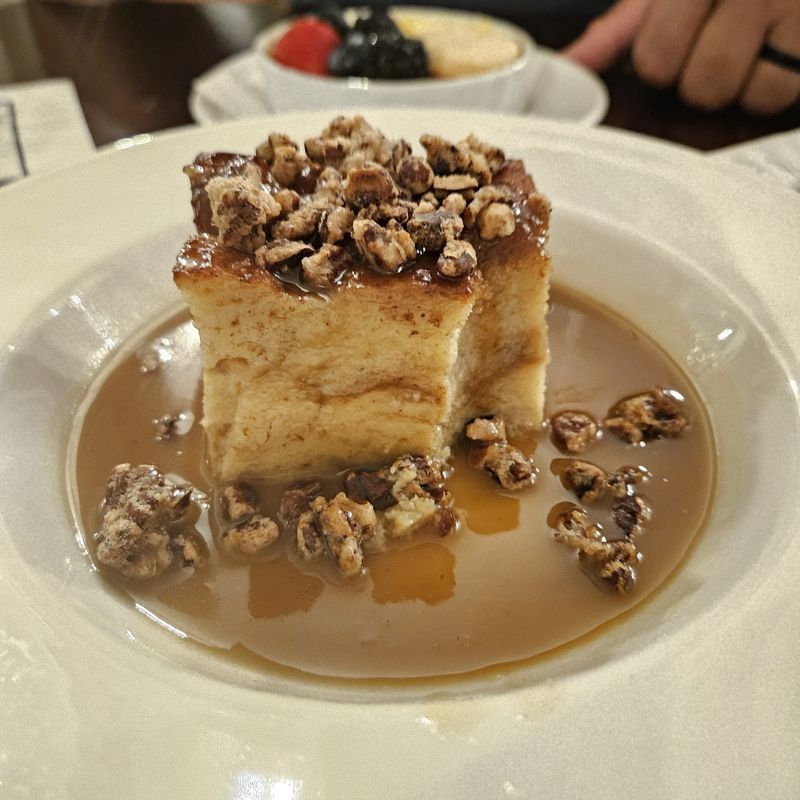
Bread pudding comes up in conversation about Muriel’s more than any other dish, which says something in a city full of bread pudding. The restaurant’s pain perdu bread pudding arrives with candied pecans and a rum sauce, and seasonal versions have included a white chocolate and praline take.
Close behind is the dark chocolate pecan tart. It sits on a brown sugar crust made with pecans and comes with salted caramel.
One diner noted that nearly every upscale kitchen tries a dessert like this, but this version stood out from the pack.
Creme brulee rounds out the classic options for people who prefer something lighter and custardy. It gets steady praise for its crackly top and smooth center.
At brunch, dessert can double as the main event if you go with the Bananas Foster pain perdu. At dinner, the three-course menu includes dessert, which makes saving room easier to justify.
A practical tip: if your table is split between the tart and the bread pudding, order both and pass plates. They hit very different notes, one dark and nutty, the other warm and soft, and sampling each gives you a fuller picture of what the pastry side of the kitchen does well.
The Seance Lounge Up A Narrow Stair
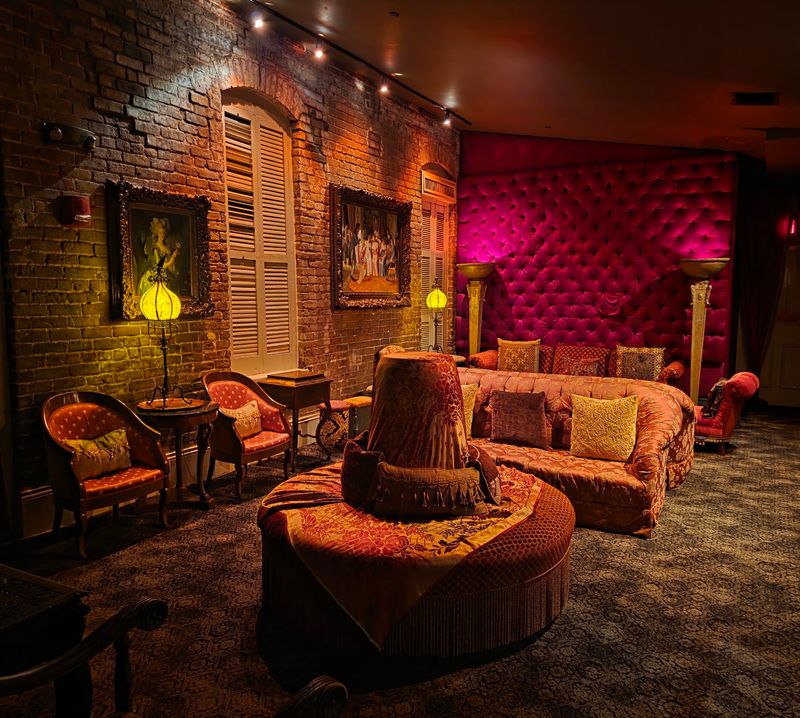
Up a narrow stairway on the second floor waits the room many guests talk about long after the meal. The Seance Lounge features deep red ceilings, exposed brick, and a wall covered in diamond-tufted red silk.
The restaurant says the space exists to celebrate the mystery and character of Muriel’s.
It is also where the Jourdan legend is said to linger most. Combine the color palette, the low light, and the story, and you get a room that feels theatrical without tipping into a haunted-house attraction.
Visitors regularly recommend taking a few minutes to walk upstairs even if you dine on the first floor. One birthday guest called it among the most striking spaces she had ever seen, and others describe it as a relaxed place to linger after eating.
Next door, a smaller private room seats up to ten, and the building holds other event rooms too. The Magnolia Room and Cotillion Room host gatherings, and one guest pointed out that the private rooms are unusually large for the Quarter.
The lounge also connects to the balcony, so a visit upstairs often turns into a two-part tour: red silk and candlelight, then open air above the square.
Balcony Views, Courtyard Seats, And Who Feels At Home
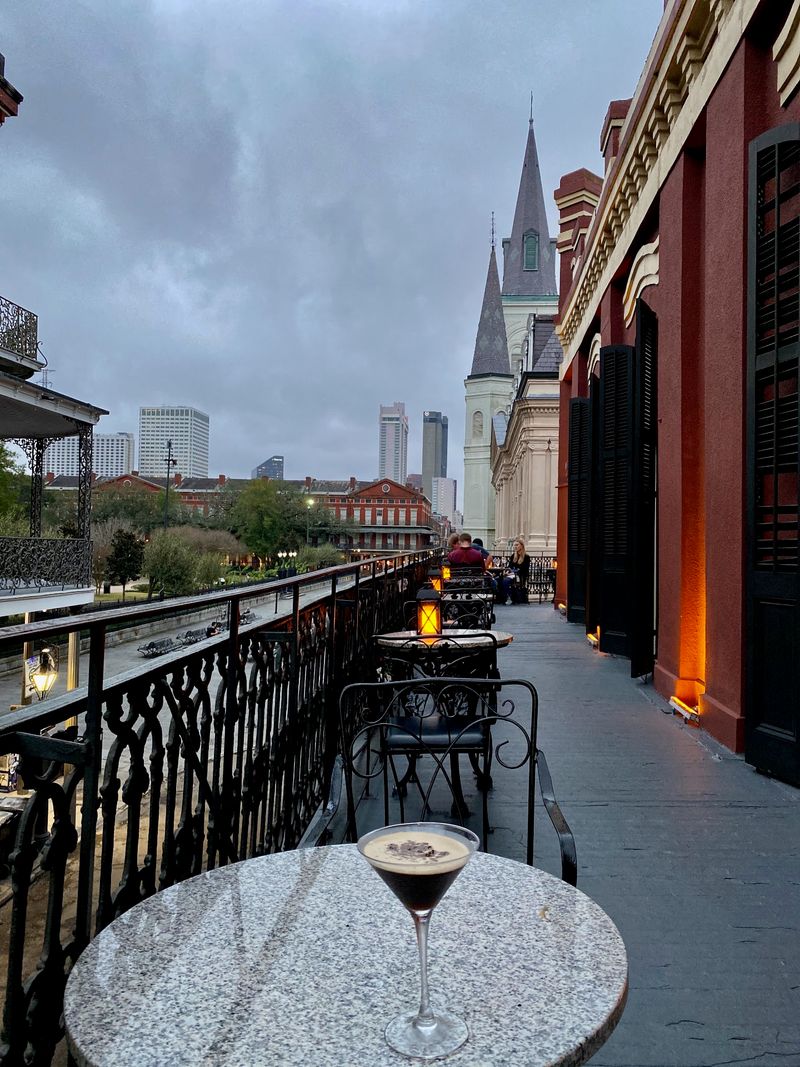
Sunset is the hour people mention most when they talk about the balcony. From the wrap-around ironwork, you look straight across Jackson Square toward the cathedral while the Quarter shifts into evening.
Guests describe it as peaceful, a surprising word for one of the busiest corners in the city.
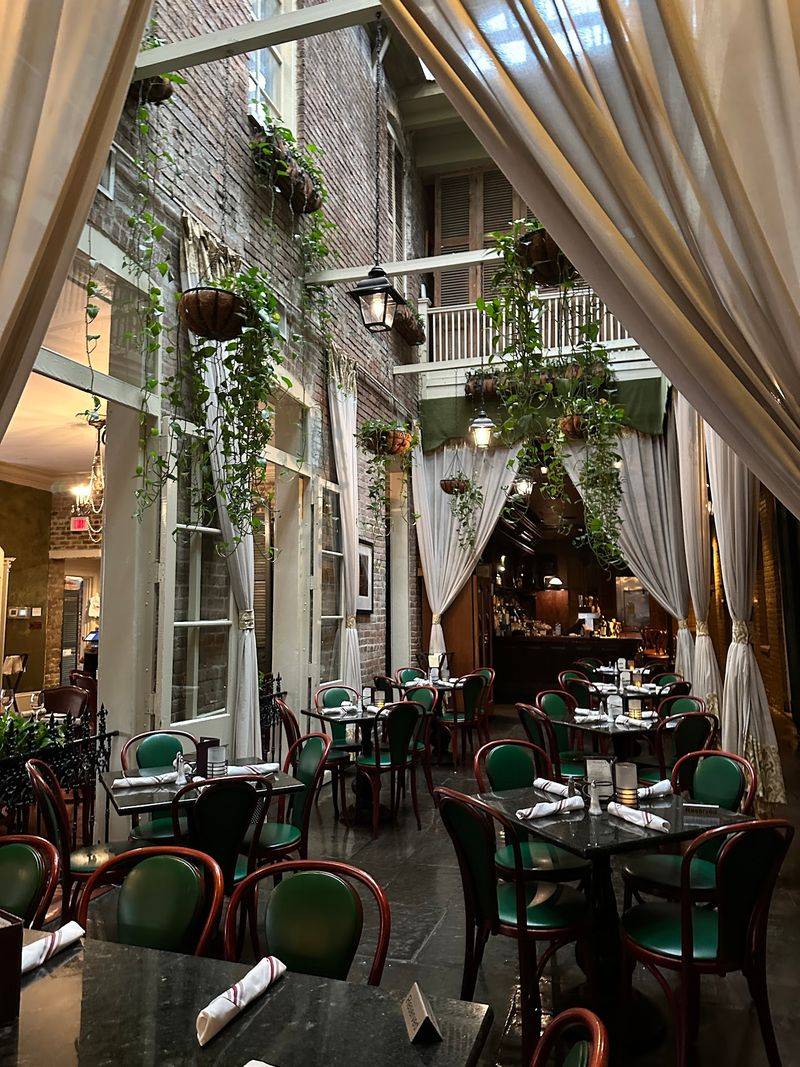
Downstairs offers a different mood. The Bistro area includes the Gris Gris, the Cathedral Room, and the Courtyard and Bar, plus a lush indoor courtyard.
Some diners request a window seat with a street view for the people watching.
The overall tone is elegant but not stiff. One visitor described it as romantic and atmospheric without feeling overly formal, and that balance shows in who comes.
Couples mark anniversaries and birthdays, families bring kids who get mocktails and the ghost story, and solo diners have found staff especially welcoming.
It can get loud during peak hours, which is worth knowing if you want quiet conversation. Brunch with the trio has a brighter, livelier feel, while late dinner tends to suit couples.
Weekday happy hour, Monday through Friday from 3 to 5 PM, is another relaxed way to see the balcony and bar without committing to a full meal.
Hours, Prices, Dress Code, And Reservations
Reservations are the first thing to sort out. Guests repeatedly say the restaurant fills quickly, and booking ahead is strongly recommended, especially for weekend brunch.
Call 504-568-1885 or book through muriels.com.
Brunch runs Saturday and Sunday from 10:30 AM to 2 PM. Dinner goes Sunday through Thursday from 5 to 9:30 PM and Friday and Saturday from 5 to 10 PM.
The bar opens at 3 PM daily, closing at 9:30 PM Sunday through Thursday and 10:30 PM on Friday and Saturday.
Expect to spend roughly $30 to $90 per person depending on courses. The three-course table d’hote dinner at around $60 is the clearest value, and extras like added crab on entrees can raise the bill quickly.
Dress is smart casual. Gentlemen are asked to skip tank tops and hats in the dining rooms, so plan your outfit before a day of walking the Quarter.
Getting there is easy on foot from most of the French Quarter, since the restaurant sits right on the square at Chartres and St. Ann. Parking nearby is limited, so walking, a streetcar ride toward Canal Street, or a rideshare drop-off usually works better than driving in.
A Brunch Worth Planning A Weekend Around
Plenty of French Quarter restaurants sell location first and cooking second. Muriel’s manages to give both their due, with a building restored to its 19th-century grace, a menu rooted in Creole classics, and a view no newer dining room can copy.
The weekend brunch shows that best. You get a live trio, a bowl of stone-ground grits topped with Gulf shrimp, and tall windows framing the cathedral across the street.
Add a trip upstairs to the red silk Seance Lounge and a few minutes on the balcony, and the visit stretches comfortably past two hours.
It is not flawless. Some dishes draw mixed opinions, the rooms get noisy at peak times, and prices climb if you order freely.
Those are fair tradeoffs for most visitors, and choosing the crepes, the pork chop, the turtle soup, or the three-course menu keeps things steady.
Plan for a weekend morning, reserve early, and leave room for bread pudding. Then, before heading back into the square, glance at the table set for Pierre Jourdan, still waiting with its bread, more than two centuries after he refused to give up the house on Chartres Street.