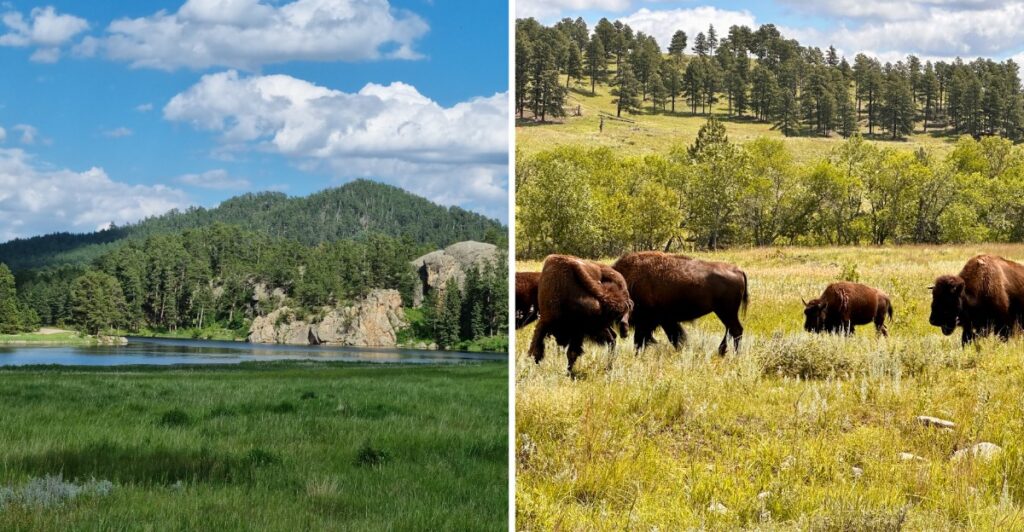
If traffic stops here, do not reach for the horn.
Look for horns.
In South Dakota’s Black Hills, bison can wander straight across the road as if the pavement was put there for them. And really, nobody in the car is going to argue.
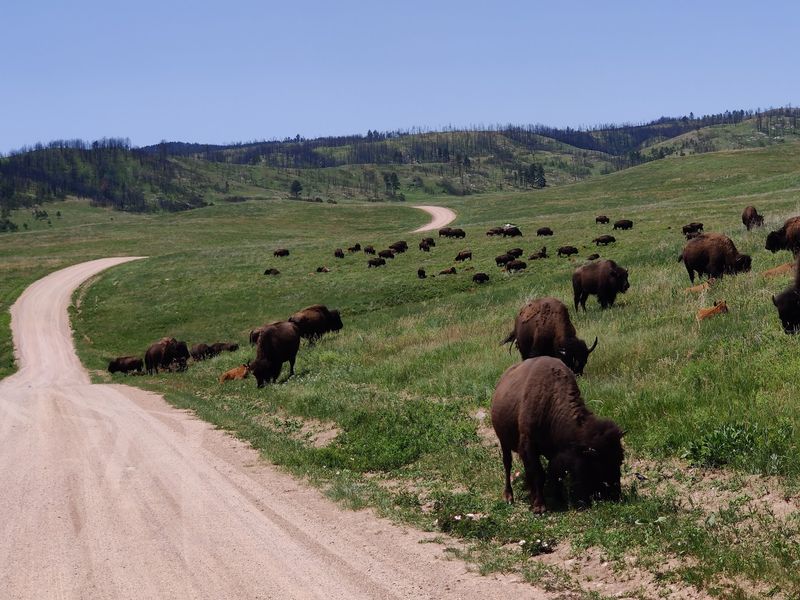
The herd roams across thousands of acres, so this is nothing like watching wildlife from behind a fence. You might spot a few grazing in the distance or find yourself parked while an entire group takes its time crossing.
That is your cue to stay put.
Bring binoculars, give the animals plenty of room, and forget trying to hurry the drive.
I would keep the camera ready and the schedule loose.
When a bison decides your lane is now a walking path, the bison wins.
Roughly 1,300 To 1,400 Bison Roam This State Park
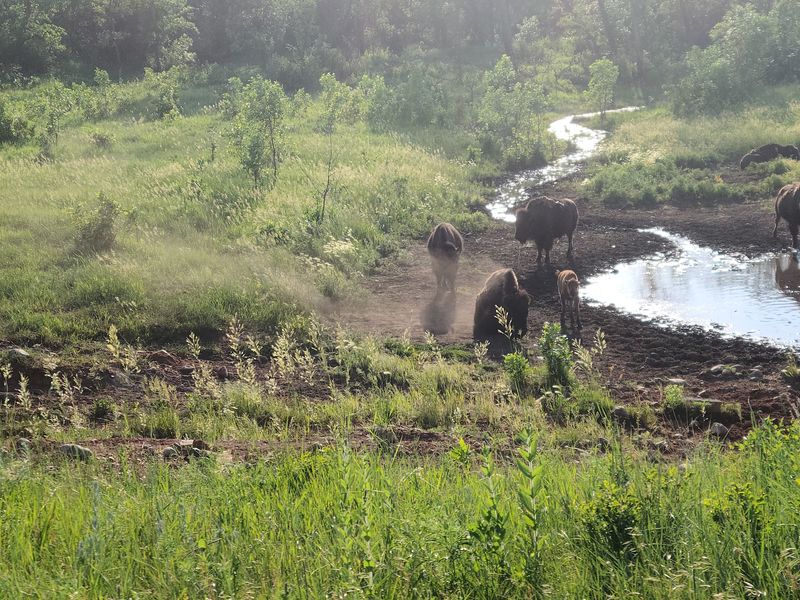
A herd of roughly 1,300 to 1,400 bison roams Custer State Park, moving through the open grasslands and wooded hills of the southern Black Hills.
That freedom is part of what makes wildlife viewing here different from a zoo or drive-through attraction. The bison are not arranged for convenient viewing, and their location changes as they move across the park.
One morning may bring a roadside herd. Another may call for binoculars and a patient scan across the prairie.
Keep the experience on the safe side by staying in your vehicle when bison are close. Away from the car, remain at least 100 yards from bison, elk, and other large wildlife. Their heavy build can make them look slow until they decide to move.
A zoom lens is a better tool than stepping closer. It also lets the animals keep grazing, resting, or crossing without having to react to you.
If a herd blocks the road, remain in your vehicle and wait for the animals to move before continuing.
The Herd Began With Just 36 Bison In 1914
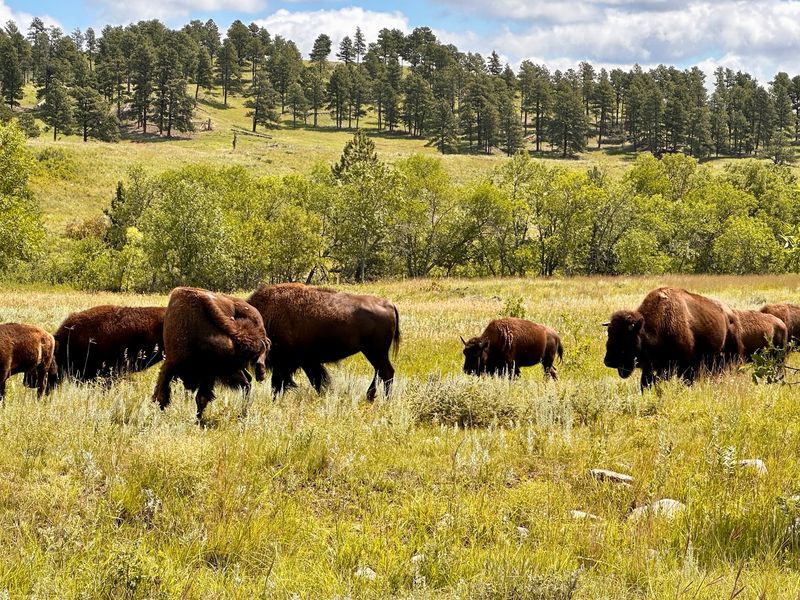
The herd you see today began with only 36 bison purchased in 1914 from Scotty Philip’s herd near Pierre.
That small beginning came during a period when bison numbers across North America had fallen dramatically.
The park’s herd grew over the following decades through continued management, eventually becoming the large free-roaming population that defines so much of Custer State Park today.
The number is worth remembering as you drive. A group of several dozen animals crossing the prairie can equal the size of the park’s entire original herd.
Management remains part of the story. Custer State Park balances herd size with available habitat and forage, which is why the bison are managed rather than simply left to increase without limits.
You do not need to turn the drive into a history lesson to appreciate that background. Keep 1914 and 36 bison in mind, then look at the scale of the animals spread across the landscape now.
The contrast is easy to understand from the passenger seat.
Wildlife Loop Road Is The Main Bison-Viewing Drive
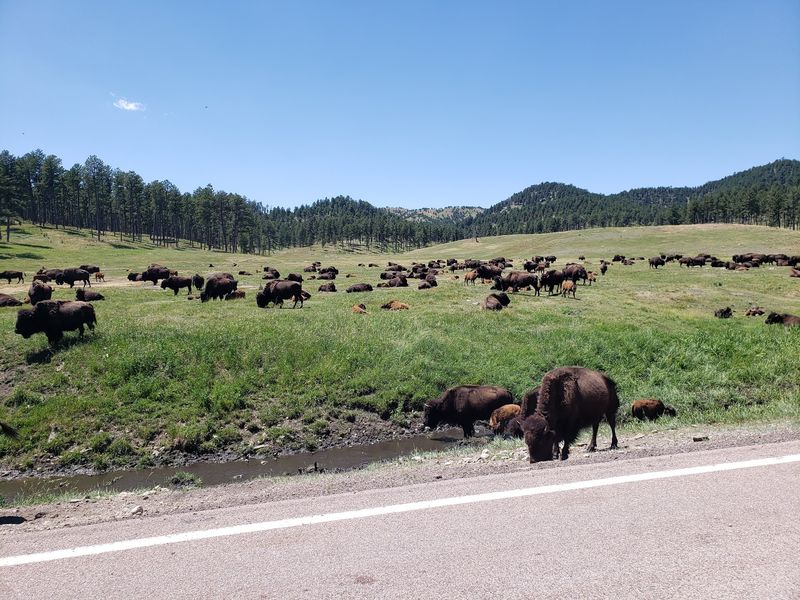
Wildlife Loop Road stretches 18 miles through prairie and ponderosa pine-covered hills in the southern part of the park. It is one of the most practical places to begin looking for bison.
Allow about 90 minutes for the drive before adding stops. That estimate can grow quickly when wildlife gathers near the road, so this is not a route to squeeze between tightly timed reservations.
Drive slowly, watch the shoulders, and use pullouts when you want a longer look. Bison may be the main target, but the route also offers chances to see white-tailed deer, mule deer, elk, prairie dogs, pronghorn, feral burros, and other wildlife.
Do not feed the burros or any other park animals. Feeding and disturbing wildlife are against park regulations, even when an animal approaches a vehicle.
Pack water and a snack before starting the loop. A traffic delay caused by wildlife is easier to handle when nobody in the car is watching the clock or wondering where the next drink is coming from.
If you only have time for one dedicated wildlife drive, make this the one and let the road unfold at its own pace.
Early Morning And Late Evening Improve Your Wildlife Odds
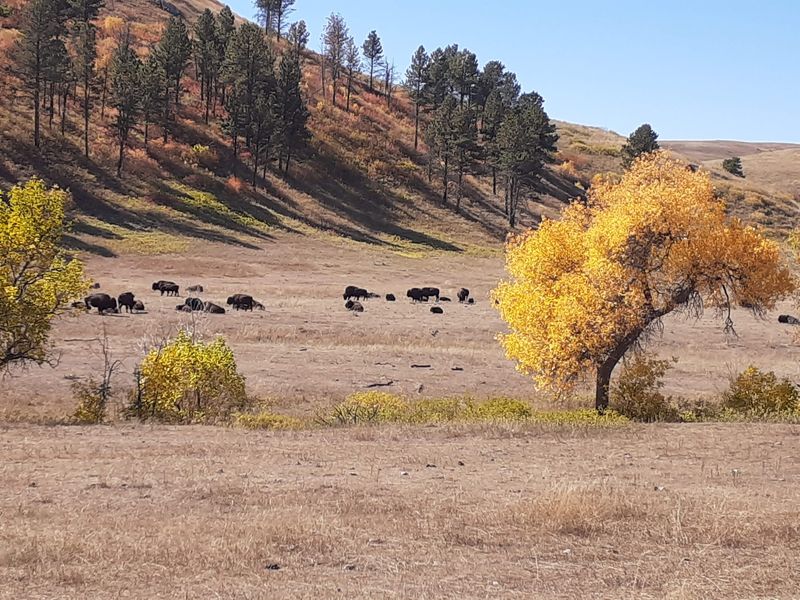
Wildlife Loop Road can produce sightings throughout the day, but early morning and late evening, just before sunset, are the recommended times for watching animals.
Cooler hours can bring more movement across the open country, while low light gives the prairie and pine hills a completely different look from midday.
An early start also gives you breathing room afterward. If bison hold up traffic or you stop repeatedly for wildlife, you still have most of the day available for other parts of Custer State Park.
Late evening works differently. Build enough time into the drive so you are not rushing toward the end of the loop as daylight fades.
Midday is not a lost cause. The herd moves on its own schedule, and you may still encounter bison near the road. The difference is that morning and evening give you the timing officially recommended for the strongest wildlife-viewing opportunities.
If your schedule allows two drives, try opposite ends of the day. The same road can look surprisingly different once the light, temperature, and animal movement change.
Either way, patience matters more than chasing a perfect moment.
Prairie And Pine Hills Shape The 71,000-Acre Park
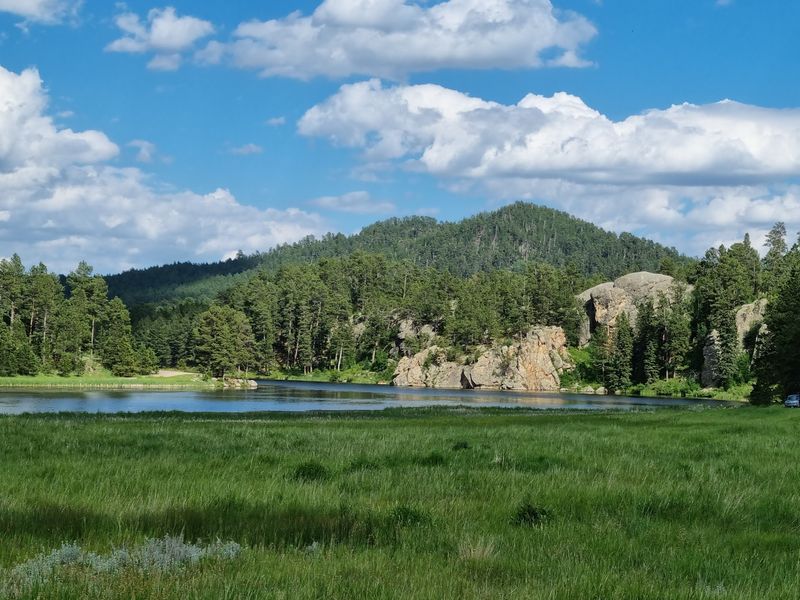
Custer State Park covers about 71,000 acres in the Black Hills, mixing rolling prairie with ponderosa pine-studded hills, granite formations, lakes, and open range.
For bison, that means space to move through large grassland areas rather than remaining concentrated beside roads. For you, it means the scenery keeps changing even when wildlife is temporarily out of sight.
One stretch of road can open onto broad grassland. A few turns later, pine-covered slopes can close in around the route.
Other animals use different parts of the landscape too. Prairie dogs are closely tied to open grasslands, while deer and elk may appear near wooded areas. Bighorn sheep, coyotes, burrowing owls, and other species are also possible, though never guaranteed.
Bring layers even on a warm-weather trip. Elevation, wind, clouds, and time of day can change how the Black Hills feel over the course of a few hours.
The landscape is not just background for the herd. It determines where animals move, where they feed, and how easily you can see them.
That is why a quiet stretch without bison is not wasted time. Keep scanning the hills and prairie rather than treating the drive as a checklist.
The Bison Center Adds Context Along Wildlife Loop Road
The Custer State Park Bison Center sits along Wildlife Loop Road at the Buffalo Corrals and focuses entirely on the park’s herd.
Inside, interpretive displays cover the history of the bison, their importance, and the way the herd is managed today. It makes an easy stop when you want to get out of the vehicle and put some context around what you have been seeing on the road.
The center also breaks up an 18-mile drive nicely. Stretch your legs, spend time with the exhibits, then return to the loop with a better idea of what you are watching.
Opening hours change by season. From Memorial Day through Labor Day, the center operates longer summer hours, while autumn hours shorten and winter access can be subject to seasonal closure.
If the Bison Center matters to your trip, check its current schedule before building the whole day around it.
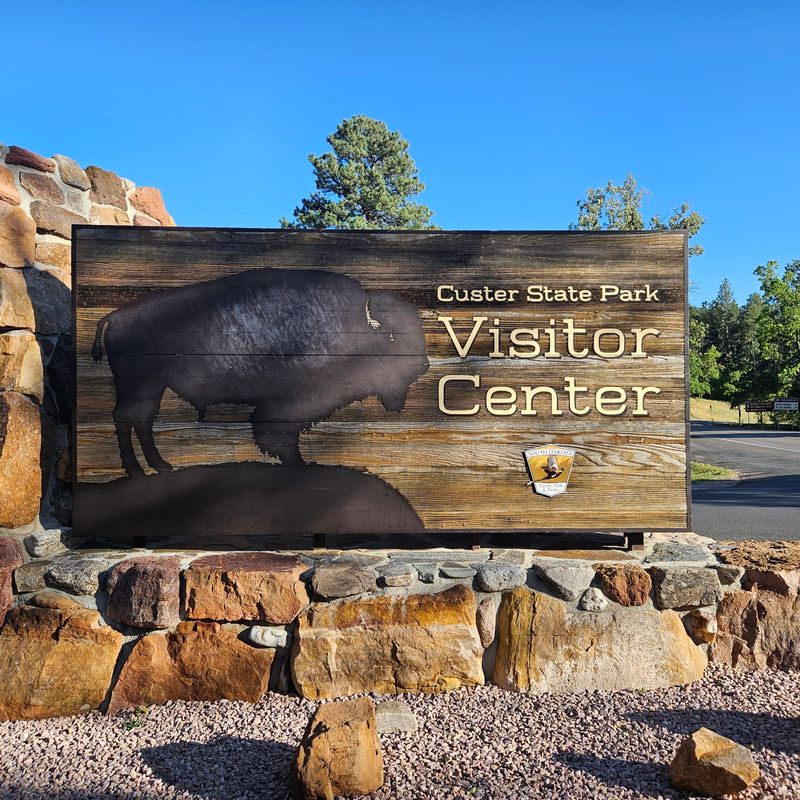
The Visitor Center offers another useful stop elsewhere in the park and remains open year-round except for Thanksgiving and Christmas.
You can do the wildlife drive without either building, but adding one of them can turn a wildlife sighting into a better-understood part of the park’s conservation story.
Useful Tips Before Visiting The Park
Custer State Park requires an entrance license for most visitors. Current short-term vehicle licenses cover one to seven consecutive days, while annual options are also available.
Start with enough fuel, water, and time for delays. Wildlife Loop Road is only 18 miles, but a herd on the pavement can stretch a planned drive well beyond the usual 90 minutes.
The park’s contact address is 13329 US Highway 16A, Custer, SD 57730.
For wildlife safety, stay at least 100 yards from bison, elk, and other large animals when you are outside a vehicle. Never feed or disturb wildlife, and do not leave the road to get closer for a photograph.
Binoculars make distant animals easier to enjoy without changing their behavior. A charged phone or camera is useful too, but keep your attention on traffic when you are the driver.
If possible, begin Wildlife Loop Road early in the morning or save it for the period before sunset. Add the Bison Center if its seasonal hours match your visit, and leave enough open time for stops that cannot be predicted.
The herd may appear right beside the road or stay farther across the grass. Either way, Custer State Park works best when you arrive prepared to watch rather than pursue.