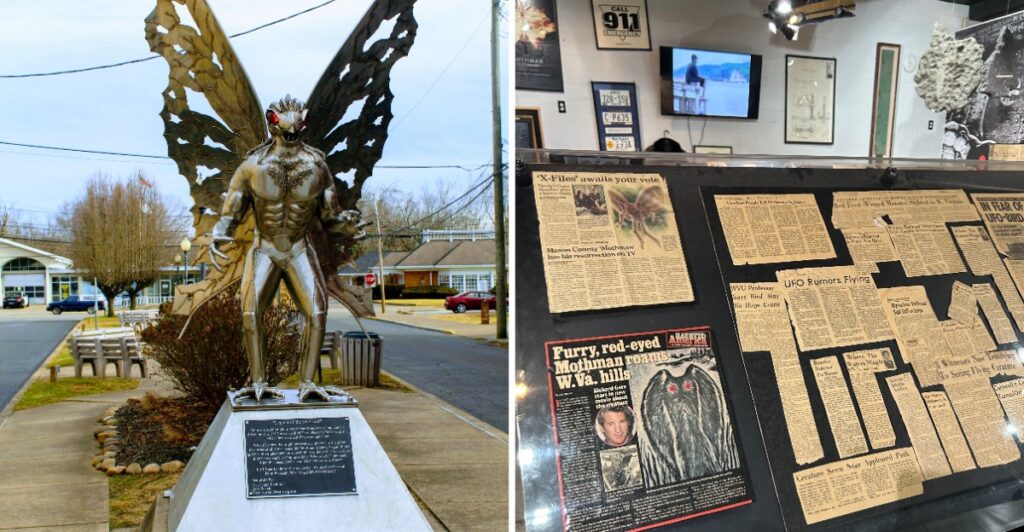
Some towns get a mascot. This one ended up with a winged mystery.
It started back in 1966, when strange reports near an old industrial area gave West Virginia one of its most enduring local legends.
And the story never really packed up and left.
Decades later, you can still follow the trail through town, from old clippings and eyewitness accounts to a few much stranger reminders of how deeply the legend stuck.
September turns the volume up even more, when fans arrive for a weekend built around the mystery.
I would start with the original story before diving into the stranger stuff. It makes everything that comes after a lot more fun.
Because once a town gives a mysterious creature its own statue, museum, and annual celebration, you know this is no ordinary piece of folklore.
The Story Took Hold In November 1966
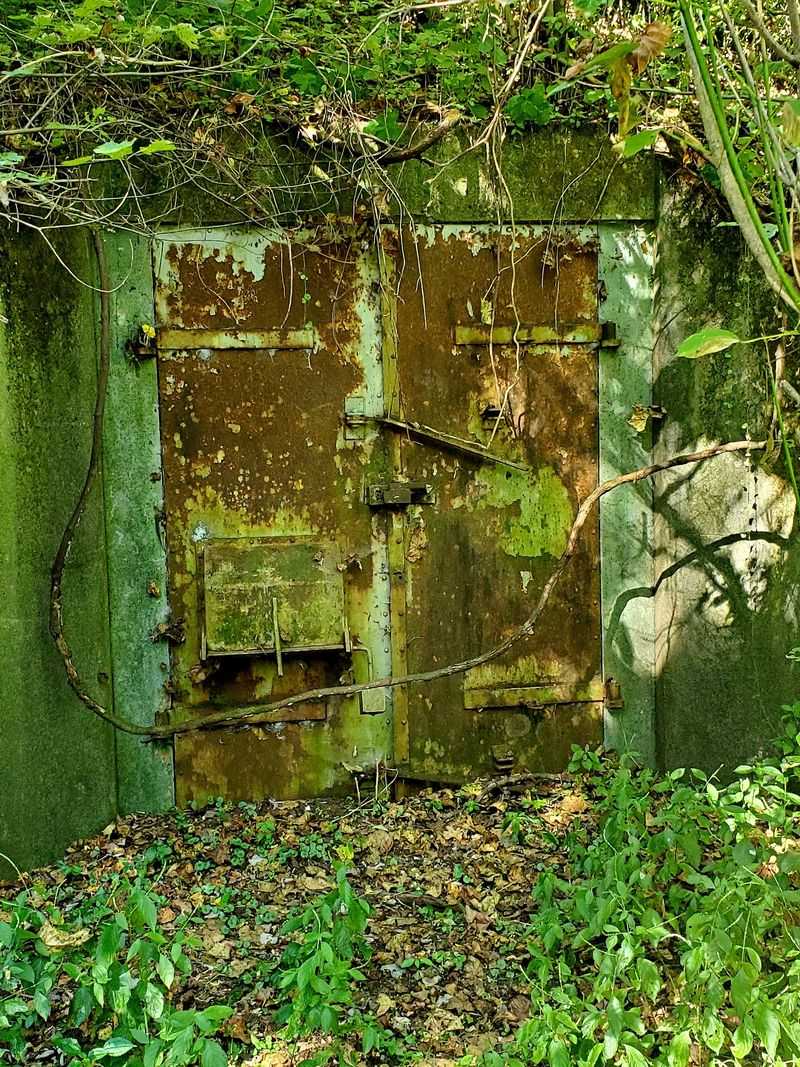
Point Pleasant’s Mothman story is tied most closely to November 15, 1966, when two young couples reported encountering a large winged figure with red eyes near the old TNT area outside town.
Newspaper coverage followed quickly, and additional reports became part of the local story during the months that followed.
That distinction matters because the legend is based on reported encounters, not a verified creature. The appeal today comes from seeing how those accounts were documented and how deeply they became connected to Point Pleasant.
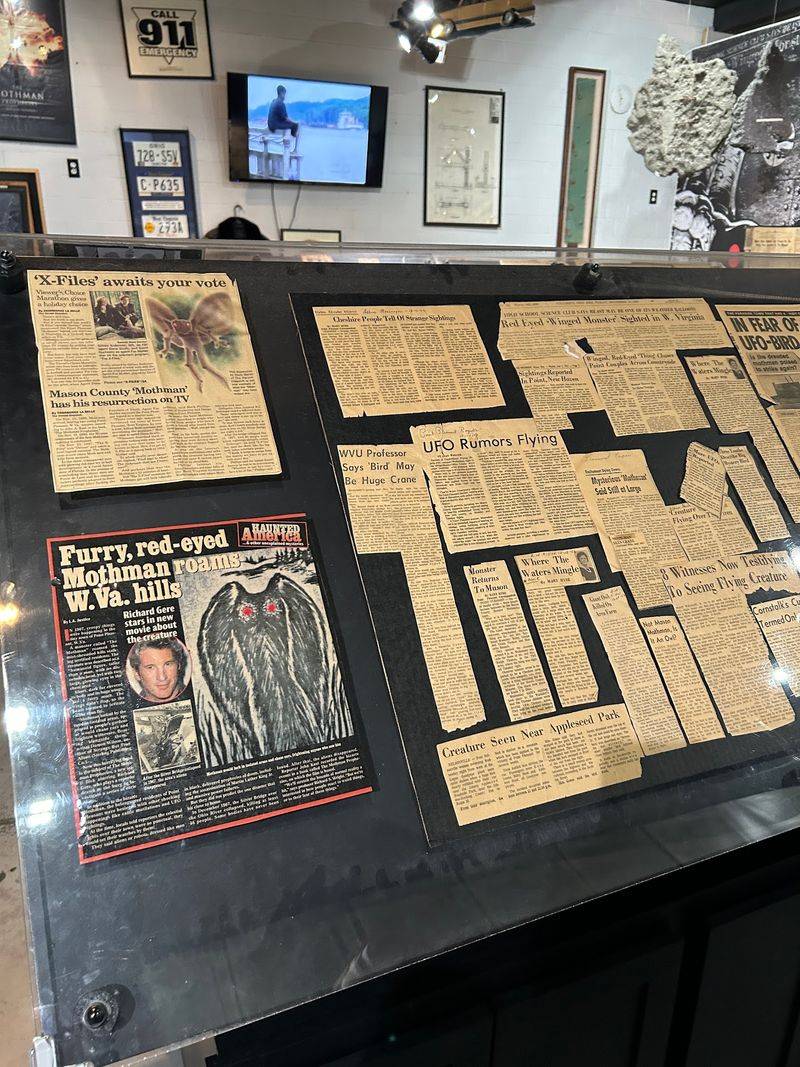
The Mothman Museum preserves rare historical documents, original press clippings, handwritten police reports, and other material tied to the eyewitness accounts. It also covers figures associated with the story, including journalist John Keel and reporter Mary Hyre.
For a first visit, beginning with the documented material gives the rest of the town more context. The statue makes more sense after reading the old reports, and the TNT area feels less like a random patch of woods once you understand why it appears so often in the story.
You do not have to decide what the witnesses saw. The museum and town leave plenty of room for curiosity without turning uncertainty into fact.
The Old TNT Area Sits North Of Town
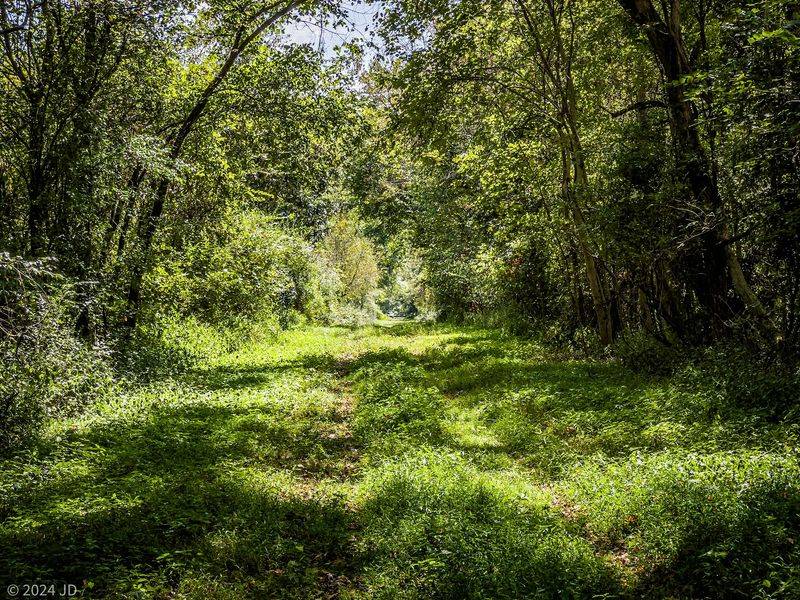
The landscape behind the legend is still there. McClintic Wildlife Management Area lies about five miles north of Point Pleasant and covers 3,655 acres of farmland, brushland, wetlands, and mixed hardwood forest.
The area includes the former wartime industrial site commonly connected with the Mothman story.
Today, the property is managed by the West Virginia Division of Natural Resources. It is a wildlife management area first, with hunting, fishing, birding, ponds, and other outdoor uses alongside its unusual place in local folklore.
Visitors interested in the Mothman connection do not have to explore the area without context. The Mothman Museum schedules guided TNT tours on selected Saturdays, including dates throughout fall 2026.
Those tours visit bunkers and other landmarks associated with the story and generally run for about seventy minutes.
That makes the guided option useful for travelers who want the history without guessing which road or structure matters. The tour also removes some of the temptation to treat every concrete remnant as part of the legend.
If nature is the stronger interest, McClintic still works as an outdoor stop in its own right. Just remember that it is an active wildlife management area, not a theme attraction, so normal outdoor awareness matters.
The Museum Keeps The Original Material Close
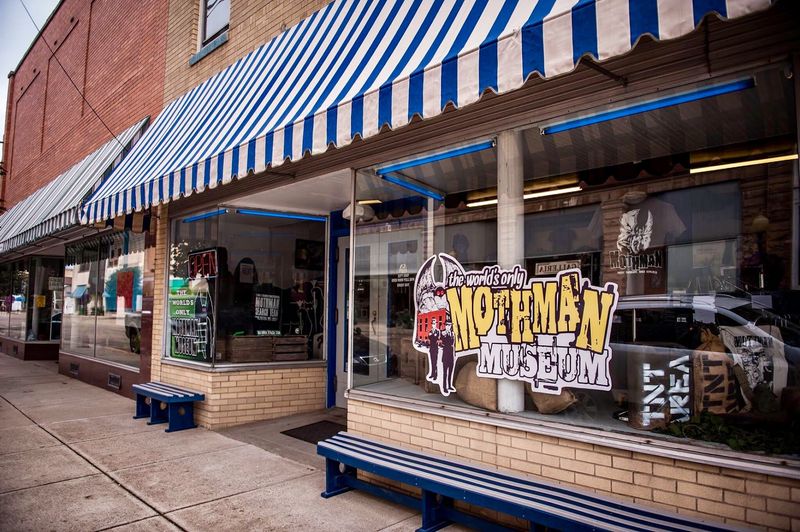
Downtown Point Pleasant gives the legend a much more concentrated home. The Mothman Museum focuses entirely on the history and mystery surrounding the local accounts, using archival material rather than relying only on modern merchandise or movie references.
Inside are eyewitness documents, historical press clippings, photographs, material connected to John Keel and Mary Hyre, and props and memorabilia from The Mothman Prophecies film. The collection also includes handwritten police reports from original eyewitnesses.
The current schedule makes the museum easy to work into most trips. It is open Monday through Thursday from 10 a.m. to 5 p.m., Friday and Saturday from 10 a.m. to 6 p.m., and Sunday from noon to 5 p.m., with closures on several major holidays.
Admission is currently around five dollars for ages eleven and older and around two dollars for children ten and younger.
The museum is at 400 Main Street, Point Pleasant, WV 25550. That address also puts you beside the statue and within a short walk of the riverfront, floodwall murals, and other downtown stops.
Give yourself enough time to read instead of rushing from display to display. The original documents give the visit a direct connection to the 1966 accounts.
A Twelve-Foot Statue Marks The Downtown Story
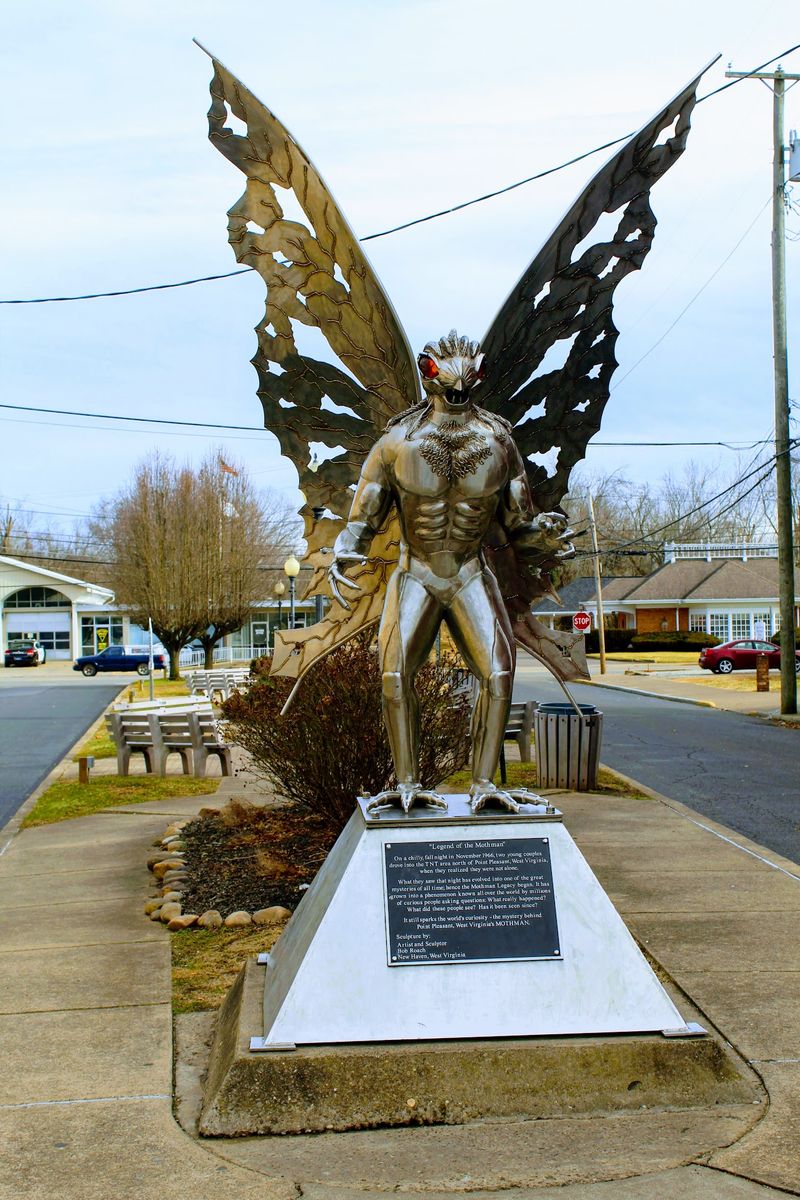
Step back outside and the Mothman becomes much harder to miss. A 12-foot stainless-steel statue created by sculptor Bob Roach stands on Main Street beside the museum.
The sculpture was commissioned after the success of the 2002 film and has been part of downtown Point Pleasant since 2003.
Its spread wings, metallic finish, and red eyes turn the legend into a very literal landmark. The statue is free to see, which makes it an easy stop even when the museum is closed or the day is too packed for a longer visit.
The pairing works especially well because the museum and statue offer two completely different versions of the same story.
One is built around documents, clippings, photographs, and research material. The other is pure public art, designed to make the creature impossible to overlook.
Keep the photo stop short if Main Street is busy, then continue toward the riverfront. Point Pleasant has more history than the Mothman story alone, and Tu-Endie-Wei State Park sits nearby at the meeting of the Ohio and Kanawha rivers.
That contrast gives the afternoon two very different kinds of stops. A twelve-foot cryptid statue can share the same route with river views and early American history without requiring a complicated itinerary.
September Turns Main Street Into Festival Space
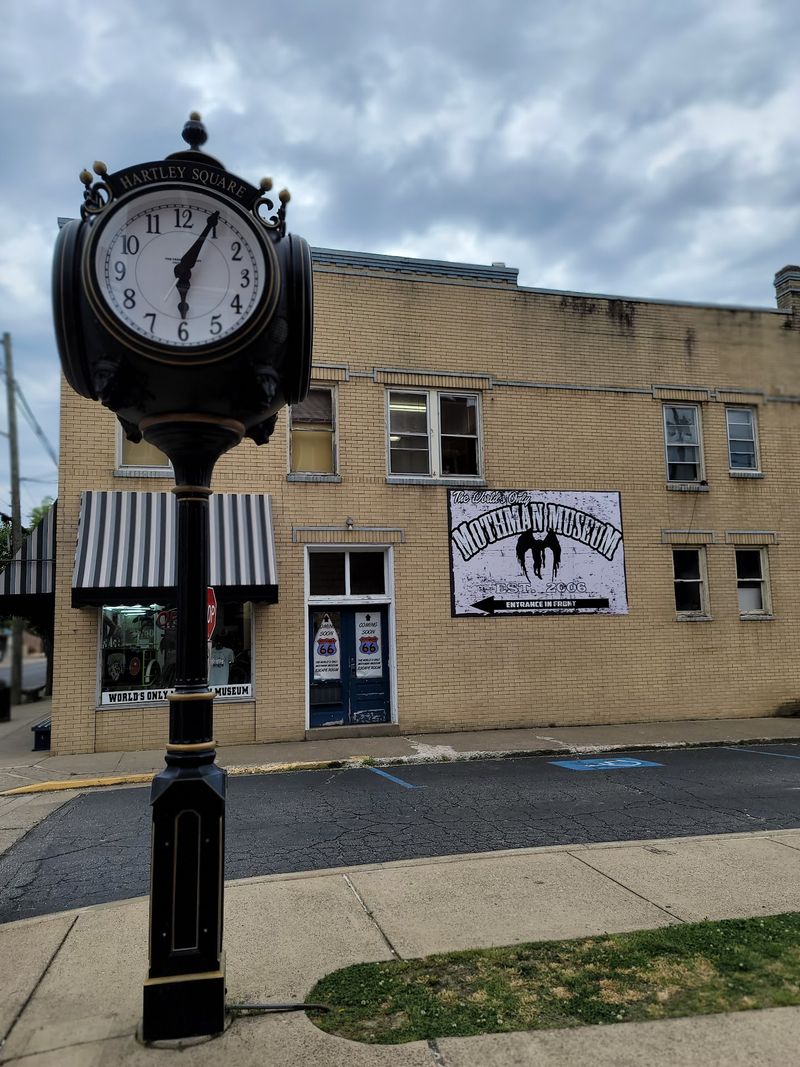
The Mothman Festival is held every third weekend in September in downtown Point Pleasant. In 2026, the event took place on September 19 and 20, with most activity centered along the 200 through 500 blocks of Main Street.
Admission to the festival itself is free, although some attractions and activities charge separately. The schedule includes live music, guest speakers, vendors, food trucks, cosplay, and Mothman-related activities.
Festival programming also extends beyond Main Street through TNT-area tours and evening wagon rides connected to the old industrial grounds.
Saturday activity generally begins around 10 a.m., with many shops and vendors wrapping up between 5 and 6 p.m. Some entertainment continues later. Sunday begins around 10 a.m. and winds down around 5 p.m.
The practical issue is not finding the festival. It is dealing with the extra traffic and walking. Main Street becomes the event zone, parking near the center is limited, and the festival advises visitors to arrive early for better options.
Comfortable shoes beat an ambitious outfit here. Even a compact downtown festival can turn into a lot of walking once parking, speakers, vendors, and the museum are all part of the plan.
Festival Weekend Requires A Different Plan
A normal Point Pleasant visit can be fairly relaxed. Festival weekend needs more structure. Streets around the event area get busy, some parking requires a longer walk, and popular add-ons have separate ticket rules.
The TNT and Farm Museum wagon rides, for example, use same-day ticket sales rather than advance reservations.
The festival’s guided TNT bus tours work differently, with online reservations available before the event. Those details can decide the shape of the day before you ever reach Main Street.
Cash is also useful during festival weekend because some vendors and activities may not accept cards reliably. The museum accepts cards and cash during normal operations, but the festival recommends carrying cash for food, merchandise, and certain activities.
If the museum is the priority, go early. If speakers or live music matter more, build around the published schedule and fit the museum between sessions. Trying to do every attraction in one sweep usually creates more backtracking than fun.
Outside festival weekend, the town is much easier to approach spontaneously. You can visit the museum, see the statue, walk the riverfront, and decide whether the TNT area belongs in the day without managing an event schedule.
The Legend Is Only One Layer Of Point Pleasant
Mothman may be the reason many travelers know the town’s name, but it does not have to fill every hour of the visit.
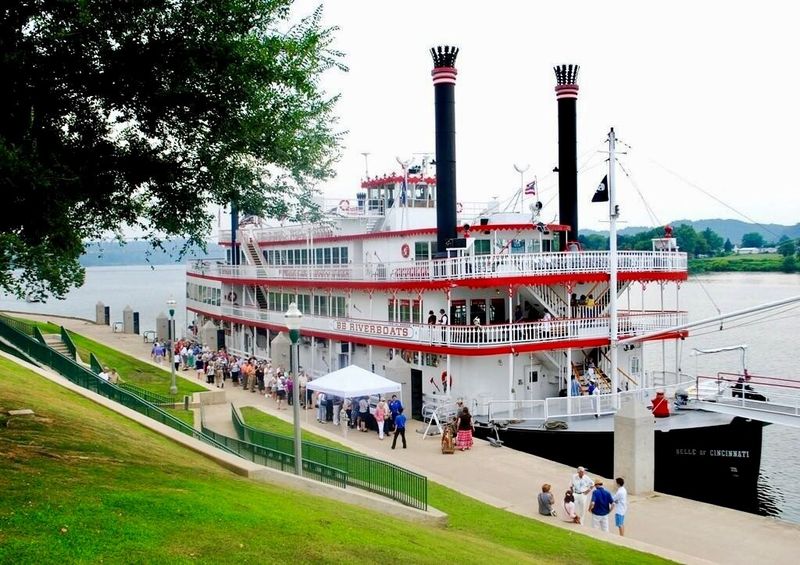
The riverfront and floodwall murals are within easy walking distance of the museum, and Tu-Endie-Wei State Park adds a completely different piece of Point Pleasant history nearby.
That makes the town easier to enjoy with people who have different levels of interest in cryptid folklore. One person can spend more time reading museum documents while someone else may prefer the river, park, or downtown streets.
The Mothman theme is still hard to miss. The museum, statue, festival, shops, and scheduled TNT tours have turned a decades-old story into a visible part of the town’s modern identity.
For a compact trip, start downtown with the museum and statue, add the riverfront, and stop there. For a deeper version, schedule a TNT tour or return during the September festival.
Point Pleasant does not require you to believe the legend to enjoy the way the town has preserved it. Curiosity is enough, and that leaves plenty of room for a surprisingly full West Virginia day.